loader image

How to Jump Higher: A Complete Guide to Explosive Leg Training

Learning how to jump higher is not about doing random box jumps until your legs are tired. A higher vertical jump comes from building force, expressing that force quickly, and using the ground like a spring instead of a brake. That means your training needs strength work, plyometrics, elastic contacts, landing skill, and recovery.

Two methods deserve special attention: hurdle hops and flywheel training.

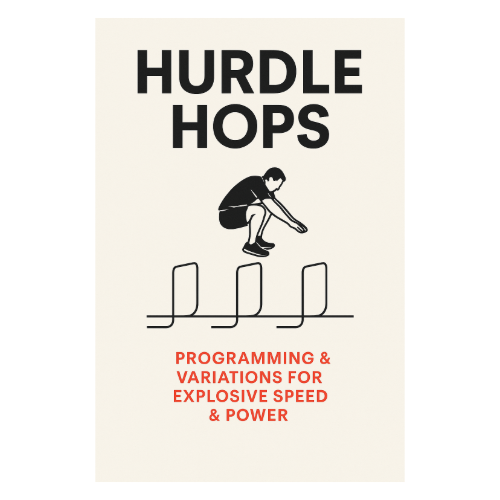
Hurdle hops teach the body to hit the ground, stay stiff, and rebound fast. 

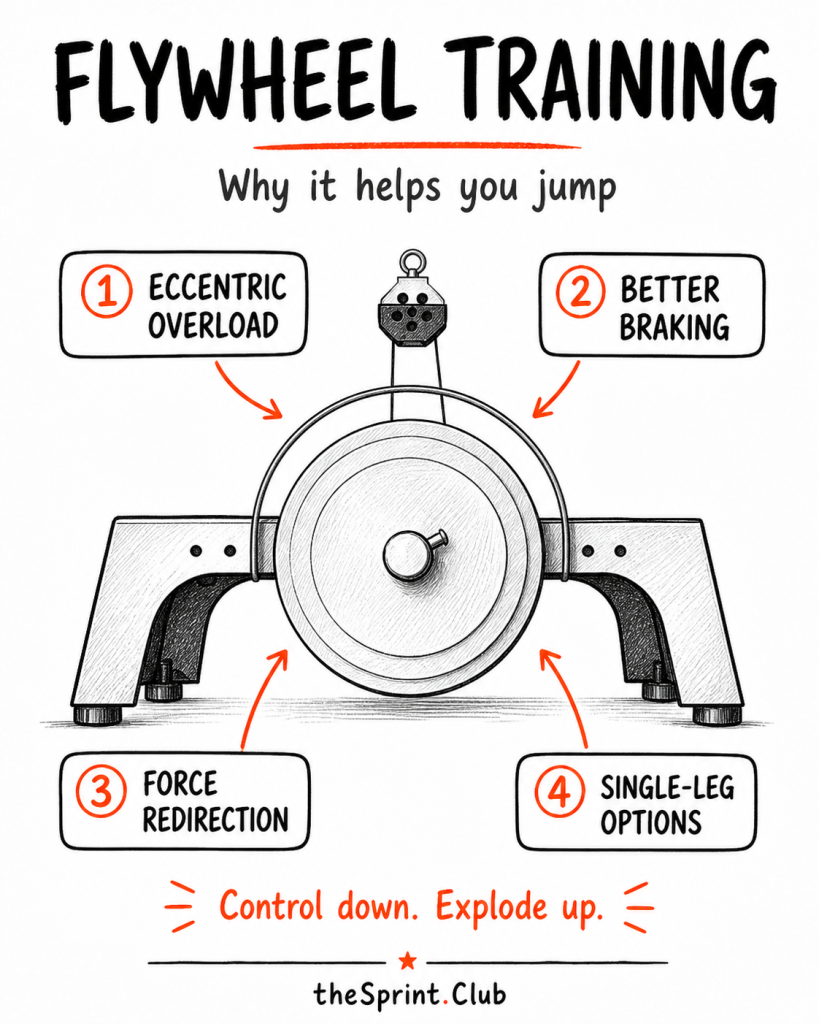
Flywheel training builds eccentric strength, the ability to absorb force and redirect it explosively. Used together, they create a powerful combination: better braking, better stiffness, and better takeoff.

Research supports this broader approach. Plyometric training has been shown across multiple reviews to improve jump performance, especially when programmed with quality, rest, and progressive intensity. Flywheel eccentric overload training has also been linked with improvements in strength, power, hypertrophy, vertical jump, and sprint performance compared with traditional resistance training in reviewed studies.

Bold title "How to Jump Higher" with sketch of a man leaping, curved arrow, hurdle hop arc, and a flywheel trainer

Why Jumping Higher Is Not Just About Stronger Legs

A vertical jump is a fast force problem.

Strength matters, but only if the athlete can use it quickly. A slow heavy squat does not automatically become a higher jump. The body must produce force rapidly, coordinate the hips, knees, and ankles, and transition from loading to takeoff without energy leaks.

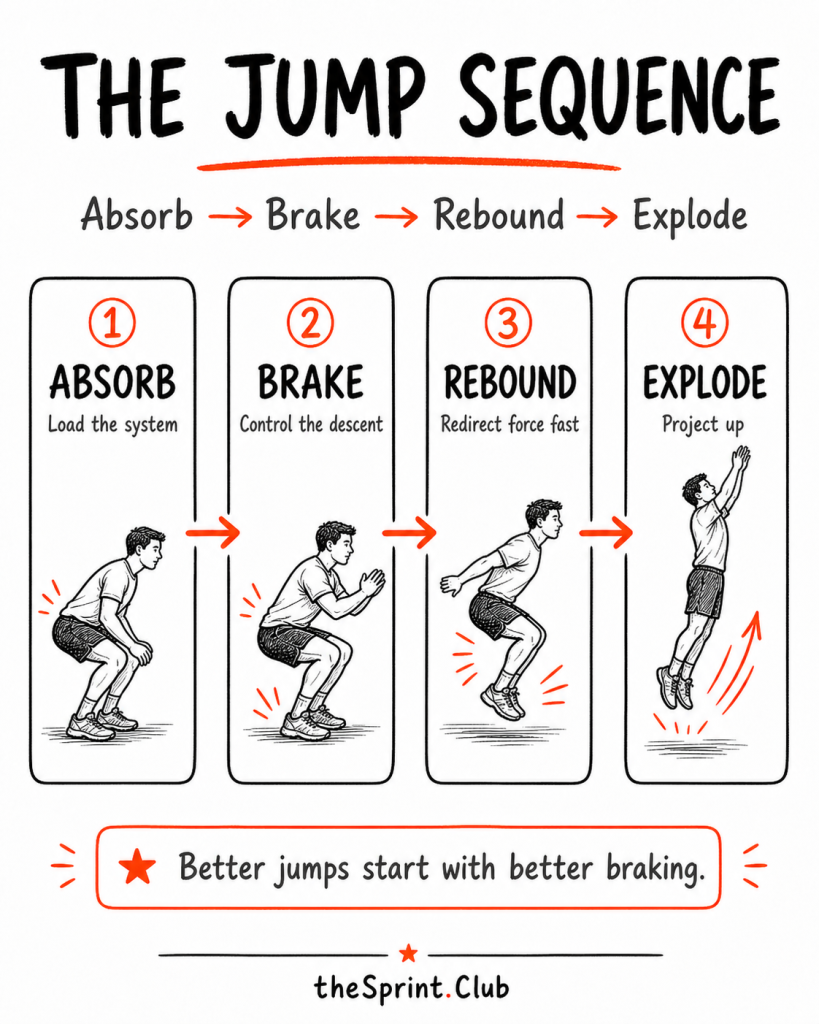
Think of jumping as a three-part sequence:

  1. Absorb force during the countermovement.
  2. Redirect force through the hips, knees, and ankles.
  3. Express force into the ground fast enough to leave it.


This is why plyometrics work. Plyometric training uses the stretch-shortening cycle, where the body rapidly transitions from eccentric loading to concentric action. The NSCA describes plyometric training as a method that develops lower-body power through this rapid eccentric-to-concentric transition.


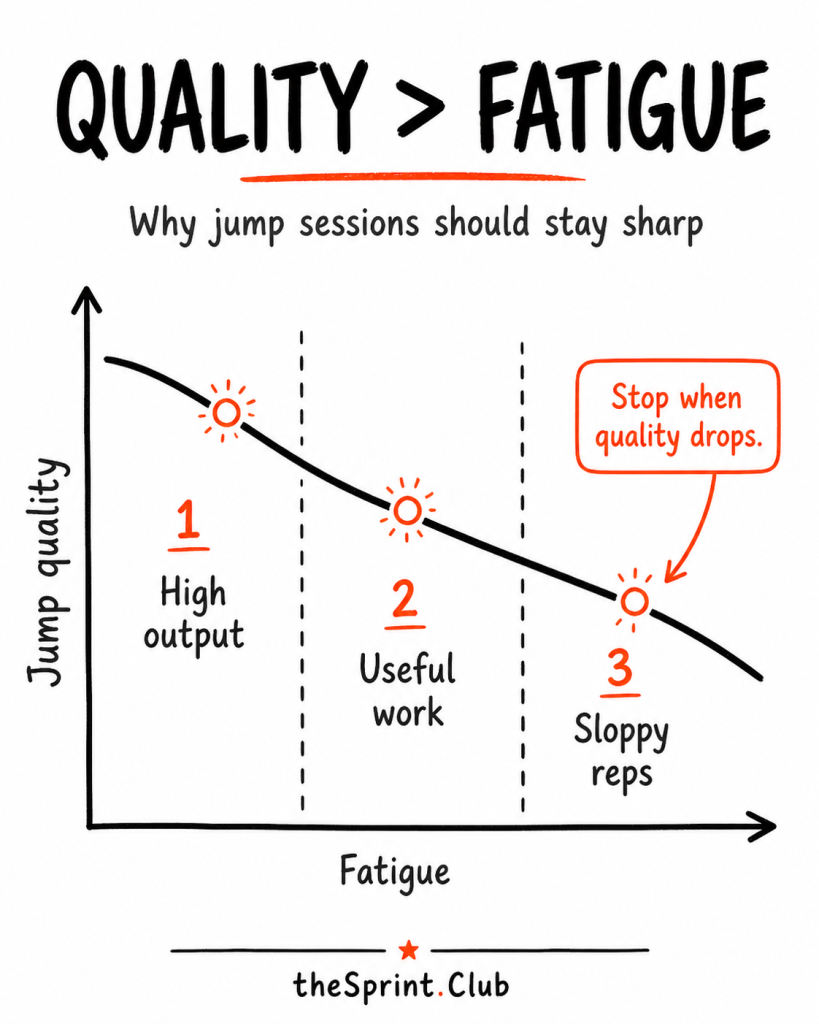
The best jump programs do not chase soreness. They chase high-output, high-quality repetitions.

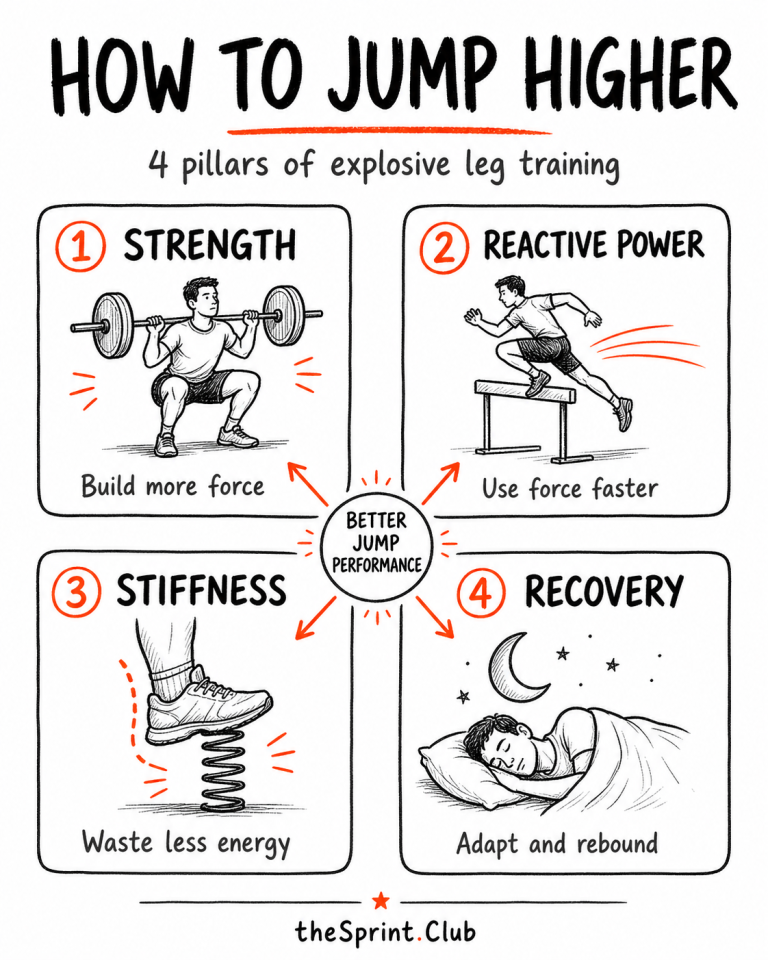
How to jump higher infographic showing four pillars: strength (squats), reactive power (hurdle jump), stiffness (springy shoe), recovery (sleep).

The Jump Higher Framework

1. Strength: produce more force

Strength gives you the raw material. If an athlete cannot produce enough force, the jump has a low ceiling.


Useful exercises include:

  • Back squat
  • Front squat
  • Trap bar deadlift
  • Romanian deadlift
  • Rear-foot elevated split squat
  • Step-up
  • Hip thrust
 

But strength training should support jumping, not bury it. Heavy lifting works best when paired with enough recovery so speed and spring do not disappear.


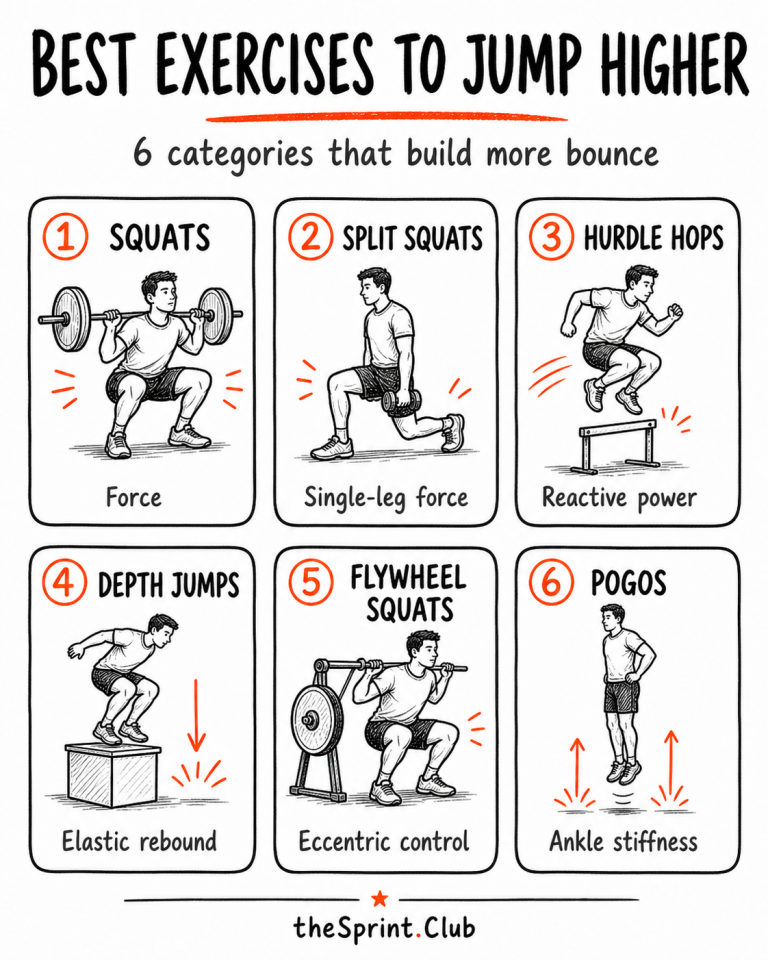
Six illustrated exercise cards showing: squats, split squats, hurdle hops, depth jumps, flywheel squats, and pogos for jumping higher.

2. Plyometrics: express force quickly

Plyometrics teach the body to apply force fast. This is where hurdle hops, pogos, bounds, depth jumps, and approach jumps belong.

A major mistake is treating plyometrics like conditioning. They are not cardio. They are nervous-system and tendon-quality training. Reps should look sharp. Ground contacts should be quick. Jump height should not collapse across sets.

Reviews have found that short-term plyometric training, often 2 to 3 sessions per week for several weeks, can improve jump, sprint, and agility performance in team-sport athletes.

3. Elastic stiffness: waste less energy

Great jumpers do not simply push harder. They lose less energy.

Elastic stiffness means the foot, ankle, knee, and hip can handle impact without collapsing. This is why pogo jumps, hurdle hops, and depth jumps are valuable. They train the body to stay organized under fast ground contact.

The goal is not to land softly like a pillow. The goal is to land quietly, stiff enough to rebound, and controlled enough to avoid joint collapse.

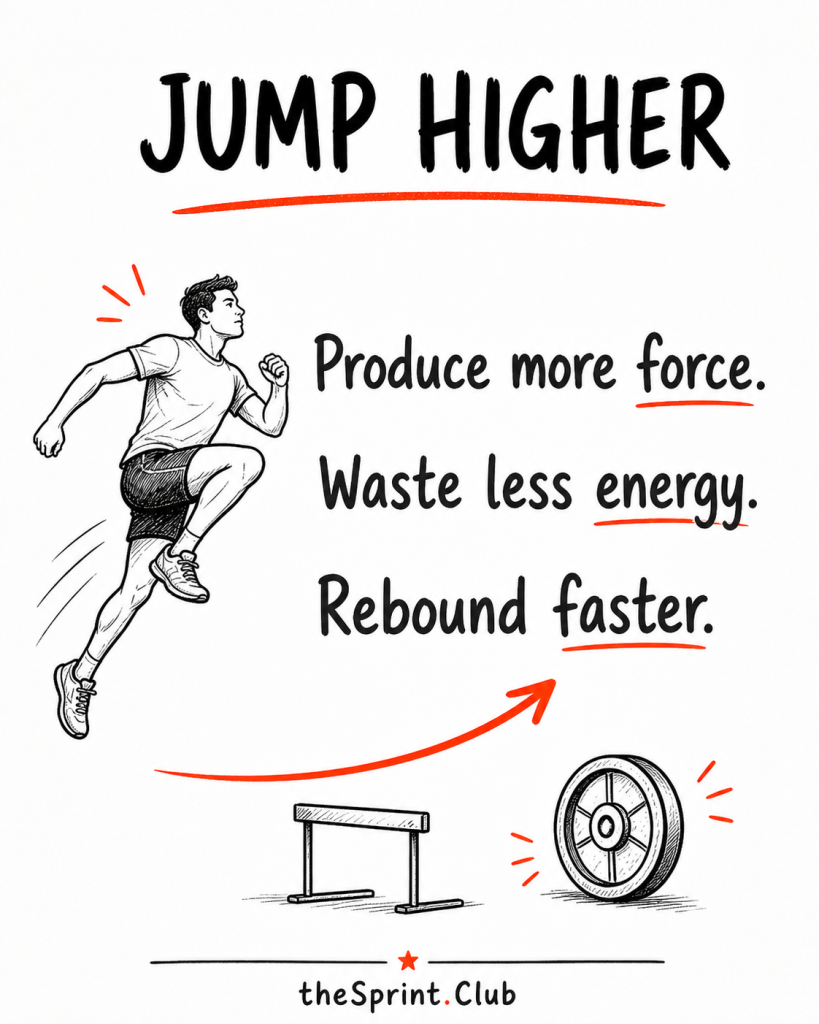
Illustration of a sprinter leaping with text: "Jump Higher" and bullet points: "Produce more force. Waste less energy. Rebound faster."

4. Landing skill: absorb before you explode

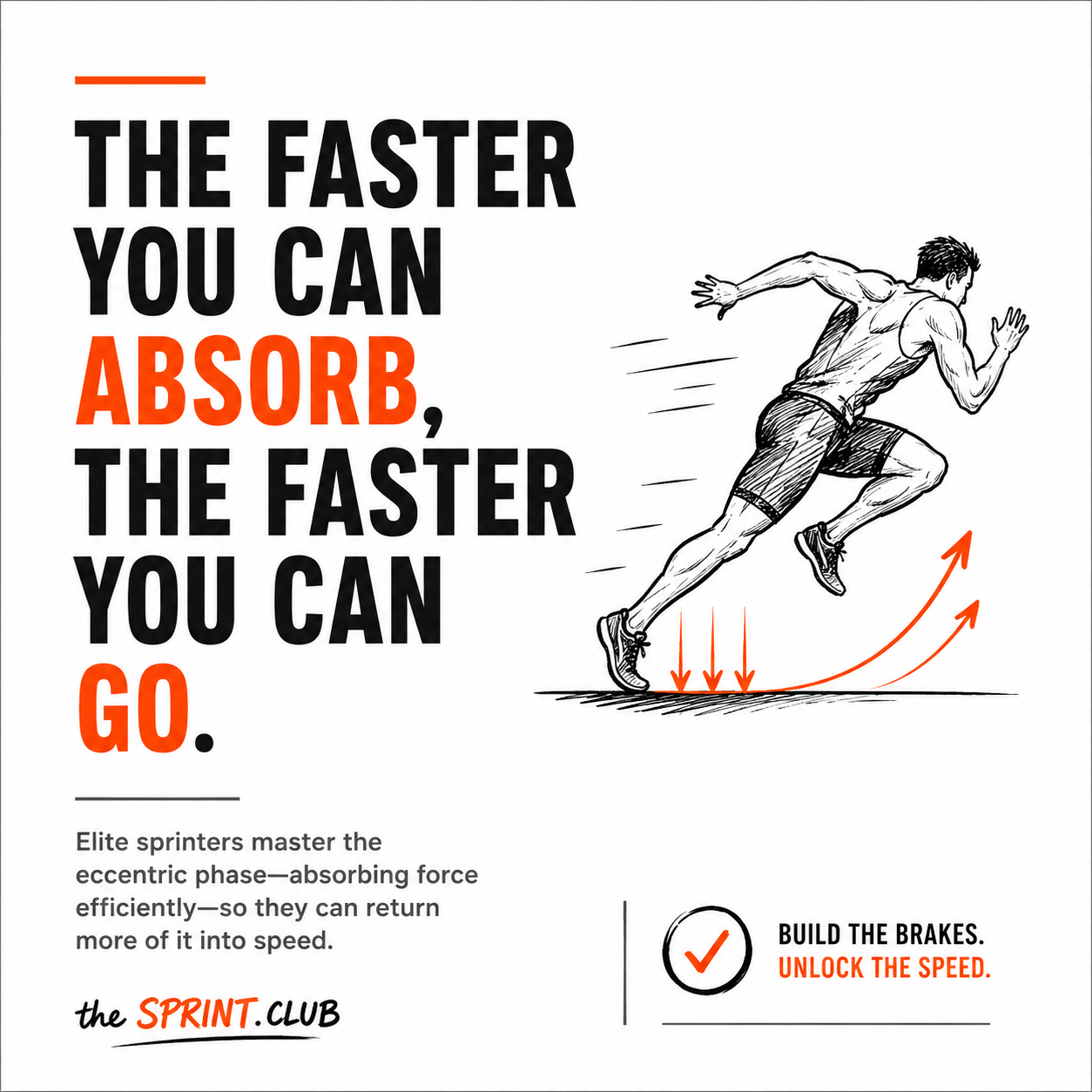
Every higher jump starts with better absorption.

If the knees cave in, the torso folds, or the ankles collapse, energy leaks before takeoff. Landing training builds the braking system that makes explosive takeoff safer and more repeatable.

Use:

  • Snap-downs
  • Altitude landings
  • Stick landings
  • Low hurdle hop to stick
  • Drop landing to vertical jump
Illustration showing four-stage jump sequence: Absorb, Brake, Rebound, Explode with drawings of a man performing each phase.

Speed science that makes you faster.

Weekly sprint science, training insights, and speed culture. Free.
Black man in a white T-shirt with a black silhouette of a sprinter, looking up and to the right against a plain light background.

Best Exercises to Jump Higher


Strength Exercises

Squat variations

Squats build lower-body force through the hips, knees, and ankles.

Best options:

  • Front squat
  • Back squat
  • Safety bar squat
  • Goblet squat for beginners

Programming:

  • 3 to 5 sets
  • 3 to 6 reps
  • Moderate to heavy load
  • Full recovery between sets

Split squat variations

Single-leg strength matters because most sport jumps happen off one leg, or through asymmetrical positions.

Best options:

  • Rear-foot elevated split squat
  • Front-foot elevated split squat
  • Walking lunge
  • Step-up

Programming:

  • 3 to 4 sets
  • 5 to 8 reps per side

Hip hinge variations

The hips help drive takeoff. The posterior chain also supports landing and sprint transfer.

Best options:

  • Romanian deadlift
  • Trap bar deadlift
  • Hip thrust
  • Single-leg RDL

Programming:

  • 3 to 4 sets
  • 4 to 8 reps
Graph showing jump quality falling as fatigue rises, labeled zones 1 High output, 2 Useful work, 3 Sloppy reps with note "Stop when quality drops."

Plyometric Exercises

Hurdle hops

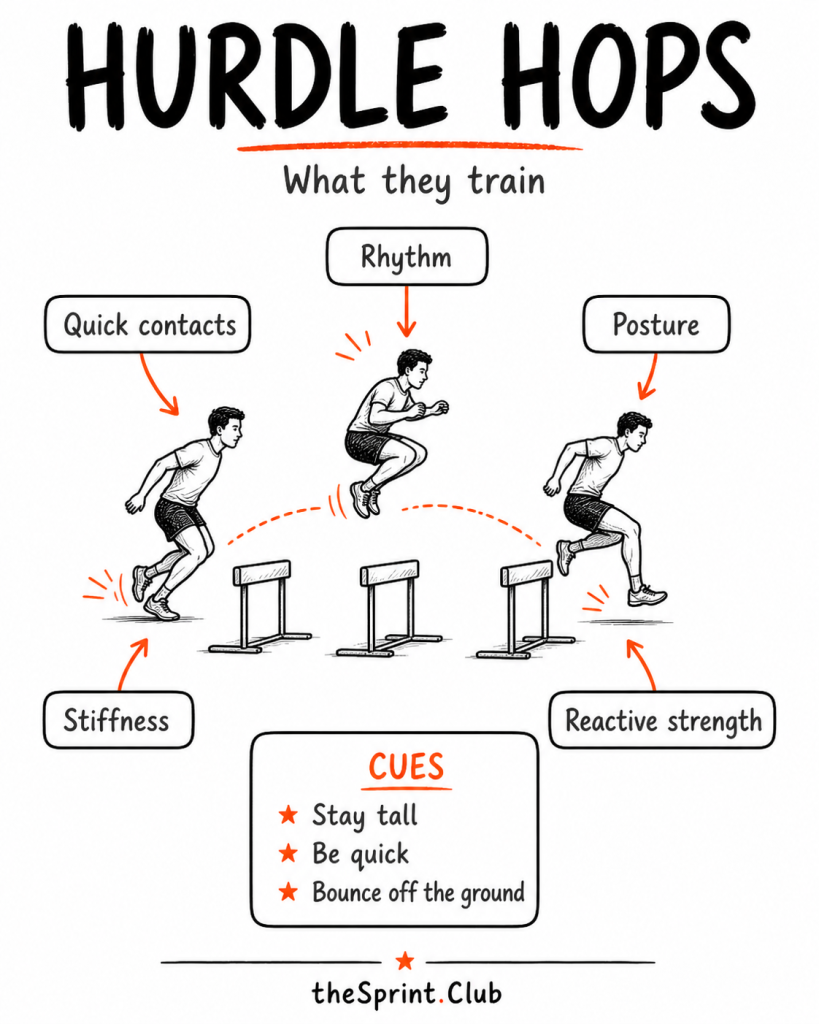
Hurdle hops are one of the best tools for teaching elastic power.

They train:

  • Fast ground contact
  • Ankle stiffness
  • Rhythm
  • Reactive strength
  • Landing posture
  • Hip-knee-ankle coordination

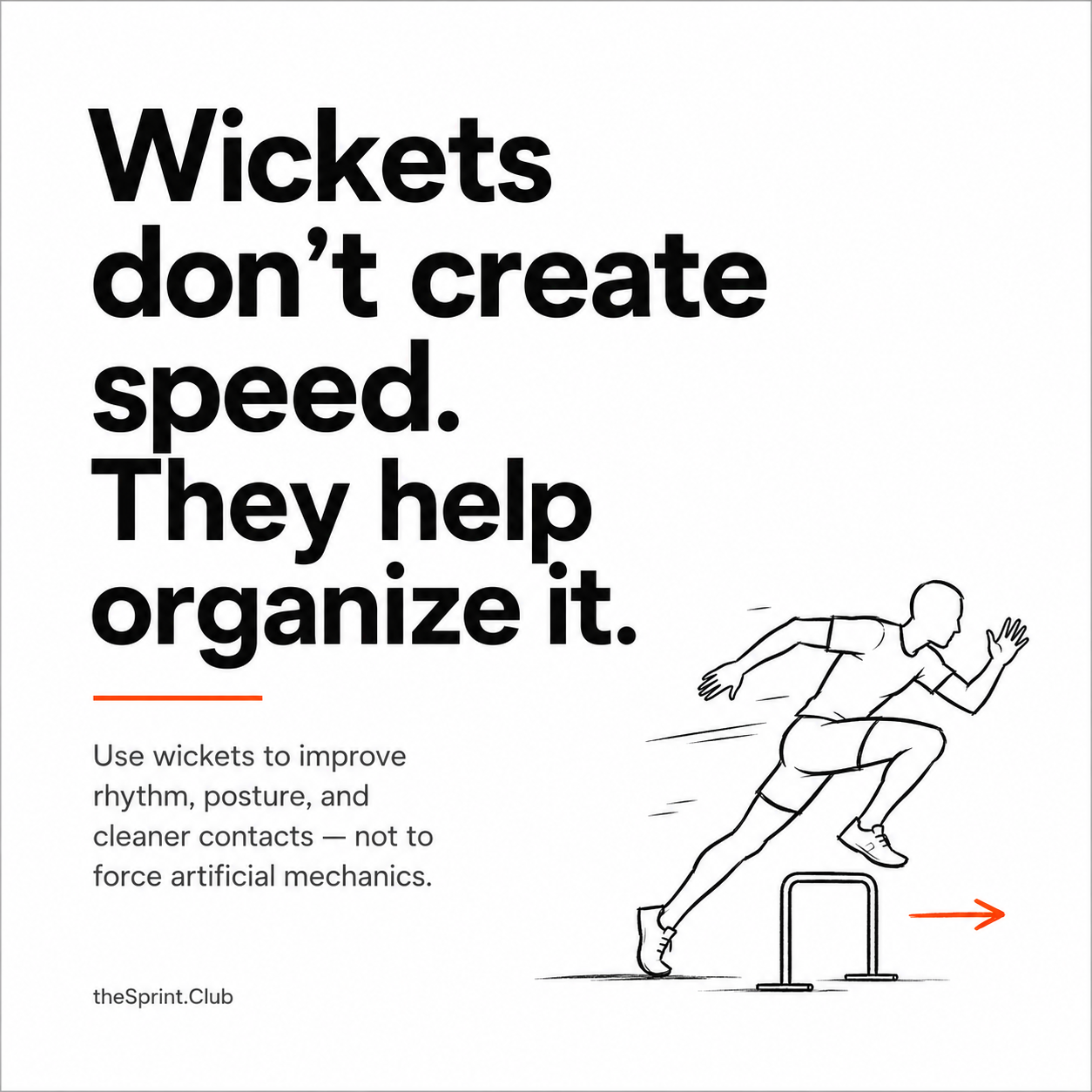
Hurdle hops are especially useful because the hurdle gives the athlete a clear target without needing complicated coaching.

Depth jumps

Depth jumps are more intense than hurdle hops. They train rapid absorption and explosive redirection.

Use them only after the athlete can land well and rebound with control.

Programming:

  • 2 to 4 sets
  • 2 to 5 reps
  • Full recovery
  • Low to moderate box height at first

Bounds

Bounds train horizontal power and elastic projection. They are useful for athletes who need sprint speed, approach jumping, or field-sport explosiveness.

Options:

  • Alternate-leg bounds
  • Single-leg bounds
  • Power skips
  • Speed bounds

Countermovement jumps

These are the simplest test and training tool.

Use them to practice:

  • Arm swing
  • Fast dip
  • Vertical projection
  • Full extension
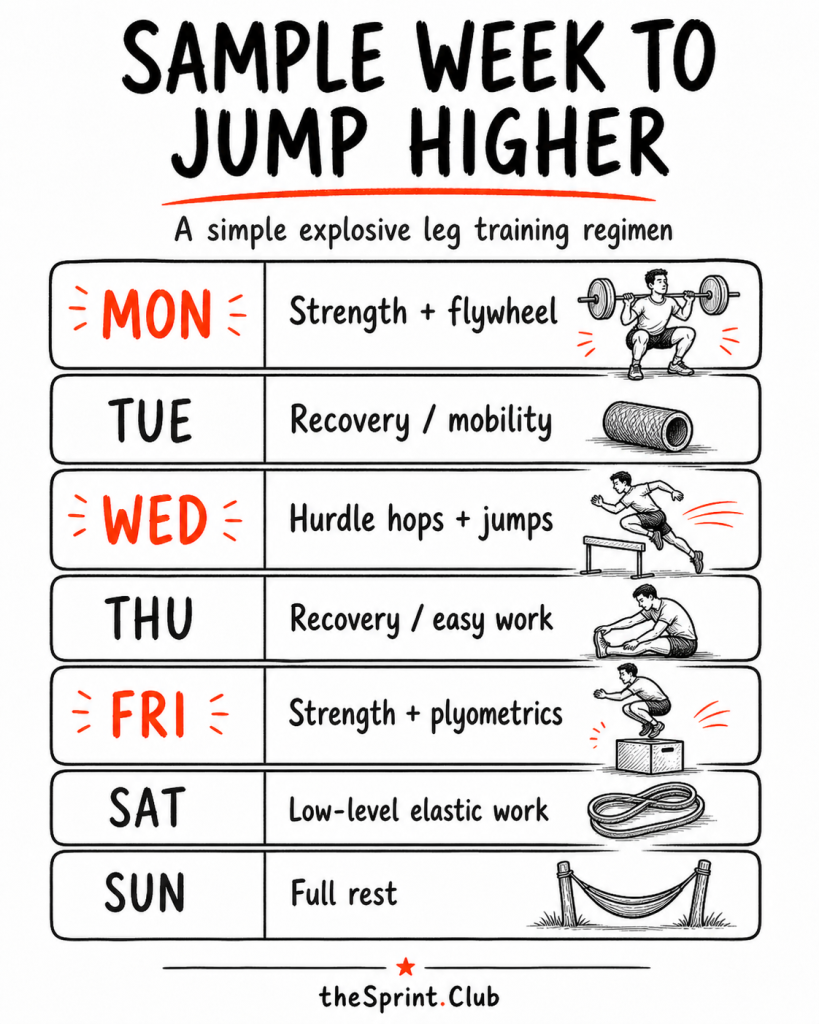
Weekly plan titled "Sample week to jump higher" listing Mon: Strength + flywheel; Tue: Recovery/mobility; Wed: Hurdle hops + jumps; Thu: Recovery; Fri: Strength + plyometrics; Sat: Low-level elastic work; Sun: Full rest.

How to Use Hurdle Hops to Jump Higher

Hurdle hops should be placed early in the workout, after the warm-up and before heavy lifting or conditioning. The nervous system needs to be fresh.

Beginner hurdle hop progression

Start with low hurdles or mini hurdles.

Option 1: Hurdle hop to stick

  • 3 sets of 3 reps
  • Jump over one hurdle
  • Land and freeze for 2 seconds
  • Focus on stable knees, tall chest, quiet feet

Option 2: Line hops

  • 3 sets of 10 to 15 seconds
  • Quick contacts
  • Low height
  • Stiff ankles

Intermediate hurdle hop progression

Option 1: Continuous low hurdle hops

  • 3 to 5 hurdles
  • 3 to 5 sets
  • Walk-back recovery
  • Keep contacts fast and posture tall

Option 2: Hurdle hop to vertical jump

  • Hop over 2 to 3 hurdles
  • After final hurdle, perform one max vertical jump
  • 3 to 4 sets
  •  
Three-panel sketch of an athlete hurdling with labels: Quick contacts, Rhythm, Posture, Stiffness, Reactive strength, and cues.

Advanced hurdle hop progression

Option 1: Hurdle hops with reduced ground contact

  • 4 to 6 hurdles
  • 3 to 5 sets
  • Focus on bounce, not squat depth

Option 2: Hurdle hop into approach jump

  • 2 to 3 hurdle hops
  • Transition into a sport-specific jump
  • Useful for basketball, volleyball, and track jumpers


Hurdle hop coaching cues

Use simple cues:

  • “Bounce off the ground.”
  • “Tall hips.”
  • “Stiff ankle.”
  • “Do not sit into the landing.”
  • “Leave the ground fast.”


Avoid turning hurdle hops into tuck jumps. The goal is not to pull the knees high. The goal is to rebound efficiently.

How to Use Flywheel Training to Jump Higher

Flywheel training uses rotational inertia instead of traditional weight. The athlete accelerates the wheel during the push phase, then must absorb and redirect the returning force during the eccentric phase.

That eccentric demand is the key.

Jumping requires fast braking before takeoff. Flywheel training helps develop the ability to tolerate and redirect force, which is why it can fit well in a jump program.

A meta-analysis on flywheel eccentric overload training reported favorable effects compared with traditional resistance training for outcomes including strength, power, hypertrophy, vertical jump height, and running speed.


Flywheel ExerciseWhy It Helps Jumping
Flywheel squatBuilds bilateral braking and takeoff strength
Flywheel split squatBuilds single-leg eccentric control
Flywheel RDLStrengthens posterior chain and hamstrings
Flywheel lateral lungeHelps field-sport athletes control side-to-side force
Flywheel calf raiseBuilds ankle and lower-leg capacity

Unlock
Speed

Speed is is unlocked by building the right qualities in the right order.
TheSprint.Club logo above four book cover thumbnails titled "Bounce!!!", "Programming", "Wickets", and "Hurdle Hops" with simple line illustrations

How to dose flywheel work

Start conservatively. Flywheel training can create high eccentric stress.

Beginner dose:

  • 1 to 2 exercises per session
  • 2 to 3 sets
  • 5 to 6 reps
  • 1 to 2 sessions per week

Intermediate dose:

  • 2 exercises per session
  • 3 to 4 sets
  • 5 to 8 reps
  • 1 to 2 sessions per week

Advanced dose:

  • 2 to 3 exercises
  • 3 to 5 sets
  • 4 to 8 reps
  • Pair with jumps only when quality stays high

8-Week Jump Higher Training Program

This program uses three main training days per week. It blends strength, hurdle hops, flywheel training, and jump practice.

Weekly Schedule

DayFocusExample
MondayStrength + flywheelSquat, flywheel split squat, RDL
TuesdayRecoveryMobility, walk, easy bike
WednesdayHurdle hops + jump skillHurdle hops, vertical jumps, bounds
ThursdayRecoveryFull rest or light mobility
FridayStrength + plyometricsTrap bar deadlift, hurdle hops, depth jumps
SaturdayOptional low-intensity elastic workPogos, ankle stiffness, light approach jumps
SundayFull restNo jump training

The Jump Higher Training Checklist

Use this before every jump session.

QuestionYes or No
Did I sleep well enough to produce high output? 
Are my legs springy during warm-up? 
Can I land without knee collapse? 
Are my contacts quick and quiet? 
Is jump height staying consistent? 
Am I stopping before quality drops? 
Did I rest enough between explosive sets? 

Common Mistakes That Kill Jump Progress

Mistake 1: Turning jump training into conditioning

Jump training should not feel like a bootcamp finisher. If you are gasping for air during plyometrics, the session has probably shifted away from power.

Use full rest.

For high-intensity plyometrics, quality matters more than density. NSCA educational material emphasizes the stretch-shortening cycle and lower-body power development, not fatigue-chasing conditioning.

Mistake 2: Too many ground contacts

More contacts do not automatically mean more bounce. They often mean more soreness.

Start with low volume:

  • Beginner: 40 to 70 contacts per week
  • Intermediate: 70 to 120 contacts per week
  • Advanced: 120 to 160 contacts per week

[Inference] These ranges are practical coaching guidelines, not universal research thresholds. They should be adjusted by age, training history, sport workload, body size, and recovery.

Mistake 3: Using hurdles that are too high

High hurdles often make athletes tuck, pause, or collapse.

Use a height that allows fast, rhythmic contacts. If the athlete has to over-jump, the hurdle is too high.

Mistake 4: Ignoring eccentric strength

Jumping is not only takeoff. It is braking plus takeoff.

This is where flywheel training fits. It challenges the athlete to control the eccentric phase and redirect force. Flywheel eccentric overload training has been reported in meta-analysis research to improve several strength and power outcomes relevant to jumping.

Mistake 5: Testing max jumps every day

Testing is not training.

Use max vertical jump testing once every 1 to 2 weeks. On other days, train the ingredients: strength, elastic contacts, flywheel eccentrics, and approach rhythm.

FAQ

How often should I train to jump higher?

Most athletes should train jumping 2 to 3 times per week. Higher-intensity plyometrics need recovery between sessions. Short-term plyometric programs performed 2 to 3 times per week have been shown to improve jump and performance outcomes in team-sport athletes.

Are hurdle hops good for vertical jump?

Yes, hurdle hops can help because they train fast ground contact, rhythm, stiffness, and reactive strength. They work best when the hurdles are low enough to keep contacts quick.

Is flywheel training good for jumping higher?

Flywheel training can be useful because it develops eccentric strength and force redirection. Research reviews have reported favorable effects of flywheel eccentric overload training on strength, power, vertical jump height, and running speed.

Should I lift heavy or do plyometrics to jump higher?

Use both. Strength training builds force capacity. Plyometrics teach you to express force quickly. Combined training is usually more complete than only lifting or only jumping.

How many hurdle hops should I do?

Start with 3 to 5 sets of 3 to 5 hurdles. Keep the volume low at first. Stop when contacts slow down, landings get loud, or posture breaks.

Do squats improve vertical jump?

Squats can help by improving lower-body force production. But squats work best for jumping when paired with plyometrics, jump practice, and recovery.

How long does it take to jump higher?

Many athletes need 6 to 12 weeks of consistent training to see meaningful changes. The timeline depends on training age, strength level, body composition, tendon capacity, sport workload, sleep, and recovery.

Interactive Training Builder

Jump Higher Training Planner

Build a practical weekly jump plan using strength work, hurdle hops, flywheel training, plyometrics, and recovery rules.

82
Plan Fit

Your Jump Higher Plan

A balanced week built around strength, hurdle hops, flywheel eccentric control, plyometrics, and recovery.

Weekly Structure

Explosive work is placed on high-quality days. Recovery days protect speed, stiffness, and jump quality.

Session Builder

Select a focus day to see the recommended session structure.

Quality Rules

Progress Targets

Related Posts

Bold title reading "Best Exercises for Sprint Strength" with a sketch of a sprinter launching forward and a tagline about building force, stiffness, and speed.

Best Exercises for Sprint Strength

Build sprint strength that actually transfers to speed. Learn the best exercises for acceleration, max velocity, hamstring strength, elastic power, and single-leg force, plus how to organize them into a simple weekly plan for faster, cleaner sprinting.

Read More
Two sprinters in motion with bold orange accents, surrounded by sprint club apparel (hoodie, tees, jacket) and slogan "Finish Strong."

The Rise of the Challenger: Coolest Sprinting Brands

This article breaks down why challenger sprinting brands are gaining traction, how culture and performance are converging, what the science actually says about apparel and performance, and what trends are shaping sprint gear from race-day kits to post-race identity wear.

Read More
the sprint club thesprint.club logo

theSprint.Club

Join theSprint.Club

The Science, Art, & Love of Speed in your inbox.
Man standing against a pale gray background wearing a navy T-shirt printed with a large white silhouette of a running figure, hands in his pockets, head tilted and forearm tattoos visible.

Systems + Programs = Measurable Results

Train with confidence. Know exactly what to work on and why it matters

Tools & Calculators

Stop Guessing. Start Measuring.

Access free tools & calculators built to help coaches and athletes train smarter.

thesprintclub logo

theSprint.Club

Join the squad.
Explore the gear.
Get faster.
white thesprint.club sprinter tee tshirt