loader image

NFL Draft Speed Architecture: A Scientific & Practical Playbook for Dropping 40-Yard Dash Time

In the NFL draft world, speed is currency. A clean 40-time doesn’t just show athleticism. It signals that your mechanics, power, and on-field translation are aligned.

Yet, too often athletes chase random drills, load up heavy sleds, or throw more sprint volume at the problem. What separates those who actually improve versus those who spin their wheels is method: profiling, diagnostic coaching, and coherent training phases.

In this post, we blend the art and science: not just what to do, but why, when, and for whom it fits. You’ll come away with a blueprint you can tailor to your athlete or yourself.

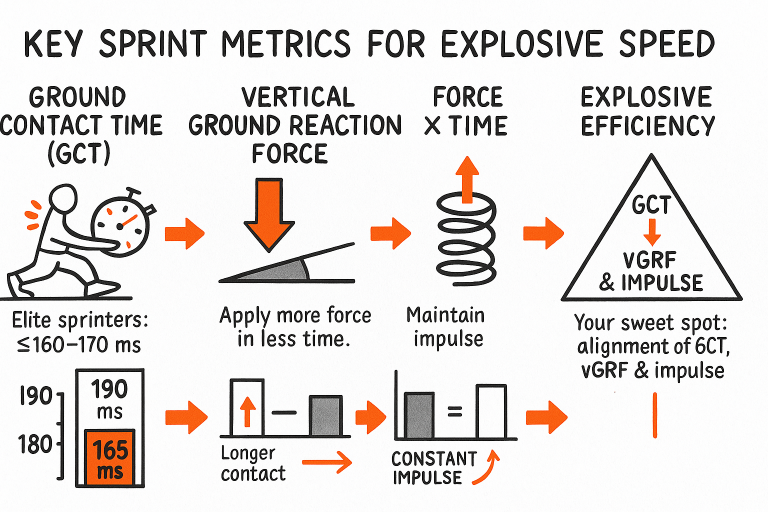
Infographic showing key sprint metrics: ground contact time, vertical ground reaction force, force x time, and explosive efficiency with diagrams.

Speed Philosophy

Architecting Acceleration

Speed isn’t a drill list—it’s a system. You assess weaknesses, segment interventions, and progress stressors. Scott Salwasser, reflecting on Spellman’s work, notes that it gives coaches a way to “look under the hood” — prescribing ratcheted interventions based on each athlete’s signature, not one-size-fits-all programs. 

Some key tenets from the Spellman paradigm:

  • Individual profiling over generic templates
  • Load-velocity profiling to find optimal resisted sprint loads
  • Technical intervention tiers (e.g., drills, overspeed, resisted, pure sprint)
  • Logical progression: simpler mechanical drills → resisted/assisted → full-velocity emphasis
  • Training must fit game demands, not just test demands


Spellman also cautions that building speed in the offseason must consider neuromuscular, mechanical, and metabolic loads — not just raw speed output.

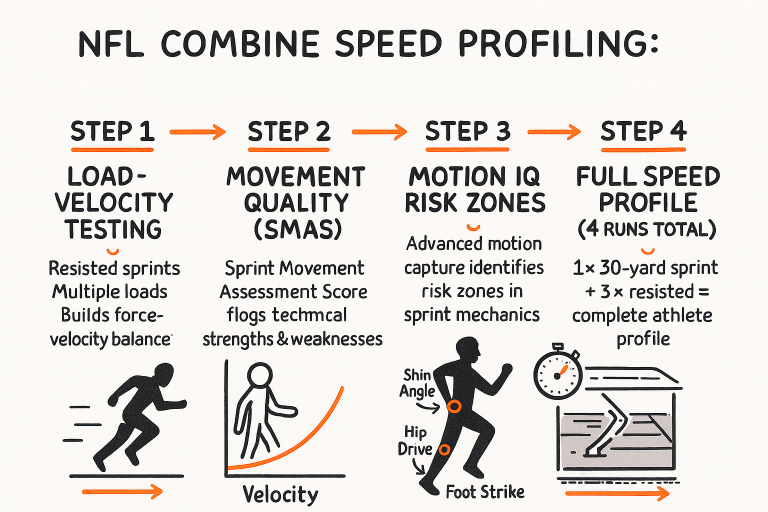
Infographic titled "NFL Combine Speed Profiling" showing four steps: Step 1 Load-Velocity Testing with resisted sprints; Step 2 Movement Quality (SMAS) with sprint movement score vs velocity graph; Step 3 Motion IQ Risk Zones highlighting shin angle, hip drive, foot strike; Step 4 Full Speed Profile (4 runs total) with stopwatch and sprint treadmill illustration.

Drive + Max Velocity, Not One or the Other

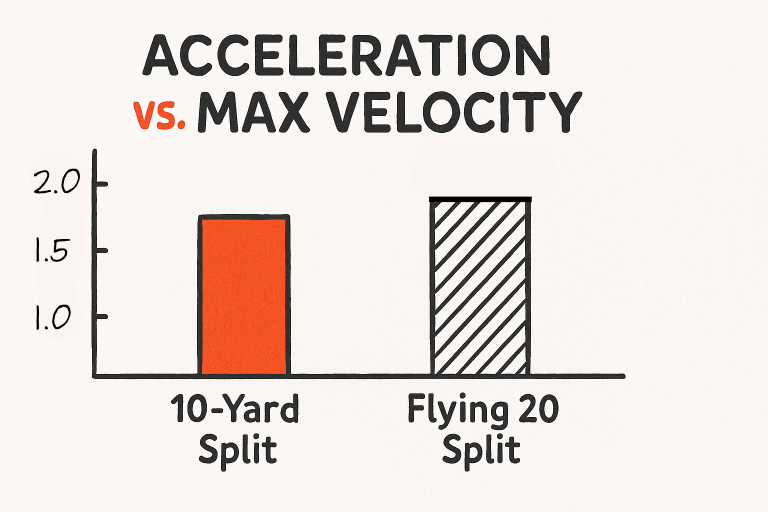
A long-standing SimpliFaster principle that resonates in 40-yard training: you must train both the drive (acceleration) and max velocity phases to truly improve 40-time.

They argue:

  • The drive phase is the domain where coaching has the greatest leverage
  • Max velocity matters too, especially when athletes already accelerate well
  • Too many programs undervalue one phase in favor of the other
  • Use measurable tests (e.g. 10m fly) to see which phase is limiting your 40

Simplifaster also warns about comparing “apples to oranges”. If your timing methodology, spike usage, or surface differs, you may misinterpret progress.

Bar chart titled "Acceleration vs. Max Velocity" comparing a solid orange 10-yard split bar (~1.7) and a hatched flying 20 split bar (~1.9) on a vertical scale from 1.0 to 2.0.

Performance Profiling: From Drives to Load-Velocity & SMAS

To meaningfully improve speed, you must first measure and diagnose. Here’s how to set up your profiling system:

Acceleration Profiling (10m, 20m splits)

Breaking your 40 into 10m or 20m increments reveals where your deceleration or inefficiency kicks in.

Load-Velocity Profiling (Resisted Sprint Testing)

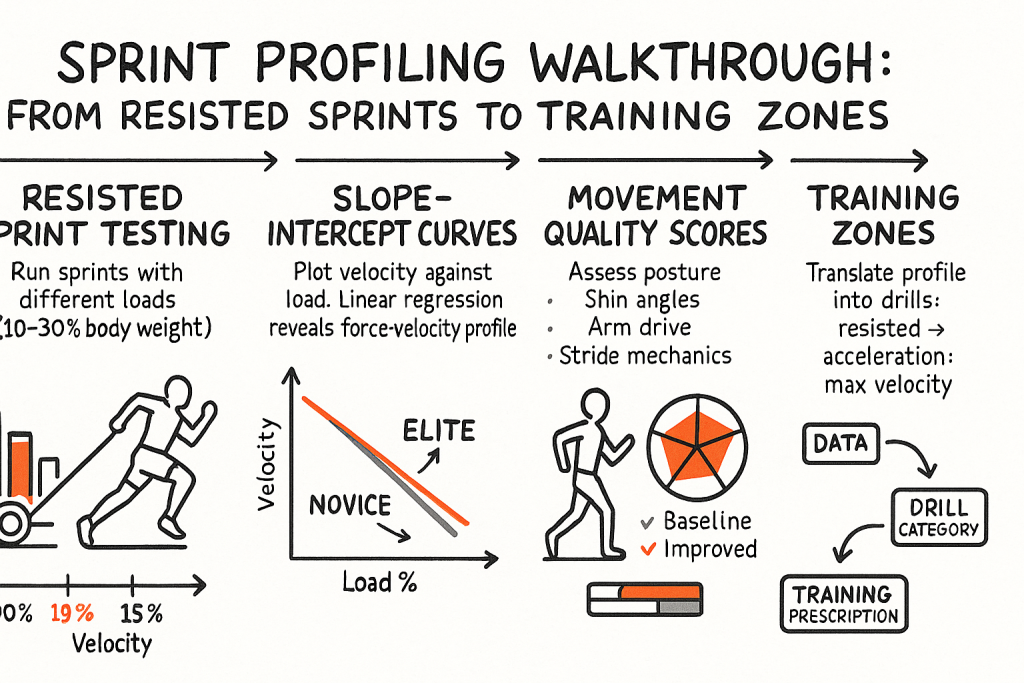
Spellman and his affiliates use resisted sprints at varying loads (e.g. 0%, 10%, 20%, 30% body weight) and chart velocity drop-off to find the load that maximally stresses the athlete without technique breakdown. 

Hand-drawn infographic titled "Sprint Profiling Walkthrough" showing four panels: resisted sprint testing (runner towing weight), slope-intercept curves graph of velocity vs load (elite vs novice lines), movement quality checklist with running posture icon and radar chart, and training zones flowchart from data to drill category to training prescription.

SMAS (Sprint Movement Assessment Score) & Motion IQ

In the Spellman combine protocol, after load-velocity testing, they run movement quality assessments (SMAS) and use Motion IQ to flag technical “risk zones.” All of this can be done in 4 runs (one 30-yard sprint, three resisted) to build a full speed profile.

Supporting Tests & Correlations

  • SimpliFaster reported a robust correlation between the two-leg triple jump and 40-yard dash output in their athlete profiling study. (SimpliFaster)
  • Plyometric capacity, elastic strength, and reactive ability are frequently cited by jump-coaches and track coaches as underpinning sprint performance.

These allow you to triangulate whether an athlete’s limiting factor is pure force, neuromuscular rate, or mechanical inefficiency — then pick drills and loads accordingly.

Key Metrics to Monitor: GCT, vGRF, Impulse & Efficiency

Here’s how modern speed coaches talk about sprint metrics  and why you should, too:

  • Ground Contact Time (GCT): The shorter, the better (elite acceleration phase: ≤ 160–170 ms)
  • Vertical Ground Reaction Force (vGRF): Your ability to apply force rapidly; more is better
  • Vertical Impulse (Force × Time): If you hold impulse constant but reduce contact time, you became more efficient
  • Efficiency / Explosive Efficiency: The alignment of GCT, force, and impulse;  your “sweet spot” where you are maximizing force in minimal time.


These are not just lab toys. When you collect them across training cycles, you can see when the athlete is overreaching, where technique breaks down, and when they’re peaking.

Week Focus Drills Emphasized
1 Technique Hygiene & Start Wall drills, sub-max sled, A-skips
2 Acceleration Strength Sled push, horizontal jump, resisted drive
3 Overspeed Prep Assisted sprints, overspeed band work
4 Load-Velocity Phase Resisted sprints at optimal loads
5 Combine Simulation Full 40s, timed splits, tactical starts
6 Taper & Sharpen Low-volume high-quality sprints, peaking work
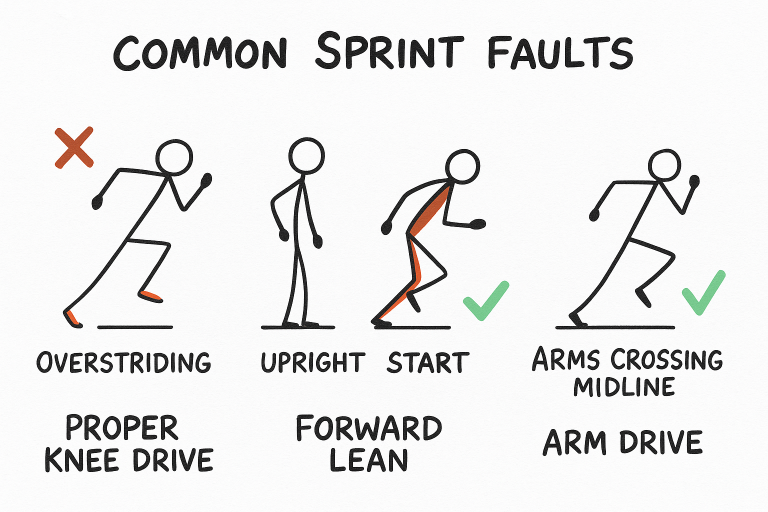
Diagram titled "Common Sprint Faults" showing four stick-figure panels: overstriding with red X, upright start, forward lean with proper knee drive (green check), and arms crossing midline corrected to arm drive (green check).

Common Pitfalls & Coaching Myths

  • Myth: Heavy sleds always help → Only useful if mechanics hold; else degrade form
  • Myth: More “max speed” work always benefits → If acceleration is poor, max speed becomes irrelevant
  • Pitfall: Not profiling early → Without diagnostic baseline, you guess poorly
  • Pitfall: Overtraining the neuromuscular system → Speed is neurological. Too much volume blunts adaptation
  • Pitfall: Switching drill programs every week → Consistency allows adaptation, but with micro-variation

40yd Dash Advisor (10yd, 20yd, sled)

Educational tool. Uses your split times and sled “velocity loss” to suggest emphasis (technique hygiene, resisted work, overspeed prep, etc.). Times can be hand-timed or electronic, just be consistent.

Unresisted splits
Resisted splits (sled)
Enter times, then click “Get Recommendations”.

Speed science that makes you faster.

Weekly sprint science, training insights, and speed culture. Free.
white thesprint.club sprinter tee tshirt

Related Posts

Two sprinters in motion with bold orange accents, surrounded by sprint club apparel (hoodie, tees, jacket) and slogan "Finish Strong."

The Rise of the Challenger: Coolest Sprinting Brands

This article breaks down why challenger sprinting brands are gaining traction, how culture and performance are converging, what the science actually says about apparel and performance, and what trends are shaping sprint gear from race-day kits to post-race identity wear.

Read More
the sprint club thesprint.club logo

theSprint.Club

Join theSprint.Club

The Science, Art, & Love of Speed in your inbox.
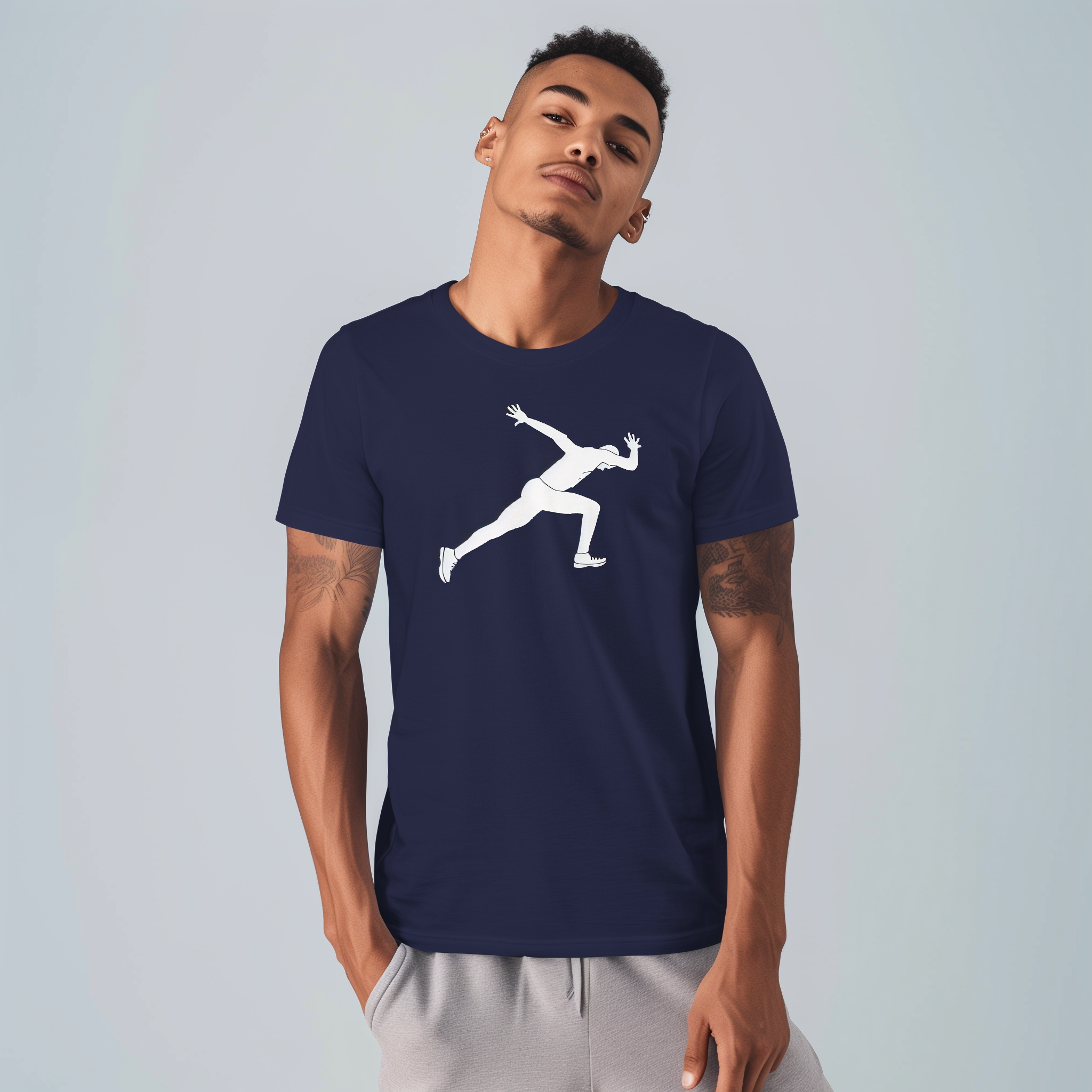
Man standing against a pale gray background wearing a navy T-shirt printed with a large white silhouette of a running figure, hands in his pockets, head tilted and forearm tattoos visible.

Systems + Programs = Measurable Results

Train with confidence. Know exactly what to work on and why it matters

Tools & Calculators

Stop Guessing. Start Measuring.

Access free tools & calculators built to help coaches and athletes train smarter.

thesprintclub logo

theSprint.Club

Join the squad.
Explore the gear.
Get faster.
white thesprint.club sprinter tee tshirt