loader image

Best Exercises for Sprint Strength

Bold headline reading "Best Exercises for Sprint Strength" with sketch of a sprinter pushing off and ascending red arrow.

1. Sled Sprints

Best for: acceleration strength, projection, horizontal force

Use sleds because they let athletes train sprint-specific force without turning the session into general lifting.

Goal Load Distance Reps
Power/speed light to moderate 10–30m 3–6
Acceleration strength moderate to heavy 10–20m 3–5
Technical projection light 10–20m 4–8

Coaching rule: The athlete should still look like they are sprinting. If they start grinding, reaching, folding, or losing rhythm, the load is too heavy.

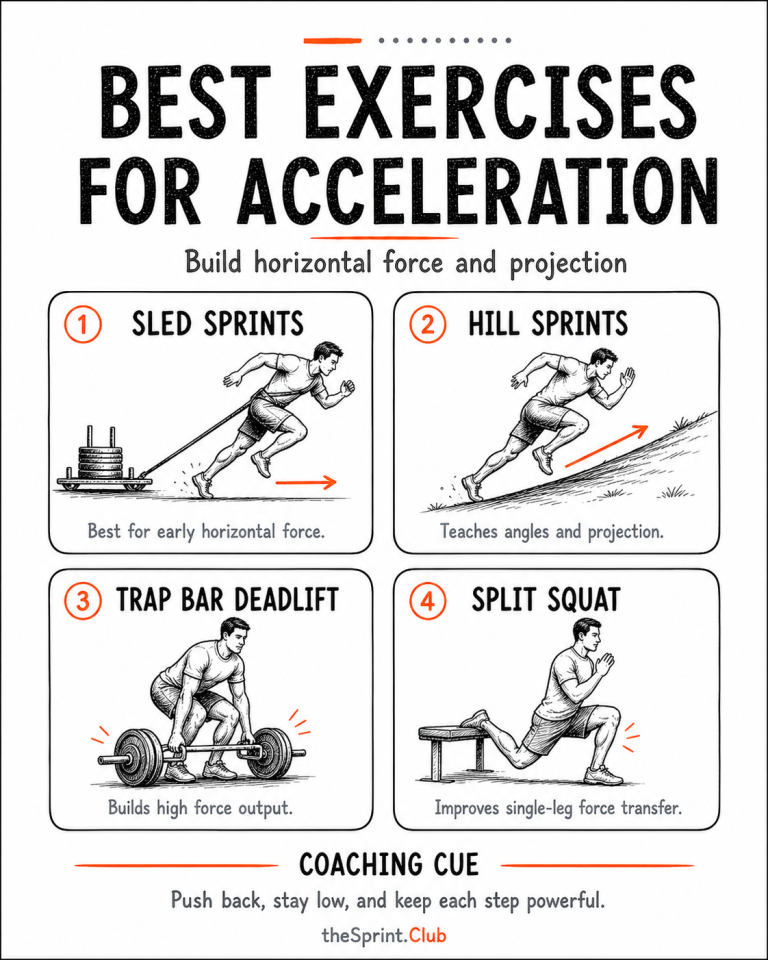
Poster titled "Best Exercises for Acceleration" showing four illustrated exercises: sled sprints, hill sprints, trap bar deadlift, and split squat, with brief benefits and a coaching cue.

2. Heavy Squat or Trap Bar Deadlift

Best for: general force production

These build the engine, especially for younger or weaker athletes. They are useful because acceleration requires large force into the ground.

Best options:

  • Trap bar deadlift
  • Front squat
  • Safety bar squat
  • Rear-foot-elevated split squat
  • Step-up

Simple prescription:

  • 3–5 sets
  • 2–5 reps
  • Heavy but fast intent
  • Full recovery
  • Stop before grinding

Important: Heavy lifting supports sprinting. It does not replace sprinting.

3. Romanian Deadlift

Best for: posterior chain strength, hamstrings, glutes, hip extension

The RDL builds strength through the hinge pattern, which matters for sprinting because the hamstrings and glutes help control and extend the hip.

Use:

  • 3–4 sets
  • 5–8 reps
  • Controlled eccentric
  • Strong hip position
  • No spinal rounding

Best variations:

  • Barbell RDL
  • Dumbbell RDL
  • Single-leg RDL
  • Kickstand RDL
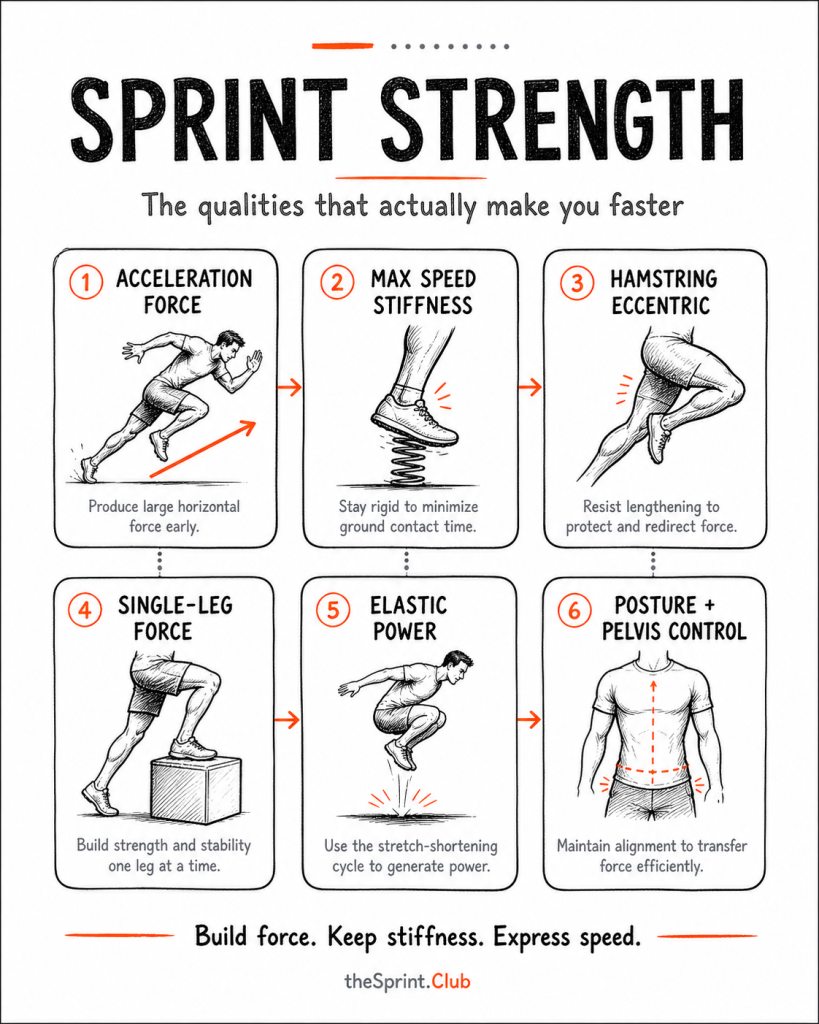
Title "Sprint Strength" poster showing six illustrated sprint qualities: acceleration, stiffness, hamstring eccentric, single-leg force, elastic power, and posture control.

4. Nordic Hamstring Curl

Best for: eccentric hamstring strength

Nordics are one of the best accessory exercises for sprint athletes because they target eccentric hamstring strength, which is important during high-speed running. Research supports positive effects on eccentric strength and some sprint outcomes.

Use carefully:

  • 1–3 sets
  • 2–6 reps
  • 1–2 times per week
  • Start low volume
  • Avoid placing hard Nordics right before max-speed sprinting

Better for sprinters: Treat Nordics like medicine. Effective dose, not maximum dose.

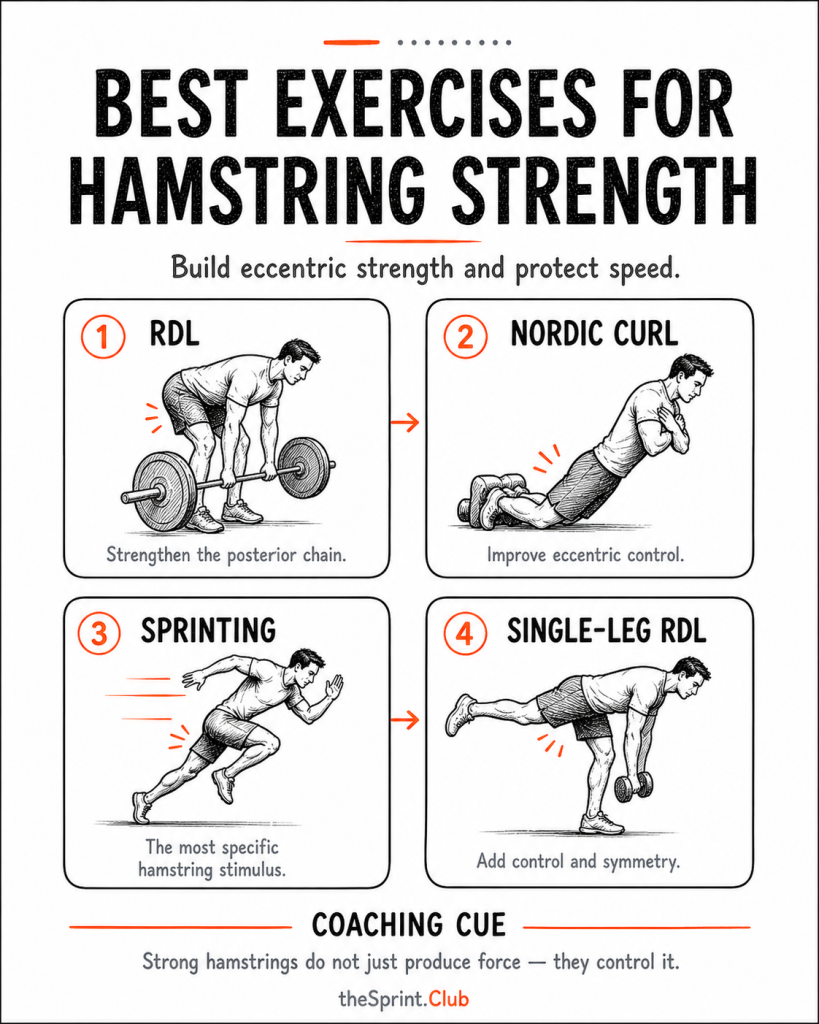
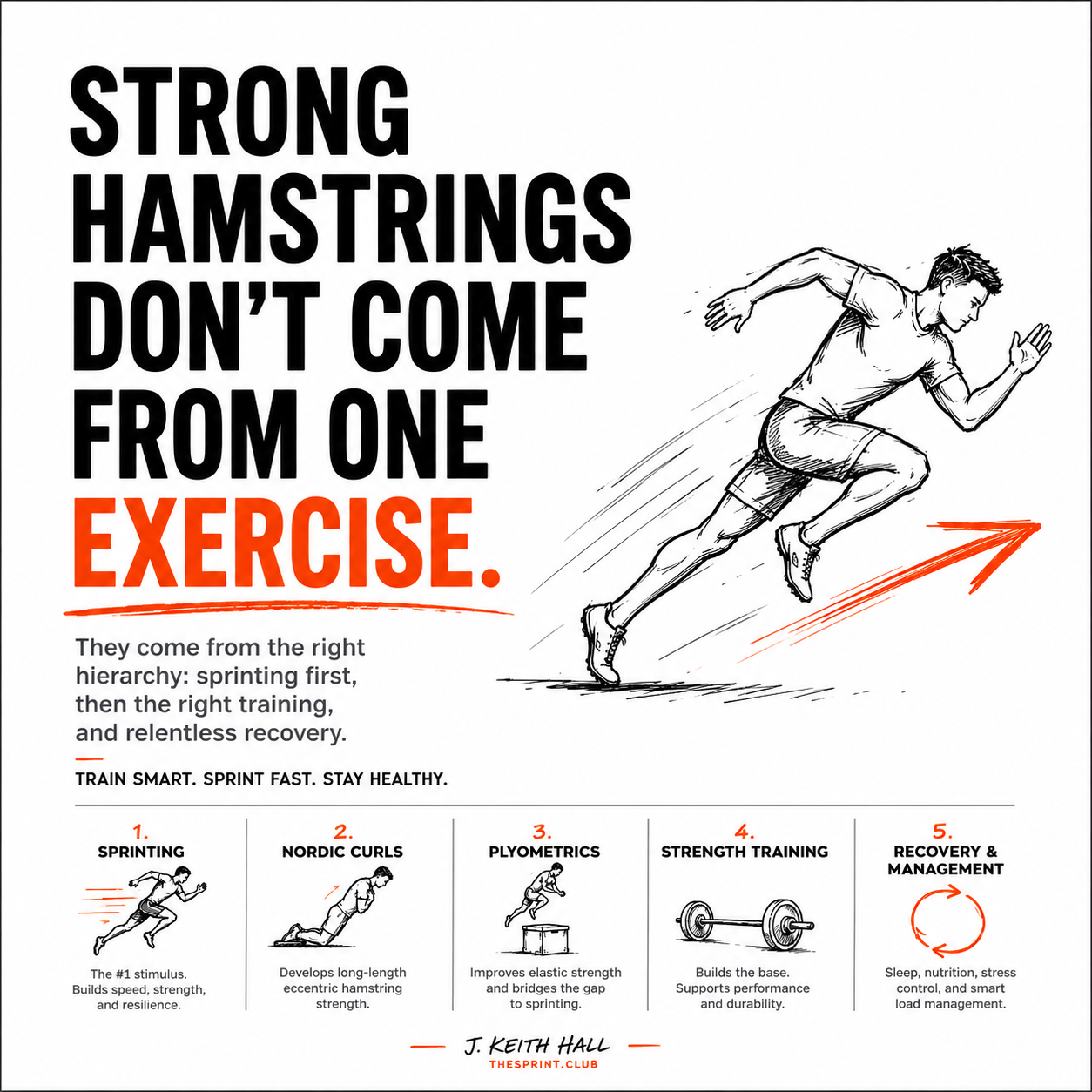
Poster showing four hamstring exercises: RDL with barbell, Nordic curl, sprinting pose, and single-leg RDL with dumbbell.

Speed science that makes you faster.

Weekly sprint science, training insights, and speed culture. Free.
white thesprint.club sprinter tee tshirt

5. Bounds

Best for: horizontal power, elastic stiffness, rhythm

Bounding bridges lifting and sprinting. It teaches athletes to project, strike, and rebound.

Best variations:

  • Alternate bounds
  • Straight-leg bounds
  • Speed bounds
  • Power bounds
  • 10-bound competition

Use:

  • 3–6 sets
  • 20–40m, or 5–10 contacts per leg
  • Full recovery
  • Stop when contacts get loud or slow

6. Drop Jumps

Best for: stiffness, reactive strength, ground contact quality

Drop jumps help train the foot-ankle complex and the ability to hit the ground and rebound quickly. This matters more for max velocity than heavy grinding strength.

Use:

  • 2–4 sets
  • 3–5 reps
  • Low to moderate box height
  • Focus on short contact and tall posture

Coaching cue: “Bounce off the ground, don’t collapse into it.”

7. Split Squat or Rear-Foot-Elevated Split Squat

Best for: single-leg force, hip stability, pelvis control

Sprinting is not bilateral. Single-leg strength work helps expose asymmetries and builds control through hip, knee, and ankle.

Use:

  • 3–4 sets
  • 4–8 reps per leg
  • Controlled down
  • Fast intent up
  • Keep pelvis level

Best options:

  • Rear-foot-elevated split squat
  • Front-foot-elevated split squat
  • Walking lunge
  • Step-up

8. Hip Thrust or Glute Bridge

Best for: hip extension strength

These can help athletes who lack glute strength or hip extension power, but they should not dominate the program.

Use:

  • 2–4 sets
  • 5–10 reps
  • Strong lockout
  • No lumbar overextension

Good accessory, not the centerpiece.

9. Medicine Ball Throws

Best for: explosive coordination and projection

Medicine ball work is underrated for acceleration because it lets athletes express force fast without the technical cost of heavy barbell work.

Best options:

  • Overhead backward throw
  • Scoop throw
  • Chest pass
  • Rotational throw
  • Falling start chest pass

Use:

  • 3–6 sets
  • 2–5 throws
  • Maximum intent
  • Full recovery

Unlock
Speed

Speed is is unlocked by building the right qualities in the right order.
theSprint.Club logo with handwritten BOOKS above a grid of four book covers titled Bounce, Programming, Wickets, and Hurdle Hops, each showing sprint-training illustrations

10. Sprinting Itself

Best for: actual sprint strength

The most specific sprint-strength exercise is sprinting.

Use:

  • 10–30m accelerations
  • Hill sprints
  • Flying 10s or flying 20s
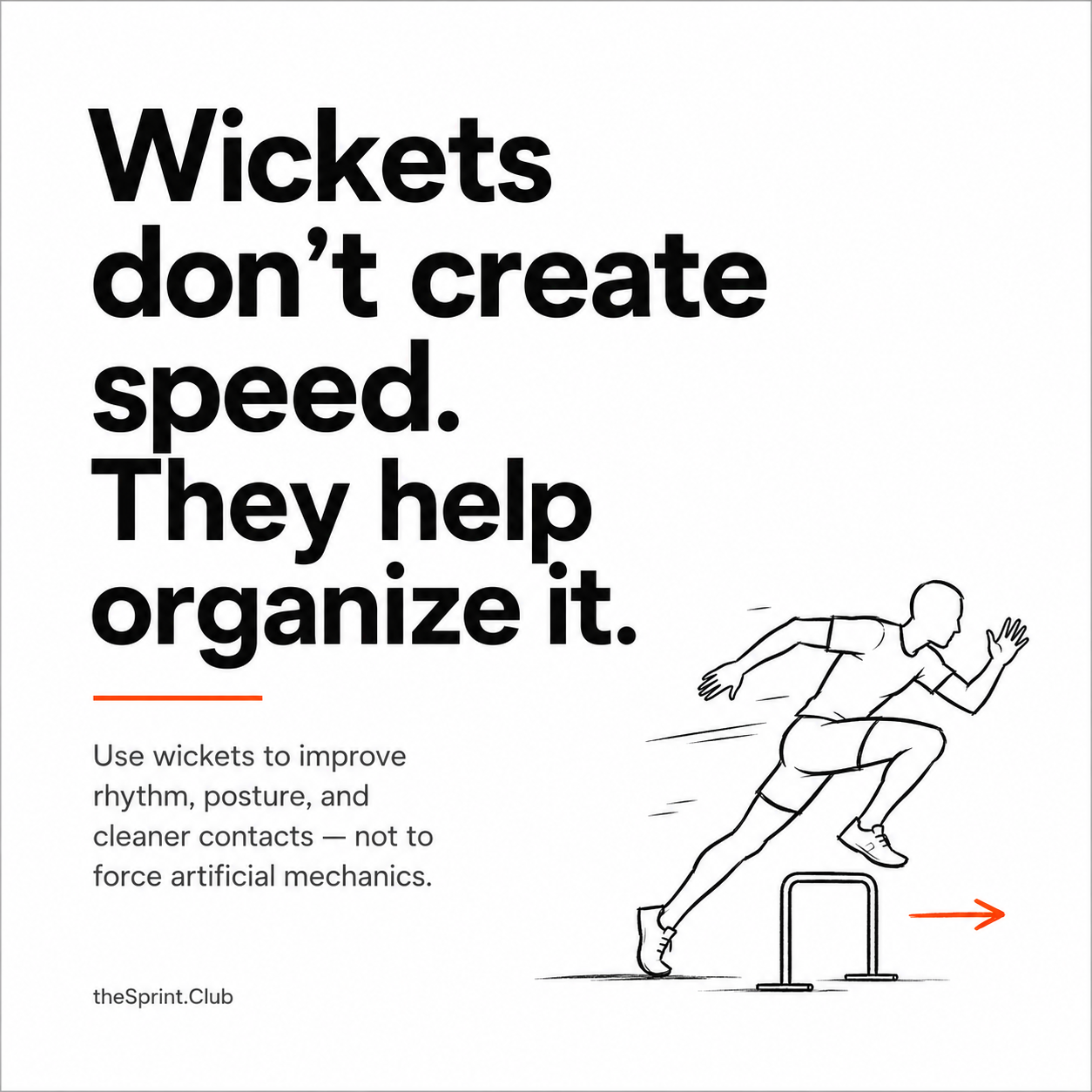
  • Wickets
  • Sled sprints
  • Assisted sprints, if advanced and carefully controlled

Research on sprint training and Nordic hamstring training found sprint training improved sprint performance and eccentric hamstring strength, which supports the idea that high-quality sprinting is not just skill work. It is strength work expressed at speed.

Best Sprint Strength Exercise Menu

Quality Best Exercises
Acceleration force Sled sprints, trap bar deadlift, front squat, hill sprints
Horizontal power Bounds, sled sprints, medicine ball throws
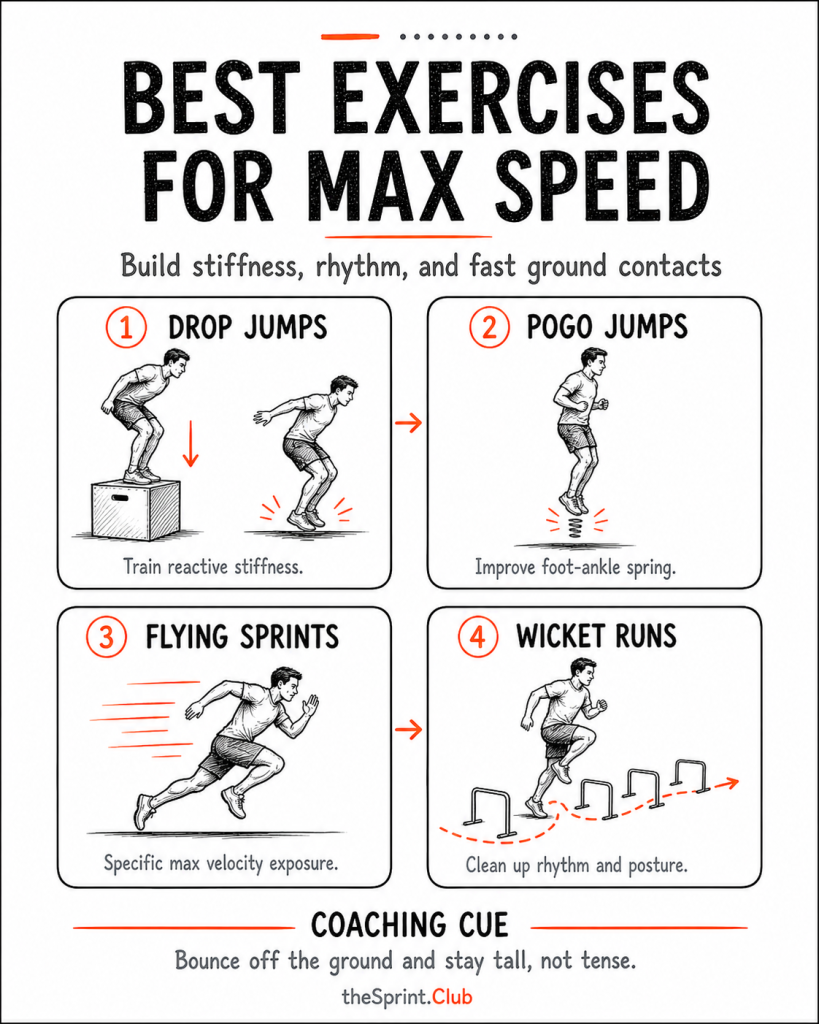
Max velocity stiffness Drop jumps, pogos, wickets, flying sprints
Hamstring resilience Nordics, RDLs, sprinting, hip-lock drills
Single-leg force Split squats, step-ups, single-leg RDLs
Elastic power Bounds, hurdle hops, drop jumps, pogo jumps
Postural strength Carries, marches, anti-rotation presses, med ball throws
Poster titled "Best Exercises for Max Speed" showing four illustrated exercises: drop jumps, pogo jumps, flying sprints, wicket runs with short cues.
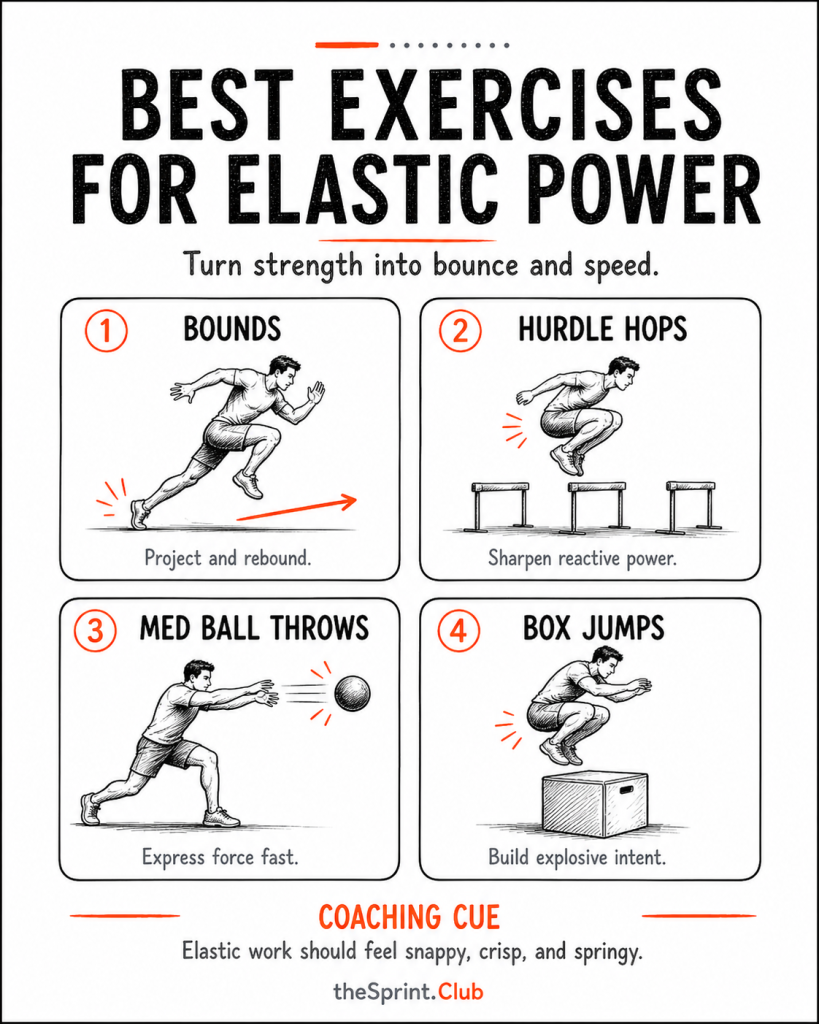
Poster titled "Best Exercises for Elastic Power" showing four illustrated exercises: bounds, hurdle hops, med ball throws, and box jumps with short captions.
Day Focus Example
Day 1 Acceleration strength Sled sprints + trap bar deadlift + split squat
Day 2 Recovery Mobility, tempo, easy movement, or rest
Day 3 Max velocity Flying sprints + drop jumps + RDL
Day 4 Recovery Rest or low-intensity work
Day 5 Elastic power Bounds + med ball throws + Nordics
Day 6 Recovery Rest
Day 7 Recovery Rest

Main Rule

Do not chase weight-room numbers at the expense of speed.

For sprinters, strength only matters if it transfers into faster, cleaner, more elastic sprinting. The goal is not to become the strongest athlete in the gym. The goal is to express force at the right angle, at the right time, with the least braking and the most bounce.

Sprint Strength Tool

Build Your Sprint Strength Plan

Choose your sprint goal, training level, schedule, equipment, and readiness. The tool gives you a practical session plan, weekly structure, and exercise menu for faster, cleaner sprinting.

1 Training Profile

High-quality sprint-strength work usually fits best on 2 to 4 focused days per week.

2 Readiness Check

7
Use your honest sense of energy, sleep, soreness, and motivation.
Session Readiness
78
Green: Sprint strength session

You are clear for a high-quality sprint-strength day. Keep volume controlled and stop when output or rhythm drops.

Your Session Prescription

Best Exercise Menu For Your Goal

Simple Weekly Structure

Main rule: sprint strength should support sprint quality. Do not turn every session into a fatigue contest.

How To Use This

Step 1 Pick one primary goal for the next 3 to 6 weeks. Acceleration, max speed, elastic power, or hamstring strength.
Step 2 Run the readiness check before each session. Green means train fast. Yellow means reduce volume. Red means shift to recovery or technical work.
Step 3 Track one output metric: 10 m time, flying 10 m time, jump height, RSI, bound distance, or bar speed.
Step 4 Stop the session when mechanics, rhythm, or output quality clearly drops. Sprint strength is about expression, not exhaustion.
This tool is educational and does not diagnose injury or replace medical care. Athletes with pain, recent injury, or neurological symptoms should work with a qualified clinician or coach.

Related Posts

Two sprinters in motion with bold orange accents, surrounded by sprint club apparel (hoodie, tees, jacket) and slogan "Finish Strong."

The Rise of the Challenger: Coolest Sprinting Brands

This article breaks down why challenger sprinting brands are gaining traction, how culture and performance are converging, what the science actually says about apparel and performance, and what trends are shaping sprint gear from race-day kits to post-race identity wear.

Read More
the sprint club thesprint.club logo

theSprint.Club

Join theSprint.Club

The Science, Art, & Love of Speed in your inbox.
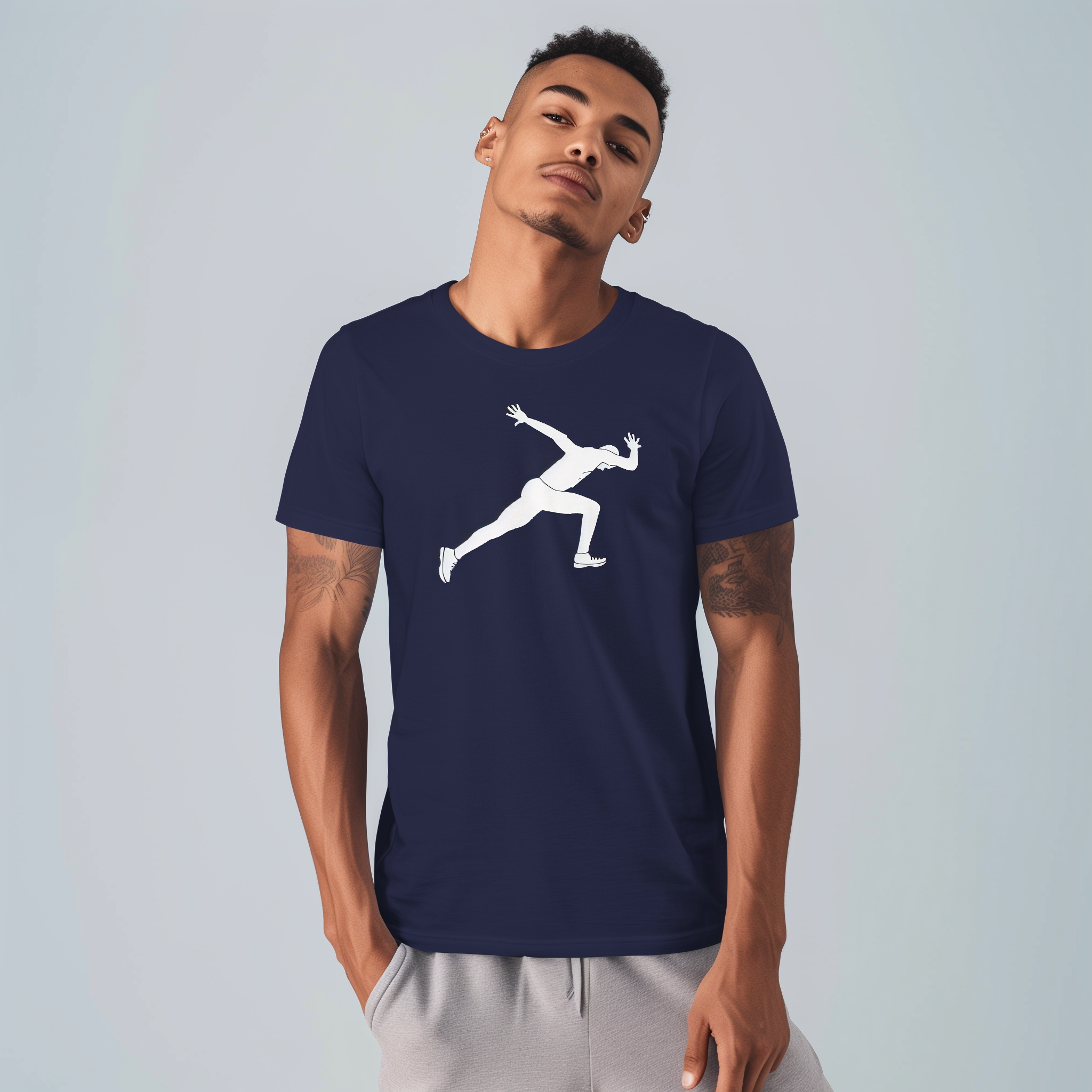
Man standing against a pale gray background wearing a navy T-shirt printed with a large white silhouette of a running figure, hands in his pockets, head tilted and forearm tattoos visible.

Systems + Programs = Measurable Results

Train with confidence. Know exactly what to work on and why it matters

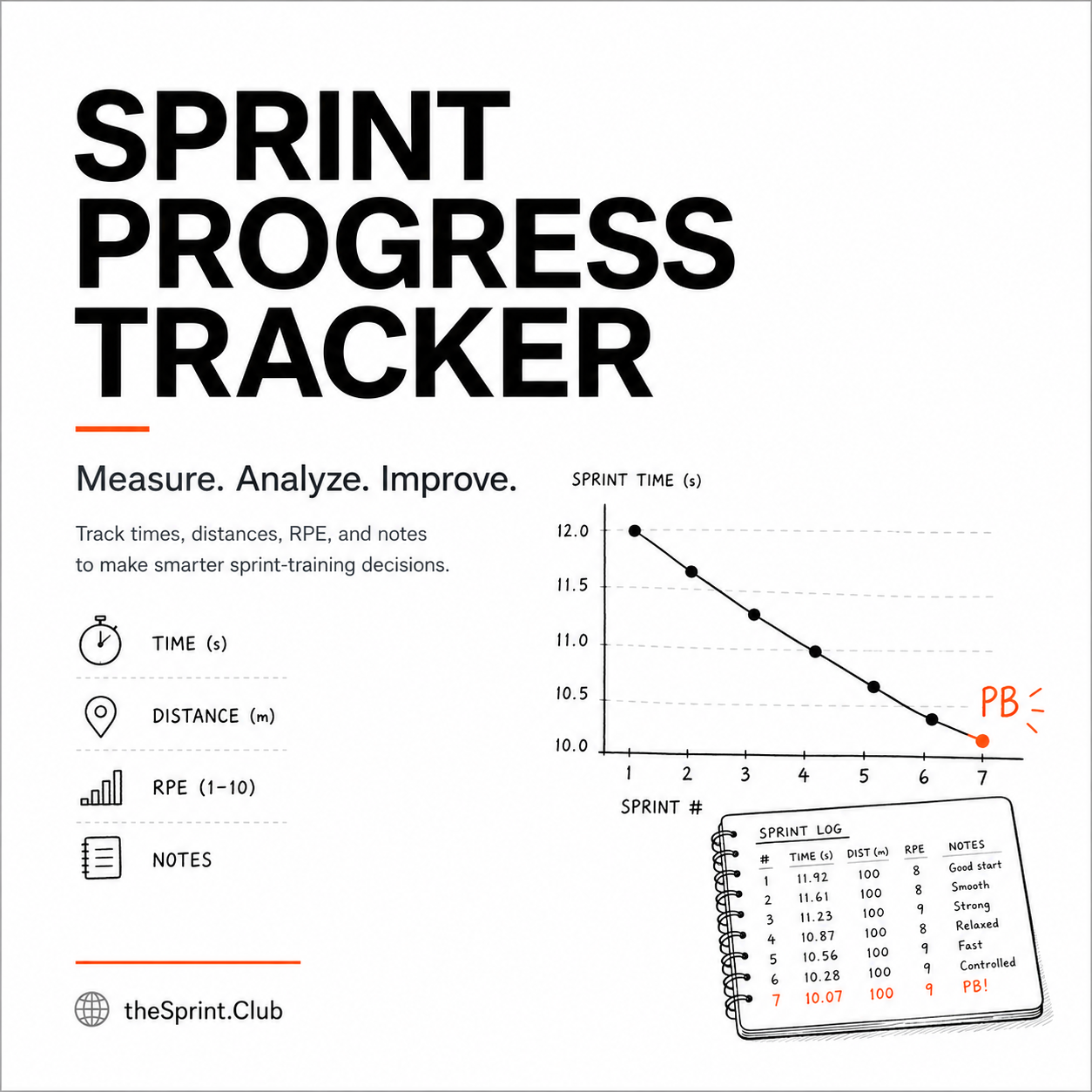
Tools & Calculators

Stop Guessing. Start Measuring.

Access free tools & calculators built to help coaches and athletes train smarter.

thesprintclub logo

theSprint.Club

Join the squad.
Explore the gear.
Get faster.
white thesprint.club sprinter tee tshirt