loader image

The Rise of the Challenger: Coolest Sprinting Brands

The Shift in Sprinting: From Mass Market to Precision Culture

Sprinting apparel is no longer just about fit and fabric. In 2026, it reflects a deeper shift toward performance specificity, identity, and cultural signaling.

Legacy brands still dominate global distribution, but smaller, athlete-focused companies are gaining influence where it matters most: elite training environments, subcultures, and digital communities.

Brands such as:

  • Bandit
  • Satisfy
  • Tracksmith
  • Heartbreak Run


have built traction not through scale, but through precision alignment with athlete needs and identity.

Why Challenger Brands Are Eating Market Share

1. They Design for Constraints, Not Consumers

Traditional sportswear is designed for versatility. Challenger brands design for specific mechanical demands.

For sprinters, that includes:

  • Hip flexion range during maximal velocity
  • Ground contact timing (often <0.1 seconds at elite speed)
  • Fabric tension across key movement chains

Research supports the importance of minimizing restriction. A study in Sports Engineering (2019) found that garment compression and seam placement can influence stride mechanics and perceived comfort, which may indirectly affect performance outcomes (Brownlie et al., 2019).

2. Authenticity Beats Scale

According to McKinsey’s State of Fashion 2024 report, consumers are increasingly drawn to brands with clear identity and community alignment, particularly in performance niches.

  • 71% of Gen Z consumers prefer brands that “reflect their personal identity”
  • Niche performance brands are among the fastest-growing segments in sportswear

Source: McKinsey & Company (2024)

Identity Over Optimization: The Real Performance Lever

The conversation around sprint apparel often centers on marginal gains, such as reduced drag or improved thermoregulation. Those factors exist, but they are not what is driving the current shift.

The more powerful force is psychological.

Research in sports psychology consistently shows that identity and perceived belonging influence performance behaviors, confidence, and risk tolerance. A review in International Review of Sport and Exercise Psychology (2017) highlights that athletes who strongly identify with their role and group demonstrate:

  • Higher intrinsic motivation
  • Greater persistence under stress
  • Improved consistency in performance environments

Source: Rees et al., 2017

The Mechanism: Belonging Changes Output

When an athlete feels aligned with a group or identity, several things change:

  • Movement becomes less inhibited
  • Decision-making becomes faster and less cautious
  • Effort expression increases without conscious forcing

This aligns with broader findings in psychology. Research published in Psychological Science (Walton & Cohen, 2011) shows that a sense of belonging directly affects performance outcomes, particularly in high-pressure environments.


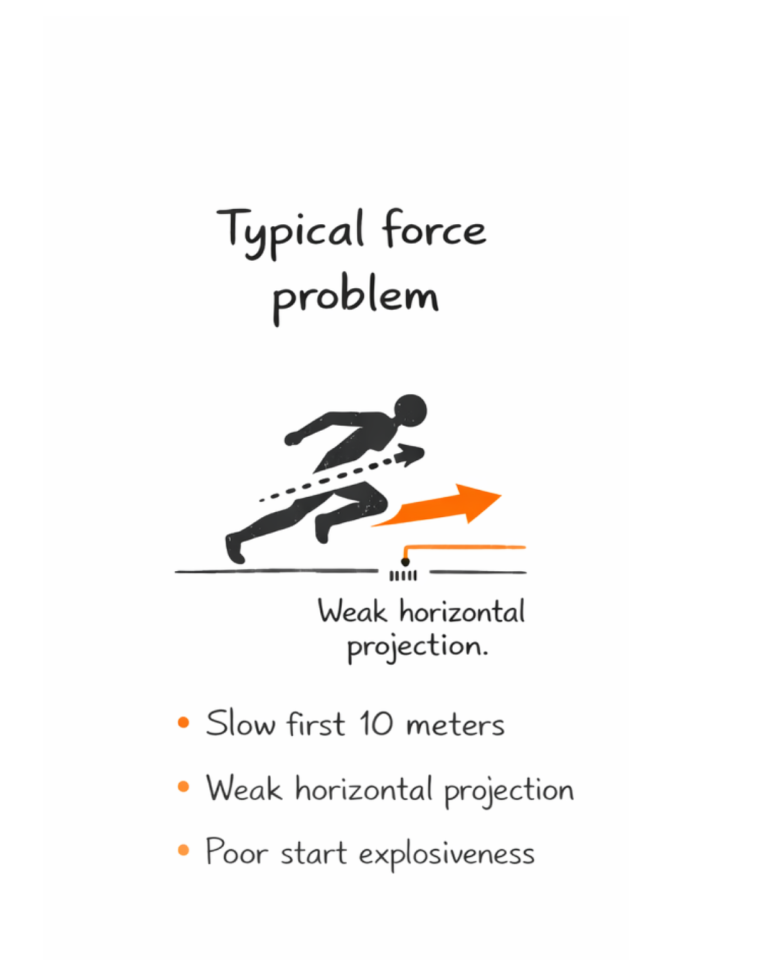
Stylized sprinter with small orange arrow showing weak horizontal projection; captions: slow first 10m, poor explosive start.

Why Eccentric Strength Matters for Max Velocity

If you only look at sprinting as a pushing problem, you miss half of it.

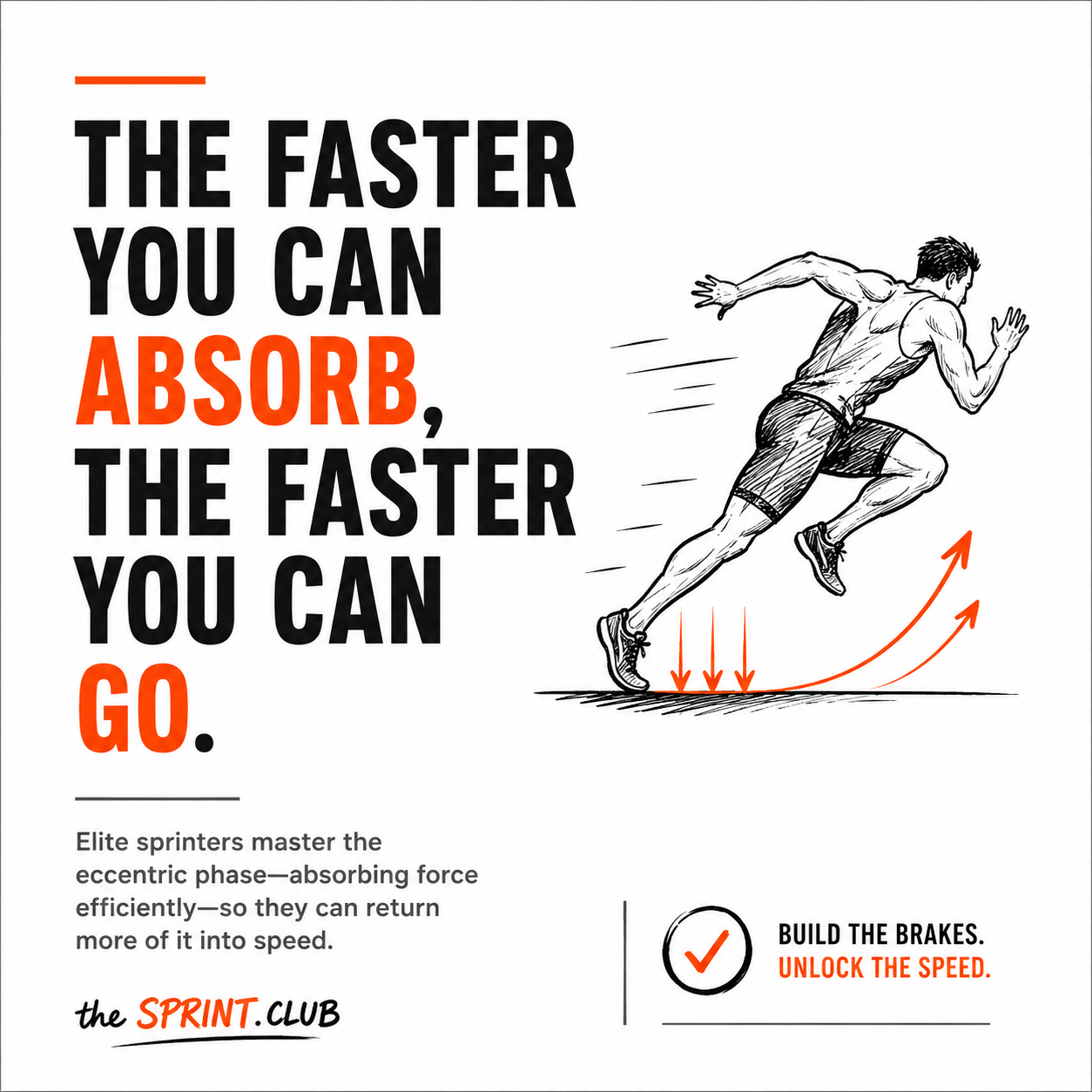
At high speeds, ground contact is brief. The athlete has very little time to accept force, stabilize, and redirect it. That makes eccentric strength and stiffness highly relevant to sprinting performance.

What eccentric overload means

Eccentric action happens when a muscle is producing force while lengthening. In sprinting, that matters during the braking and loading side of ground contact. Training that develops this quality may help athletes better tolerate and redirect force at speed.

Why traditional lifting can miss part of the demand

Traditional lifting still has value. Squats, hinges, split squats, and Olympic lift variations can all support sprint performance.

That does not make barbells ineffective. It means they may need to be supplemented with methods that challenge deceleration, braking, and rapid force absorption more directly.

Where flywheel training may fit

Flywheel training is one option because it can increase eccentric demand during the return phase of a repetition. In practice, that may make it useful for athletes trying to connect gym work more closely to the absorb-and-reapply demands of sprinting.

That said, flywheels are not magic. They are a tool. They work best when used inside a complete sprint program that still includes actual sprinting, plyometrics, and recovery.

Apparel as Identity Signaling

Clothing functions as a signal, not just a tool.

In sprinting, wearing specific brands or styles communicates:

  • “I am part of this group”
  • “I train at this level”
  • “I understand this culture”

This is consistent with identity signaling theory in consumer psychology, where products act as extensions of self-concept (Belk, Journal of Consumer Research, 1988).

Why Challenger Brands Win Here

Challenger brands are not outperforming legacy brands because of fabric innovation alone.

They are winning because they:

  • Create clear identity signals
  • Build tight communities around shared values
  • Reinforce a sense of insider belonging

The result is not just better branding. It is a different psychological environment for the athlete.

Key Insight

Performance apparel does not just change how you move.
It can change how much of your ability you allow yourself to access.

The Cult Factor: Why These Brands Feel Bigger Than They Are

Performance alone does not explain the rise of these brands.

They are building identity ecosystems, not just products.

  • Tracksmith → nostalgia, Ivy League distance culture
  • Satisfy → art-meets-performance aesthetic
  • Bandit → community-first storytelling

This aligns with broader trends in sport:

  • Athletes increasingly value belonging over brand recognition
  • Apparel functions as a signal of philosophy and tribe

A 2023 Nielsen Sports report found that fan and athlete engagement increases when brands align with identity and storytelling, not just performance claims.

Sprinting apparel now exists in two domains:

  1. Performance (on track)
  2. Expression (off track)

This has led to a new category:
“Track Swag”, where athletes wear gear:

  • During warm-ups
  • Between heats
  • Post-race
  • In everyday life

This mirrors trends seen in basketball and soccer, where tunnel fits and lifestyle gear became extensions of performance identity.

Speed science that makes you faster.

Weekly sprint science, training insights, and speed culture. Free.
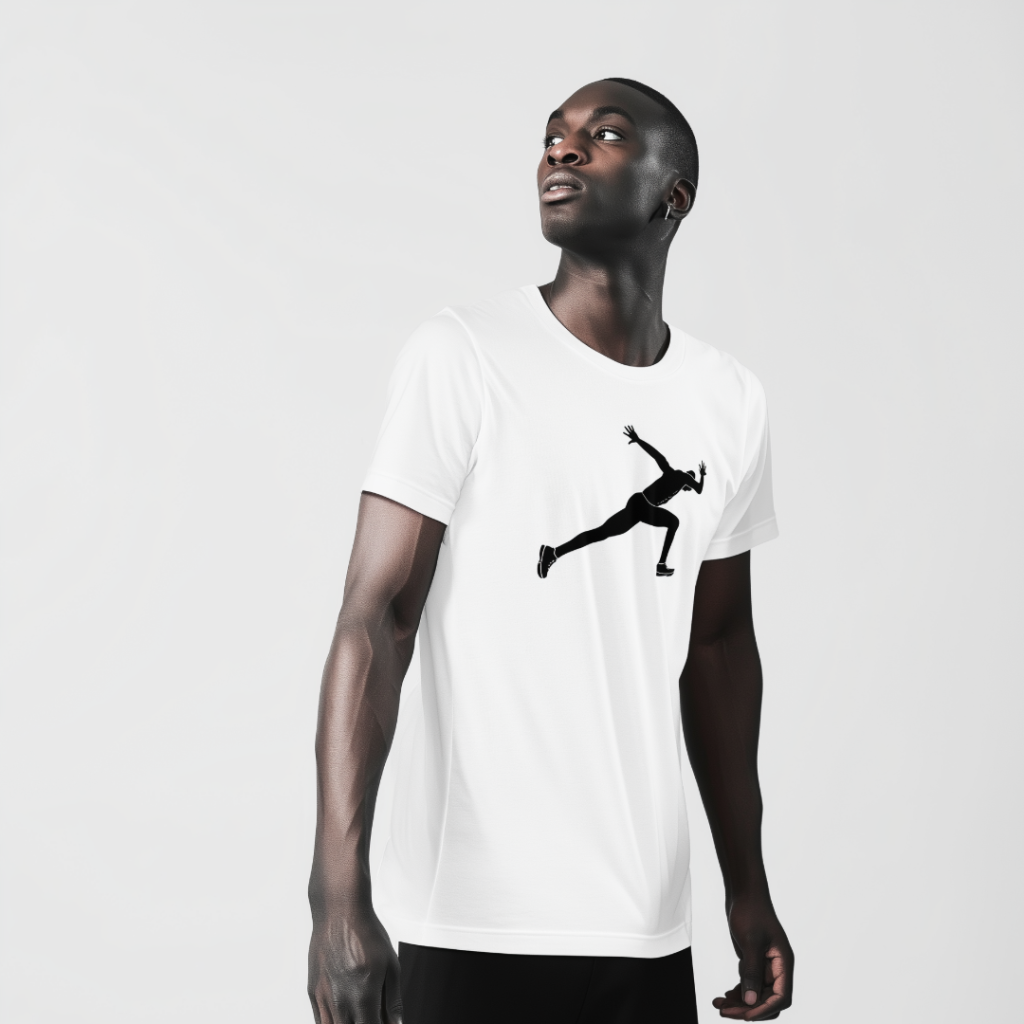
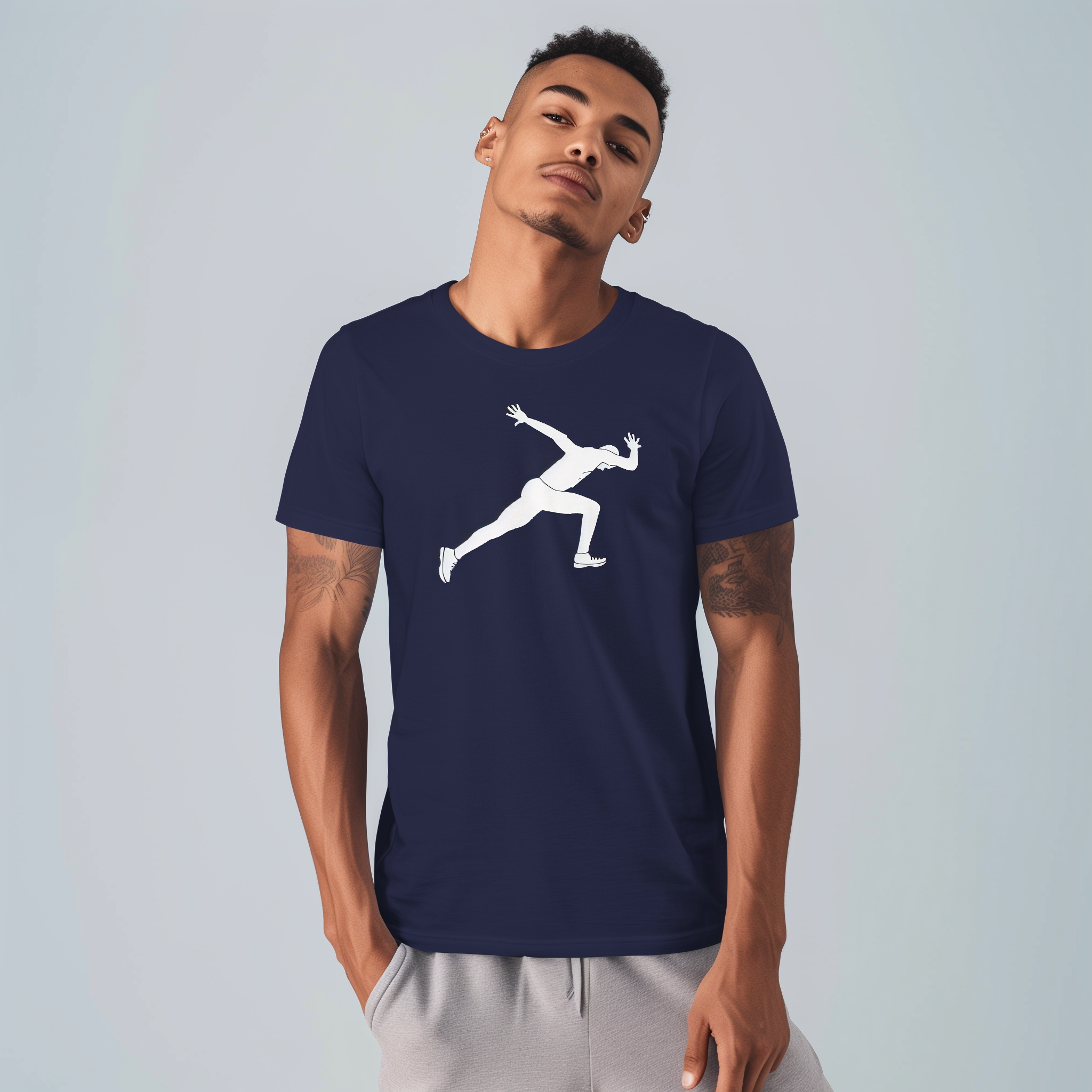
white thesprint.club sprinter tee tshirt
Sprint Gear Checklist

What Actually Makes Sprint Apparel Performance-Ready

Feature Why It Matters
Seam placement Prevents restriction during hip flexion
Fabric elasticity Supports full stride mechanics
Breathability Regulates temperature under high output
Compression zones May improve proprioception
Weight Reduces drag and energy cost

TL;DR

  • Sprint apparel in 2026 is shifting from mass-market to performance-specific and identity-driven
  • Challenger brands succeed by focusing on biomechanics, culture, and community
  • Scientific evidence supports apparel’s role in temperature regulation, aerodynamics, and comfort, not direct speed gains
  • Warm-up gear is one of the few apparel categories with clear performance relevance
  • “Track swag” is turning sprint gear into lifestyle and status signaling


External Sources

  • McKinsey & Company. State of Fashion 2024
  • Brownlie et al. (2019). Sports Engineering
  • Ward-Smith (2007). Journal of Biomechanics
  • Born et al. (2013). Sports Medicine
  • Journal of Strength and Conditioning Research (2013, 2015)
  • Statista (2024) Activewear Market Data
  • Business of Fashion (2024) Trend Report
  • Nielsen Sports (2023) Brand Engagement Study


Summary

The sprinting apparel landscape is undergoing a structural shift. The brands gaining traction are not the ones with the largest budgets, but the ones closest to the constraints of the sport and the identity of the athlete. Performance matters, but culture, belonging, and signaling now sit alongside it. The result is a new category of sprinting gear that functions both as equipment and expression.

Related Posts

the sprint club thesprint.club logo

theSprint.Club

Join theSprint.Club

The Science, Art, & Love of Speed in your inbox.
Man standing against a pale gray background wearing a navy T-shirt printed with a large white silhouette of a running figure, hands in his pockets, head tilted and forearm tattoos visible.

Systems + Programs = Measurable Results

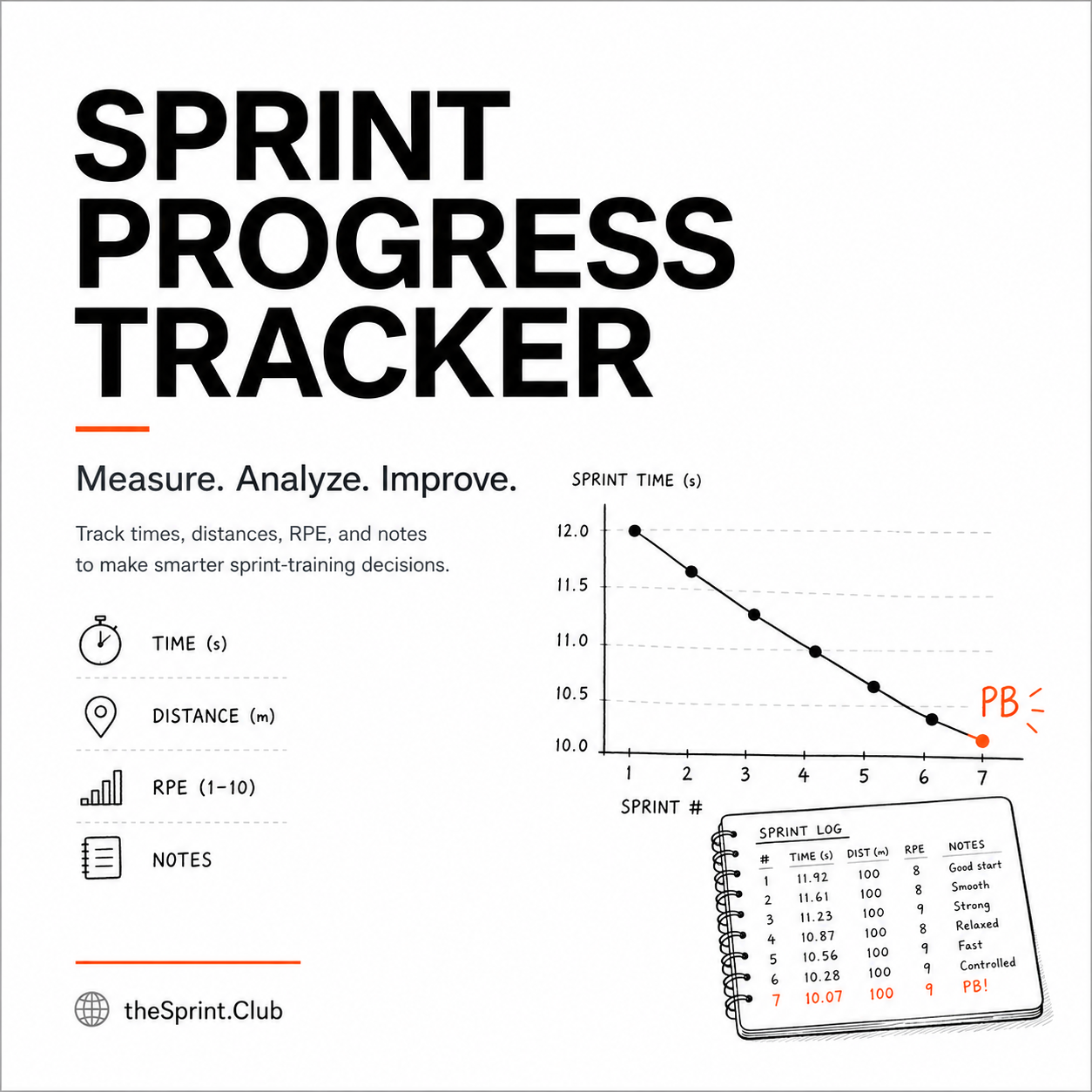
Train with confidence. Know exactly what to work on and why it matters

Tools & Calculators

Stop Guessing. Start Measuring.

Access free tools & calculators built to help coaches and athletes train smarter.

thesprintclub logo

theSprint.Club

Join the squad.
Explore the gear.
Get faster.
white thesprint.club sprinter tee tshirt