loader image

How to Sprint Faster, The Science of Max Velocity and Acceleration

Most athletes who want to sprint faster make the same mistake. They do more work, add more intervals, and assume effort alone will move the stopwatch. Usually, it does not.

The problem usually isn’t motivation. Most often, it is a misunderstanding of what sprint speed really is.

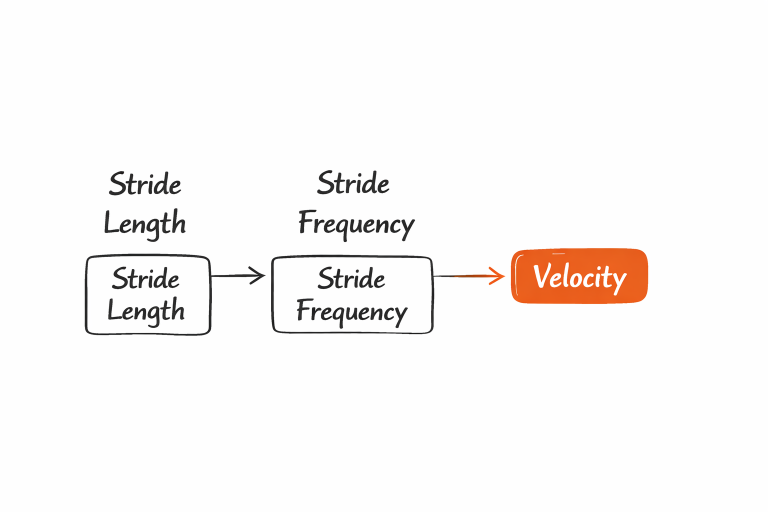
At a basic level, velocity comes from two things, stride length and stride frequency. But elite sprinting is not simply about reaching farther or cycling the legs faster. It is about producing force in the right direction, at the right time, in very little time.

If you want to improve top speed, you need to understand acceleration, force application, stiffness, and the eccentric demands of sprinting. That is where real progress starts.

Three-box flow diagram: "Stride Length" arrow to "Stride Frequency" arrow to orange rounded box labeled "Velocity".

Why Most Athletes Stop Getting Faster

A lot of athletes chase visible speed without building the qualities underneath it.

They try to move their legs faster. They add more sprint reps. They turn speed sessions into conditioning. The result is usually the same, fatigue goes up, but true sprint quality does not.

Sprinting speed is not just fast movement. It is rapid force production. Athletes who apply force well into the ground and organize their body position effectively tend to create better outcomes than athletes who simply try harder.

That matters because speed is constrained by mechanics and timing, not just intent.

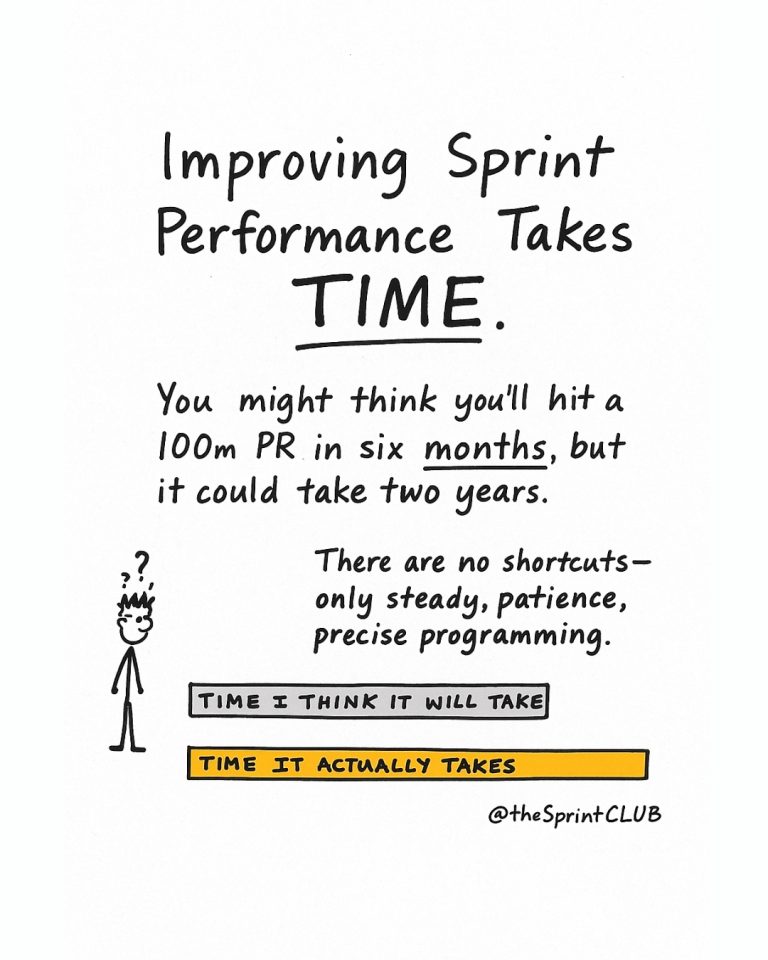
Hand-drawn poster reading "Improving Sprint Performance Takes TIME," noting patience and showing short "time I think" bar vs longer "time it actually takes" bar

What Actually Drives Sprint Speed

Top-end speed is often described as stride length multiplied by stride frequency. That is useful, but incomplete.

What sits underneath both is force application.

Every step depends on how much force you can put into the ground, how quickly you can do it, and how well your body can handle and redirect that force. This is where ground reaction force becomes practical, not just theoretical. The ground pushes back against the athlete, and better sprinters tend to use that interaction more effectively than slower ones. 

This is also why sprinting improvements do not always come from adding more volume. If the quality of force application is poor, more reps simply rehearse the same limitation.


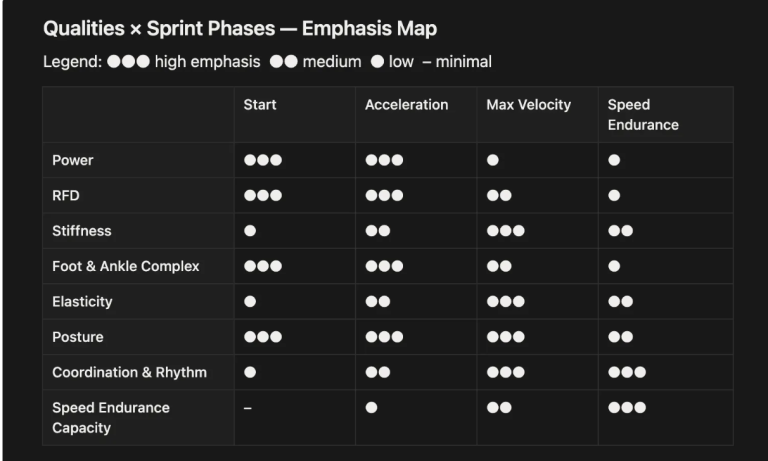
Table titled “Qualities × Sprint Phases — Emphasis Map” showing emphasis (three dots = high, two = medium, one = low) for physical qualities across sprint phases: Start, Acceleration, Max Velocity, and Speed Endurance; rows list Power, RFD, Stiffness, Foot & Ankle Complex, Elasticity, Posture, Coordination & Rhythm, and Speed Endurance Capacity, with Power and RFD strongly emphasized in Start and Acceleration, Foot & Ankle Complex emphasized in Start and Acceleration, Stiffness and Elasticity emphasized in Max Velocity, Posture emphasized across phases, and Speed Endurance Capacity emphasized mainly in Max Velocity and Speed Endurance.

The First 10 Meters, Where Acceleration Is Won

Maximum velocity gets most of the attention, but many races and game actions are shaped much earlier.

The opening steps matter because they determine how well an athlete projects forward and builds momentum. 

Horizontal force in the early steps

During acceleration, the athlete needs to push force backward into the ground so the body moves forward. This is why the earliest steps look different from upright sprinting. The body and shin angles are more inclined, the projection angle is lower, and the goal is not vertical bounce yet. It is forward displacement.

Shin angles, posture, and projection

When athletes stand up too early or strike in positions that send force upward, they leak force that should have helped them move forward.

Good acceleration is not just aggressive effort. It is organized effort.

The hidden eccentric demand in acceleration

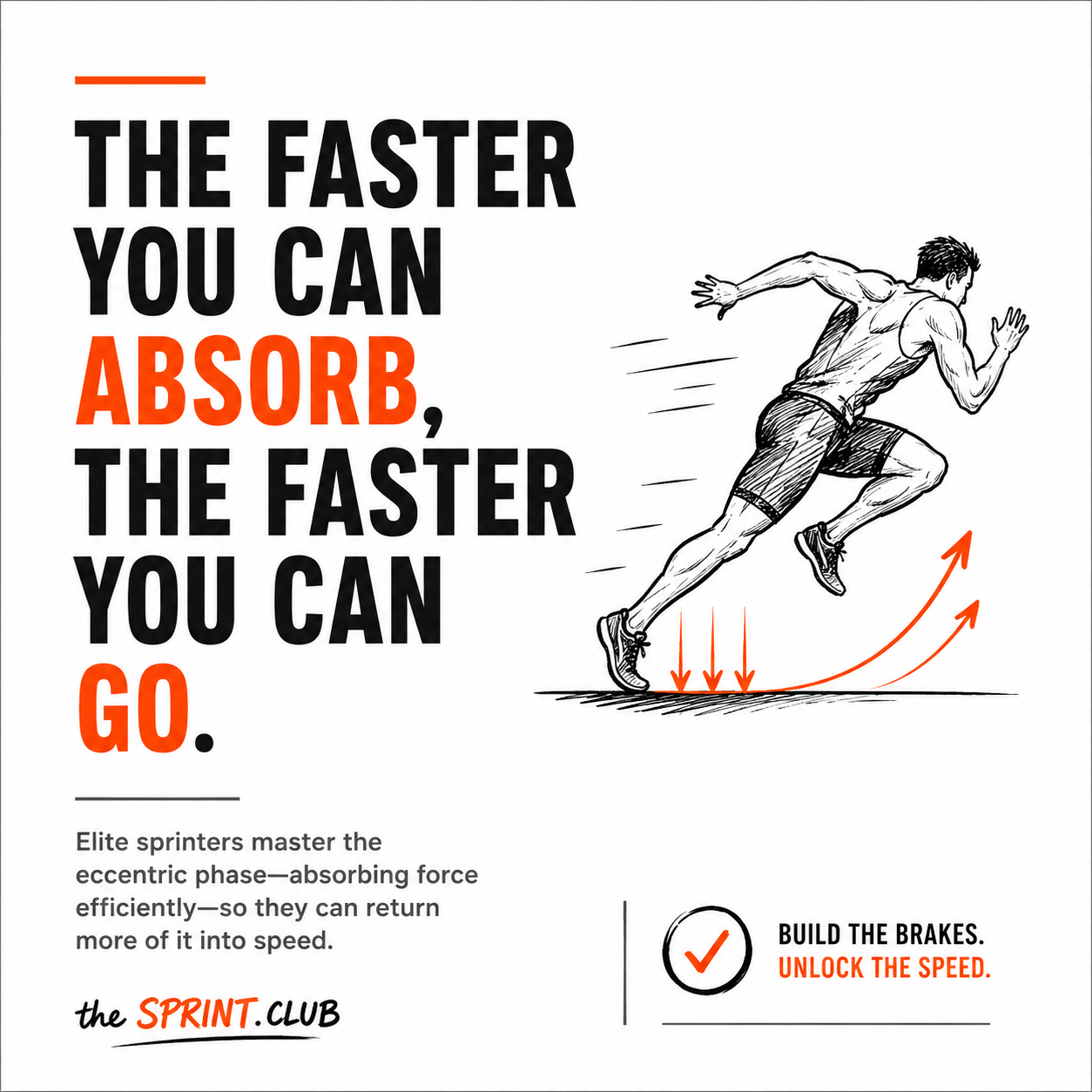
Many athletes think acceleration is only about concentric pushing. But every step also includes braking and stabilization. The body has to accept force before it can redirect force.

That means acceleration is not purely about producing power. It also depends on the ability to absorb and organize impact quickly enough to keep the next step effective.

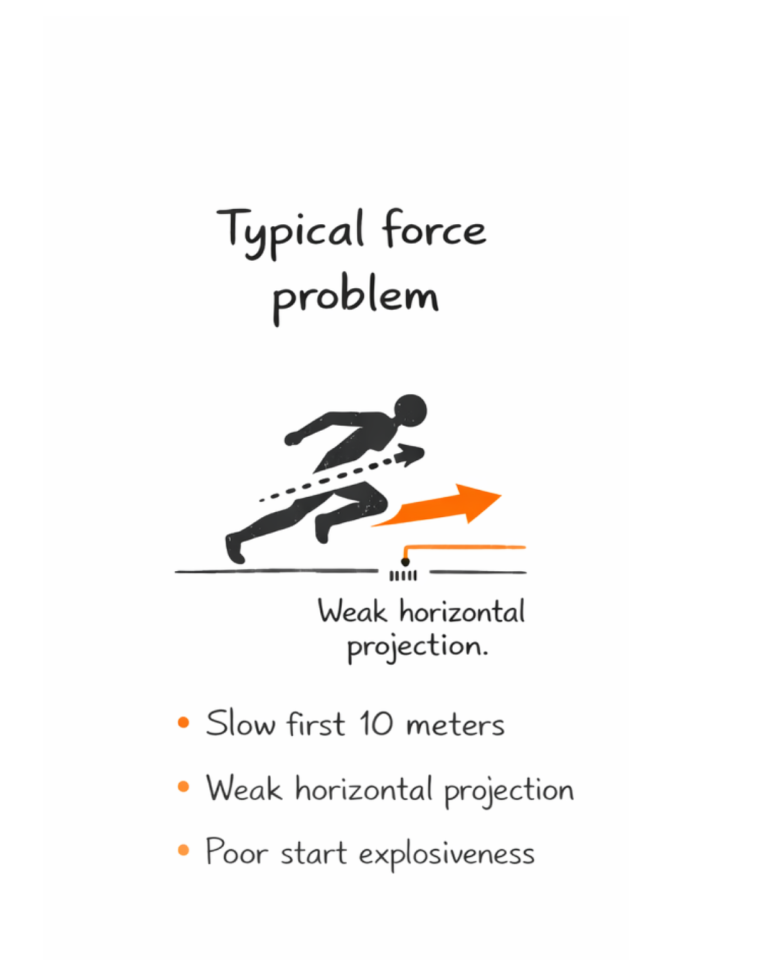
Stylized sprinter with small orange arrow showing weak horizontal projection; captions: slow first 10m, poor explosive start.

Why Eccentric Strength Matters for Max Velocity

If you only look at sprinting as a pushing problem, you miss half of it.

At high speeds, ground contact is brief. The athlete has very little time to accept force, stabilize, and redirect it. That makes eccentric strength and stiffness highly relevant to sprinting performance.

What eccentric overload means

Eccentric action happens when a muscle is producing force while lengthening. In sprinting, that matters during the braking and loading side of ground contact. Training that develops this quality may help athletes better tolerate and redirect force at speed.

Why traditional lifting can miss part of the demand

Traditional lifting still has value. Squats, hinges, split squats, and Olympic lift variations can all support sprint performance.

That does not make barbells ineffective. It means they may need to be supplemented with methods that challenge deceleration, braking, and rapid force absorption more directly.

Where flywheel training may fit

Flywheel training is one option because it can increase eccentric demand during the return phase of a repetition. In practice, that may make it useful for athletes trying to connect gym work more closely to the absorb-and-reapply demands of sprinting.

That said, flywheels are not magic. They are a tool. They work best when used inside a complete sprint program that still includes actual sprinting, plyometrics, and recovery.

5 Exercises That Support Faster Sprinting

If the goal is to sprint faster, exercise selection should reflect the demands of sprinting itself. That means force production, unilateral control, stiffness, and rapid transition qualities all matter.

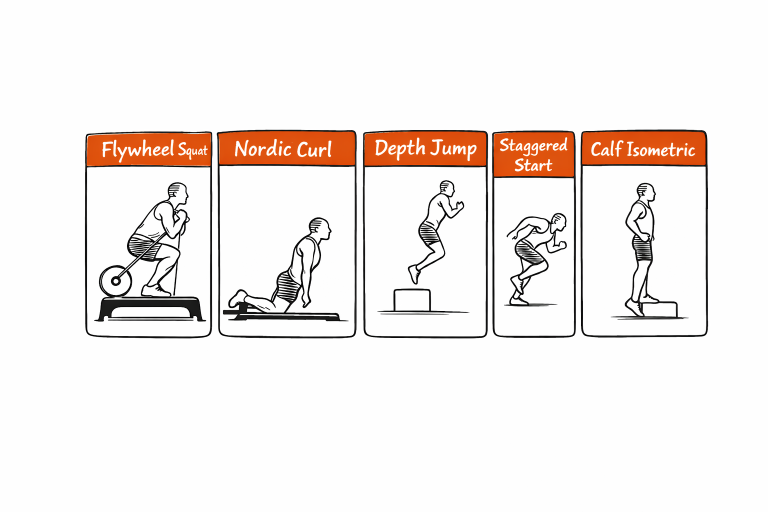
1. Flywheel squats and split-stance lunges

These can be useful for building lower-body force and exposing the athlete to greater eccentric demand than they may get from standard machine work. Split-stance versions are especially relevant because sprinting is a single-leg activity in motion.

2. Nordic curls or flywheel hamstring curls

Hamstrings matter in both late swing and ground contact. Eccentric hamstring work may help athletes improve force tolerance and may support injury reduction strategies when paired with good programming. Your draft also highlights hamstring function as central to sustaining top speed.

3. Depth jumps

Depth jumps train the transition from landing to takeoff. They can help athletes develop better reactive qualities and improve how quickly they move from absorption to propulsion. These should stay low in volume and high in quality.

4. Staggered-stance starts

This is a useful bridge between weight room concepts and sprint mechanics. It teaches the athlete to project force from an asymmetrical position that better resembles acceleration.

5. Foot and calf isometrics

At top speed, the foot and ankle need to be stable and responsive. Isometrics can support tendon stiffness, positional control, and force transfer through the lower leg.

Five labeled exercise panels showing stick-figure demonstrations: Flywheel squat, Nordic curl, depth jump, staggered start, calf isometric.
A good sprint training program should balance high-quality speed work with eccentric strength acceleration practice, and recovery. This 7-day sprint training schedule shows one practical way to organize max velocity sessions, plyometrics, and recovery days so athletes can improve sprint speed without turning every session into fatigue work.

7-Day Sprint Training Program for Speed Development

This weekly sprint training plan organizes acceleration, max velocity, plyometrics, and recovery across a simple 7-day structure. Use it as a practical example of how to improve sprint speed while keeping quality high and fatigue under control.

Weekly sprint training schedule for acceleration, max velocity, plyometrics, and recovery
Day Focus Example Work
Day 1 Acceleration Sleds 15 m x 3 (heavy), 30 m x 3 (medium), full recovery, high quality
Day 2 Recovery Yoga or full rest
Day 3 Max velocity Wickets or flying sprints x 60 to 80 m, alternatively assisted speed
Day 4 Recovery Yoga or full rest
Day 5 Plyometrics 10 bounds competition x 10 reps or power/speed bounds x 90 m x 5 reps
Day 6 Recovery Full rest
Day 7 Recovery Full rest

Sprint session rules

  • Keep sprint volume low enough that quality stays high.
  • Rest long enough to avoid turning speed work into conditioning.
  • End the session when mechanics clearly fall off.
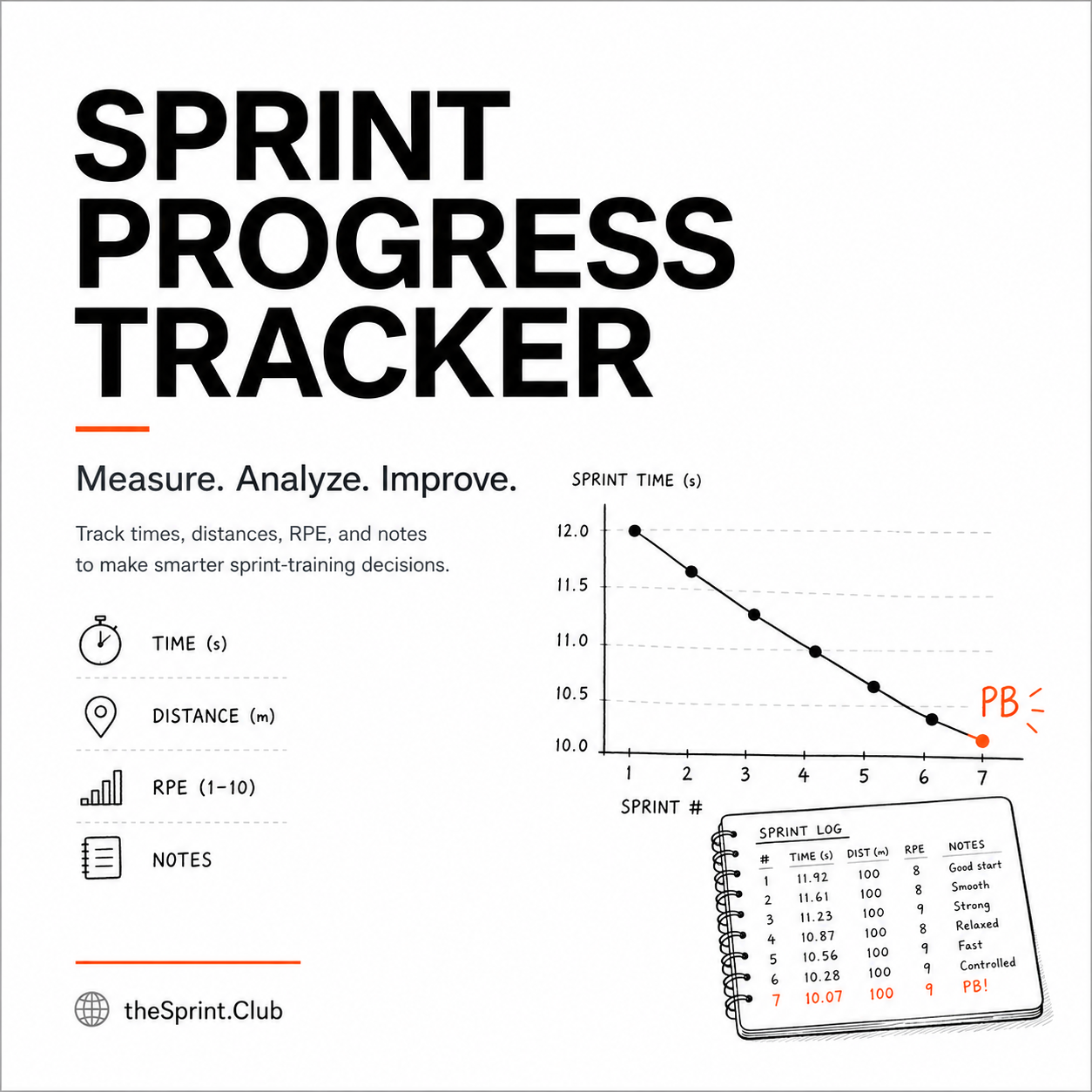
  • Track times when possible so the session stays honest.


Recovery that protects quality

Recovery should not be treated as extra. It is part of the speed plan. If sleep, tissue tolerance, and nervous system freshness are poor, high-speed output usually drops with them.


Common Mistakes That Keep Athletes Slow

Turning speed work into fatigue work

If rest periods are too short, the session stops being about speed.

Standing up too early in acceleration

This changes force direction and makes the first steps less effective.

Chasing leg turnover without improving force application

Fast limbs do not matter much if force timing and projection are poor.

Ignoring eccentric capacity

Athletes who cannot absorb force well often struggle to express it cleanly.

Using too much volume in reactive work

Depth jumps, max velocity sprints, and similar drills work best when the quality stays high.

Speed science that makes you faster.

Weekly sprint science, training insights, and speed culture. Free.
white thesprint.club sprinter tee tshirt

Related Posts

the sprint club thesprint.club logo

theSprint.Club

Join theSprint.Club

The Science, Art, & Love of Speed in your inbox.
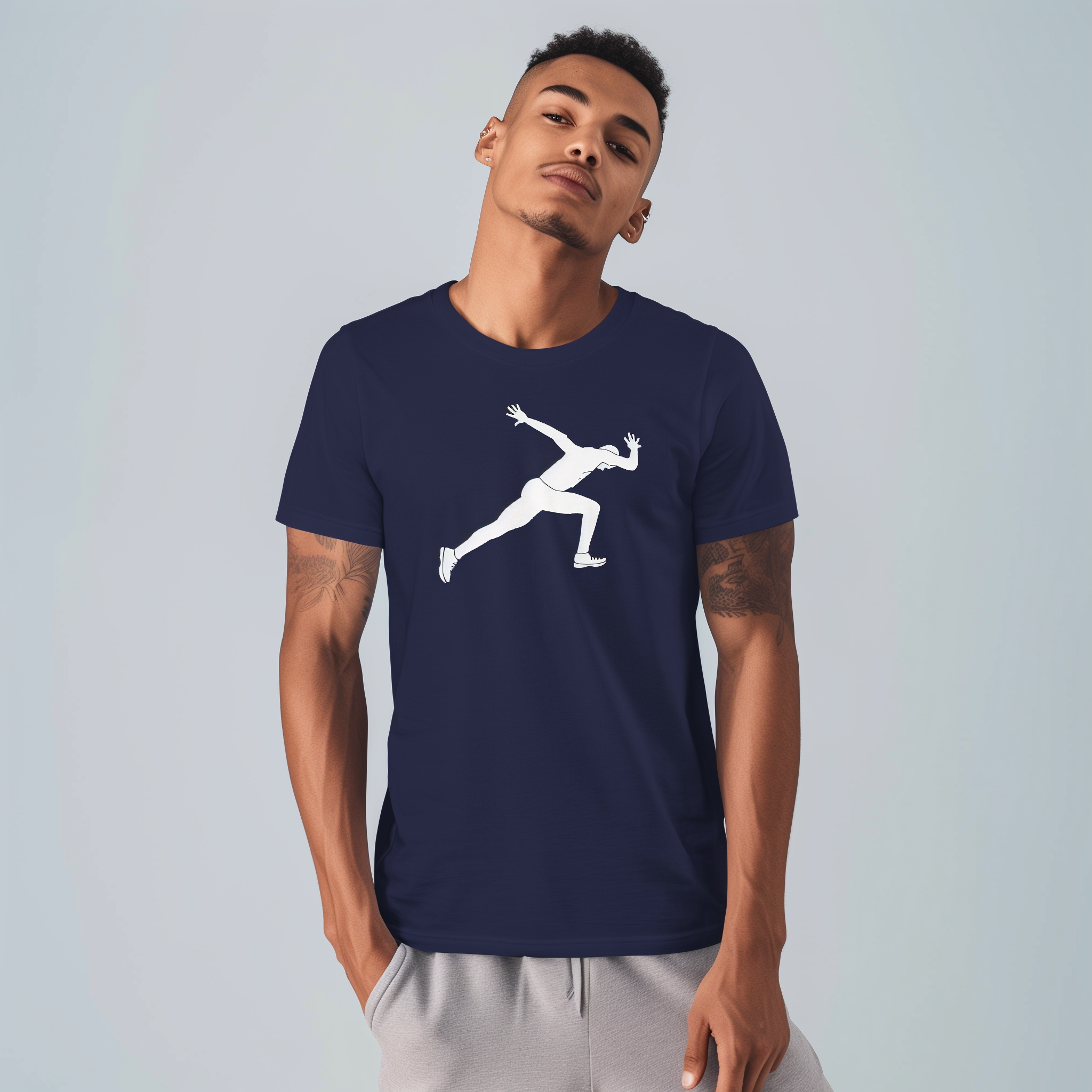
Man standing against a pale gray background wearing a navy T-shirt printed with a large white silhouette of a running figure, hands in his pockets, head tilted and forearm tattoos visible.

Systems + Programs = Measurable Results

Train with confidence. Know exactly what to work on and why it matters

Tools & Calculators

Stop Guessing. Start Measuring.

Access free tools & calculators built to help coaches and athletes train smarter.

thesprintclub logo

theSprint.Club

Join the squad.
Explore the gear.
Get faster.
white thesprint.club sprinter tee tshirt