What Are Wicket Drills?
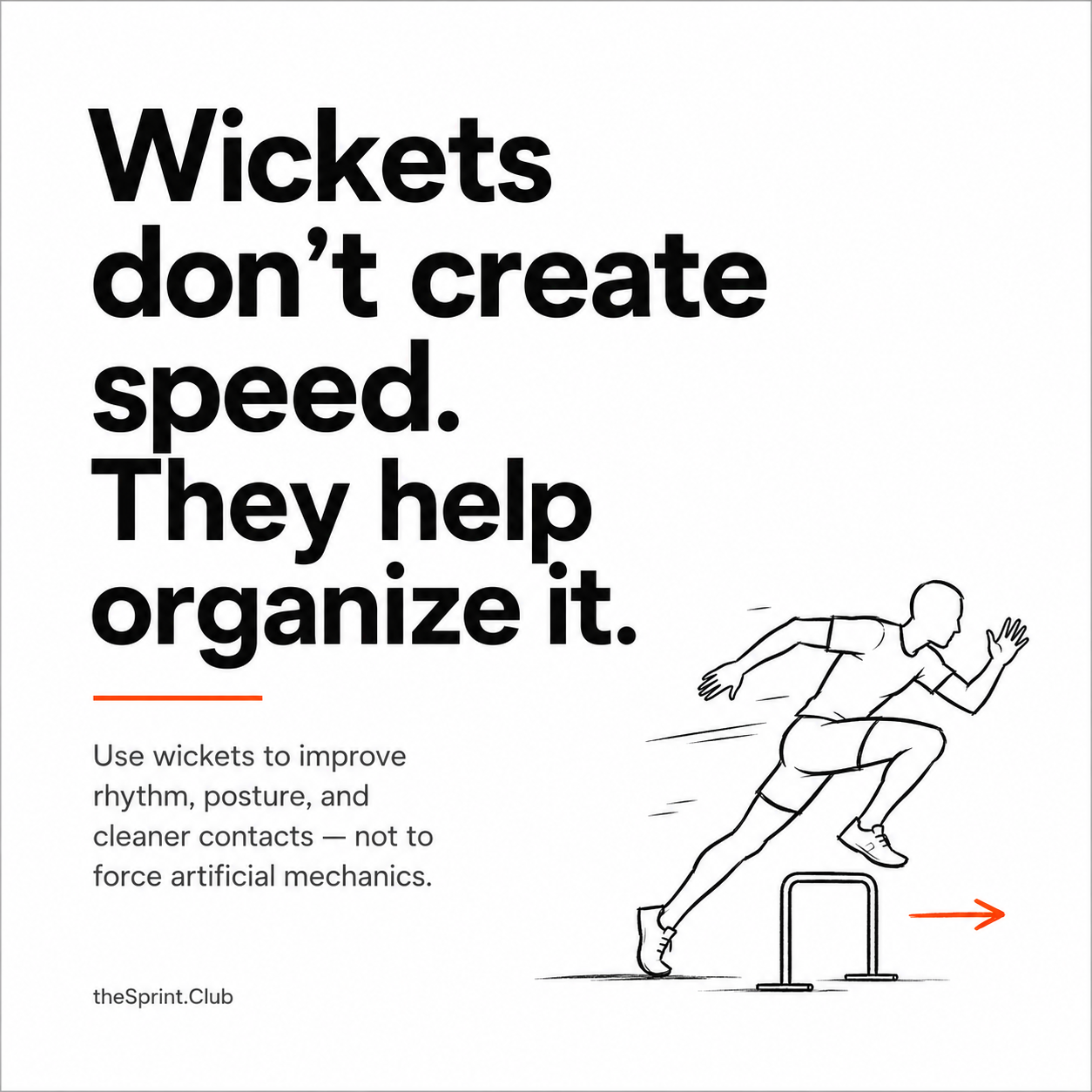
Wicket drills are sprint drills that use small hurdles, cones, or markers placed at specific distances apart to organize sprint stride rhythm and movement timing.
The athlete runs through the wickets while attempting to maintain smooth, upright sprint mechanics without reaching, chopping, or overstriding.
Modern sprint coaches commonly use wickets during maximum velocity training because they help athletes:
- Organize stride timing
- Improve front-side mechanics
- Reduce braking mechanics
- Improve posture during upright sprinting
- Develop smoother rhythm at high speed
Elite coaches including Dan Pfaff, Stuart McMillan, and Loren Seagrave have discussed using wicket variations as a movement constraint rather than a purely technical drill.
What Wicket Drills Actually Train
Front-Side Mechanics
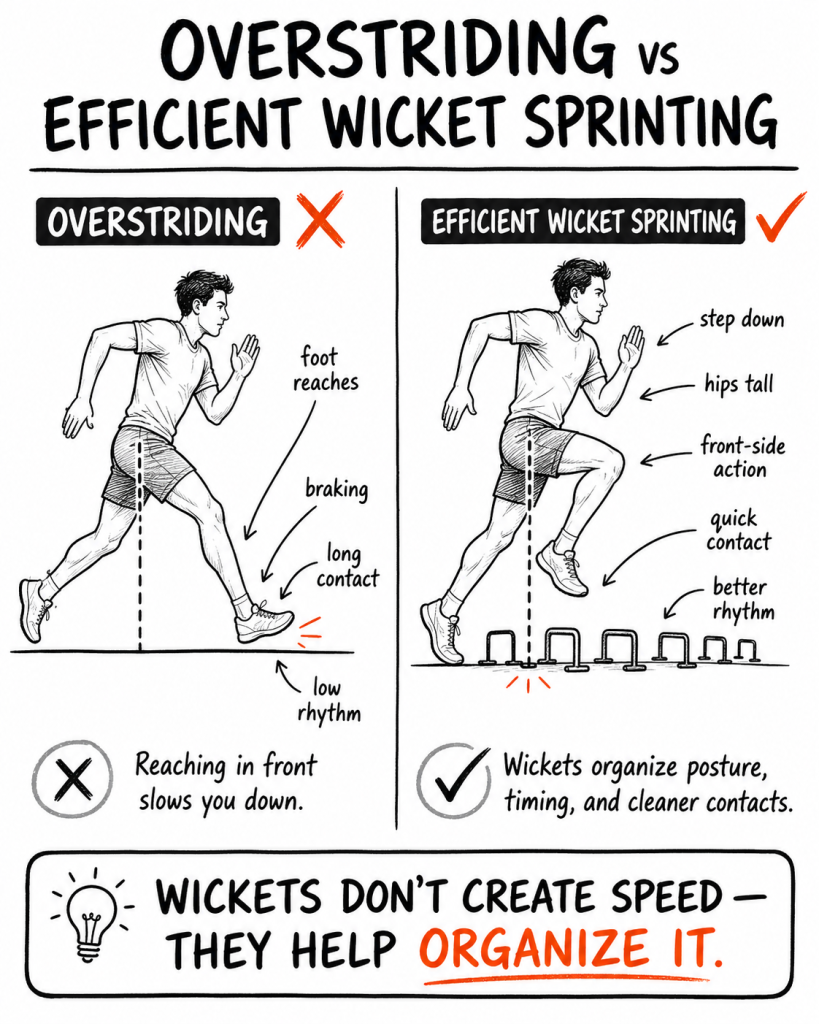
One of the main goals of wickets is improving front-side movement.
Efficient sprinters recover the thigh aggressively upward and downward in front of the body rather than cycling excessively behind them.
Wickets encourage:
- Higher knee recovery
- Better foot strike positioning
- More vertical force orientation
- Reduced backside swing
This can help athletes stop “reaching” forward with the foot.
Rhythm and Stride Timing
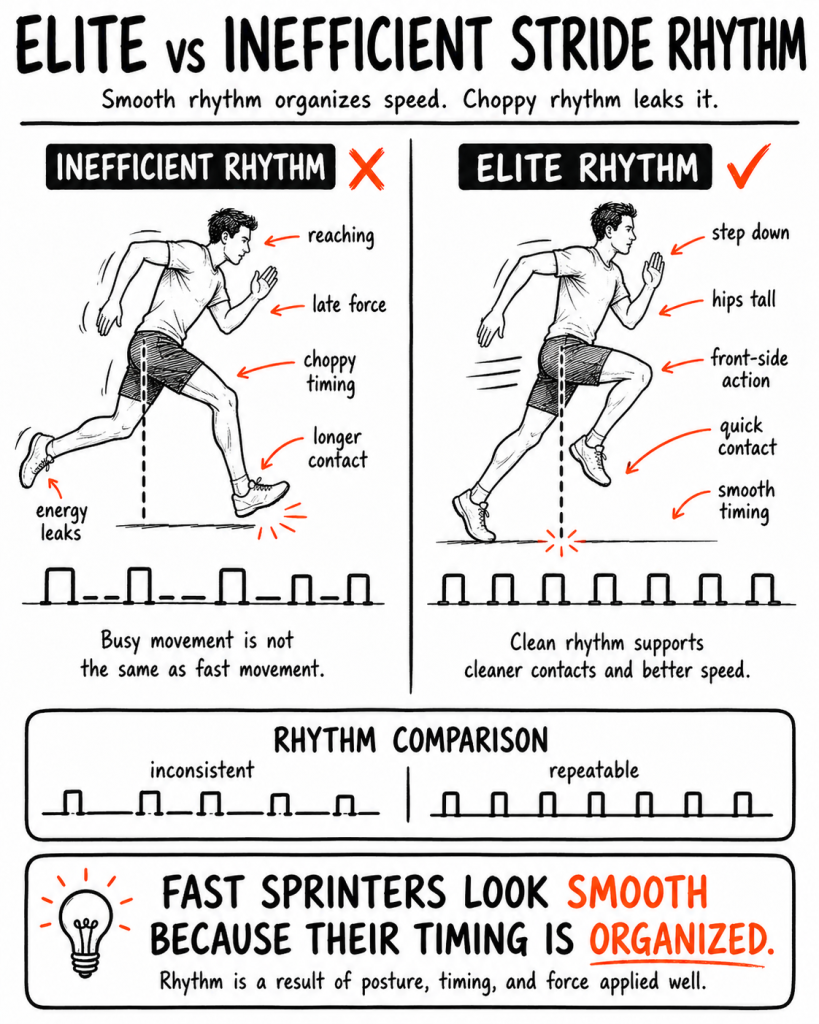
Sprint speed is highly rhythmic.
Elite sprinters display remarkably consistent stride timing and coordination patterns even as speed increases.
Wickets create an external rhythm target that helps athletes organize movement automatically instead of consciously thinking about every joint angle.
This matters because sprinting happens too quickly for conscious correction during maximal speed.
Ground Contact Organization
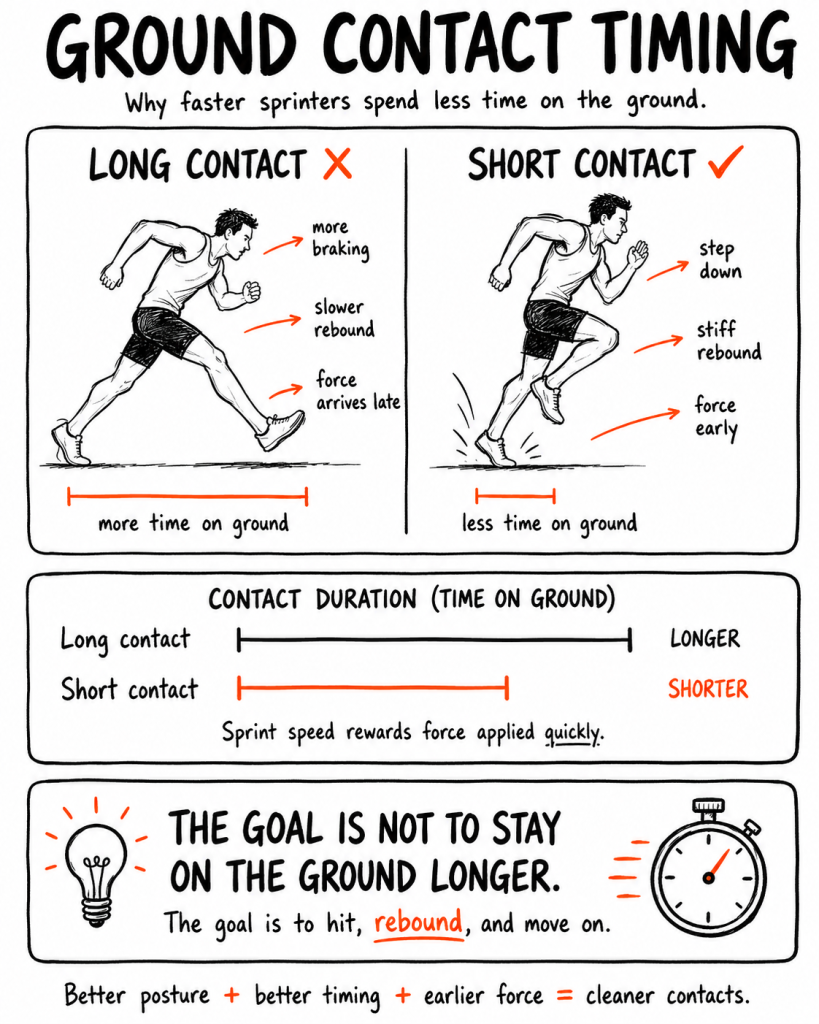
Fast sprinting depends heavily on how force is applied into the ground during extremely short contact times.
Research consistently shows elite sprinters achieve:
- Shorter ground contacts
- Greater vertical force production
- Better stiffness characteristics
- Higher force application efficiency
Wickets often improve where the foot lands relative to the center of mass, which can reduce braking forces.
Posture and Projection
Wickets encourage athletes to remain tall and organized during upright sprinting.
When done correctly, athletes learn to project vertically while maintaining horizontal momentum.
This is one reason wickets are commonly used during max velocity development rather than acceleration work.
The Science Behind Wicket Drills
Sprint Speed Depends on Force and Timing
According to research by Weyand et al. (2000), faster sprinting is more strongly associated with the ability to apply greater force into the ground quickly rather than simply moving the legs faster.
Morin and Samozino’s sprint mechanics research also highlights the importance of effective force orientation and force application.
Wicket drills may improve the organization of these forces, especially by reducing overstriding and inefficient contact positions.
Why Shorter Ground Contact Matters
Elite sprinting involves ground contact times often below 0.10 seconds during maximal velocity.
Athletes who spend too long on the ground typically lose elastic efficiency and horizontal momentum.
Wickets can help athletes organize quicker, cleaner contacts by encouraging better timing and posture.
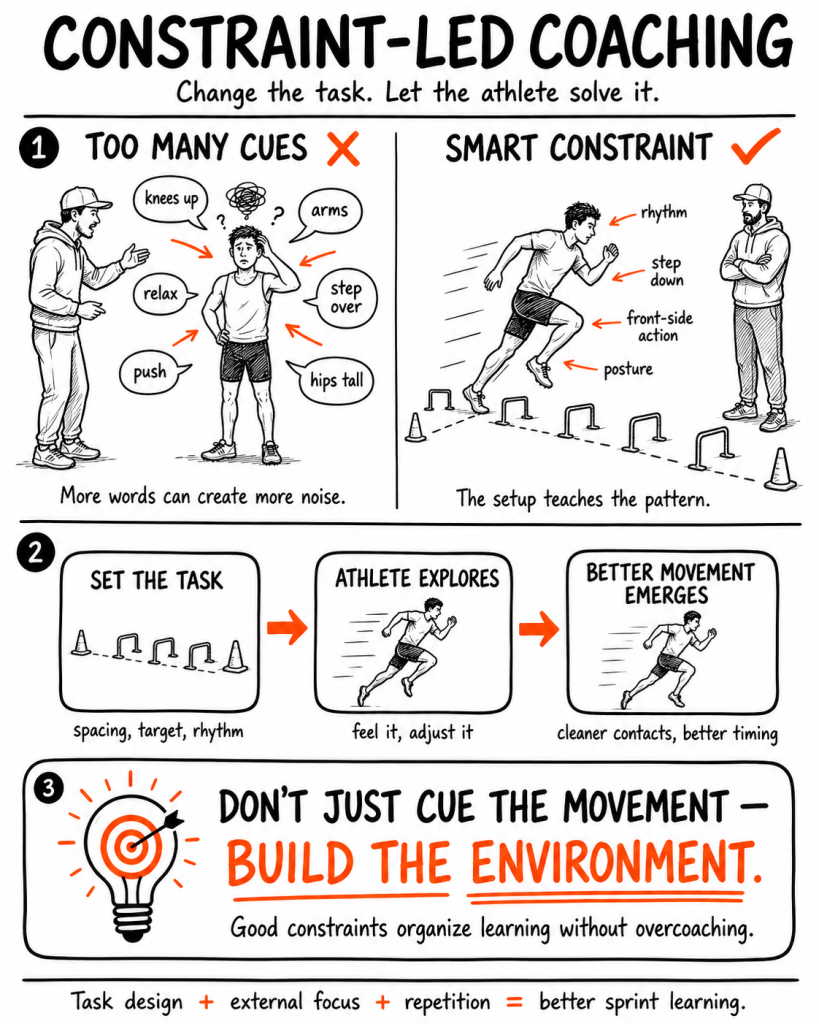
Constraints-Led Learning and Self-Organization
One of the strongest arguments for wickets comes from motor learning theory.
Instead of giving endless verbal cues, wickets create environmental constraints that encourage the athlete to self-organize movement solutions.
This often produces more natural learning than overcoaching mechanics verbally.
Research in ecological dynamics and constraints-led coaching supports this concept broadly in skill acquisition.
What Research Can and Cannot Confirm
There is limited direct peer-reviewed research proving wicket drills alone improve sprint times.
Most support comes indirectly through:
- Sprint biomechanics
- Motor learning research
- Coaching observation
- Mechanical organization principles
Why Wicket Drills Sometimes Work Extremely Well
They Simplify Complex Sprint Mechanics
Many athletes struggle when coaches overload them with technical instructions.
Wickets simplify the task.
The environment itself provides feedback.
Athletes instantly feel when they:
- Reach
- Overstride
- Collapse
- Lose rhythm
They Reduce Overstriding
Overstriding increases braking forces and often disrupts sprint rhythm.
Wickets discourage reaching too far in front of the body because poor timing immediately disrupts the drill.
They Improve Sprint Rhythm Under Speed
Good sprinting often looks smooth because elite athletes coordinate force efficiently.
Wickets can help athletes experience what efficient rhythm feels like.
This is particularly useful for field sport athletes who rarely sprint with technical consistency.
They Encourage Relaxation
One overlooked benefit is relaxation.
Athletes who tense excessively often lose elasticity and rhythm.
Good wicket runs usually look smooth, rhythmic, and relaxed.
Why Wicket Drills Sometimes Fail
Athletes Chase the Cones Instead of Sprinting
This is the most common problem.
The athlete becomes focused on “not hitting the wickets” rather than projecting force and sprinting aggressively.
The drill becomes choreography instead of sprinting.
Artificial Mechanics and Robotic Movement
Overcoached wickets can create exaggerated knee lift, unnatural arm action, or fake upright mechanics.
This often happens when coaches prioritize appearance over actual sprint output.
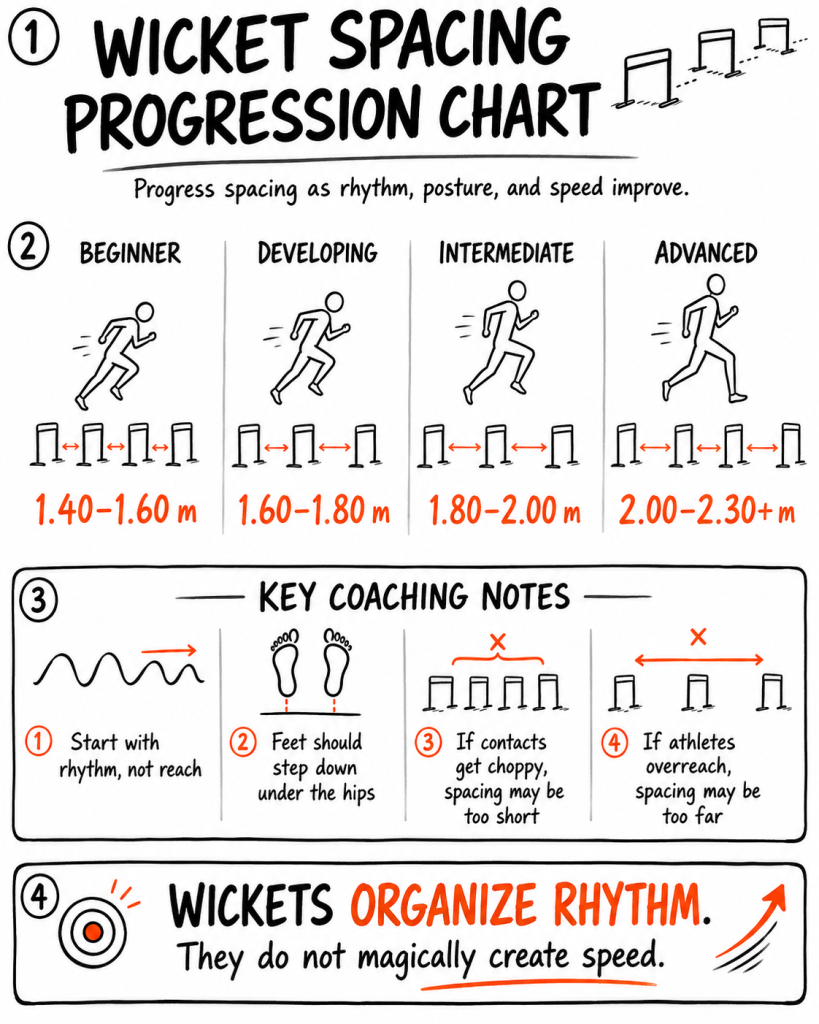
Poor Spacing Destroys Intent
Incorrect spacing changes mechanics dramatically.
Wickets that are too close can force choppy mechanics.
Wickets that are too far apart can cause reaching and excessive backside mechanics.
Proper spacing should match the athlete’s current speed capabilities.
Using Wickets for Athletes Who Lack Stiffness or Power
An athlete lacking force production, ankle stiffness, or elastic qualities may struggle to benefit from wickets.
The drill cannot create physical capacities that do not exist.
The Biggest Misunderstanding About Wickets
Wickets Do Not Create Speed Directly
Wickets organize movement.
They do not magically increase force production, elasticity, or power output.
This distinction matters.
An athlete can look technically cleaner without actually becoming faster.
Speed Qualities Still Determine Outcomes
True sprint speed still depends on:
- Force production
- Elastic stiffness
- Tendon behavior
- Neural coordination
- Sprint exposure
- High-speed practice
Mechanics Emerge From Force Capability
Many sprint mechanics are downstream effects of physical qualities.
Improved stiffness and force application often improve mechanics naturally.
This is why elite sprinters frequently look technically beautiful without obsessing over positions.
How to Use Wicket Drills Correctly
Start With Rhythm, Not Perfection
The goal is smooth projection and rhythm.
Do not obsess over perfect limb positions early.
Progress Spacing Gradually
A common setup progression:
| Level | Approximate Spacing |
|---|---|
| Beginner | 1.5–1.7 m |
| Intermediate | 1.7–2.0 m |
| Advanced | 2.0–2.4+ m |
Spacing varies heavily based on:
- Speed
- Height
- Experience
- Sprint quality
Use Wickets During Max Velocity Work
Wickets are most effective during upright sprinting phases.
Typical setup:
- 20–30 m buildup
- 10–30 m wicket zone
- Optional fly zone afterward
Pair Wickets With Fly Sprints and Elastic Training
Wickets work best alongside:
- Fly sprints
- Plyometrics
- Bounds
- Sprint exposure
- Stiffness development
- Max velocity sprinting


Best Wicket Drill Progressions
Beginner Progression
- Walking wicket drill
- March through wickets
- Low-speed dribble runs
- Rhythm skips
Intermediate Progression
- Straight-leg bounds into wickets
- Sprint-float-sprint wicket runs
- Build-in wicket sprints
Advanced Max Velocity Progression
- Fly 20s through wickets
- Alternating spacing wickets
- Competitive wicket races
- Assisted sprint wickets
Who Benefits Most From Wicket Drills?
Team Sport Athletes
Football, soccer, rugby, and lacrosse athletes often benefit because they lack consistent sprint rhythm exposure.
Developing Sprinters
Younger athletes frequently improve quickly from better stride organization and reduced overstriding.
Athletes Returning From Inefficient Mechanics
Wickets can help rebuild rhythm after technical breakdowns or inefficient movement habits.

FAQ
Do wicket drills make you faster?
They can help improve sprint mechanics and rhythm, which may contribute to faster sprinting when combined with force and speed development training.
Are wicket drills only for elite sprinters?
No. Beginners and team sport athletes often benefit substantially because wickets provide external movement organization.
How far apart should sprint wickets be?
Spacing depends on athlete speed, height, and training goal. Most setups gradually increase spacing as speed increases.
Are wicket drills good for acceleration?
They are generally more useful for upright max velocity sprinting than early acceleration mechanics.
Can wicket drills fix overstriding?
They can help reduce overstriding by improving foot strike timing and stride organization.
Can you overuse wicket drills?
Yes. Overreliance can create robotic movement if athletes focus more on avoiding hurdles than sprinting naturally.
- Do Wicket Drills Improve Sprint Speed? What the Evidence Says
- How to Progress in Nordic Curls: A Step-by-Step Guide for Stronger Hamstrings
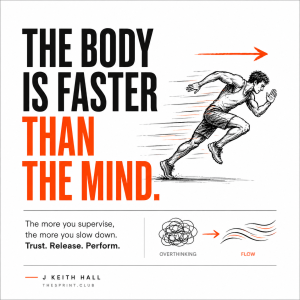
- The Body Is Faster Than the Mind: Why Overthinking Slows Athletic Performance
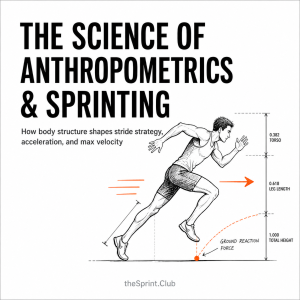
- The Science of Anthropometrics and Sprinting
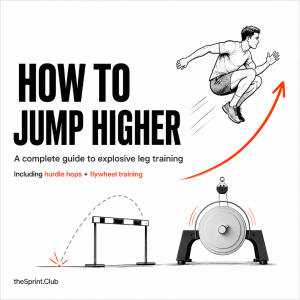
- How to Jump Higher: A Complete Guide to Explosive Leg Training
- Best Exercises for Sprint Strength