

Sprint Training Readiness Calculator
Sprint training is not like ordinary conditioning. The goal is not to survive more work. The goal is to express high-quality speed.
That means the best workout for today depends on more than the training plan written on paper. Sleep, soreness, stress, energy, warm-up sharpness, and recent sprint drop-off all affect whether an athlete is ready for true speed work.
Use this free sprint training readiness calculator to decide whether today should be a high-output sprint day, a reduced-volume speed session, a technical sprint workout, or a recovery day.
Enter your readiness markers below, then get a score, session recommendation, training adjustment, and coaching cue.
How to Use the Sprint Training Readiness Calculator
- Rate your sleep quality.
Choose the option that best describes how well you slept last night. Poor sleep can reduce readiness for high-output sprinting.
- Rate your muscle soreness.
Select how sore your legs, hips, calves, hamstrings, and overall body feel before training.
- Rate your energy level.
Choose whether you feel explosive, normal, flat, or drained.
- Rate your stress level.
High life stress, school stress, travel stress, or work stress can affect training readiness.
- Rate your warm-up sharpness.
Use your warm-up as feedback. If skips, buildups, drills, or strides feel fast and springy, readiness is usually better. If everything feels heavy or awkward, the session may need adjustment.
- Rate your recent sprint drop-off.
If recent sprint times have fallen off sharply during workouts, that may be a sign that fatigue is limiting quality.
- Click “Build Today’s Session.”
The tool will generate a readiness score, recommended session type, training adjustment, and coaching cue.
Sprint Session Decision Tool
Use today’s readiness signals to decide whether to sprint fast, reduce volume, sharpen technique, or recover.
Recommendation
Your sprint-training guidance will appear here.
Use the Score as a Decision Filter
The score is not a diagnosis. It is a decision filter.
A high score supports a more aggressive speed session. A moderate score suggests keeping speed exposure but reducing the risk. A low score suggests that recovery may create a better long-term training effect than forcing another hard workout.
The best athletes and coaches do not just ask, “Can we train today?”
They ask, “What kind of training will actually move performance forward today?”
That is the purpose of this tool.
What Is Sprint Readiness?
Sprint readiness is the athlete’s current ability to produce high-quality speed.
It is not the same thing as motivation. It is not the same thing as toughness. An athlete can be willing to train hard while still being poorly prepared to sprint fast.
High-quality sprinting requires coordination, rhythm, stiffness, relaxation, timing, and nervous system output. When an athlete is overly sore, under-recovered, stressed, flat, or showing major sprint drop-off, more work is not always better.
Sometimes the smartest speed decision is to push.
Sometimes the smartest speed decision is to reduce volume.
Sometimes the smartest speed decision is to sharpen technique.
Sometimes the smartest speed decision is to recover so the next high-output session is actually productive.
This calculator helps make that decision clearer.
Why Sprint Workouts Should Be Adjusted Based on Readiness
Speed training depends on quality.
A hard conditioning workout can still have value when an athlete is tired. A true sprint workout is different. Once speed, rhythm, mechanics, or timing drop too much, the session can shift from speed development into fatigue practice.
That is why coaches often monitor signs like:
sleep quality
muscle soreness
energy level
stress
warm-up sharpness
sprint timing
rep-to-rep drop-off
The goal is not to avoid hard training. The goal is to place the hardest training on the days when the athlete is most prepared to benefit from it.
How to Interpret Your Sprint Readiness Score
85 to 100: Green Light
This usually suggests the athlete may be ready for a high-output speed session.
Best options may include:
acceleration work
max velocity sprinting
fly sprints
timed sprints
low-volume jump work
full recovery sprint reps
The goal is quality, not exhaustion. Keep rest periods long enough to preserve speed.
70 to 84: Yellow-Green Light
This usually suggests the athlete can still train fast, but the session should have guardrails.
Good options may include:
short accelerations
reduced sprint volume
technical fly-ins
wicket runs
low-volume jumps
speed exposures with full rest
A good adjustment is to reduce total volume by roughly 10 to 20 percent and stop the session if sharpness fades.
55 to 69: Yellow Light
This usually suggests the athlete may not be ready for a demanding max-output sprint session.
Better options may include:
technical sprint drills
buildups
rhythm runs
mobility
medicine ball throws
low-intensity tempo
low-risk elastic work
The purpose of the day should be to clean up movement, not force output.
Below 55: Red Light
This usually suggests the athlete may benefit more from recovery or regeneration.
Better options may include:
mobility
walking
easy bike
pool work
recovery circuits
soft tissue work
complete rest
This does not mean the athlete is weak. It means forcing speed on a poor-readiness day may not produce the intended training effect.
FAQs
Should I sprint if I am sore?
Mild soreness does not always mean you need to skip sprinting. Severe soreness, awkward movement, reduced warm-up sharpness, or obvious sprint drop-off may mean the session should be modified.
How do I know if I should do max velocity training today?
Max velocity work is best performed when the athlete feels sharp, springy, coordinated, and able to sprint with high quality. If warm-up movements feel slow, heavy, or poorly coordinated, a technical or reduced-volume session may be a better choice.
Is this sprint readiness calculator for track athletes only?
No. This tool can be used by track sprinters, football players, soccer players, baseball players, basketball players, rugby players, and athletes in any sport where acceleration and speed matter.
Can this replace a coach?
No. This tool is educational. It gives a structured recommendation based on common readiness markers, but it should be combined with coaching judgment, athlete history, timing data, and medical guidance when needed.
How often should I use this tool?
Use it before high-output sprint sessions, acceleration days, max velocity days, jump sessions, or any workout where speed quality matters.
- The Science of Anthropometrics and Sprinting
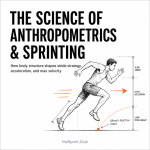 Anthropometrics do not determine whether an athlete can sprint fast, but they shape how each athlete creates speed. This post explains how height, limb length, torso proportions, body mass, and stiffness influence acceleration, max velocity, stride length, stride frequency, and sprint technique. Learn how to use body structure as a coaching map instead of forcing every sprinter into the same model.
 - How to Jump Higher: A Complete Guide to Explosive Leg Training
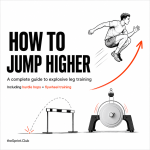 Want to jump higher? This guide breaks down the strength, stiffness, reactive power, and recovery principles behind explosive jumping. Learn how to use hurdle hops, flywheel training, plyometrics, and smart strength work to build more force, waste less energy, and rebound faster.
 - Best Exercises for Sprint Strength
 Build sprint strength that actually transfers to speed. Learn the best exercises for acceleration, max velocity, hamstring strength, elastic power, and single-leg force, plus how to organize them into a simple weekly plan for faster, cleaner sprinting.
 - 6 Basic Rules of Sprinting Every Beginner Should Know
 Power, bounce, stiffness, rhythm, projection, posture. Learn the 6 beginner sprinting rules that build real speed, fix common mistakes like overstriding and tension, and give you simple cues and drills to sprint faster with better mechanics.
 - The Rise of the Challenger: Coolest Sprinting Brands
 This article breaks down why challenger sprinting brands are gaining traction, how culture and performance are converging, what the science actually says about apparel and performance, and what trends are shaping sprint gear from race-day kits to post-race identity wear.

