loader image

The Speed Plateau Series: How to Break Through and Get Faster

How to Get Faster: Why You’re Getting Stronger But Not Faster

Table of Contents

Why Most Athletes Hit a Speed Plateau

You’ve added weight to your squat. Your deadlift is up. Your vertical jump improved.

But your 40yard time or 100m hasn’t moved.

If you’re searching for how to get faster, you’re not alone. This is one of the most common frustrations in sprint-based sports. Athletes train harder. They get stronger. Yet acceleration and top speed barely change.

Here’s the uncomfortable truth:

Strength is necessary for speed.

But strength alone does not create speed.

And for many athletes, it may actually distract from it.

Venn: barbell (strength) and runner (speed) overlap = Accel.; note: strength helps accel. but doesn't ensure sprint speed

Why Am I Not Getting Faster?

If you’re stuck, it usually comes down to one of these:

  • You’re training strength more than sprinting.
  • You’re not sprinting at true max velocity.
  • Your acceleration mechanics are leaking force.
  • Your training fatigue is masking speed.
  • You’re improving capacity, not expression.

That last one matters most.

The Strength Trap

The logic seems simple:

More force = more speed.

But sprinting isn’t about how much force you can produce in a slow lift. It’s about how much force you can apply in extremely short ground contact times.

At max velocity, ground contact times are often under 0.1 seconds in elite sprinters [Weyand et al., 2000]. That means the nervous system must produce and coordinate force rapidly, not just maximally.

Heavy lifting improves force capacity.

Sprinting improves force application.

Those are not the same thing.

Athletes often build a bigger engine but never upgrade the transmission.

Venn diagram titled Speed Audit Framework with three overlapping circles labeled Force, Projection, and Velocity, orange highlight at the Force-Projection overlap.

The 3-Part Speed Audit Framework

If you want to understand how to get faster, start by diagnosing the real issue.

Most speed plateaus fall into one of three categories:

1. Force Problem

You lack sufficient force production relative to bodyweight.

Signs:

  • Poor start explosiveness
  • Slow first 10 meters
  • Weak horizontal projection

Solution direction:

  • Relative strength improvements
  • Resisted acceleration
  • Horizontal force emphasis

Stylized sprinter with small orange arrow showing weak horizontal projection; captions: slow first 10m, poor explosive start.

2. Projection Problem

You have strength, but you can’t orient it properly.

Signs:

  • Popping upright too early
  • Overstriding
  • Braking during early acceleration

Research on sprint acceleration mechanics shows that shin angle and force orientation strongly influence horizontal acceleration efficiency [Morin et al., 2012].

If your force vector is vertical too early, you’re wasting strength.

Runner silhouette overstriding and braking; caption reads Typical projection problem — popping upright too soon, overstriding.

3. Velocity Exposure Problem

You simply don’t sprint fast enough often enough.

Many field sport athletes never truly sprint at max velocity in training. Practices are submaximal, chaotic, or fatigue-dominated.

Yet max velocity sprinting is its own skill.

Research suggests that top speed performance is heavily influenced by stride frequency and neuromuscular coordination under very short contact times [Clark & Weyand, 2014].

You don’t develop that under fatigue circuits.

You develop it by sprinting fast.

Graphic 'Max velocity exposure problem' with a submaximal runner and a fatigued figure, circled text 'No true sprint'.

The Real Difference Between Strength and Speed

Here’s the simplest way to understand it:

Strength increases your ceiling.

Speed training increases how much of that ceiling you can use quickly.

Think of it this way:

If your max squat increases 20%, but your rate of force development doesn’t improve, your sprint time might barely change.

Sprinting demands:

  • High relative force
  • Extremely rapid force production
  • Elastic stiffness
  • Precise coordination

Lifting builds some pieces. Sprinting builds others.

Speed emerges from the interaction.

Graph titled Ground contact time comparison showing a descending curve from high time at Weightlifting to low at Sprinting with an orange arrow pointing right

What Research Says About Sprint Performance

Several important themes show up repeatedly in sprint science:

  1. Faster sprinters apply greater horizontal force relative to bodyweight [Morin et al., 2012].
  2. Top speed performance correlates strongly with stride frequency and rapid force application [Weyand et al., 2000].
  3. Neuromuscular coordination plays a central role in high-velocity movement efficiency [Clark & Weyand, 2014].

Notice what’s missing:

None of those findings say “just lift heavier.”

Strength supports speed.

But sprinting trains sprinting.

How to Break the Speed Plateau

If you’re serious about learning how to get faster, here’s where to start:

1. Sprint at True Max Velocity Weekly

Not tempo runs.

Not conditioning.

Actual high-speed exposures with full recovery.

2. Separate Strength and Speed Goals

Don’t chase PRs year-round.

Periodize strength so it supports speed instead of exhausting it.

3. Train Acceleration Specifically

Acceleration is a skill.

It requires posture, projection, and horizontal force intent.

We’ll break this down deeply in Part 2.

4. Manage Fatigue

Speed drops quickly under fatigue.

If you’re constantly tired, your nervous system cannot express peak velocity.

5. Measure What Matters

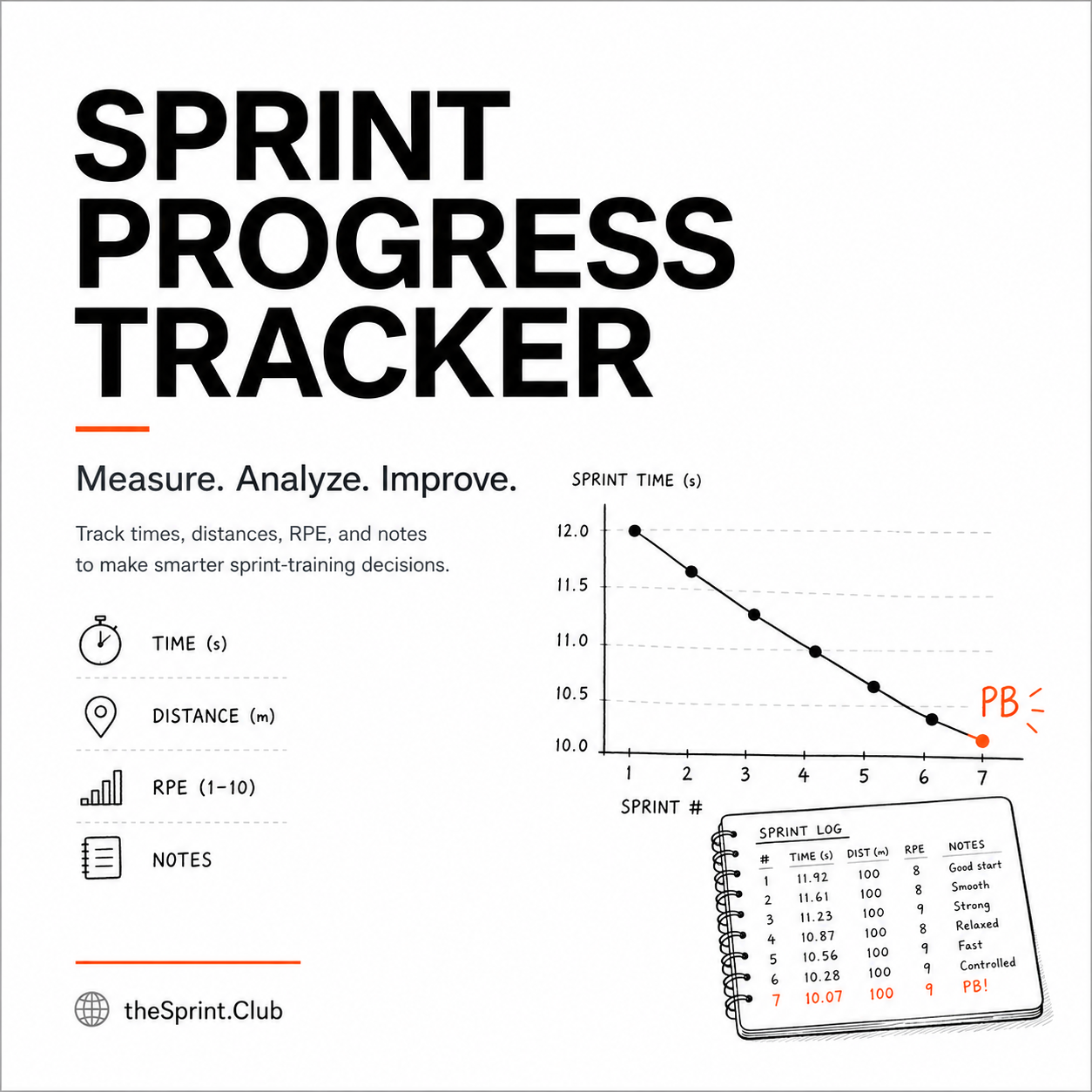
Time sprints. Track fly 10m and 30m. Monitor drop-offs.

What gets measured improves.

Speed science that makes you faster.

Weekly sprint science, training insights, and speed culture. Free.
white thesprint.club sprinter tee tshirt

The Bigger Philosophy

Most athletes aren’t slow because they lack effort.

They’re slow because they’re training general qualities instead of specific speed qualities.

You don’t get faster by accident.

You get faster by deliberately training:

  • Force application
  • Projection mechanics
  • Max velocity exposure

In Part 2, we’ll break down how to improve acceleration specifically, including drills and programming structure.

Final Thought

If you’ve been getting stronger but not faster, the problem isn’t motivation.

It’s misalignment.

Strength supports speed.

But speed must be trained as a skill.

If you want deeper breakdowns on acceleration mechanics, max velocity development, and sprint programming philosophy, join theSprint.Club newsletter here:

https://thesprint.club/join-the-sprint-club/

Every week we break down speed science, coaching insights, and practical tools to help you actually get faster.

Related Posts

the sprint club thesprint.club logo

theSprint.Club

Join theSprint.Club

The Science, Art, & Love of Speed in your inbox.
Man standing against a pale gray background wearing a navy T-shirt printed with a large white silhouette of a running figure, hands in his pockets, head tilted and forearm tattoos visible.

Systems + Programs = Measurable Results

Train with confidence. Know exactly what to work on and why it matters

Tools & Calculators

Stop Guessing. Start Measuring.

Access free tools & calculators built to help coaches and athletes train smarter.

thesprintclub logo

theSprint.Club

Join the squad.
Explore the gear.
Get faster.
white thesprint.club sprinter tee tshirt