How to Get Faster: The Missing Link in Max Sprint Speed
Most athletes never truly train max velocity. Learn how to get faster by improving top-end sprint speed with science-backed methods.

Tony Holler
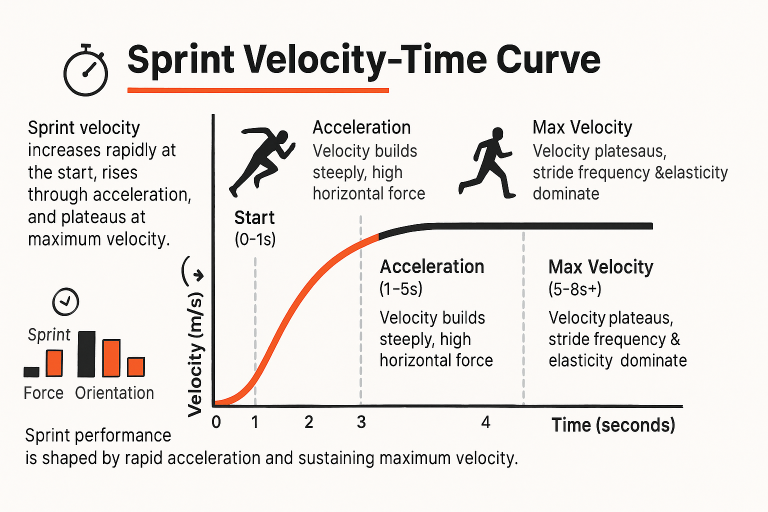
Most athletes spend 80% of their training on acceleration. But what if the fastest way to improve your start is actually to train your top speed?
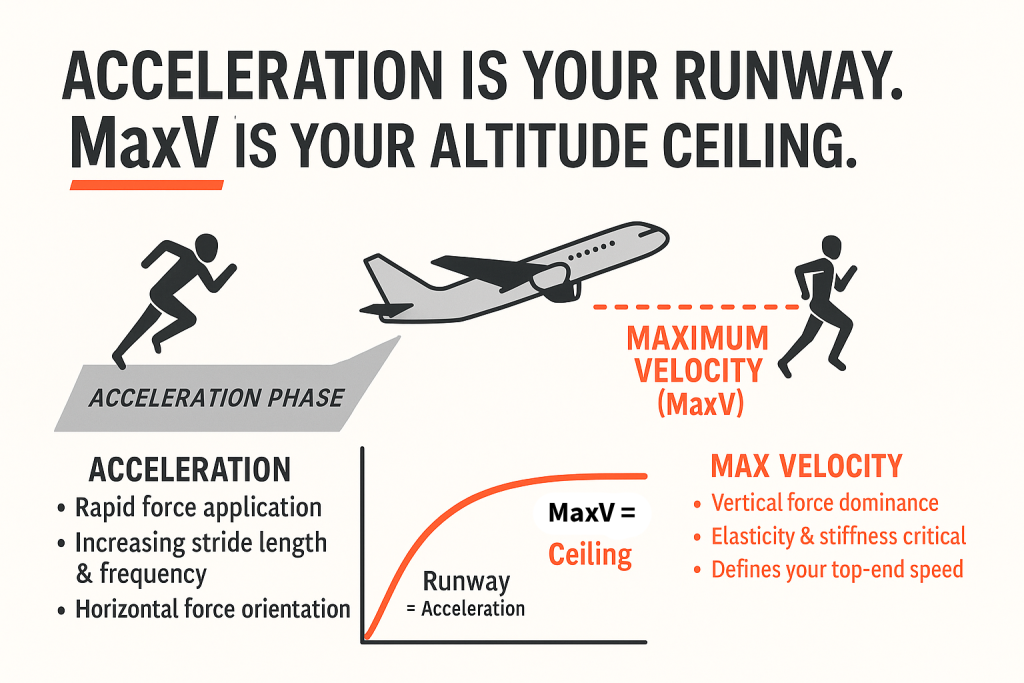
Acceleration may win the first 30 meters, but maximum velocity (MaxV) defines the ceiling of your sprinting potential. In the hierarchy of sprint training, MaxV is king — and when you raise it, every phase of your sprint improves.
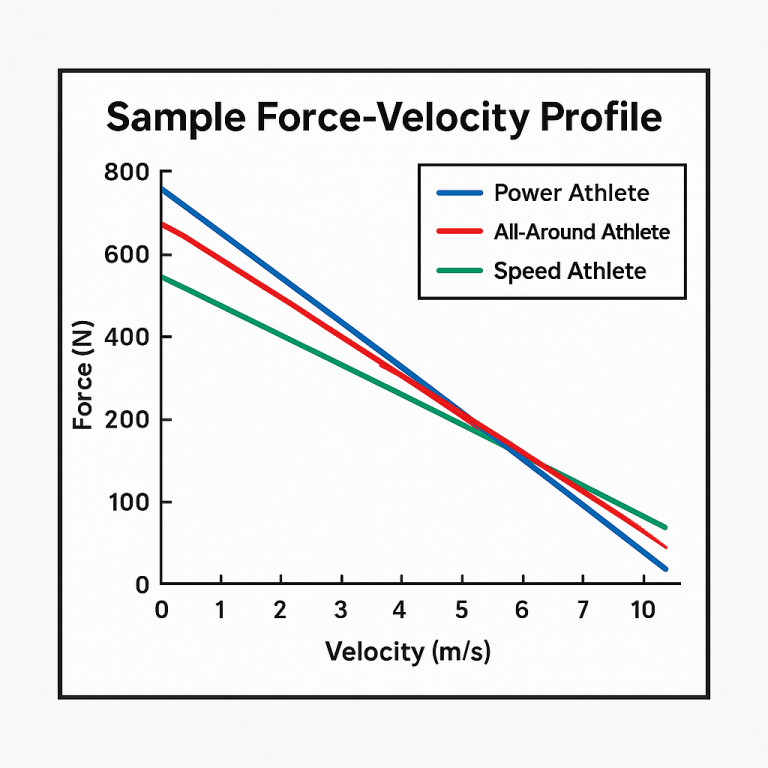
Maximum velocity (MaxV) is the fastest speed an athlete can achieve during sprinting. It’s determined by two main factors:
Unlike acceleration (building speed from a start), MaxV represents the peak performance ceiling.
Think of sprint qualities as a pyramid:
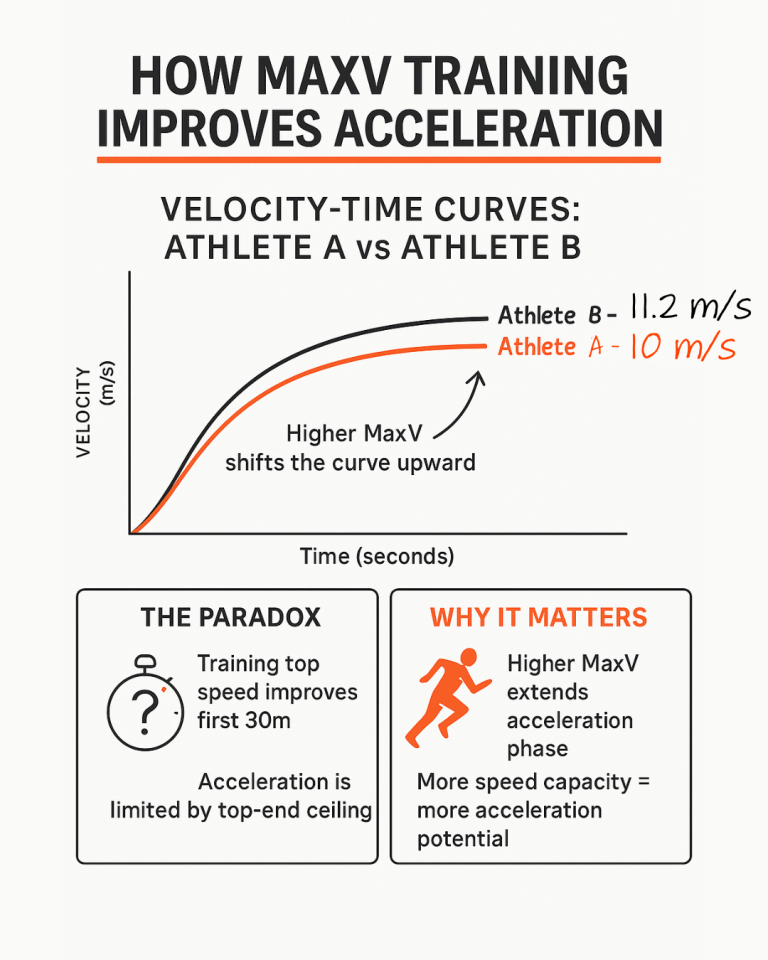
Here’s the paradox: training for top speed actually makes you faster in the first 30m. Why?
Because acceleration is limited by your top-end ceiling.
Insert graph: Velocity-time curves comparing Athlete A vs Athlete B.
In other words, a higher ceiling shifts the entire curve upward.
Charlie Francis: “Maximum velocity is the ultimate performance limiter. Raise it, and acceleration improves.”
Charlie Francis (legendary coach): emphasized “speed reserve” — running below your MaxV feels easier when your ceiling is higher.
Ralph Mann, biomechanist: found that world-class sprinters spend more time in upright MaxV mechanics than sub-elite sprinters.
Here are proven methods to raise MaxV:
Key principle: low volume, high intensity, full recovery.
Performance testing shows:
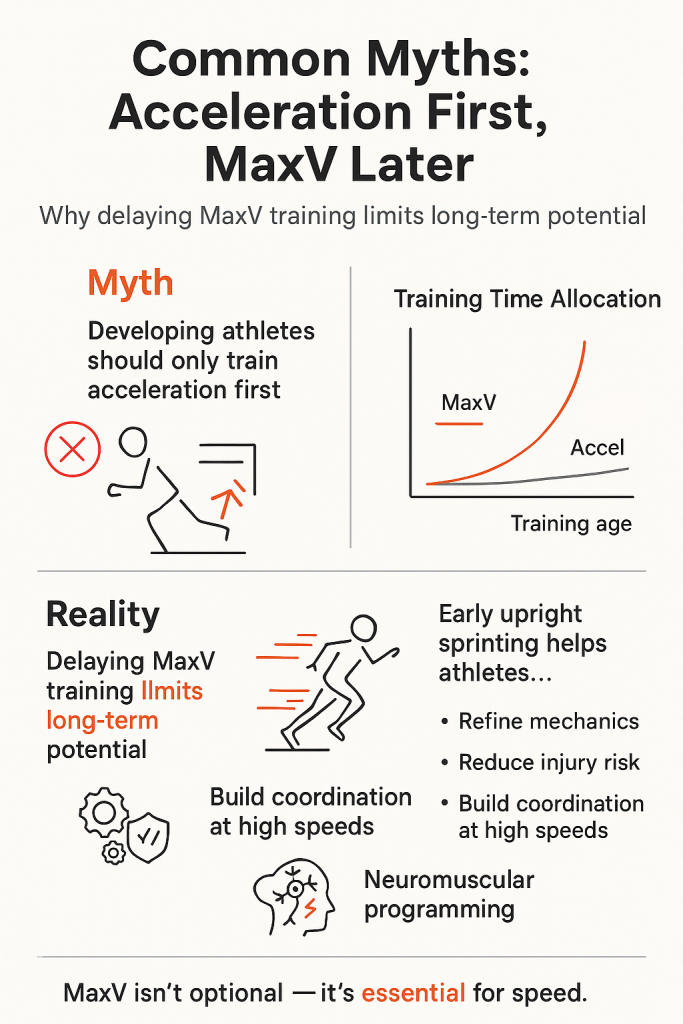
Myth: Developing athletes should only train acceleration first.
Reality: Delaying MaxV training limits long-term potential.
Early exposure to upright sprinting helps athletes:
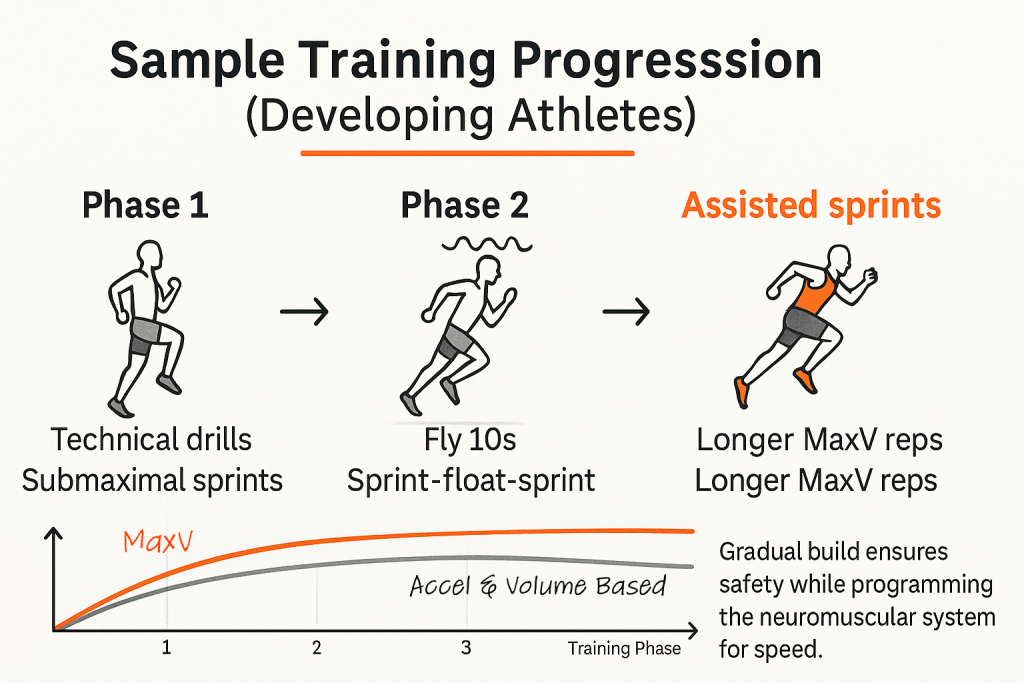
Phase 1: Technical drills, submaximal sprints
Phase 2: Fly 10s, sprint-float-sprint
Phase 3: Assisted sprints, longer MaxV reps
This gradual build ensures safety while programming the neuromuscular system for speed.
How to improve maximum velocity in sprinting?
Focus on fly sprints, sprint-float-sprint, and MaxV drills.
What drills improve MaxV?
Fly 20s, sprint-float-sprint, assisted sprints.
Should youth athletes train MaxV?
Yes, with proper progression, high intensity and low volume.
Does MaxV training reduce hamstring injuries?
Yes — exposure builds resilience under sprinting demands.
Is MaxV more important than strength training?
Both matter, but MaxV governs sprint performance ceiling.
Is maximum velocity more genetic or trainable?
Both — genetics set the potential, training determines how close you get.
How often should sprinters train MaxV?
1–2 times per week with full recovery.
Does MaxV training help team-sport athletes?
Yes — improves breakaway speed in soccer, football, rugby, and more.

Most athletes never truly train max velocity. Learn how to get faster by improving top-end sprint speed with science-backed methods.

Learn how to get faster with proven acceleration training methods. Improve first-step quickness, horizontal force, and sprint mechanics.

The Speed Plateau Series: How to Break Through and Get Faster
You can get stronger for months and still stay the same speed. Squat up, deadlift up, vertical up, but the 40 does not move. That plateau is common in sprint based sports because sprinting is not a test of how much force you can produce. Sprinting is a test of how much force you can apply in extremely short ground contact times, in the right direction, without leaking it through mechanics or fatigue.
Train with confidence. Know exactly what to work on and why it matters
Access free tools & calculators built to help coaches and athletes train smarter.