

How to Use the Sprint Progress Tracker
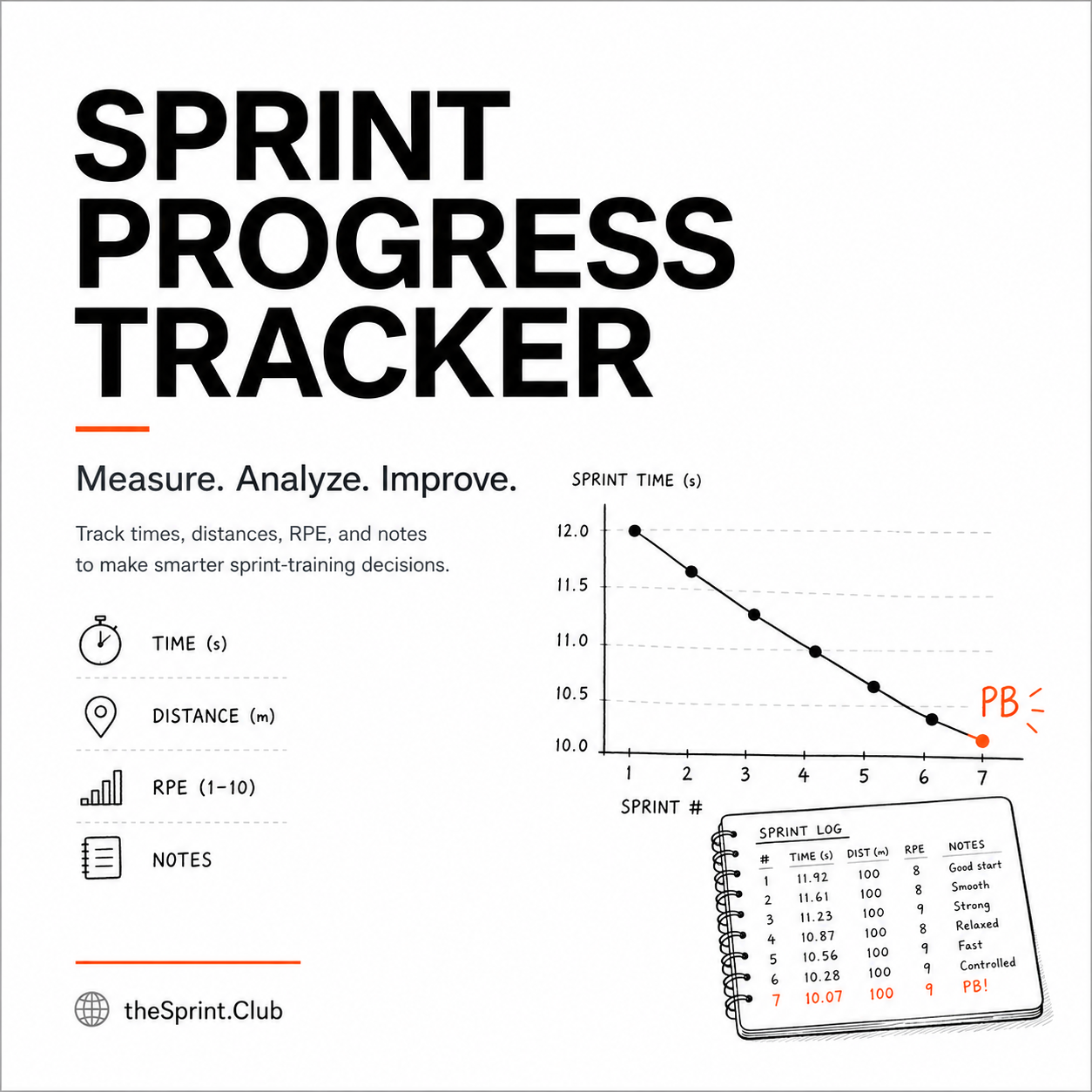
1. Log Your Sprint Performance
Enter:
- Distance (meters)
- Time (seconds)
The tool calculates velocity (m/s) using:
- Speed = Distance ÷ Time
Why this matters: Sprint performance is best evaluated through velocity, not just raw time, because it standardizes performance across distances.
2. Track Strength Metrics
Log:
- Exercise (e.g., squat, trap bar deadlift)
- Load (weight used)
Why this matters: Strength contributes to sprint performance through force production capacity, particularly during acceleration phases.
3. Monitor Your Progress Trends
The dashboard automatically:
- Plots your recent sprint speeds
- Identifies your personal best (PB)
- Displays whether you are improving or declining
Why this matters: Performance trends reveal adaptation patterns over time, not just isolated results.
4. Use the Data to Adjust Training
Use your trends to guide decisions:
- Improving → maintain current training structure
- Plateau → adjust intensity or recovery
- Declining → reduce fatigue, improve recovery
Scientific Principles Behind the Tool
1. Velocity Is the Primary KPI for Sprinting
- Sprint performance is governed by the ability to generate and maintain horizontal velocity
- Research shows sprint outcomes are tightly linked to force-velocity relationships
Evidence:
- JB Morin and Pierre Samozino demonstrated that sprint performance depends on horizontal force application and velocity profiling
- Their work on sprint mechanics shows that velocity-based metrics provide deeper insight than time alone
2. Strength Transfers to Speed Through Force Production
- Acceleration depends heavily on relative force output
- Strength training improves sprinting when it enhances force application in sprint-specific directions
Evidence:
- Ken Clark showed that faster sprinters apply greater horizontal ground reaction forces
- Weyand Peter demonstrated that top speed is driven more by force application than stride frequency alone
3. Monitoring Trends Is Superior to Isolated Testing
- Single performance tests can be misleading due to fatigue, environment, or variability
- Longitudinal tracking reveals true adaptation
Evidence:
- William Kraemer emphasizes the importance of tracking training responses over time to guide programming
- Sports performance research consistently supports trend-based monitoring over isolated snapshots
4. Fatigue Management Drives Performance Gains
- Performance drops often reflect neuromuscular fatigue, not loss of fitness
- Monitoring decline helps prevent overtraining
Evidence:
- Michael Stone highlights that performance monitoring can identify fatigue vs adaptation states
- Sprint drop-off and performance variability are widely used indicators of readiness
5. Data-Driven Feedback Improves Adherence and Outcomes
- Athletes who track performance are more likely to:
- Stay consistent
- Adjust intelligently
- Improve faster
Evidence:
- Self-monitoring in behavior change is strongly associated with improved adherence and outcomes in training programs
- Feedback loops reinforce learning and motor adaptation
Sprint Progress Tracker
Log your sprint performance and track your speed trends over time.
Add Sprint Entry
Add Strength Entry
Recent Entries
Performance Trend
-
Sprint Progress Tracker: Measure and Improve Your Speed
-
Why absorbing force efficiently is the missing link to faster sprint times, shorter ground contacts, and better performance.
-

The Volume Trap: Why More Training Can Make You Slower
-
Do Wicket Drills Improve Sprint Speed? What the Evidence Says

