Speed Is the Organizing Principle for Sprint Training
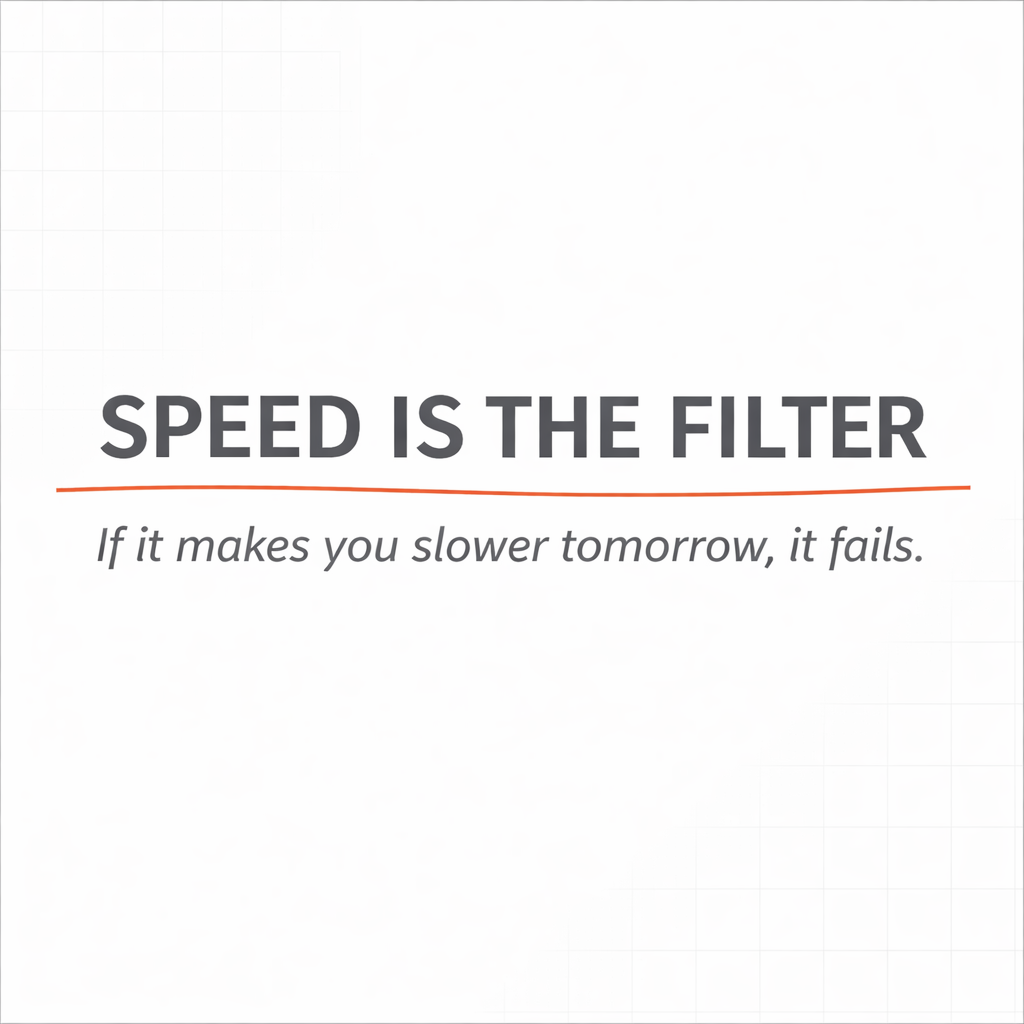
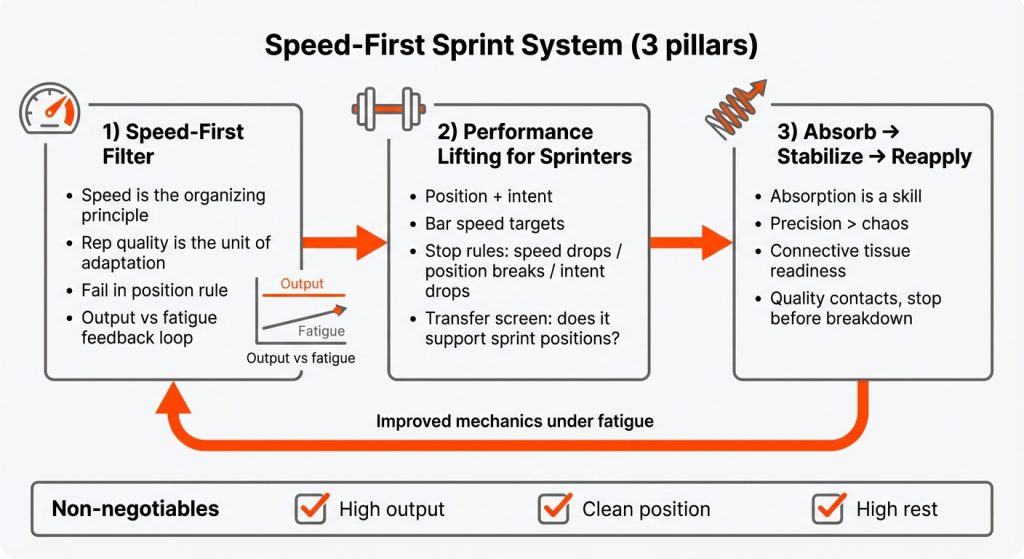
If most sprint programs were judged by one standard, whether they help an athlete express more speed tomorrow, many would fail. Too much training still rewards grinding, surviving fatigue, and collecting reps after mechanics have already broken down. A better system treats speed as the organizing principle. That means every drill, lift, sprint, and progression must support high-output movement, clean positions, and repeatable mechanics under rising demand.
Why a Speed-First System Matters
Most athletes say they want speed, but many train in ways that quietly prioritize something else. They build sessions around fatigue tolerance, volume completion, or the feeling of working hard. The problem is simple. Those qualities are not the same as sprint performance.
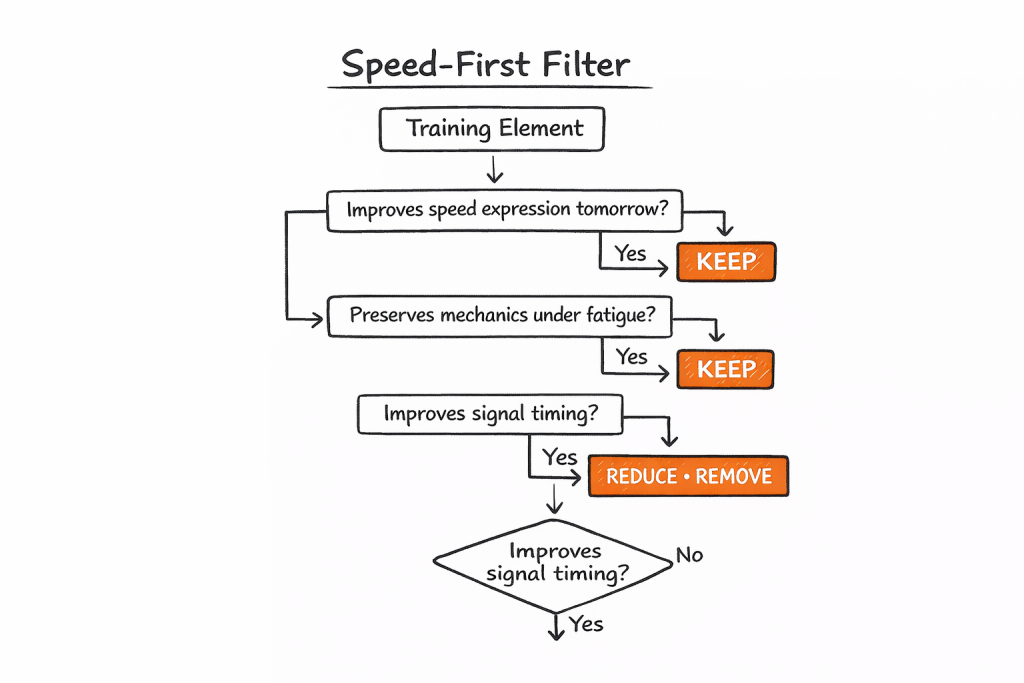
A speed-first system asks one question before anything else: does this improve speed expression or protect it?
In practical terms, speed is not just running fast once. It is the ability to produce force quickly, organize the body well at high velocity, and keep positions from collapsing when fatigue starts to rise. If a session leaves an athlete slower, sloppier, or less coordinated the next day, then the session may have created stress without creating useful transfer.
The Nervous System Drives Sprint Performance
Sprint performance is not just a muscle event. It is a neuromuscular event. Muscles, tendons, fascia, and joints all matter, but the nervous system determines how well those pieces work together.
That changes how training should be viewed. Instead of chasing load for its own sake, coaches and athletes should pay closer attention to signal quality, timing, contraction-relaxation rhythm, and posture at speed. The goal is not just more force. The goal is force that appears fast, in the right place, with the right sequencing.
This is why heavy, slow work can sometimes miss the mark for sprinters. It is not always wrong. It is often just overused, poorly timed, or disconnected from the movement qualities the athlete actually needs.
Rep Quality Is the Real Unit of Adaptation
One of the biggest mistakes in training is assuming the body adapts to completed work alone. In sprint training, the body adapts to the quality of what is repeatedly rehearsed.
That means the rep, not the session, is the real unit of adaptation.
A good rep follows a clear hierarchy. First, the athlete meets the position standard. Second, the output matches the goal of the exercise. Third, fatigue is controlled enough that the athlete does not start practicing compensation. Once position or output falls apart, the drill may still feel hard, but it is no longer quality speed work.
This shift matters because athletes often confuse exhaustion with effectiveness. A high-quality session may end before an athlete feels fully cooked. That is not a weakness in the plan. That is often a sign the plan protected the signal.
Use the “Fail in Position” Rule
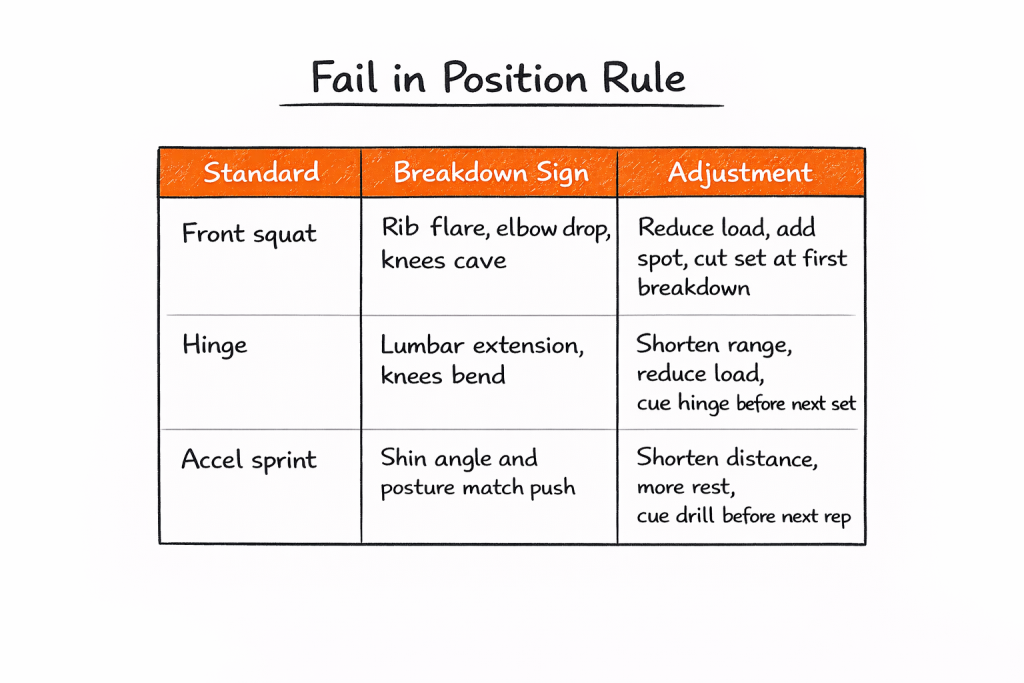
The simplest rule in a speed-first training system is this: fail in position.
If the athlete cannot complete the rep while holding the required shape, adjust the task. Reduce the load. Shorten the sprint. Increase the rest. Add assistance. Stop the set.
Too many athletes lose position, then do more reps of the same broken pattern. That teaches the nervous system to find shortcuts under stress. Over time, those shortcuts become the athlete’s default expression under pressure.
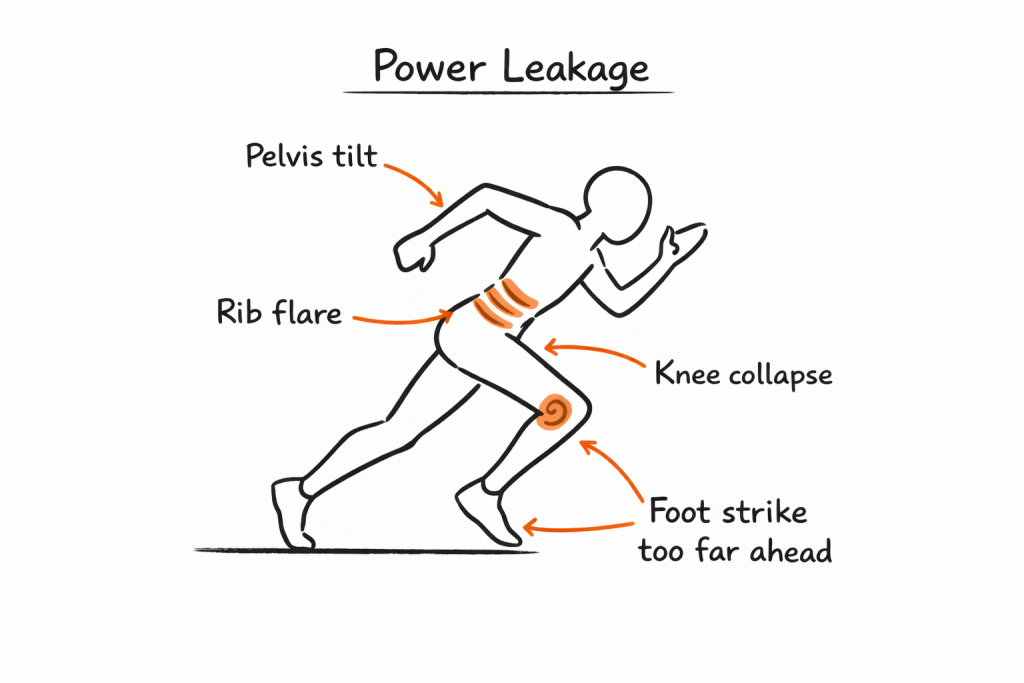
For sprinting, position standards can be simple and non-negotiable. Tall posture, stable pelvis, foot strike under the hips, limited braking, and rhythm that stays organized. The target is not perfection. The target is keeping breakdown out of the training identity.
Measure Enough to Learn, Not Enough to Drown
A speed-first system still needs feedback. Not obsessive tracking, but useful tracking.
Many athletes are poor judges of their own readiness and output. They may feel terrible and still perform well. They may feel great while their numbers quietly drop. Without feedback, training becomes guesswork.
A simple sprint training log can solve that. Track the session type, one output metric, one quality note, and one recovery flag. The output metric might be a timed sprint, jump result, wicket split, or bar speed. The quality note might be a posture cue or rhythm cue that improved the session. The recovery flag might be sleep quality or a basic readiness score.
This is enough to teach pattern recognition. The point is not to look disciplined. The point is to learn what actually helps speed show up more consistently.
Fatigue Is Not the Enemy, Breakdown Is
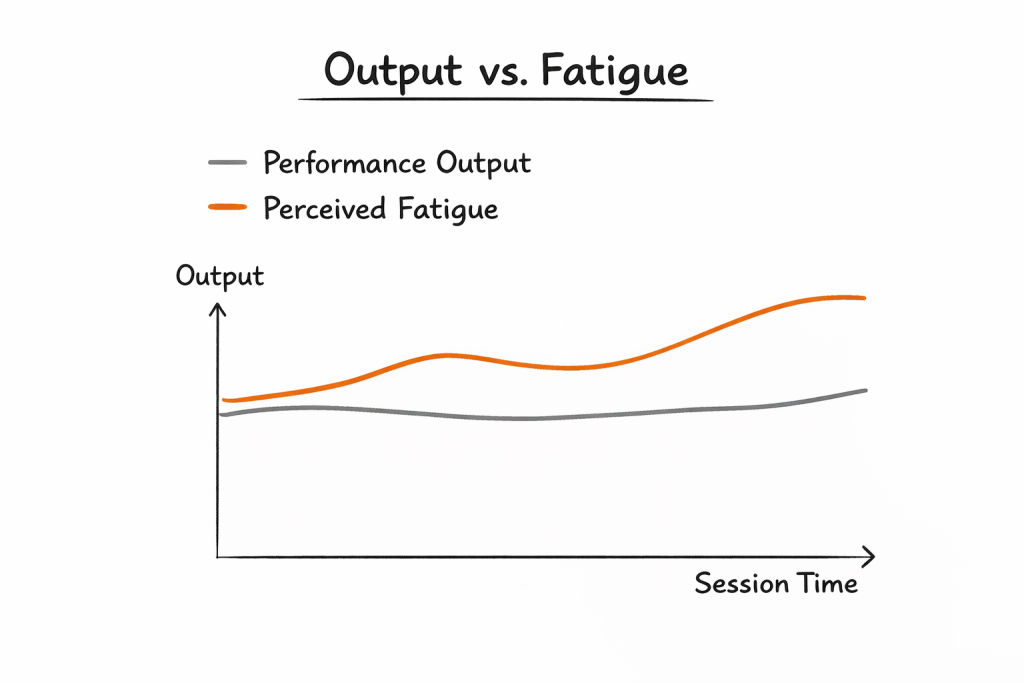
Fatigue will happen in sprint training. The goal is not to remove it. The goal is to stop fatigue from teaching the wrong lesson.
That is where good programming becomes a filter. If fatigue rises but the athlete still holds position and output, the session may still be productive. If fatigue rises and positions unravel, the session has crossed the line.
This distinction matters because many coaches stop sessions based on how tired the athlete looks, not how well the athlete is still moving. A better approach is to watch the pattern. As long as mechanics stay stable and the intended output remains present, the training stimulus may still be clean. Once the pattern degrades, the adaptation target has changed.
Overspeed Should Teach Fast, Not Chaos
Overspeed work can be useful because some athletes have never safely experienced higher-level velocity. It can help the nervous system recognize what fast feels like. But overspeed only belongs in a speed-first model when mechanics stay intact.
That means controlled exposures only. Slight downhill sprinting, wind-assisted runs, or high-turnover drills can work if posture remains organized and the volume stays low. If the athlete becomes frantic, reaches too far ahead, or loses pelvic control, the drill is no longer teaching speed. It is teaching faster breakdown.
Overspeed should raise the ceiling without corrupting the pattern.
What to Change in Training Tomorrow
Start small. Choose one output metric for the next two weeks. Pick one sprint position standard you will not compromise on. End the set or adjust the drill when that standard breaks. Keep the work that improves next-session speed expression. Reduce the work that only creates fatigue.
That is how speed stops being a slogan and starts becoming the operating system of the program.
theSprintClub Newsletter
The free newsletter trusted by sprinters, coaches, and high-performers who know that real progress starts with understanding why you’re fast — and how to build it for life.