|
|
|
|
The Reality Check
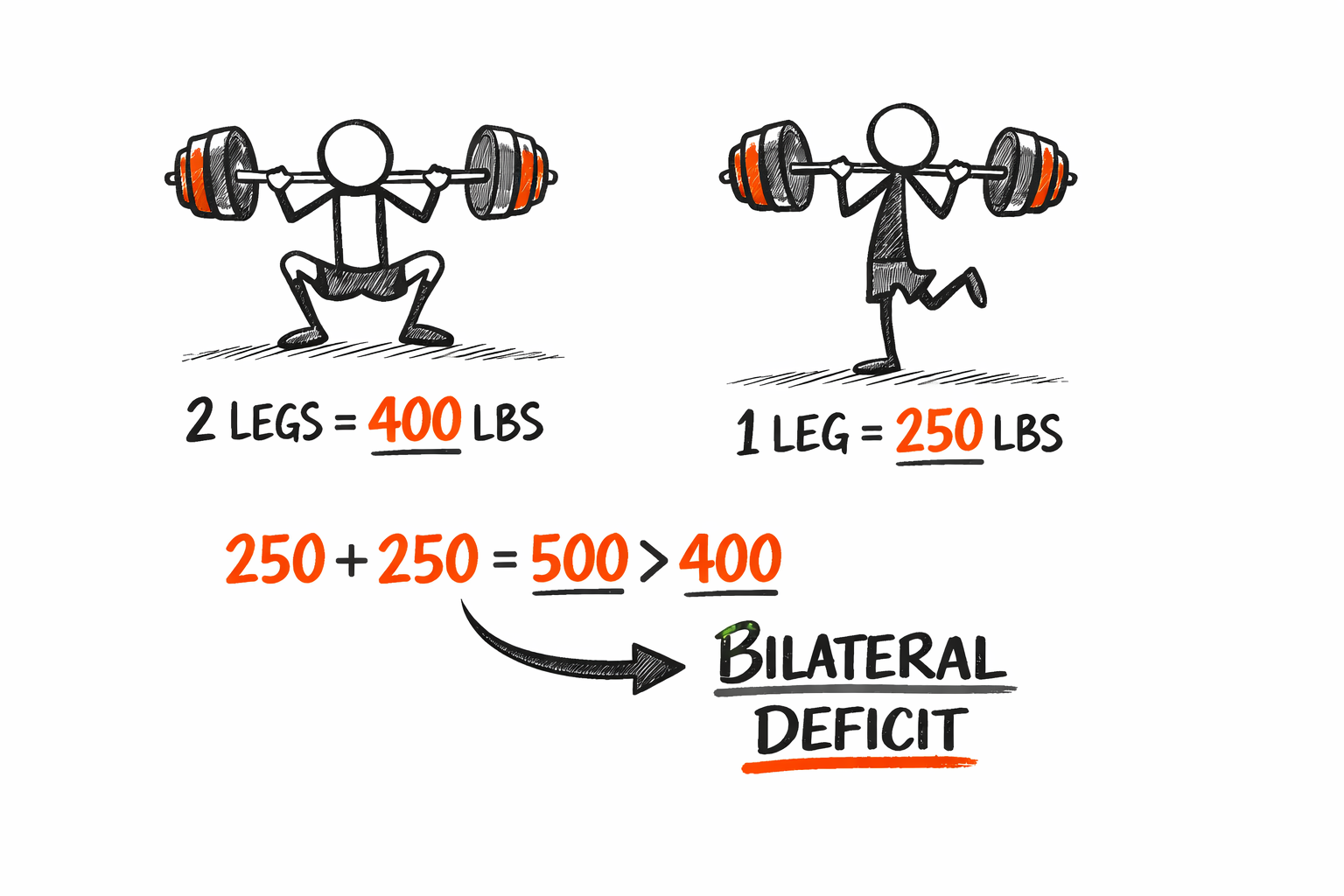
You can squat 400 lbs on two legs. But how much can you handle on one?
|
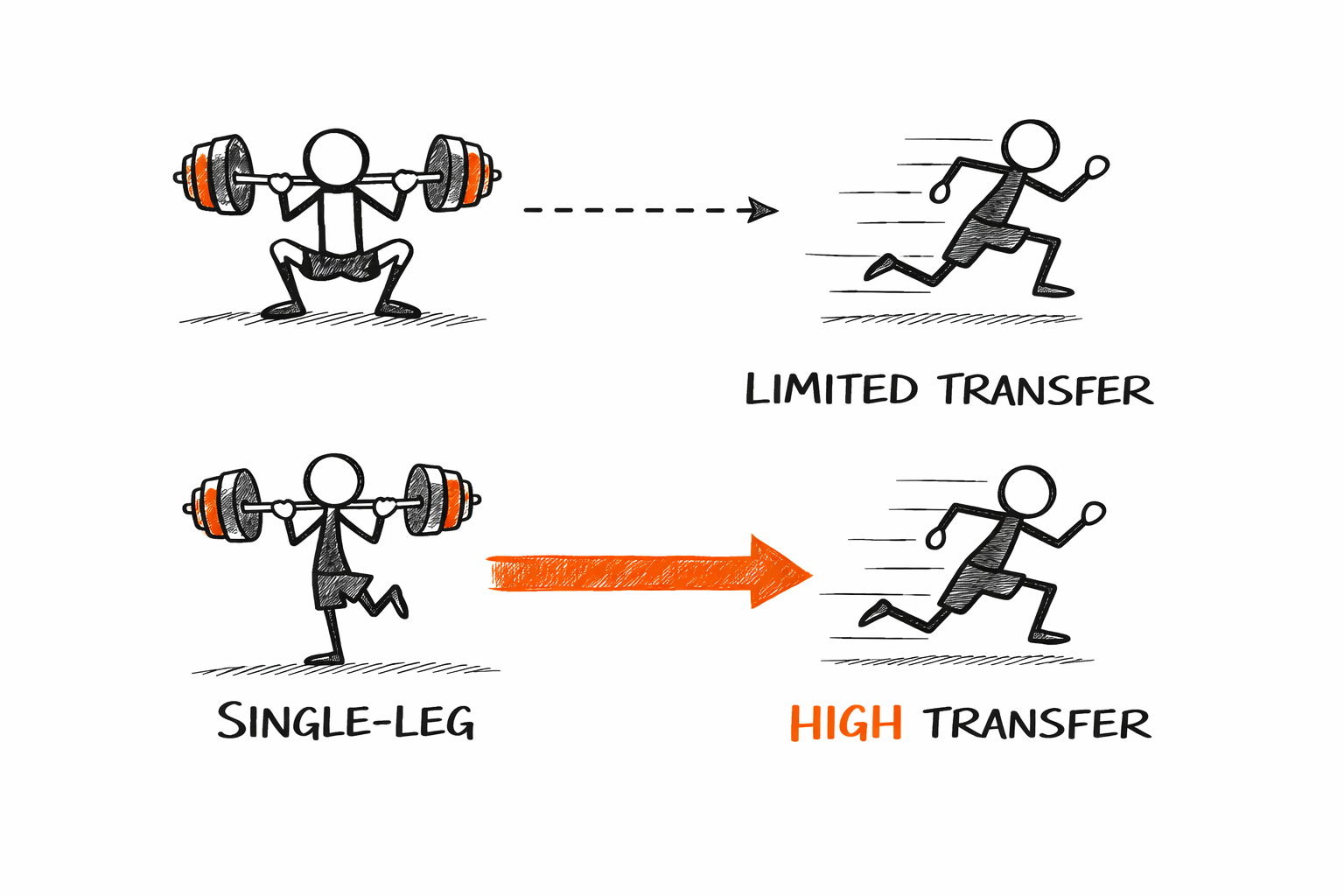
Sprinting never involves two-legged force production. Every stride is single-leg. Yet most training programs emphasize bilateral exercises.
|
This disconnect limits transfer to actual sprint performance.
|
|
|
The Science: Why Single-Leg Strength Matters More
The Bilateral Deficit Phenomenon
Research consistently demonstrates that the sum of force from each leg separately exceeds force from both legs together.
|
What this means for training: You can load each leg more heavily (relative to its capacity) in single-leg work than bilateral work.
|
|
|
|
The Transfer Evidence
Multiple studies show single-leg strength correlates more strongly with sprint performance than bilateral strength:[3][4]
|
- Single-leg plyometric ability predicts sprint acceleration
- Reducing asymmetries improves performance and reduces injury risk
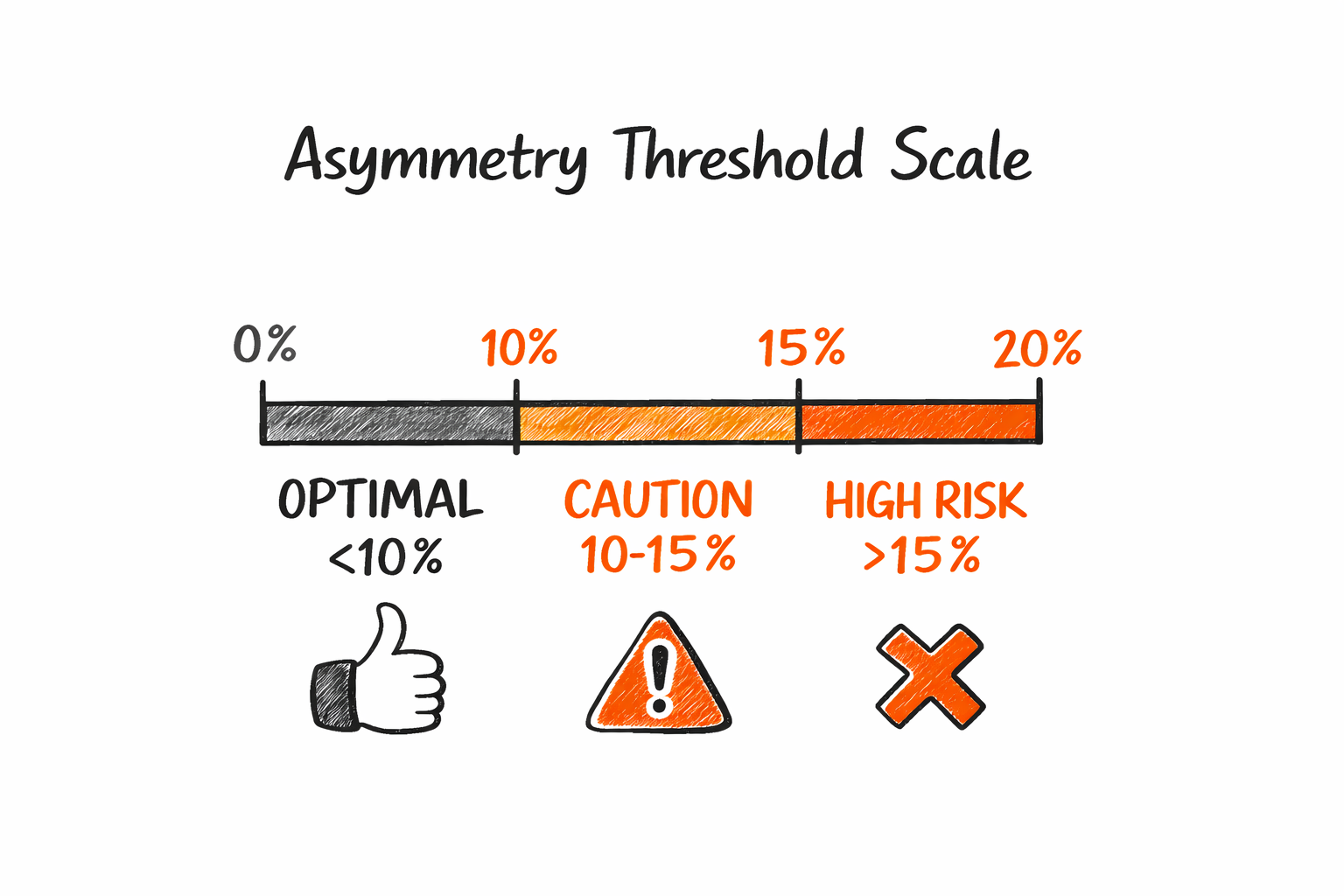
- Athletes with greater than 15% limb asymmetry show higher injury risk and worse acceleration[5]
Key finding: A 2025 study on horizontal jumps found that single-leg training produced superior transfer to sprint performance compared to bilateral training, particularly in acceleration phases.[6]
|
|
|
The Training Framework
Strength Phase Exercises
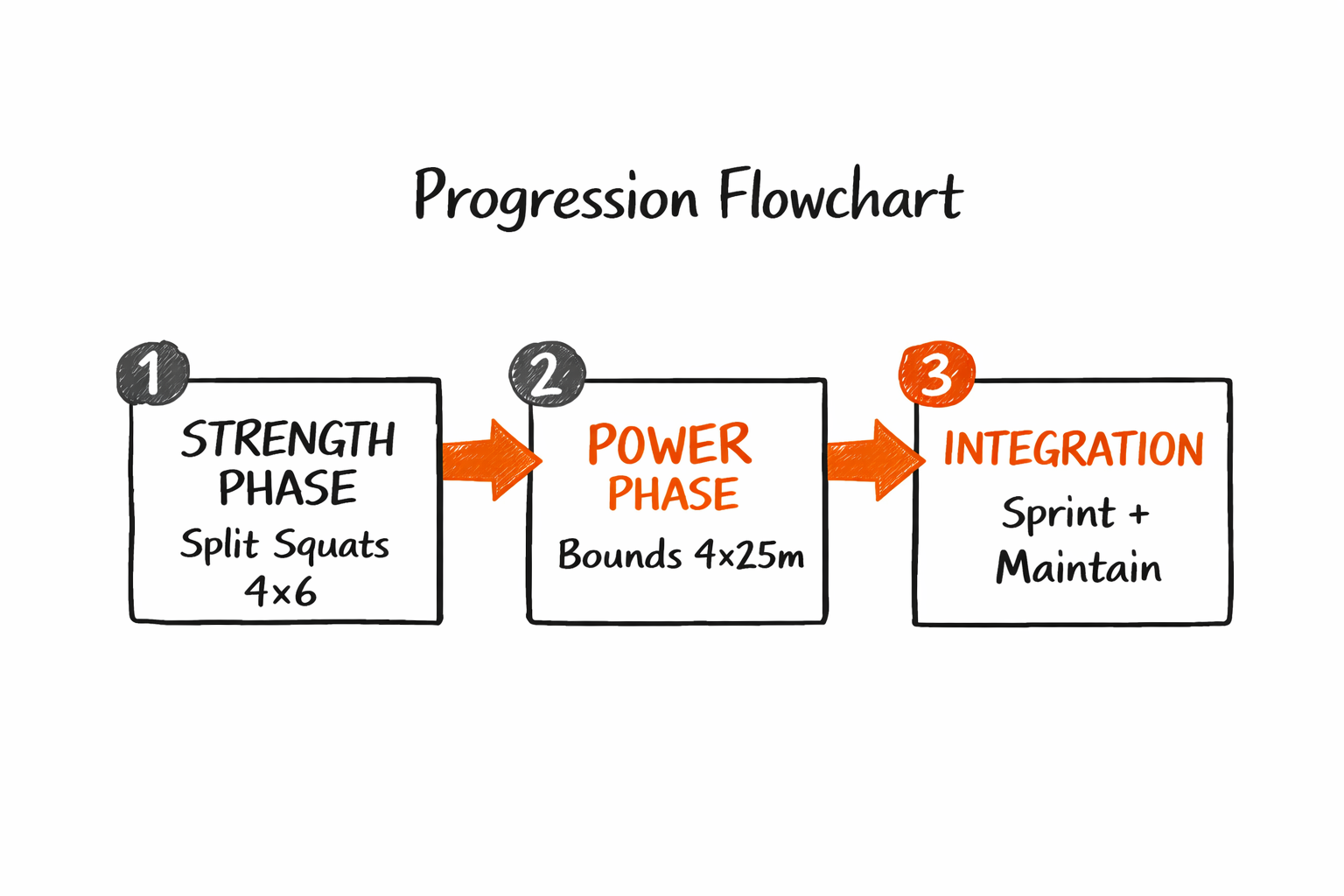
1. Split Squats / Rear-Foot Elevated Split Squats
|
- High load potential
- Stable position for progressive overload
- Front leg emphasis
- Protocol: 3-5 sets × 4-8 reps per leg
2. Single-Leg Romanian Deadlifts
|
- Posterior chain emphasis
- Hip hinge pattern
- Eccentric hamstring loading
- Protocol: 3-4 sets × 6-10 reps per leg
- Concentric emphasis
- Sprint-relevant pattern
- Can load heavily
- Protocol: 3-4 sets × 5-8 reps per leg
4. Single-Leg Hip Thrusts
|
- Glute isolation
- Terminal hip extension
- High load capacity
|
|
Power/Plyometric Phase Exercises
- Repeated same-leg contacts
- Maximum single-leg demand
- Reveals asymmetries
- Protocol: 3-5 sets × 20-30m per leg
6. Single-Leg Depth Drops
|
- Eccentric loading
- Reactive strength development
- High neural demand
- Protocol: 3-4 sets × 4-6 reps per leg
7. Single-Leg Hops (multi-directional)
|
- Stability in multiple planes
- Reactive patterns
- Ankle stiffness development
- Protocol: 3-4 sets × 8-12 contacts per leg
|
|
|
|
|
|
|
Addressing Asymmetries: The Performance Multiplier
Testing Protocol
- Maximum load capacity
- Jump height (single-leg CMJ)
- Bound distance
- Sprint split times
Asymmetry Thresholds
|
Acceptable: Less than 10% difference
|
|
Problematic: Greater than 15% difference (injury risk, performance limitation)
|
Correction Strategy
- Extra volume on weaker side
- Start training with weaker side
- Use weaker side as limiter for work sets
- Monitor progress with objective testing
Recent research indicates that sprint asymmetry is common even in elite athletes, but larger asymmetries correlate with reduced acceleration capacity.[5][7]
|
Programming: The Optimal Split
Recommended Distribution
Why Both?
- Build raw strength capacity
- Allow maximal loading
- Develop overall force production
- Specific transfer to sprinting
- Address asymmetries
- Develop stability
- Refine force application
|
|
|
|
|
|
|
|
|
Thanks for reading. See you soon!
|
|
|
|
|
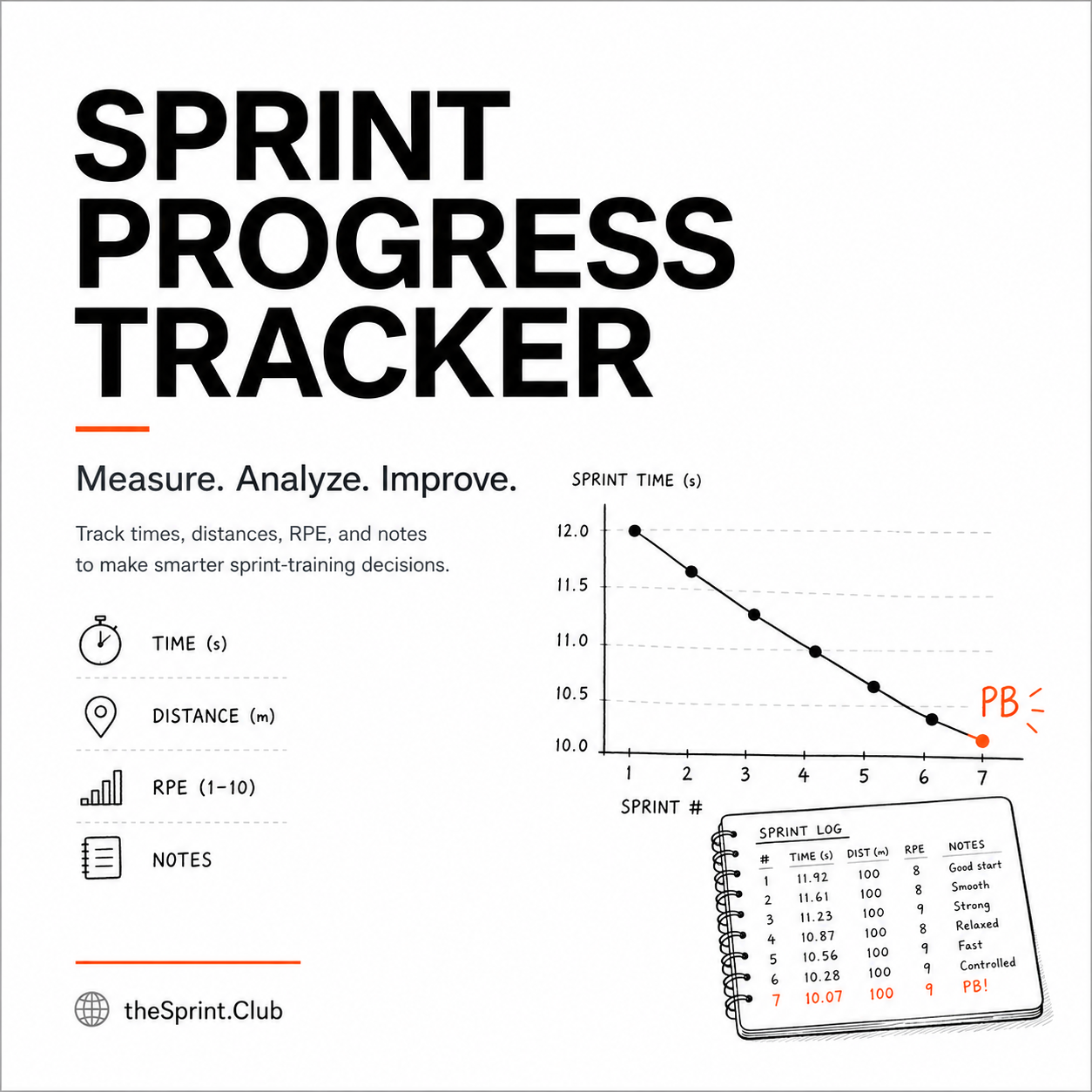
Sprint Progress Tracker: Measure and Improve Your Speed
|
|
|
|
Use a sprint progress tracker to record times, monitor fatigue, identify trends, and make smarter training decisions that improve sprint performance.
|
|
|
|
|
|
|
|
Why absorbing force efficiently is the missing link to faster sprint times, shorter ground contacts, and better performance.
|
|
|
|
Most athletes focus on producing force. Elite sprinters also master absorbing it. Every sprint step begins with a collision between the foot and the ground. Before you can produce force, your body must accept it. Athletes who develop exceptional eccentric strength can absorb larger forces, store more elastic energy, reduce ground contact time, and return more of that energy into …
|
|
|
|
|
|
|
|