|
|
|
|
|
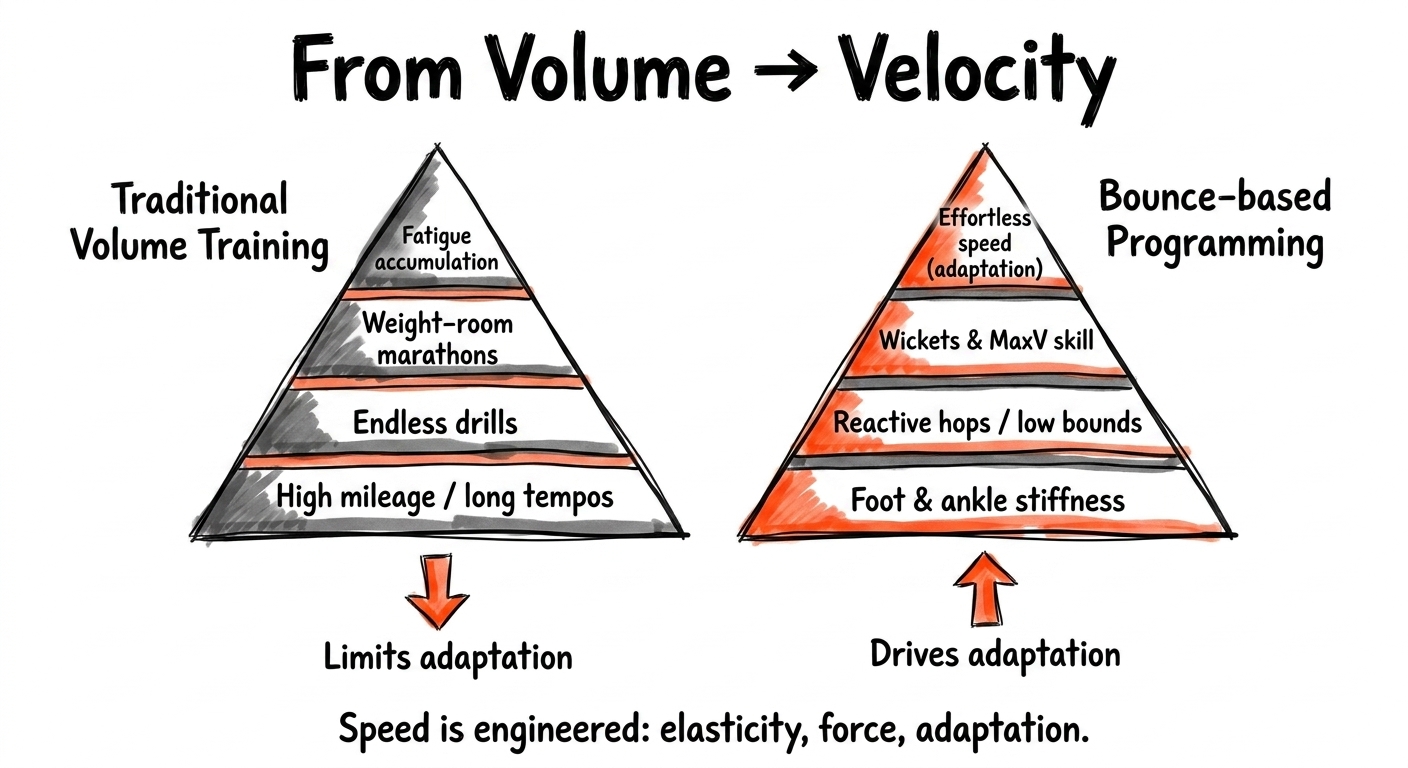
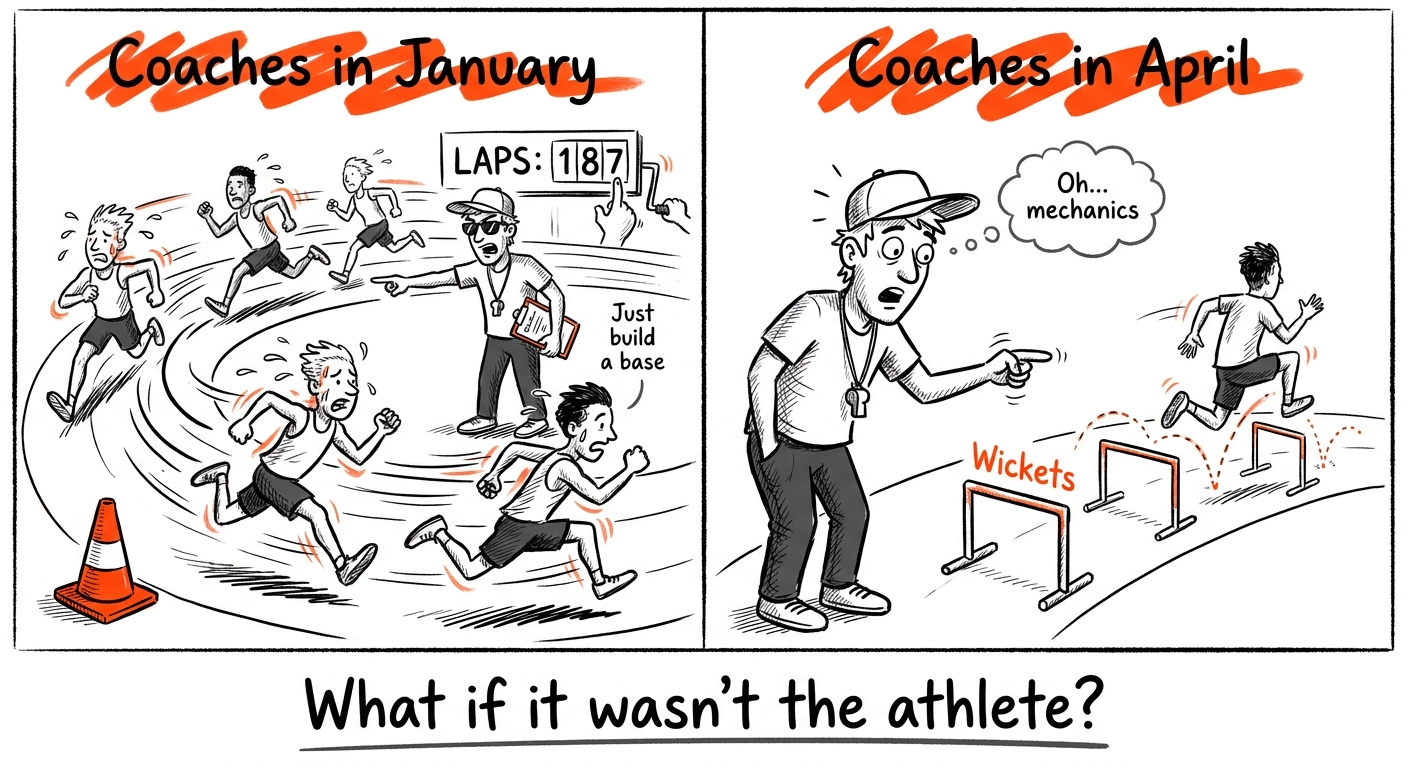
For decades, sprint coaches have been told to “build a base.”
|
Long runs. Endless drills. Weight-room marathons.
|
And every season… the same story: tired legs, slow progress, and athletes who never tap into their true top speed.
|
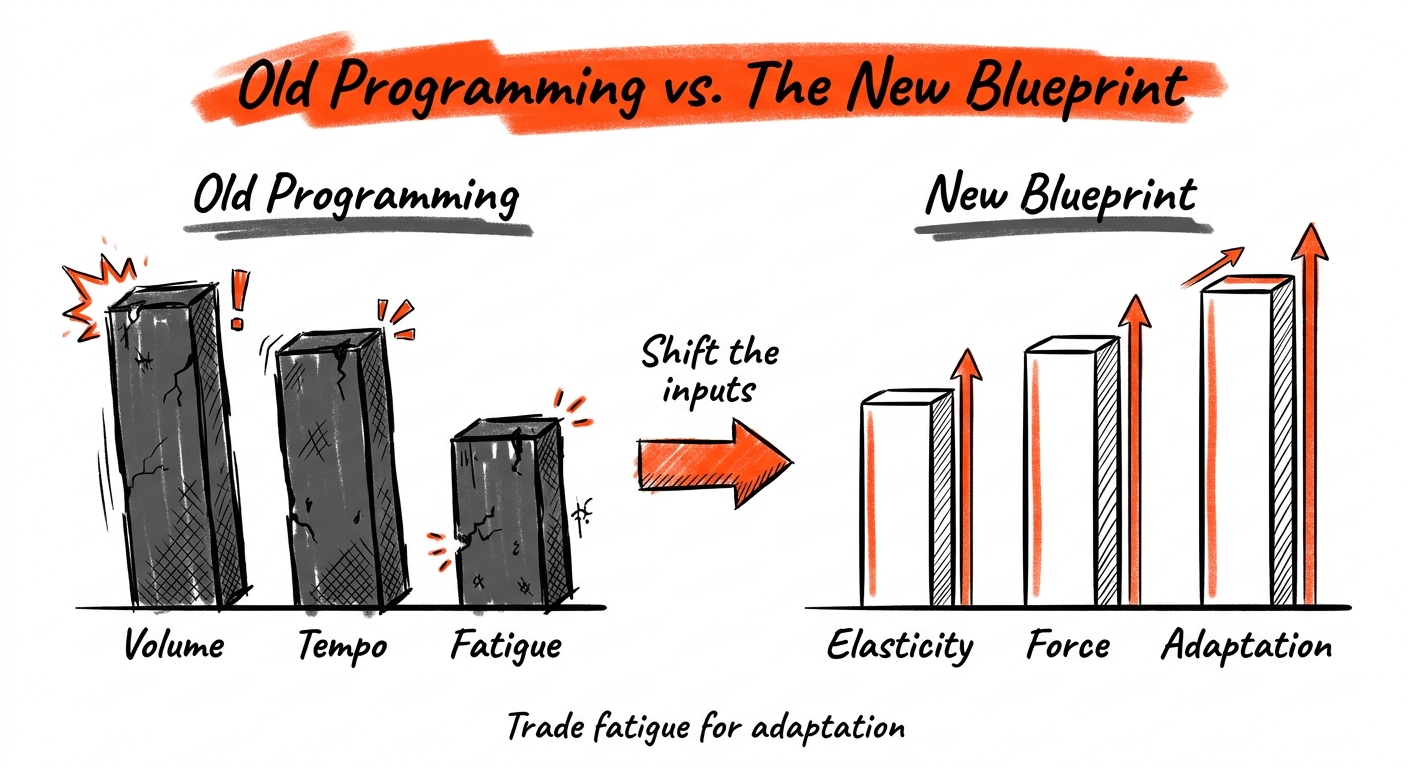
The Programming eBook rips up that script.
|
It shows that elite speed isn’t built on fatigue, it’s built on adaptation.
|
When you see a sprinter glide across the track with that effortless bounce, you’re not seeing luck or talent.
|
You’re seeing an athlete whose body has been taught to:
|
- Store and release force instead of absorbing it.
- Stay stiff and reactive through every collision with the ground.
- Accelerate efficiently instead of spinning wheels.
It’s a training system built on neuromechanics, not nostalgia.
|
|

|
|
|
Here’s what you’ll find inside Programming:
|
- Weeks 1–4: Building from the ground up. Foot & ankle stiffness, reactive hops, and low-amplitude bounds.
- Weeks 5–8: Wickets & MaxV development. Teaching athletes to feel speed, not fake it.
- Weeks 9–17: Translating bounce into effortless racing speed; adaptation, not exhaustion.
- Bonus sections: Extreme isometrics for metabolic conditioning, contrast training, and real-world examples.
It’s not theory—it’s a complete 17-week blueprint for speed you can feel.
|
|
|
|
|
|
|
|
|
“Acceleration is the base. There’s no other way to reach Max Velocity.”
— Programming, Chapter 6
|
|
Translation: If your training starts with 300 m repeats, you’re building endurance for mediocrity, not speed for dominance.
|
|
|
|
|
|
|
|
|
|
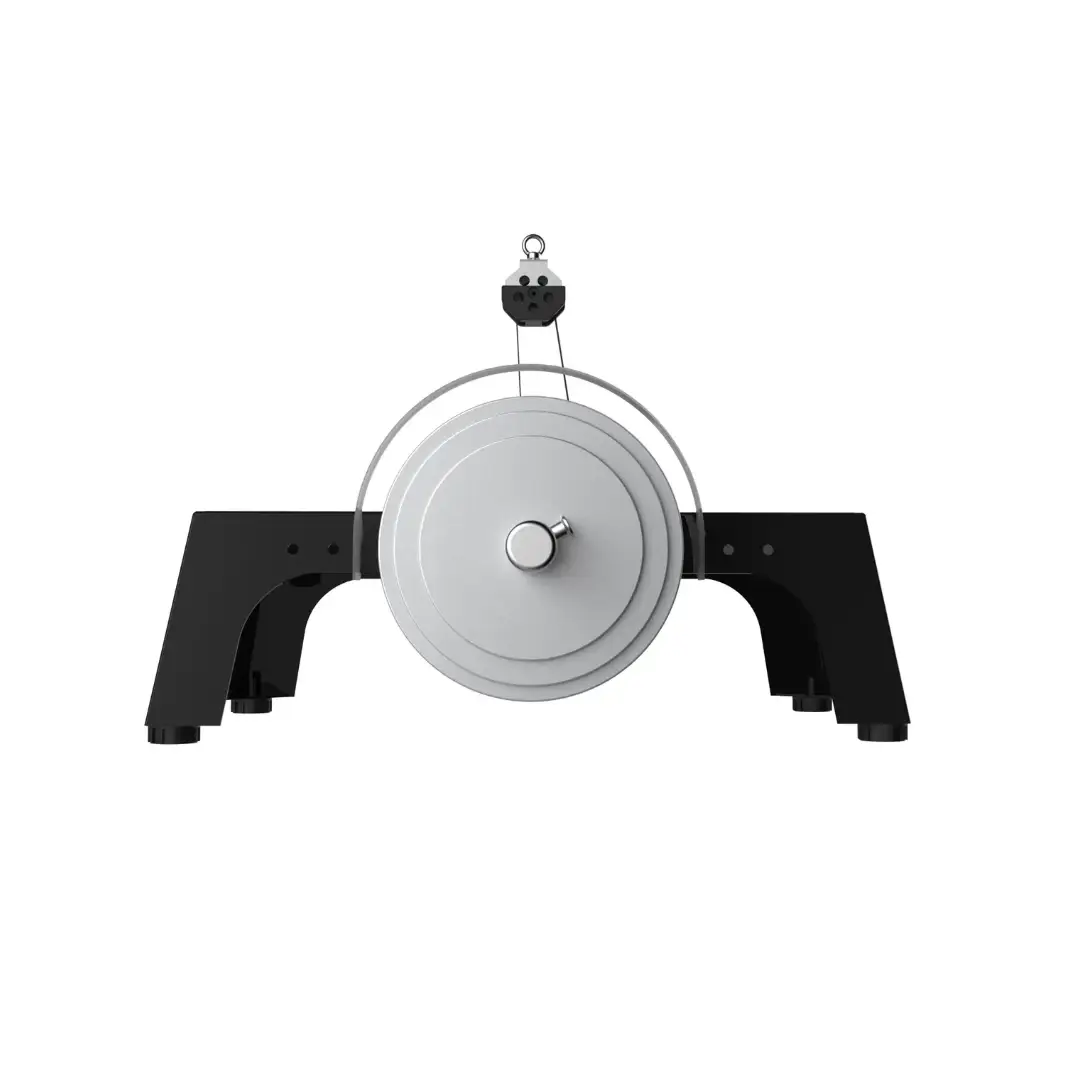
EccentriDisk Flywheel Trainer
|
|
|
Elevate your athletic prowess with the EccentriDisk Flywheel Trainer! Engineered for explosive strength, this versatile flywheel system (with 8", 10", 12" disks) delivers eccentric overload for superior sprint speed, jump height, and power. Featuring a non-slip foot surface, durable braided strap, and accessories like a hand bar and waist belt, it’s ideal for athletes targeting muscle hypertrophy and injury prevention. Compatible with Exxentric flywheels. Shop now at thesprint.club
|
|
|
|
|
|
|
|
|
|
Thanks for reading. See you soon!
|
|
|
|
|
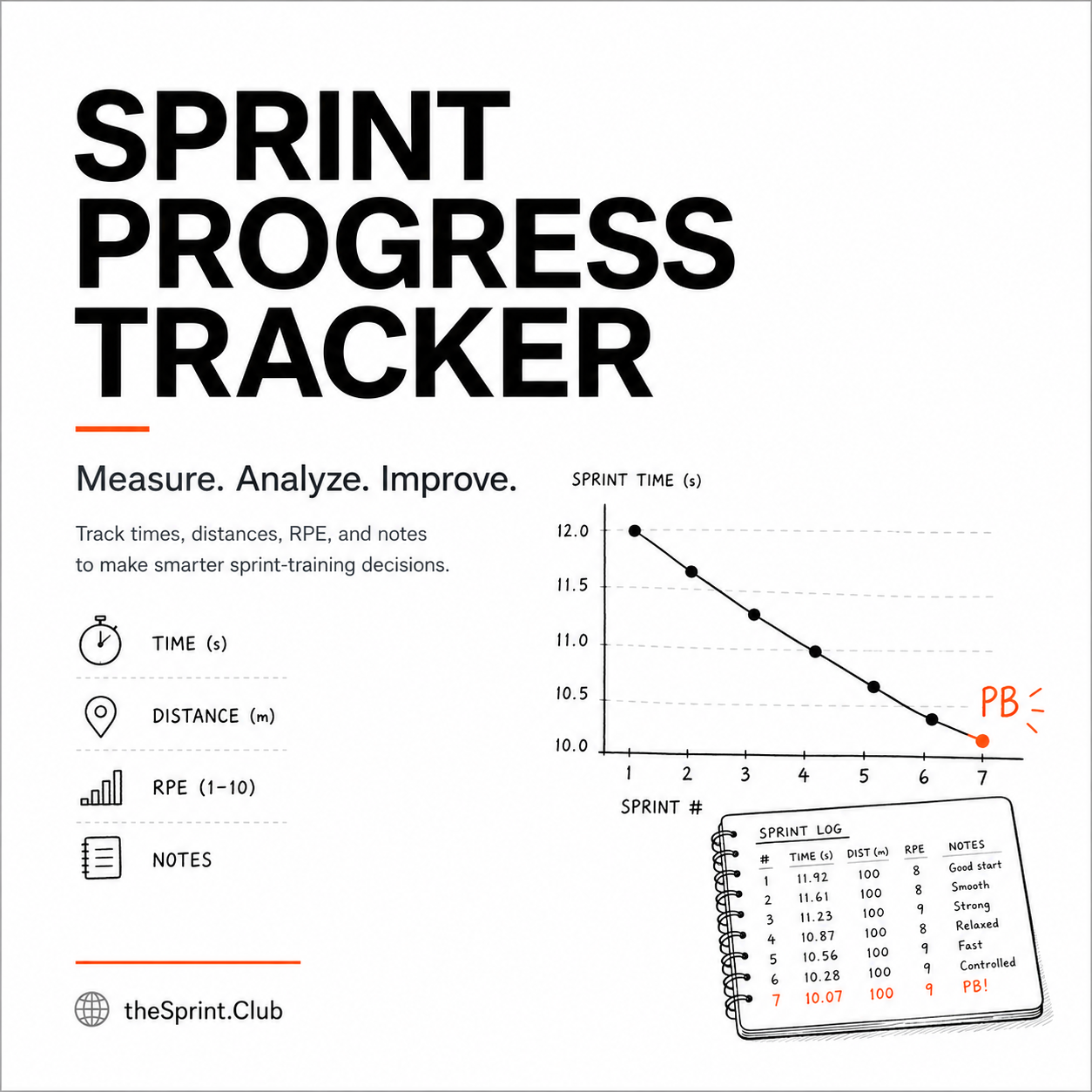
Sprint Progress Tracker: Measure and Improve Your Speed
|
|
|
|
Use a sprint progress tracker to record times, monitor fatigue, identify trends, and make smarter training decisions that improve sprint performance.
|
|
|
|
|
|
|
|
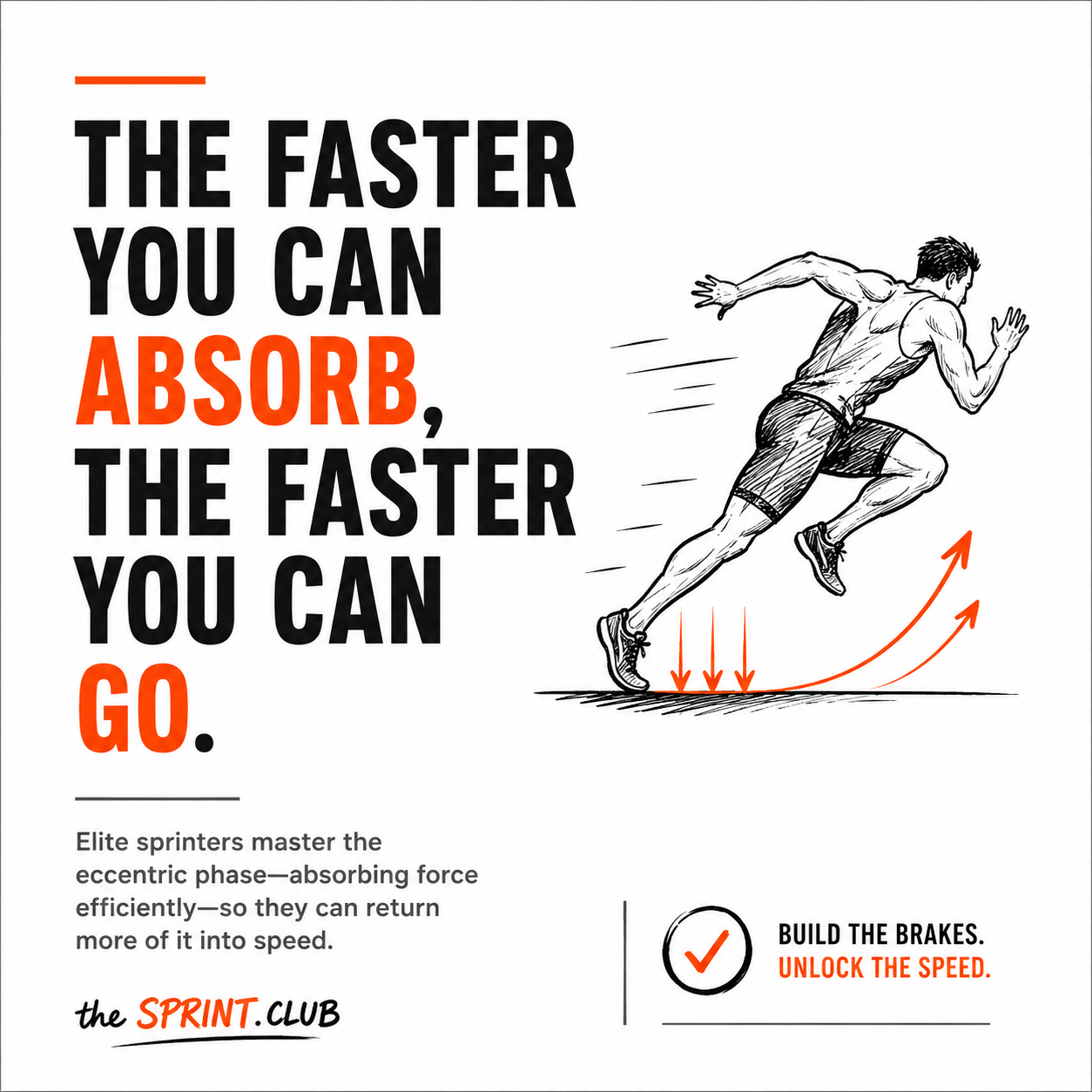
Why absorbing force efficiently is the missing link to faster sprint times, shorter ground contacts, and better performance.
|
|
|
|
Most athletes focus on producing force. Elite sprinters also master absorbing it. Every sprint step begins with a collision between the foot and the ground. Before you can produce force, your body must accept it. Athletes who develop exceptional eccentric strength can absorb larger forces, store more elastic energy, reduce ground contact time, and return more of that energy into …
|
|
|
|
|
|
|
|
|