|
|
|
|
The Flywheel Effect: Why Inertial Training Changes Speed
|
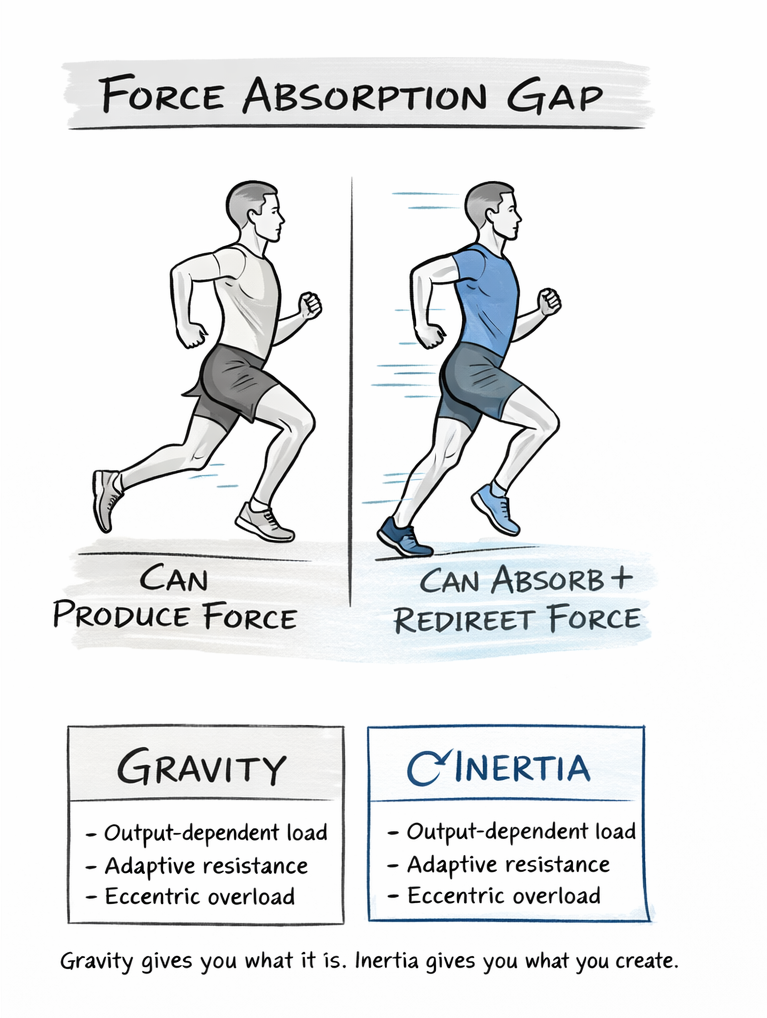
Most athletes can produce force.
|
And almost none are training that quality as well as they think.
|
|
|
The Constraint You Don’t See
|
Every traditional lift is governed by one constant:
|
- The load
- The direction
- The ceiling of eccentric stress
|
Even when you try to “control the eccentric,” you’re still just resisting a fixed load.
|
|
At some point, the system becomes predictable.
|
|
And once it’s predictable, adaptation slows.
|
What Actually Changes Speed
|
Sprint performance isn’t just about producing force.
|
It’s about how quickly and effectively you can:
|
- Accept force
- Store it
- Re-direct it
|
This is where most athletes leak performance.
|
|
Research consistently shows that eccentric strength and rate of force development are tightly linked to sprint performance and change of direction ability.
|
If you can’t handle force on the way down, you can’t express it on the way up.
|
|
|
|
|
Enter: Inertial Resistance
|
Flywheel training changes one key variable:
|
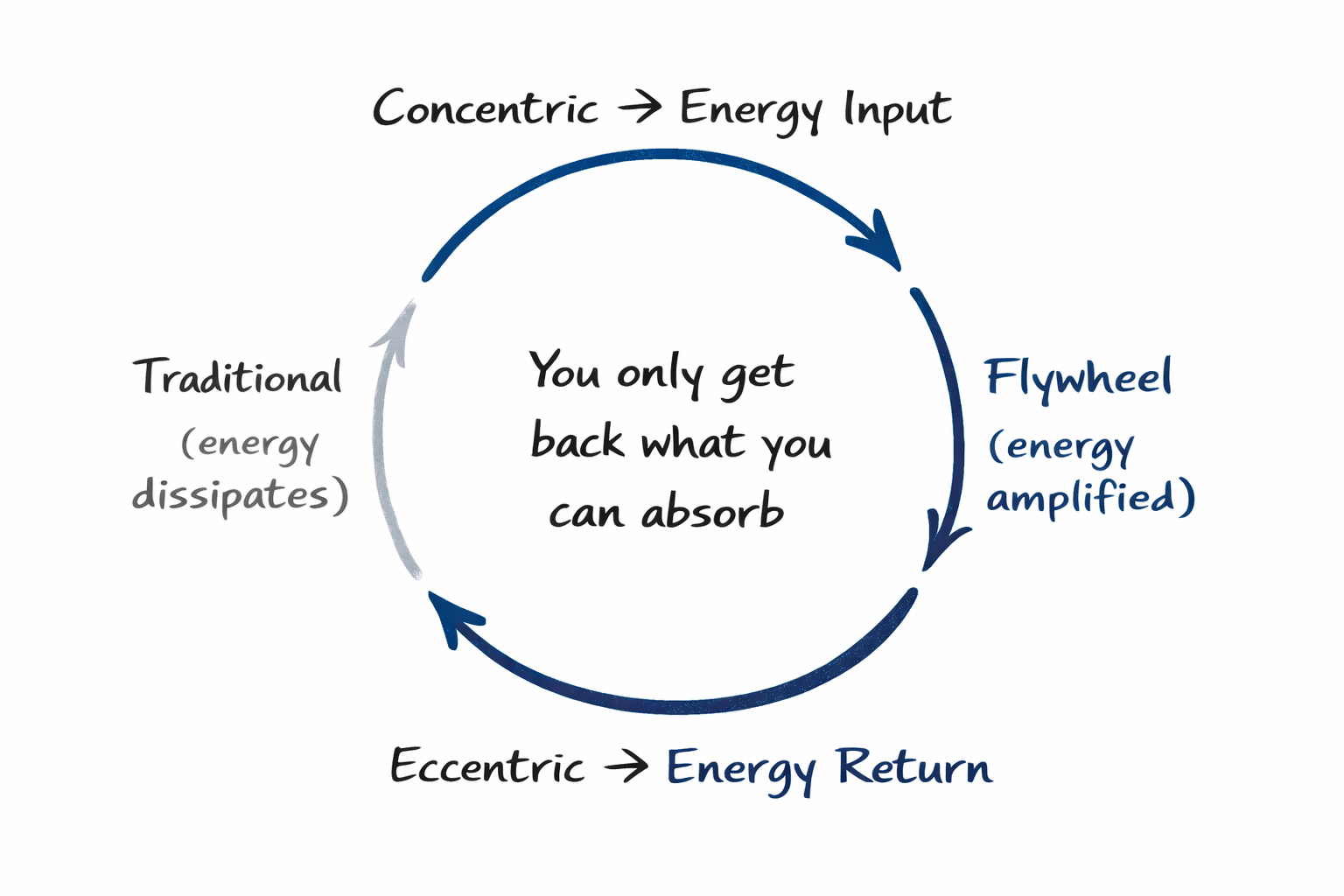
- The harder you push concentrically
- The greater the eccentric demand coming back
|
This creates what’s known as eccentric overload.
|
Not because gravity increased.
|
But because you created more energy than you can easily absorb.
|
|
|
|
|
|
Why This Matters
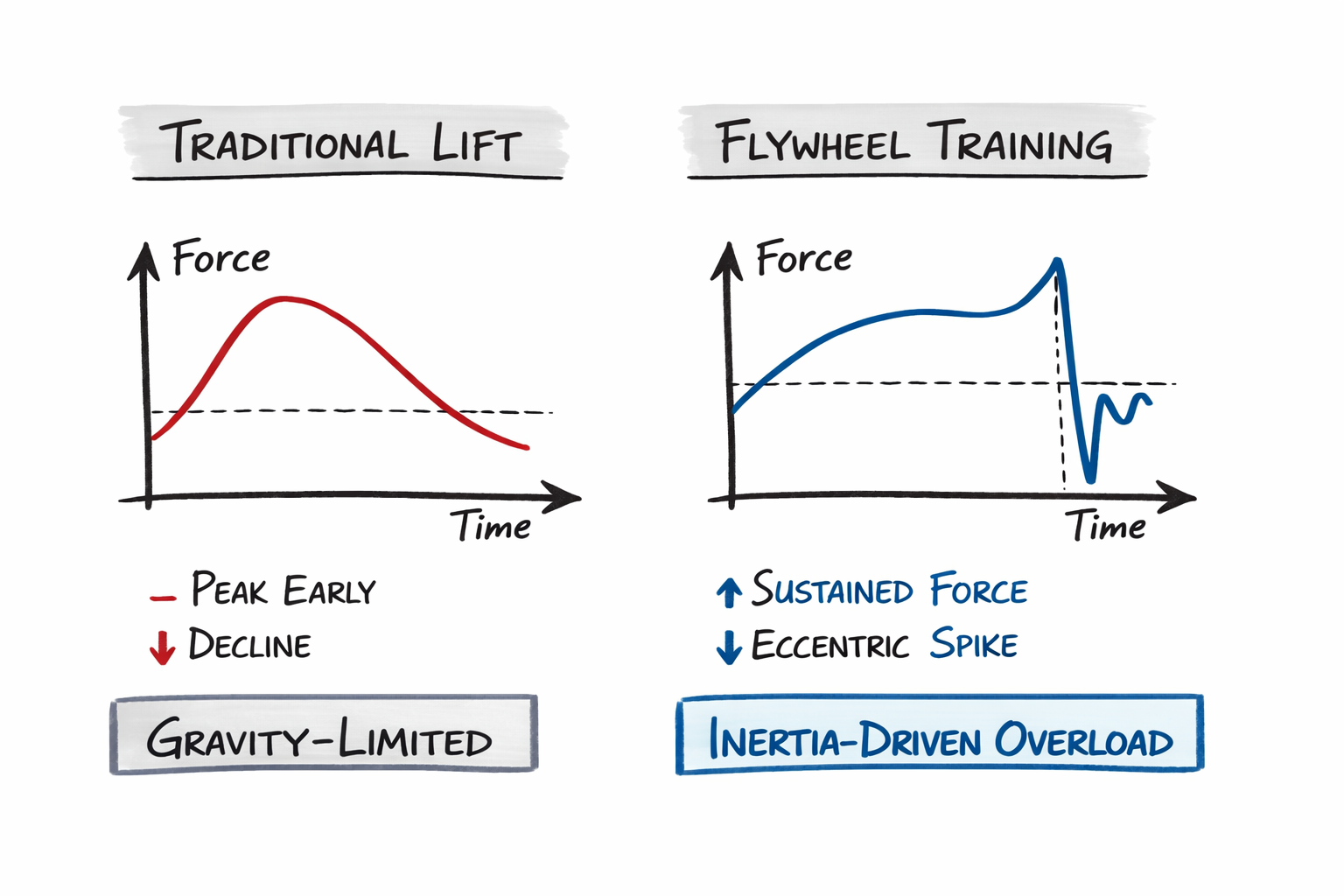
- Peak force early
- Gradual drop-off
- Limited eccentric spike
- Force builds through the movement
- Energy must be absorbed aggressively
- Eccentric phase can exceed concentric output
|
This shifts the stimulus toward what sprinting actually requires:
|
Rapid force acceptance + elastic return
|
|
|
The Transfer to Sprinting
|
At max velocity, ground contact times are extremely short.
|
|
You don’t have time to “produce” force slowly.
|
- Stiffness
- Timing
- Elastic reactivity
|
Flywheel training challenges all three simultaneously.
|
It forces the athlete to:
|
- Stay organized under high eccentric demand
- Coordinate braking and re-acceleration
- Develop usable stiffness, not just raw streng
|
|
|
|
|
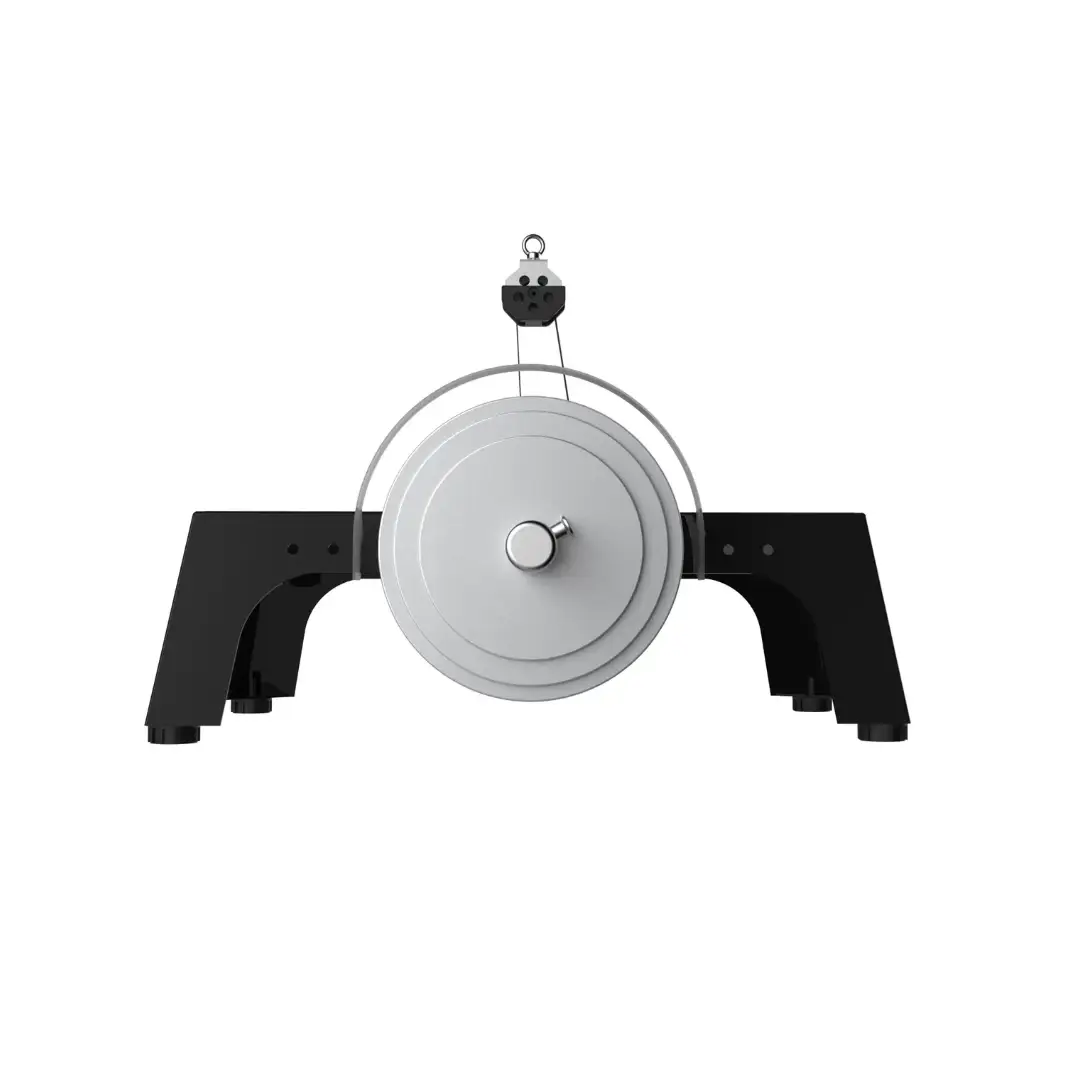
EccentriDisk Flywheel Trainer
|
|
|
Elevate your athletic prowess with the EccentriDisk Flywheel Trainer! Engineered for explosive strength, this versatile flywheel system (with 8", 10", 12" disks) delivers eccentric overload for superior sprint speed, jump height, and power. Featuring a non-slip foot surface, durable braided strap, and accessories like a hand bar and waist belt, it’s ideal for athletes targeting muscle hypertrophy and injury prevention. Compatible with Exxentric flywheels. Shop now at thesprint.club
|
|
|
|
|
|
|
|
|
|
Thanks for reading. See you soon!
|
|
|
|
|
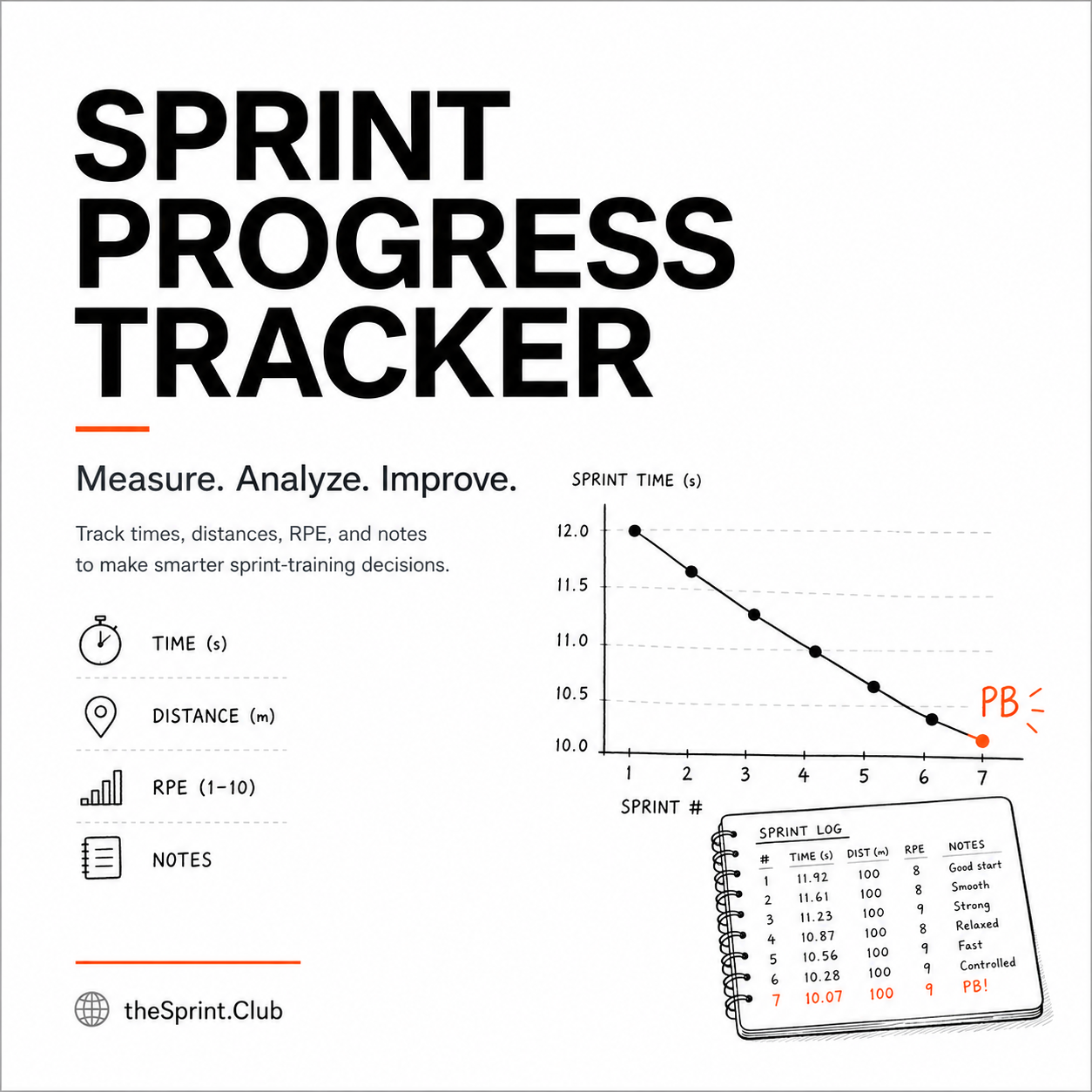
Sprint Progress Tracker: Measure and Improve Your Speed
|
|
|
|
Use a sprint progress tracker to record times, monitor fatigue, identify trends, and make smarter training decisions that improve sprint performance.
|
|
|
|
|
|
|
|
Why absorbing force efficiently is the missing link to faster sprint times, shorter ground contacts, and better performance.
|
|
|
|
Most athletes focus on producing force. Elite sprinters also master absorbing it. Every sprint step begins with a collision between the foot and the ground. Before you can produce force, your body must accept it. Athletes who develop exceptional eccentric strength can absorb larger forces, store more elastic energy, reduce ground contact time, and return more of that energy into …
|
|
|
|
|
|
|
|
|