|
|
|
|
|
Most runners have experienced it.
|
You come off the final bend feeling strong. Rhythm feels clean. You’re still in the race.
|
Your legs feel heavy.
Projection disappears.
The ground feels sticky.
Your body stops responding.
|
|
Most athletes interpret this moment as fatigue.
|
But the deeper explanation...
|
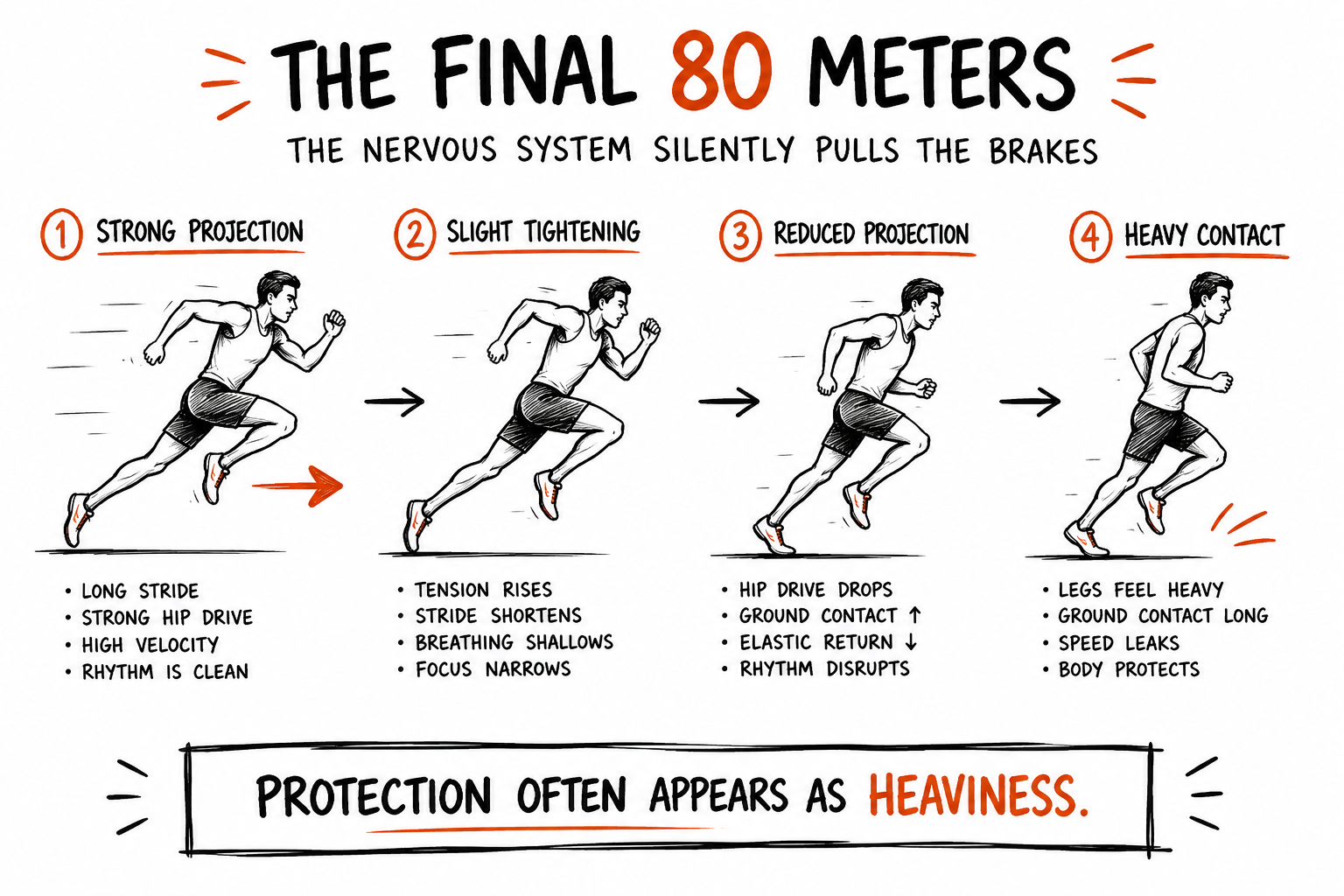
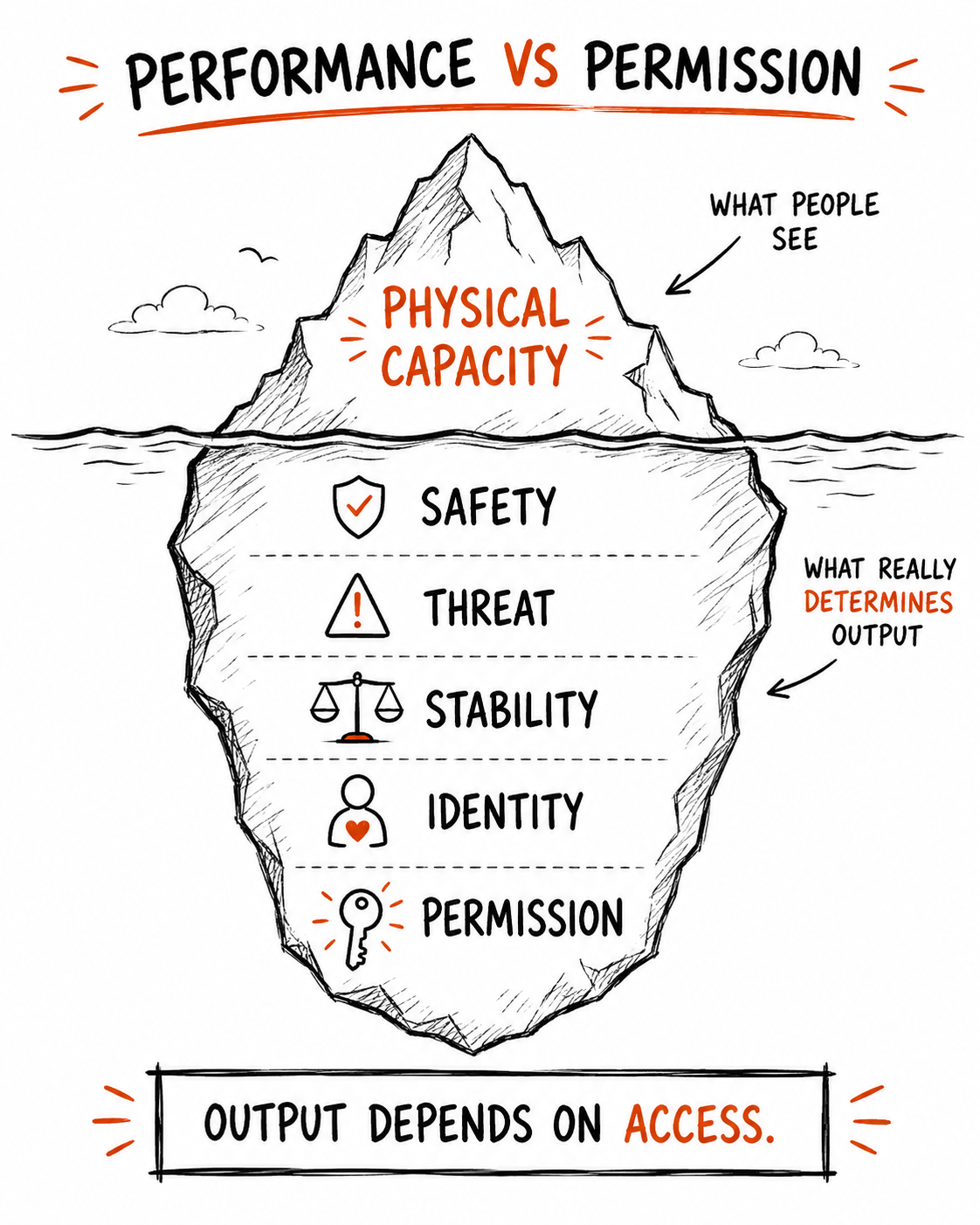
What many athletes experience in the final 80 meters is not simply metabolic collapse, but a form of neural protection. The nervous system begins restricting output when perceived instability and consequence rise beyond tolerance.
|
|
|
The Nervous System Is Not Built for Heroics
|
|
“The nervous system doesn’t fear effort, it fears exposure.”
|
|
This explains why athletes can often hit incredible splits in training, but fail to access the same output in competition.
|
The issue is not always conditioning.
|
- identity evaluation
- uncertainty
- consequence
- fear of failure
The nervous system interprets all of these as variables in a risk calculation.
|
|
And when perceived instability rises too high, the system subtly narrows output to preserve a sense of safety.
|
|
|
|
|
|
|
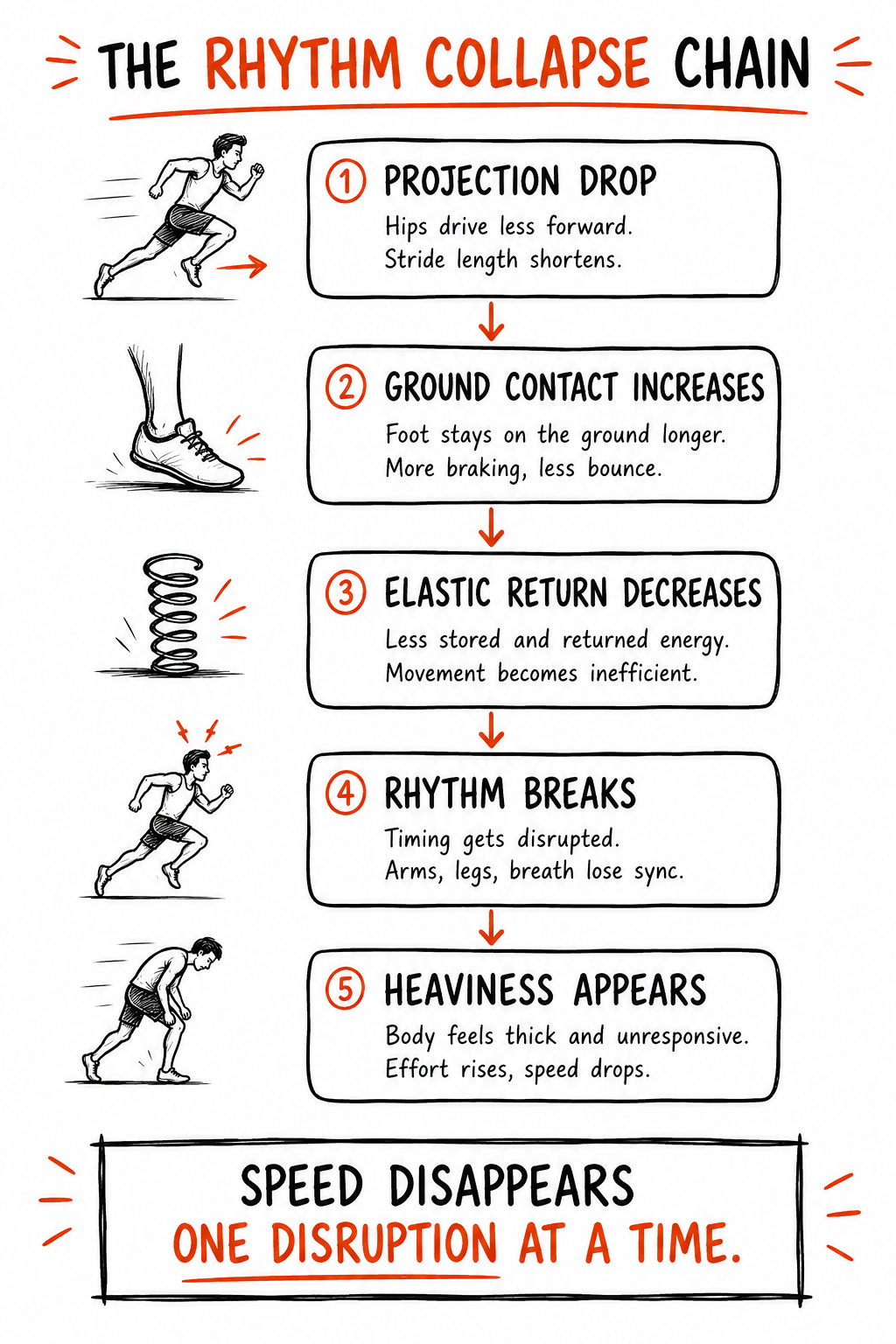
The shift isn't dramatic...
|
- reduce hip projection
- shorten stride amplitude
- increase ground contact time
- decrease elastic return
- create “heaviness”
This is why many athletes describe the sensation as:
“I suddenly lost my legs.”
|
|
|
|
|
|
|
|
|
|
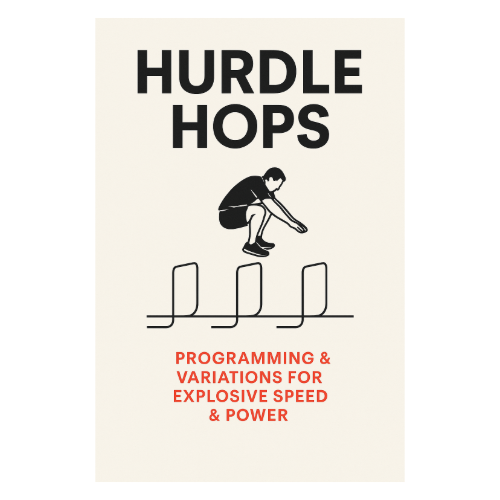
The ebook makes this distinction clear: different hurdle hop setups train different qualities. Reactive force and elasticity are trained by bouncing off the landing with low ground contact time. Stiffness and starting power are trained more through sticking landings, holding positions, and using higher hurdles. Closer spacing biases vertical force. Wider spacing increases the horizontal projection demand.
|
|
|
|
|
|
Why Slower Early Splits Don’t Always Produce Faster Finishes
|
One of the most valuable insights in the transcript is the pacing paradox.
|
Athletes often assume:
“Going out slower should leave more energy for the finish.”
|
But many runners discover something strange:
|
- 600m in 1:16 → close in 26
- 600m in 1:20 → still close in 26
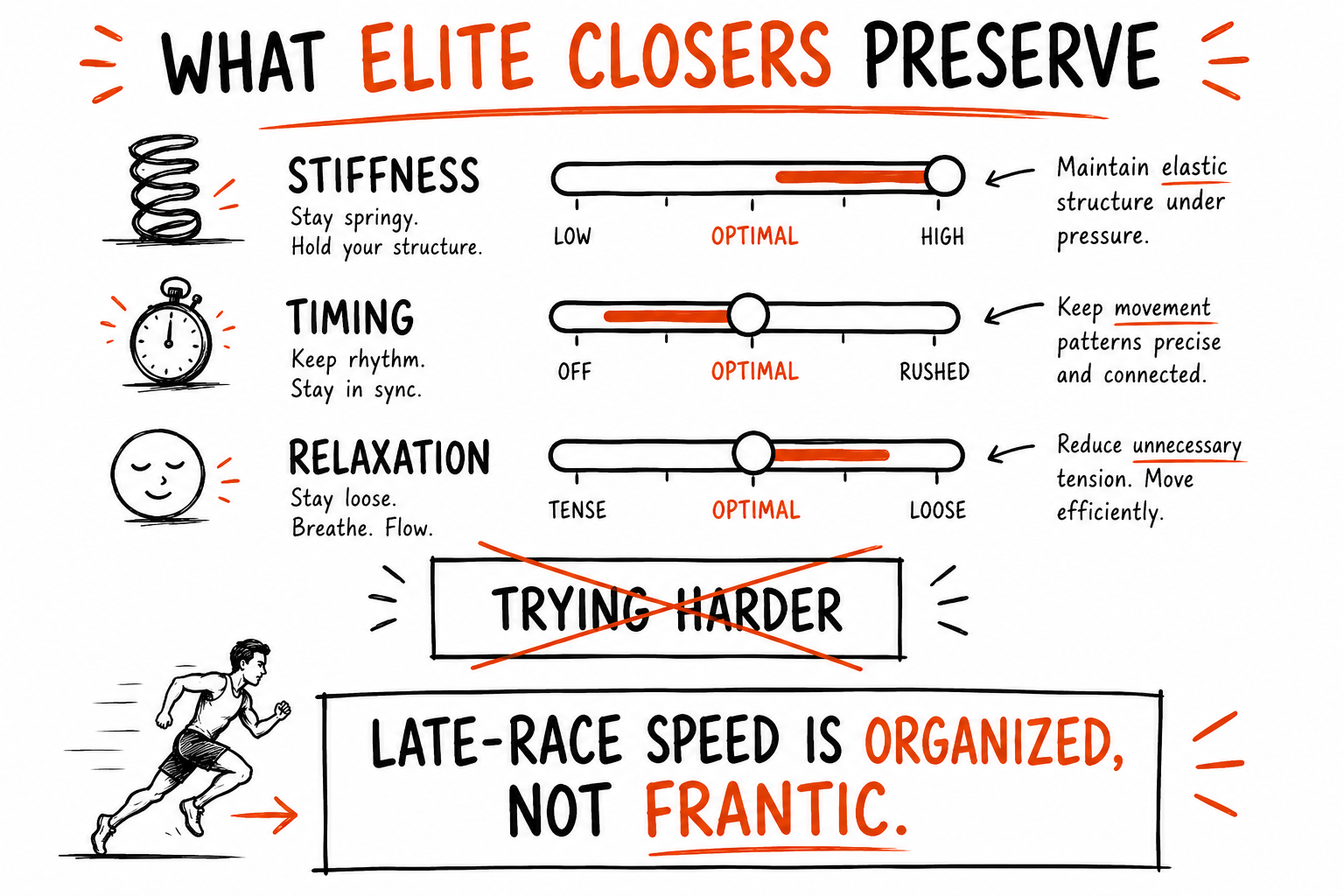
Because closing speed is rhythm-dependent, not merely energy-dependent.
|
When rhythm and projection remain aggressive:
|
- posture stays forward
- stiffness remains organized
- elastic return stays high
- movement remains automatic
But slower pacing can sometimes compress projection and alter rhythm organization.
|
The nervous system struggles to suddenly “release” from compressed mechanics under pressure.
|
|
This aligns with broader research on motor control and skilled movement:high-level performance depends heavily on preserving coordinated movement organization under stress, not simply preserving energy stores.
|
|
|
|
|
|
Help Grow THE SPRINT CLUB
If this newsletter helps you think differently about speed:
|
- share it on Instagram stories
- repost it on X
- send it to another coach
- forward it to an athlete stuck at a plateau
|
The goal of this newsletter is simple:
|
|
Teach the hidden systems that determine visible performance.
|
Growth happens when readers like you share ideas that challenge outdated training assumptions.
|
|
|
|
|
|
|
|
|
|
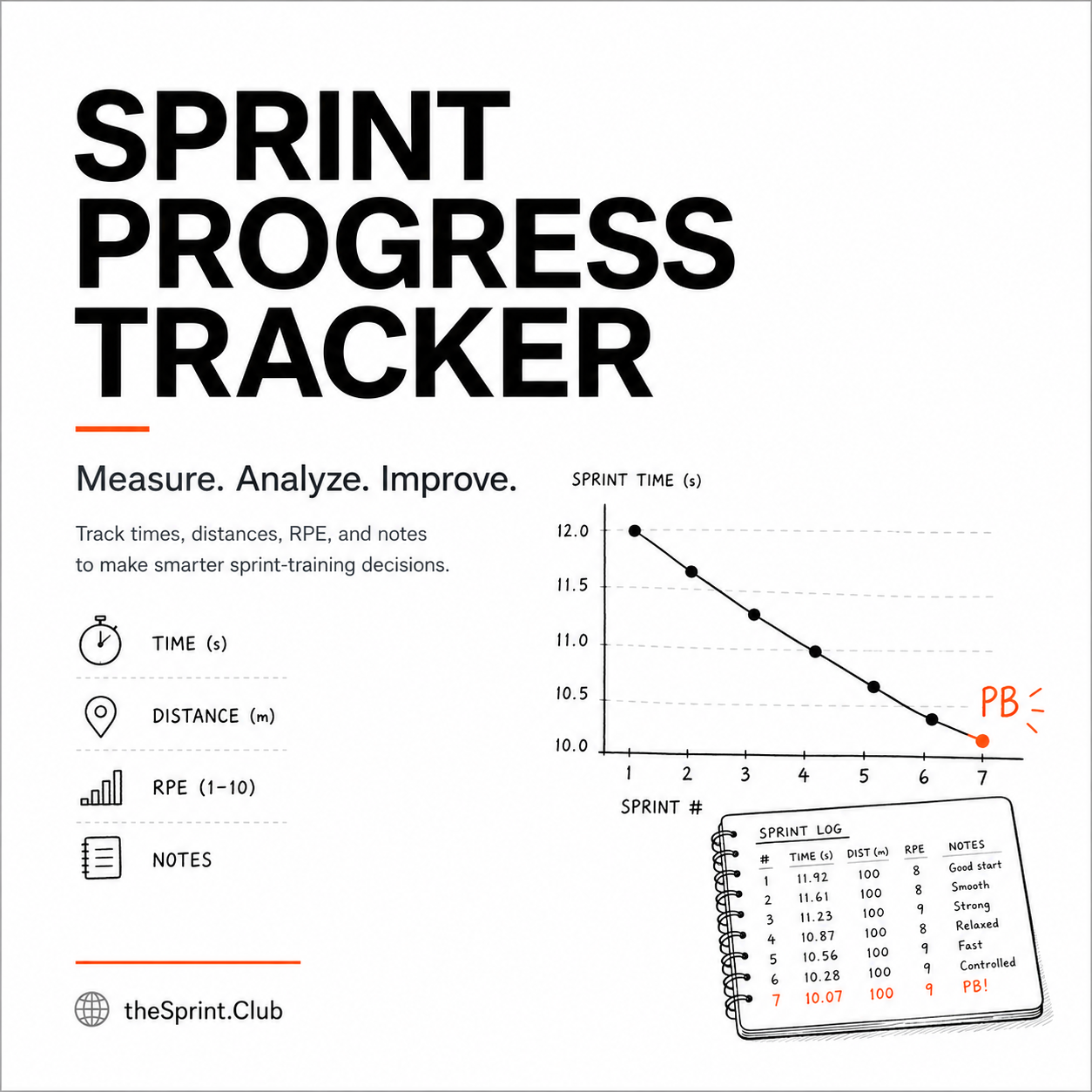
Sprint Progress Tracker: Measure and Improve Your Speed
|
|
|
|
Use a sprint progress tracker to record times, monitor fatigue, identify trends, and make smarter training decisions that improve sprint performance.
|
|
|
|
|
|
|
|
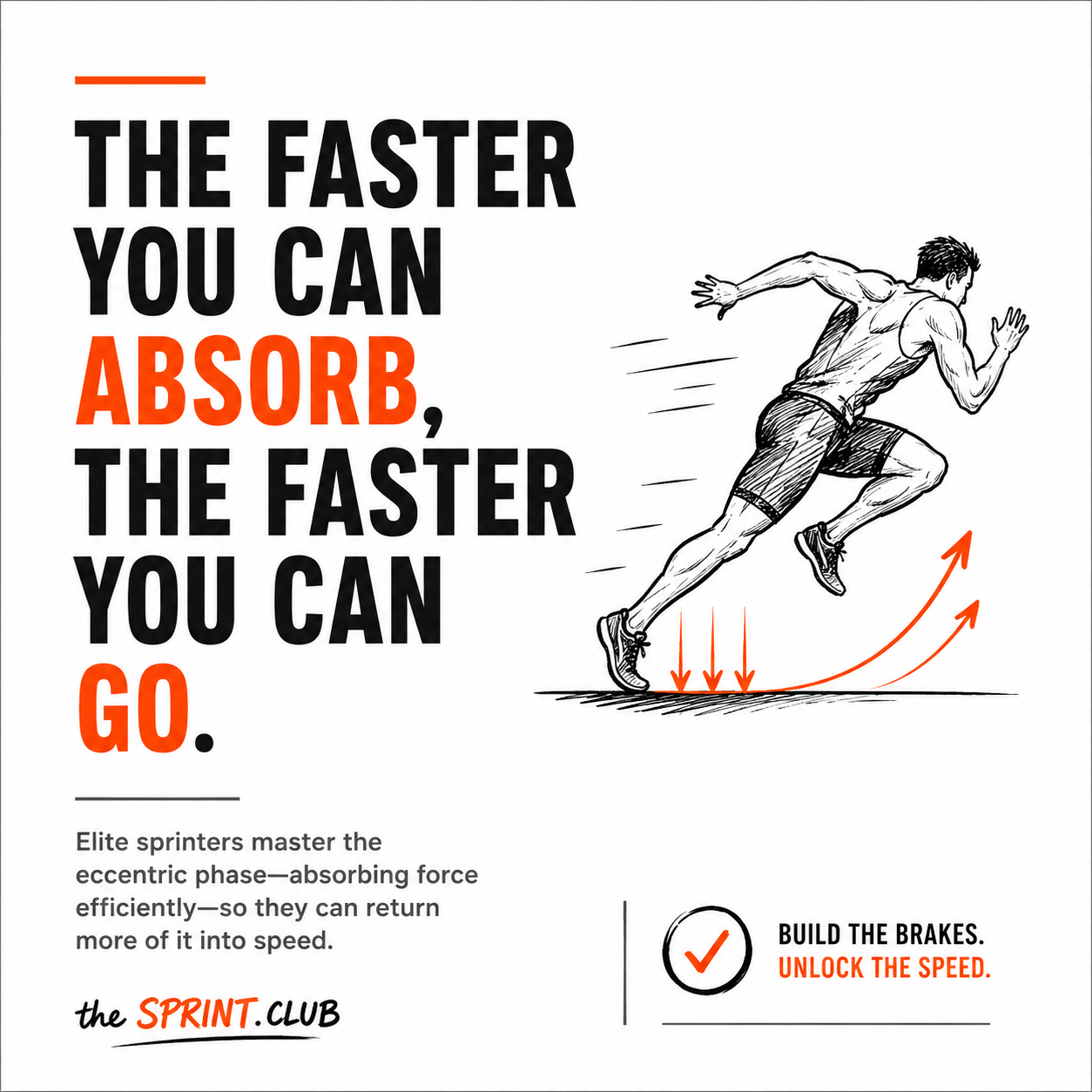
Why absorbing force efficiently is the missing link to faster sprint times, shorter ground contacts, and better performance.
|
|
|
|
Most athletes focus on producing force. Elite sprinters also master absorbing it. Every sprint step begins with a collision between the foot and the ground. Before you can produce force, your body must accept it. Athletes who develop exceptional eccentric strength can absorb larger forces, store more elastic energy, reduce ground contact time, and return more of that energy into …
|
|
|
|
|
|
|
|