|
|
|
|
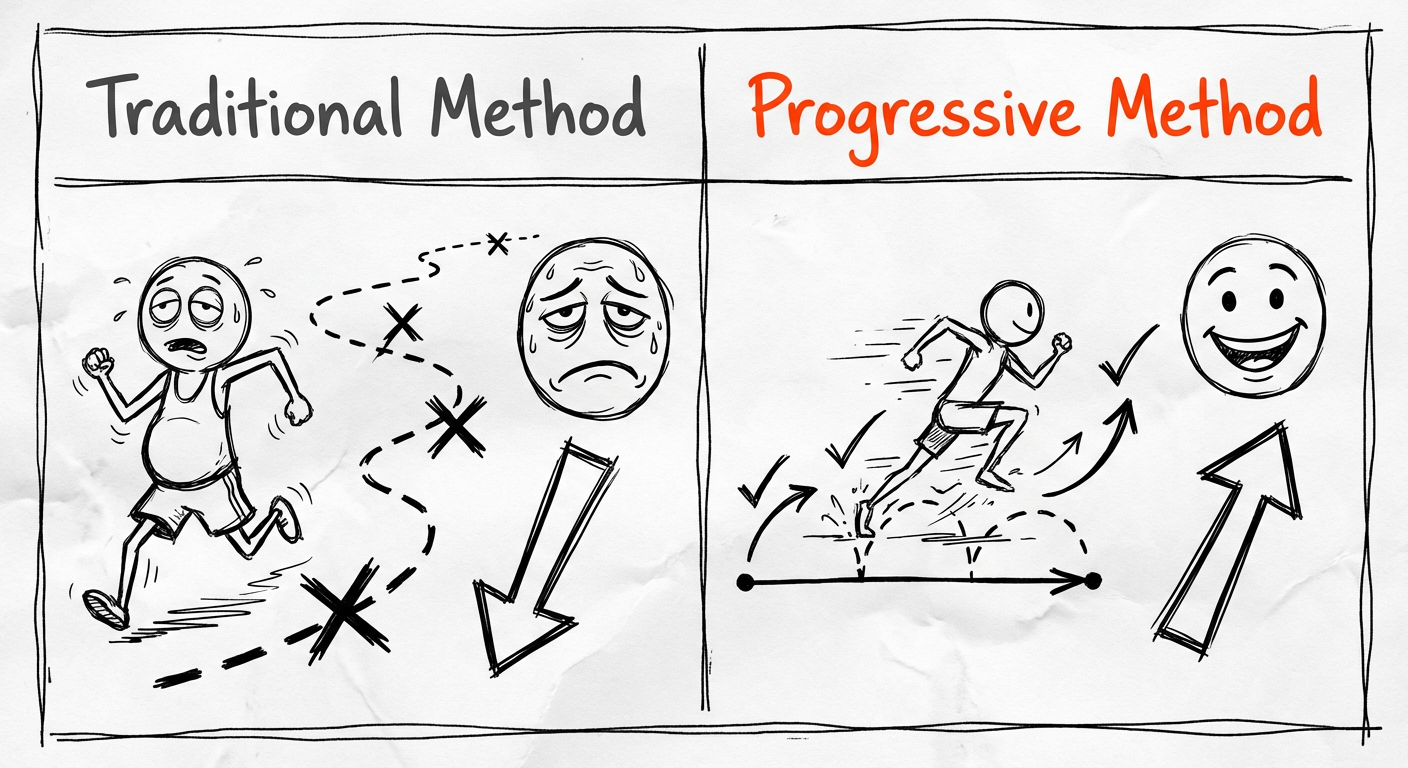
Traditional sprint training follows a destructive pattern: force athletes to run volumes and distances they're not ready for before teaching them to sprint properly.
|
This approach doesn't build faster athletes.
|
|
It builds smaller track teams and broken athletes.
|
|
|
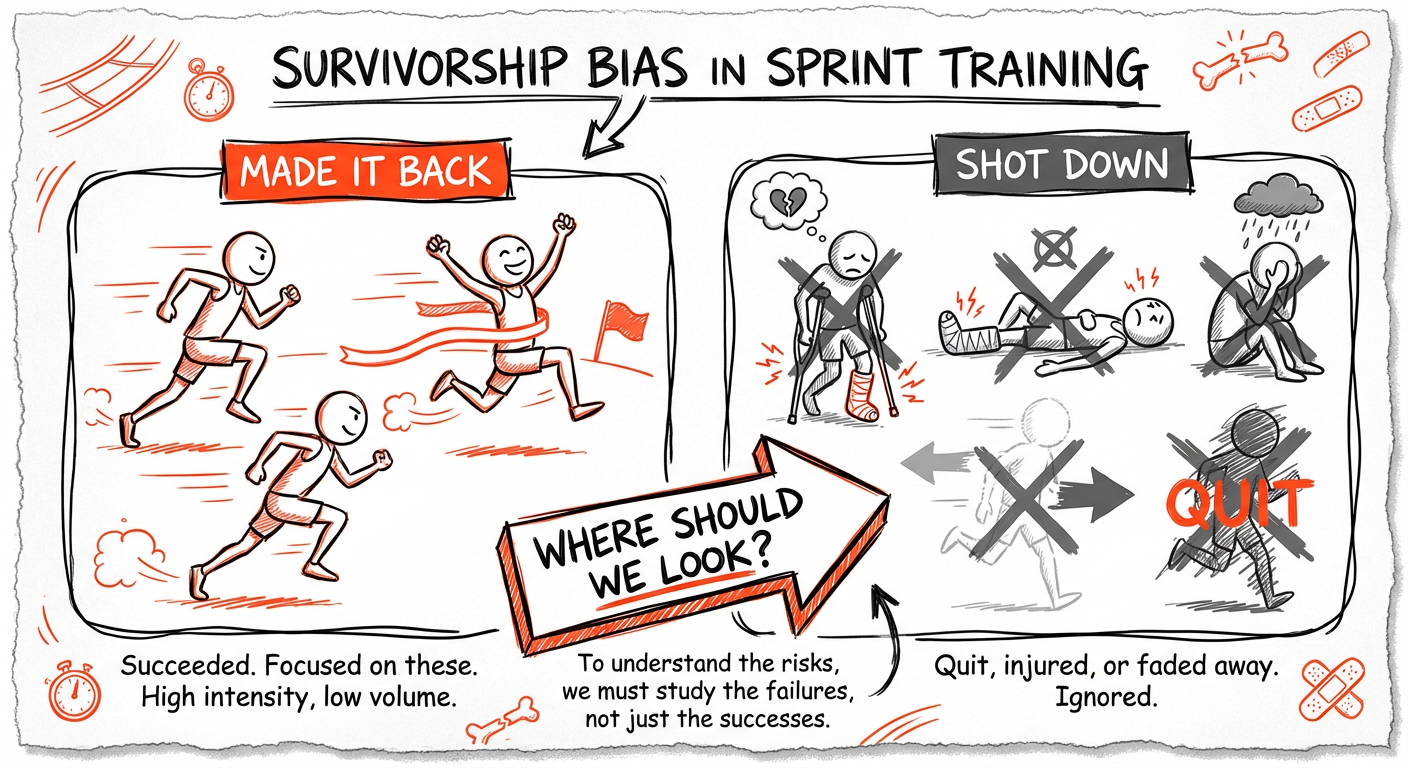
The Survivorship Bias Problem
When coaches point to athletes who "made it" through high-volume conditioning, they commit the same error as WWII strategists who studied bombers that returned from missions. The military wanted to reinforce areas where returning planes showed damage.
|
Wrong approach. They should have studied the planes that got shot down.
|
Same with sprint training. Looking at athletes who succeeded despite poor training ignores the critical data: athletes who quit, got injured, or never reached their potential.
|
Those invisible casualties reveal where the system fails.
|
Why Athletes Leave
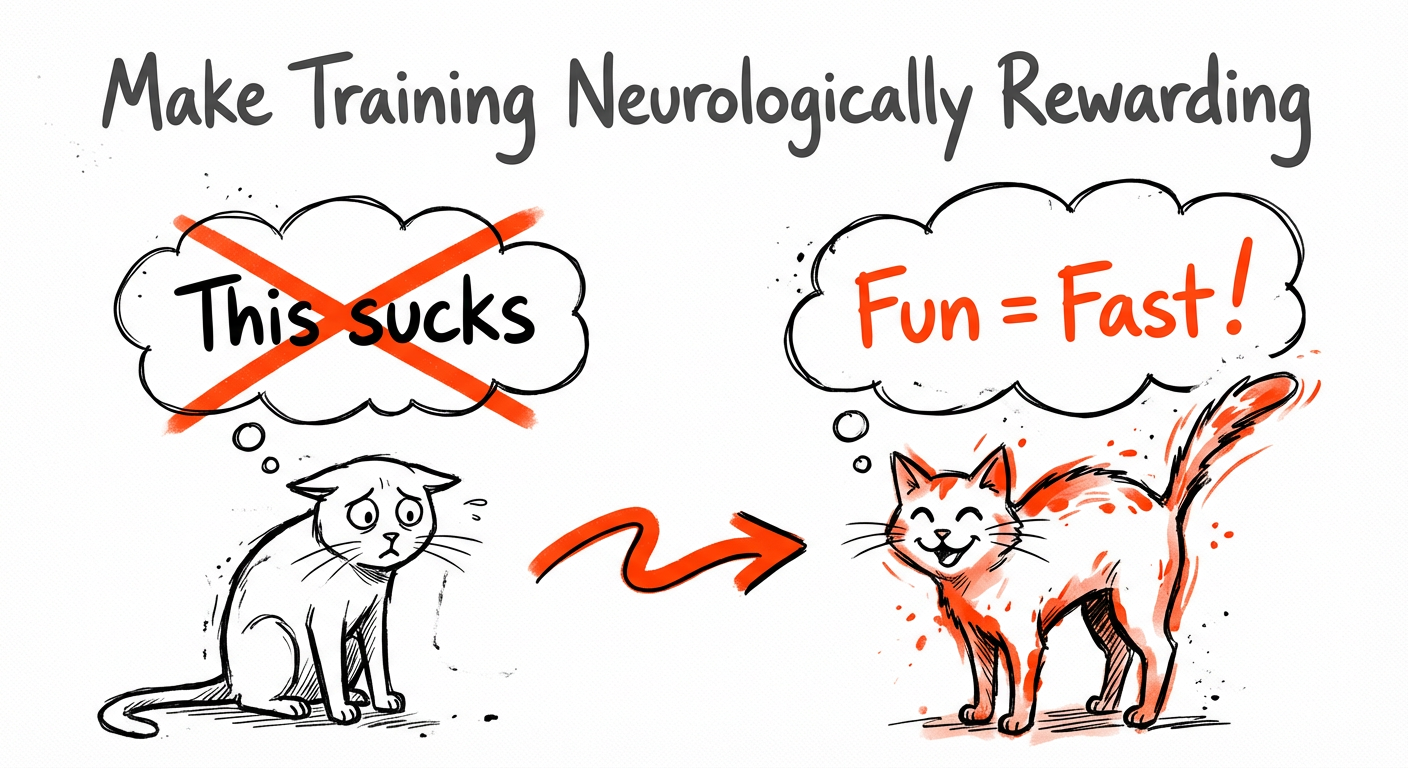
Athletes quit track and field because training is neurologically unrewarding from day one. The "Feed the Cats" philosophy (Tony Holler) recognizes this: cats (you're naturally fastest athletes with the highest potential to sprint the fastest) don't want to do work that hurts.
|
Neither do human nervous systems. (this isn't to say that you're NEVER going to do work that causes pain 🙄)
|
|
|
|
Traditional conditioning selects for masochism, ego, or lack of options.
|
|
This builds weak programs composed of survivors, not optimal performers.
|
|
|
The Progressive Distance Framework
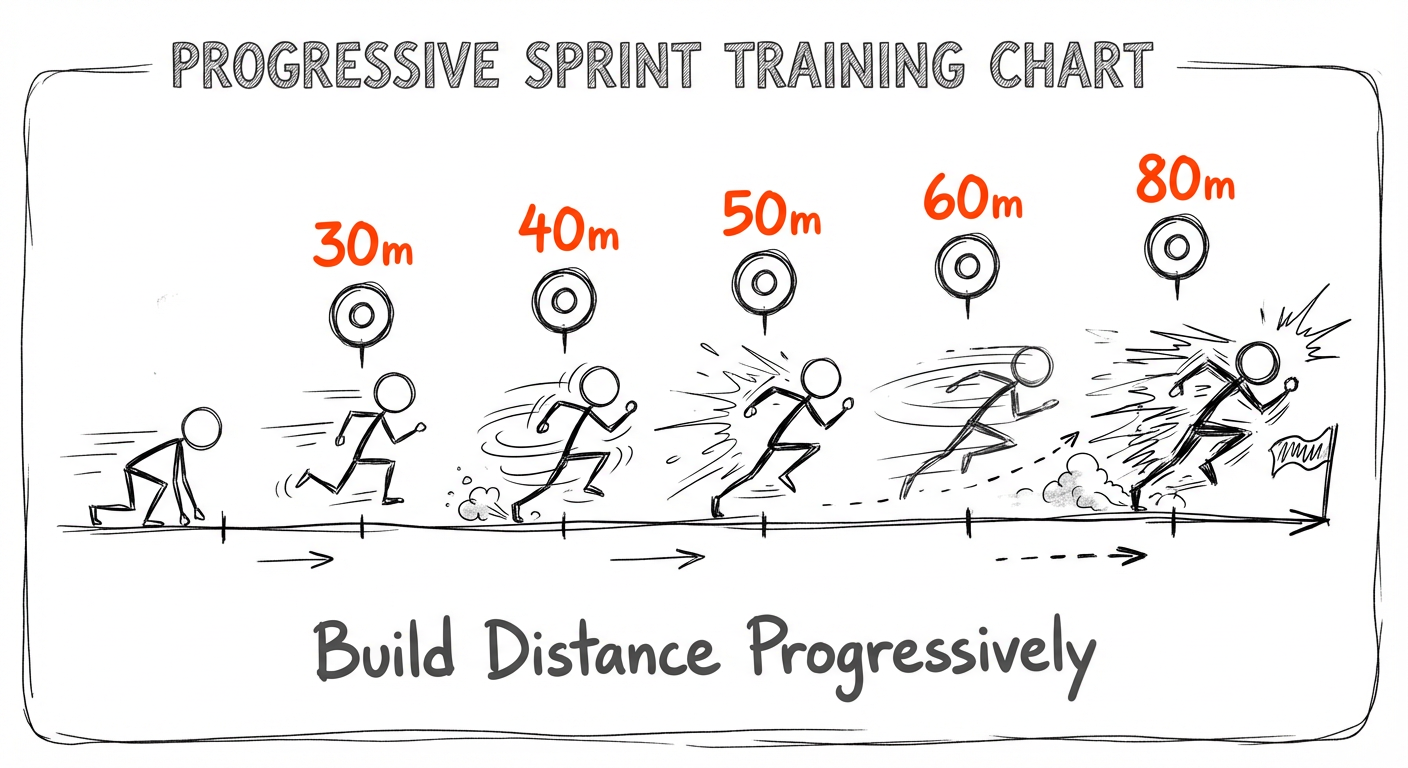
If an athlete cannot sprint 30 meters effectively, running farther distances programs dysfunction into their nervous system. Instead, build competence at each distance before adding load.
|
Progressive Distance Sequence:
|
- Master 30m acceleration
- Build to 40m
- Extend to 50m
- Progress to 60m
- Reach 80m before adding volume work
|
|
Neurological Programming Advantage
Athletes training progressively:
|
- Run at speeds that match their competition mechanics
- Program effective rhythm, bounce, and cadence
- Experience less pain due to efficiency gains
- Build neurological pathways for actual sprinting
- Stay in the sport longer
Speed endurance and maintenance work will still be hard. But athletes do it faster, more effectively, and with mechanics that transfer to competition.
|
|
|
|
|
|
|
|
Implementation Tips
Start with assessment: Can your athlete effectively accelerate through 30m? If not, stop there.
|
Build quality first: Effective, efficient, quick acceleration at shorter distances beats sloppy high-volume work.
|
Prioritize retention: Athletes who stay in the sport and train consistently will outperform those who survive abusive conditioning but operate below capacity.
|
Question tradition: "It works for some athletes" is not evidence. Examine who it doesn't work for and why they disappeared from your program.
|
|
|
|
|
|
|
|
|
|
Thanks for reading. See you soon!
|
|
|
|
|
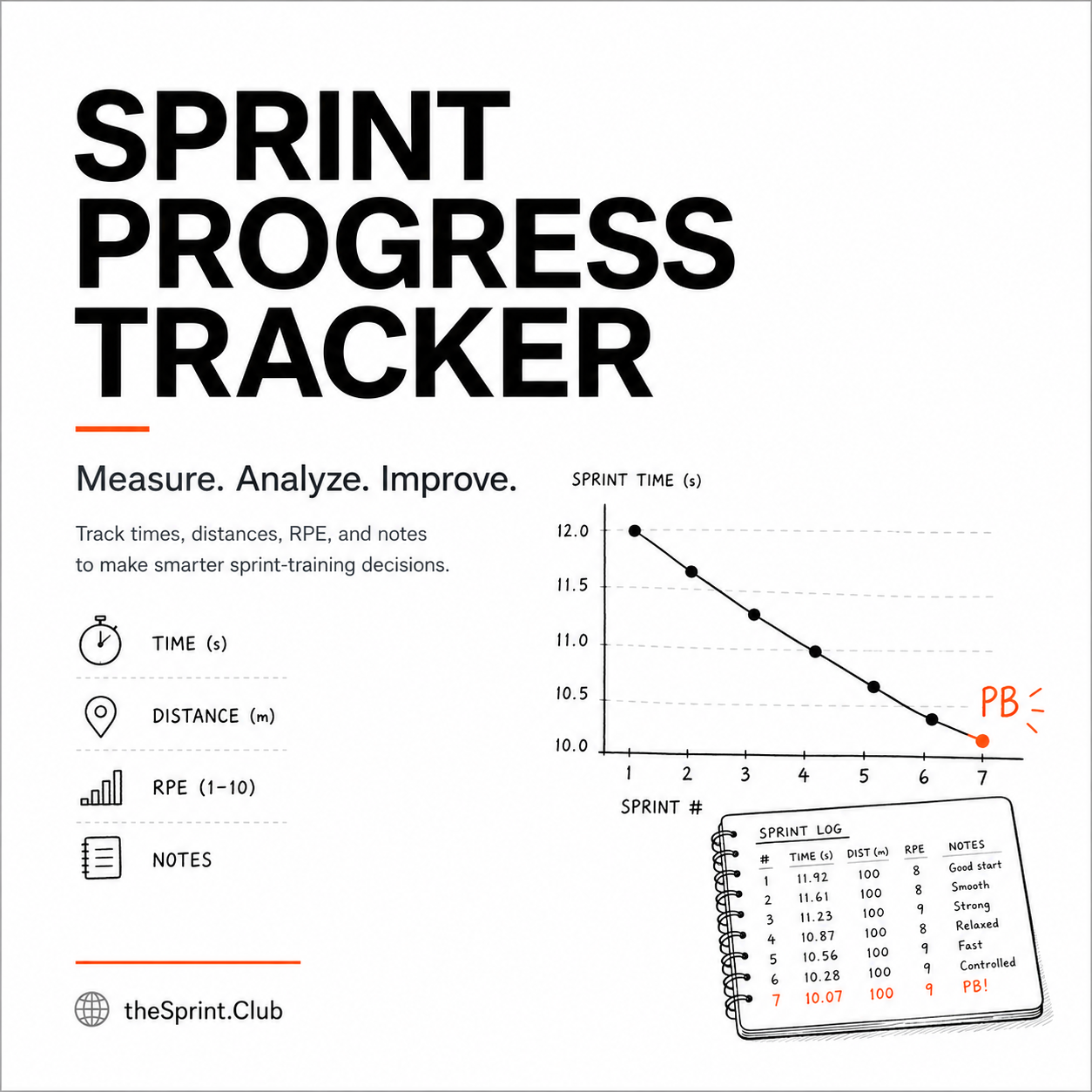
Sprint Progress Tracker: Measure and Improve Your Speed
|
|
|
|
Use a sprint progress tracker to record times, monitor fatigue, identify trends, and make smarter training decisions that improve sprint performance.
|
|
|
|
|
|
|
|
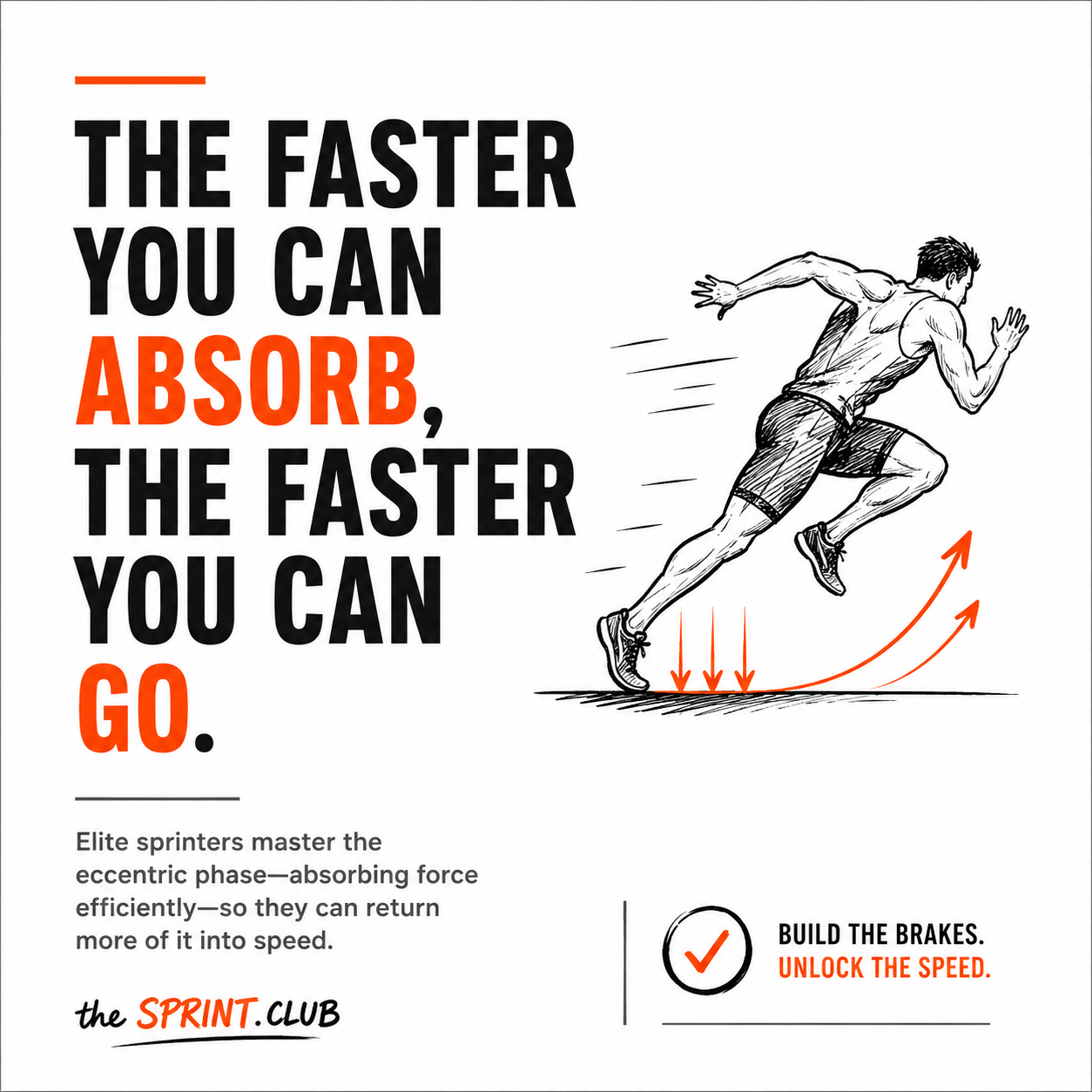
Why absorbing force efficiently is the missing link to faster sprint times, shorter ground contacts, and better performance.
|
|
|
|
Most athletes focus on producing force. Elite sprinters also master absorbing it. Every sprint step begins with a collision between the foot and the ground. Before you can produce force, your body must accept it. Athletes who develop exceptional eccentric strength can absorb larger forces, store more elastic energy, reduce ground contact time, and return more of that energy into …
|
|
|
|
|
|
|
|
|