|
|
|
|
Eccentric and isometric strength dominance during ground contact
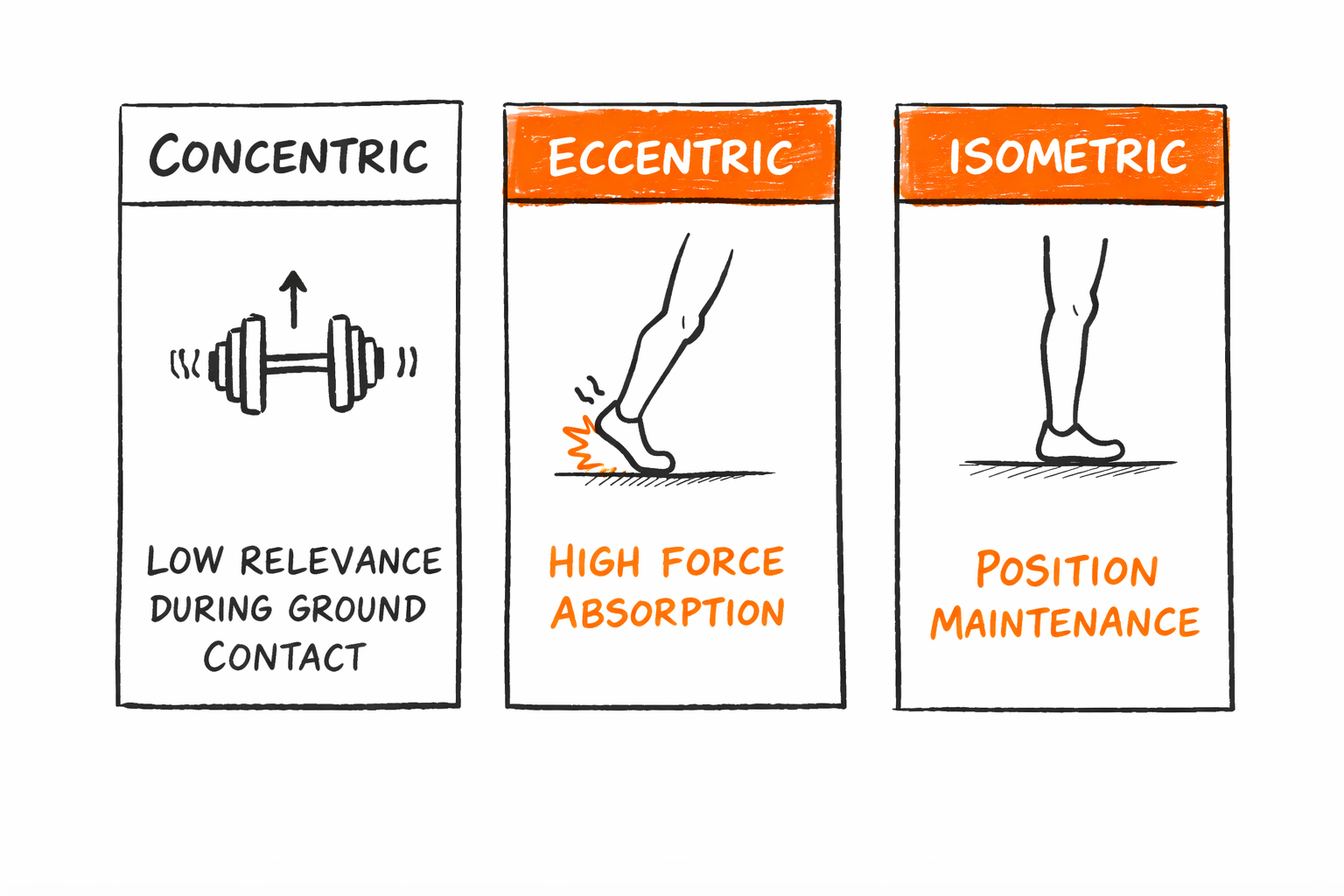
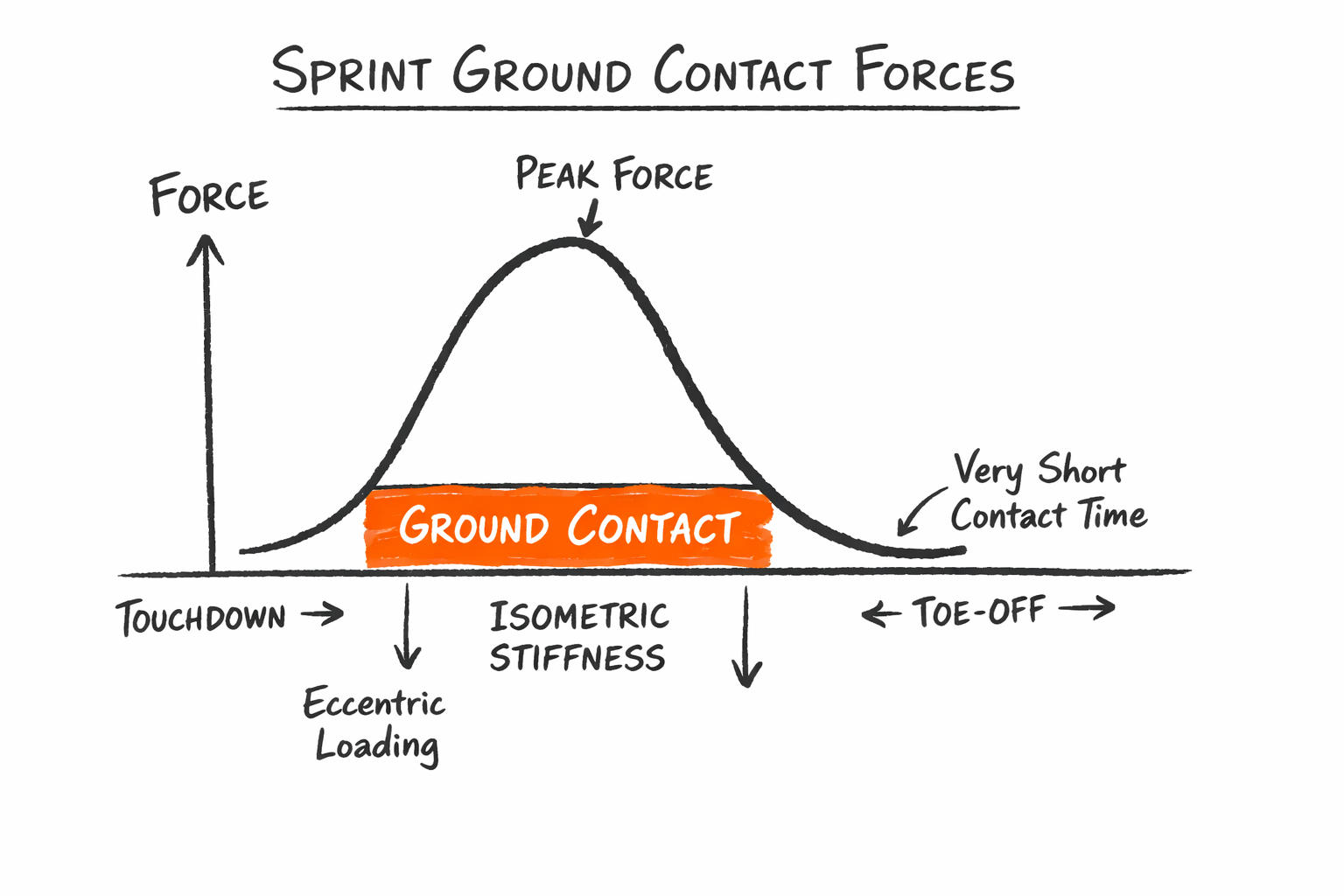
At maximum sprint velocity, ground contact is extremely brief. During that window, the athlete does not have time to produce meaningful concentric shortening in the traditional sense. What dominates instead is the ability to tolerate force, store elastic energy, and maintain stiffness long enough to redirect momentum.
|
This matters because most weight-room programs still prioritize how much weight an athlete can lift concentrically, rather than how well they can absorb and hold force under time pressure.
|
The question worth asking is not, “How strong is your concentric?”
|
It is, “Can you survive the collision with the ground without leaking speed?”
|
|
|
Why Concentric Strength Gets Overemphasized
|
Concentric lifts are easy to see, easy to load, and easy to measure. Bars move. Numbers go up. Progress feels obvious.
|
But sprinting does not reward visible effort. It rewards timing, stiffness, and resistance to collapse.
|
In sprint ground contact:
|
- Muscles are already lengthened before touchdown.
- Force rises rapidly with minimal joint excursion.
- The goal is to avoid collapse, not to push.
A stronger concentric does not automatically improve these qualities.
|
|
|
|
The Actual Strength Qualities That Matter
1. Eccentric Strength
|
Eccentric capacity determines how well the athlete can tolerate high forces at touchdown without excessive joint yield.
|
If eccentric strength is insufficient:
|
- Ground contact time lengthens.
- Energy is lost as heat instead of returned elastically.
- Posture and limb sequencing degrade.
2. Isometric Strength
|
Isometric strength governs how well positions are held during peak force.
|
In sprinting, this shows up as:
|
- Ankle stiffness at mid-stance.
- Knee and hip stability under vertical load.
- The ability to redirect force without visible sinking.
The limb behaves less like a piston and more like a spring-loaded strut.
|
|
|
|
What This Means for Programming
This is not an argument against lifting. It is an argument against misaligned emphasis.
|
Reframe the Goal of the Weight Room
|
The weight room should support sprint mechanics, not replace them.
|
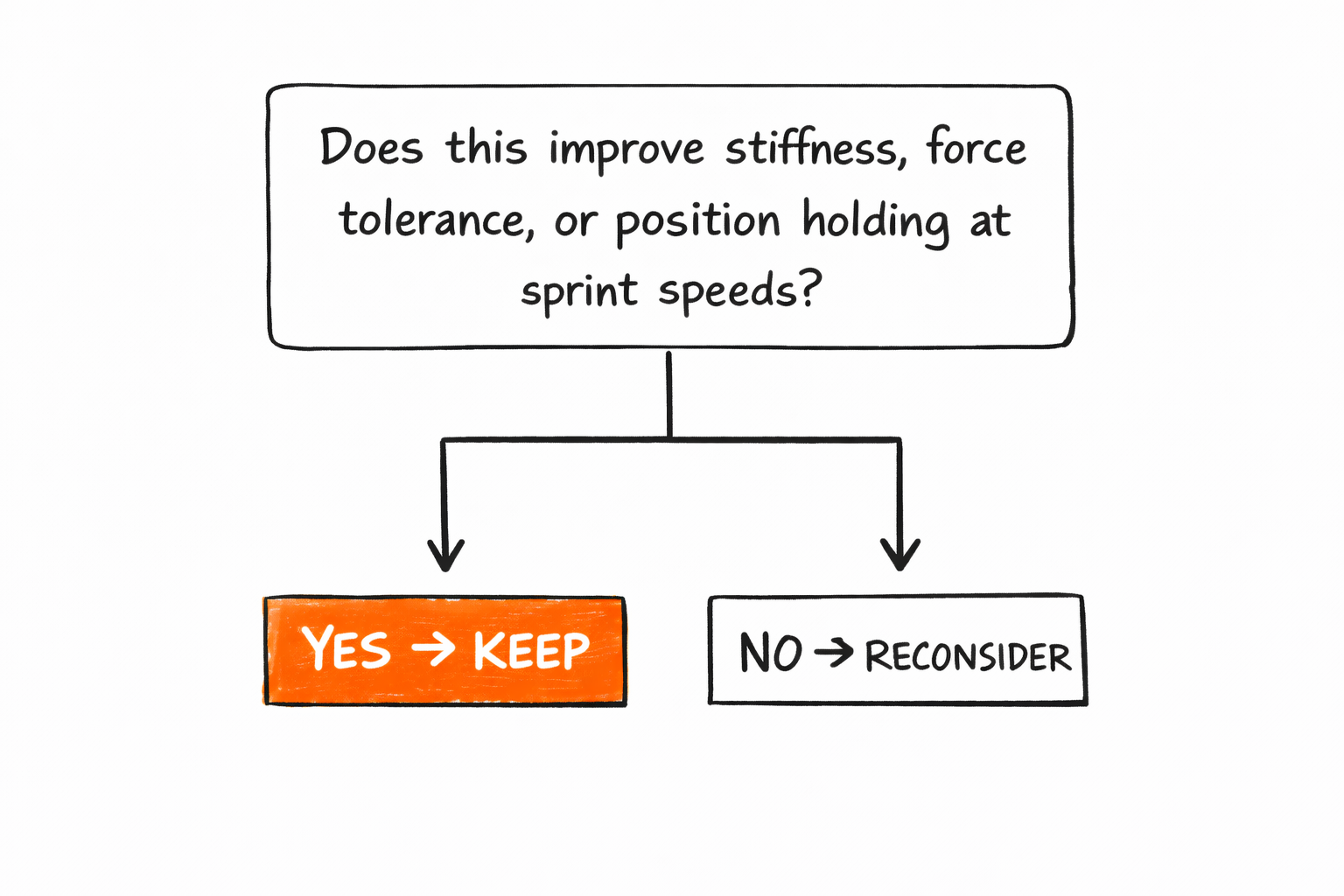
- “How much can they lift?”
- “Can they maintain stiffness under load?”
- “Can they control lengthening without panic?”
- “Can they hold joint angles under high force?”
|
|
|
|
|
|
|
Practical Training Shifts for Sprinters
Emphasize:
- Slow eccentrics with intent and control.
- Paused positions at mechanically relevant joint angles.
- Isometric holds that challenge posture and alignment.
- Unilateral work that exposes side-to-side stiffness asymmetries.
De-emphasize:
- Excessive concentric velocity work that does not resemble sprint timing.
- Max-effort grinders that reinforce long force application.
- Volume that blunts neural sharpness before speed sessions.
A Simple Mental Model
Sprinting is not about pushing longer.
|
It is about colliding better.
|
The athlete who can hit the ground hard, briefly, and elastically will outrun the athlete who can simply move heavier loads concentrically.
|
|
|
|
|
|
|
|
|
|
Thanks for reading. See you soon!
|
|
|
|
|
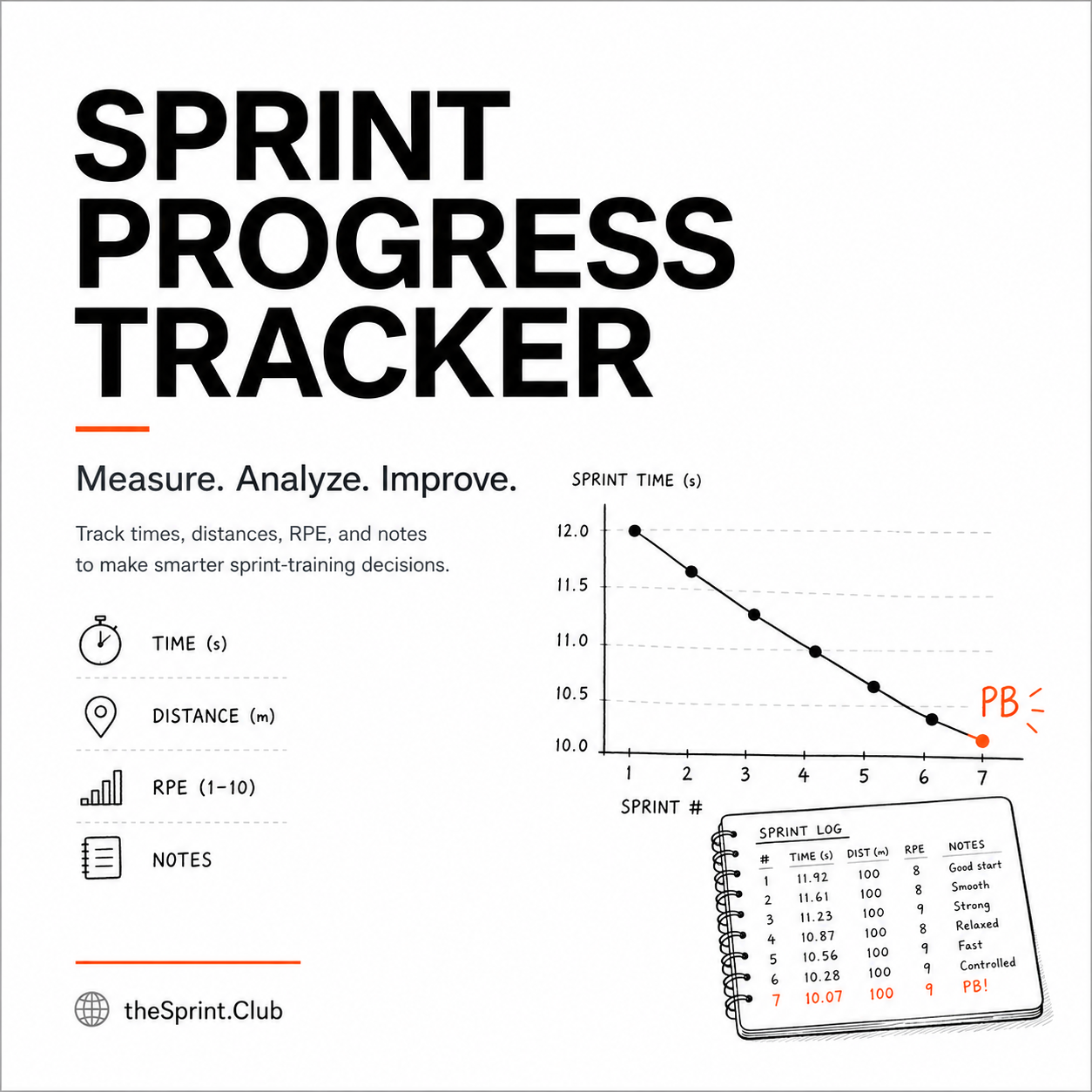
Sprint Progress Tracker: Measure and Improve Your Speed
|
|
|
|
Use a sprint progress tracker to record times, monitor fatigue, identify trends, and make smarter training decisions that improve sprint performance.
|
|
|
|
|
|
|
|
Why absorbing force efficiently is the missing link to faster sprint times, shorter ground contacts, and better performance.
|
|
|
|
Most athletes focus on producing force. Elite sprinters also master absorbing it. Every sprint step begins with a collision between the foot and the ground. Before you can produce force, your body must accept it. Athletes who develop exceptional eccentric strength can absorb larger forces, store more elastic energy, reduce ground contact time, and return more of that energy into …
|
|
|
|
|
|
|
|
|