|
|
|
|
The Big Mistake Most Coaches & Athletes Make
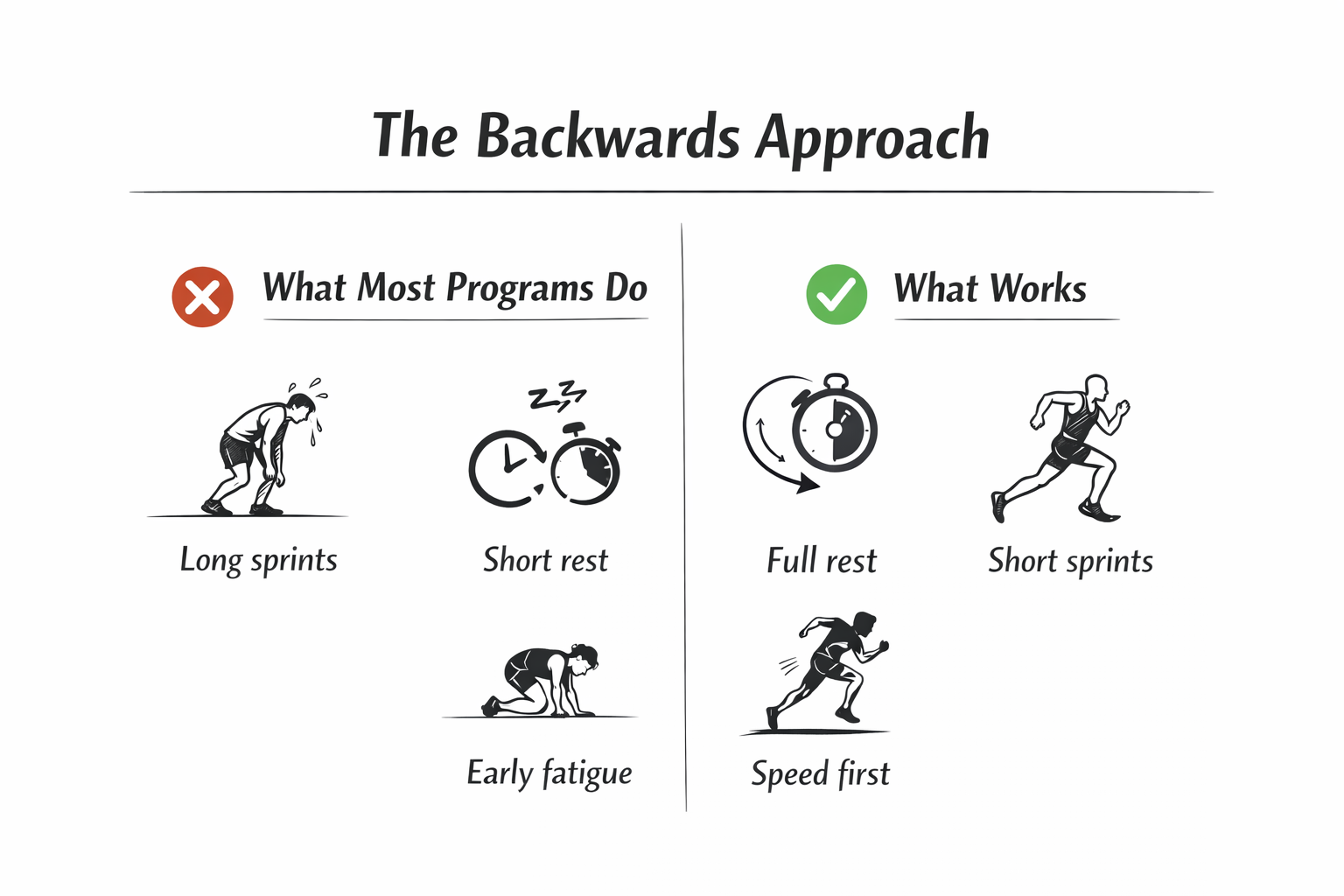
Many athletes and coaches jump into speed endurance work far too early...
|
It feels productive. It looks hard.
|
|
But it often trains the wrong system at the wrong time.
|
|
Speed endurance is not how you build speed.
|
|
It is how you protect speed under fatigue, after speed already exists.
|
Without speed, speed endurance becomes something else entirely.
|
|
|
First Principles: What Speed Endurance Actually Is
Speed endurance is the ability to maintain a high percentage of maximum velocity as fatigue accumulates.
|
Because it implies three prerequisites:
|
- You must already possess high maximum velocity
- You must be able to reach it efficiently
- You must be able to repeat it without excessive decay
|
If any of those are missing, you are no longer training speed endurance.
|
You are training slow sprinting while tired.
|
|
|
|
The Quality Threshold Rule
Sprint training obeys a hard rule:
|
|
You only adapt to what you can execute with sufficient quality.
|
For speed, quality is not effort.
|
|
Quality is velocity, mechanics, and elastic timing.
|
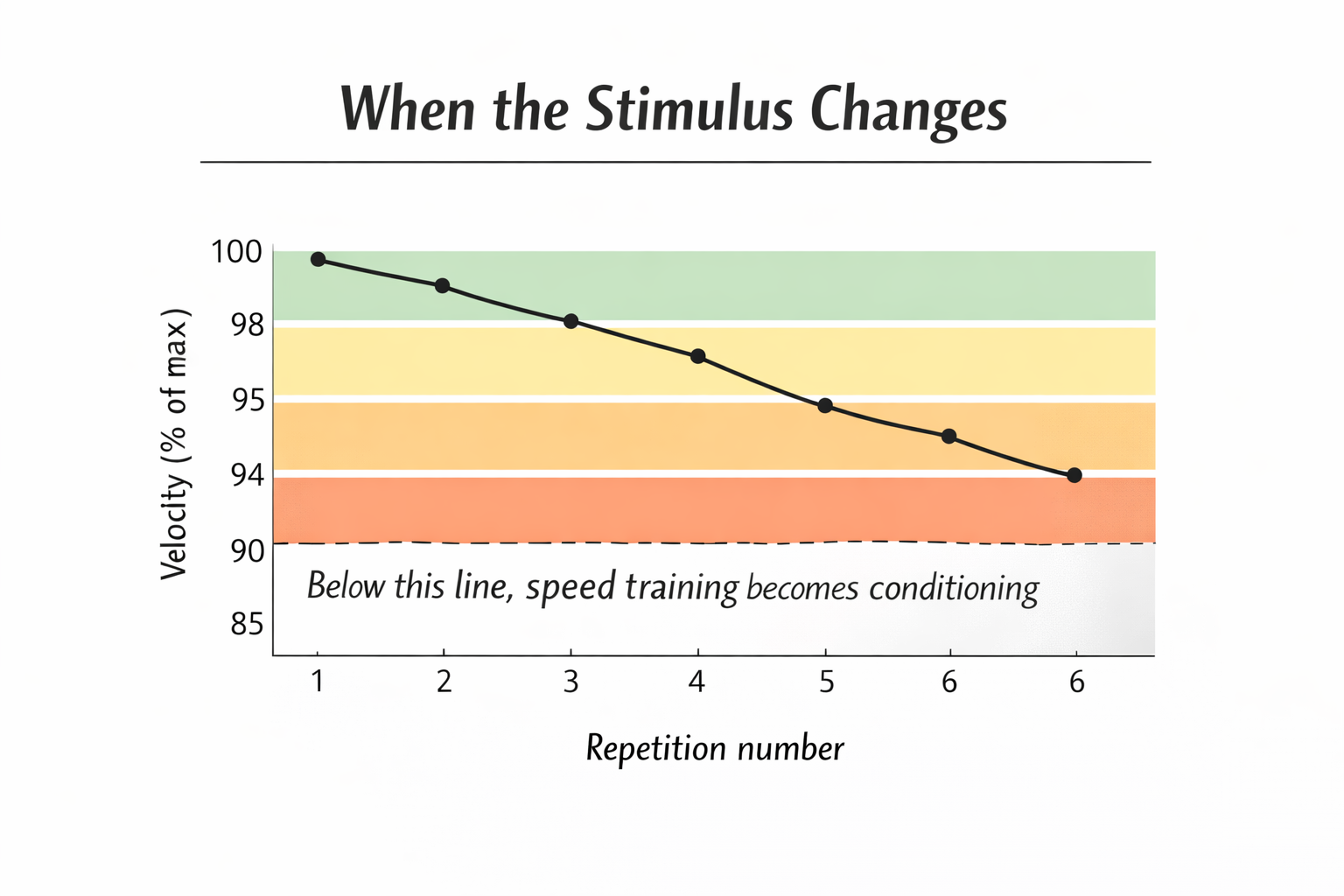
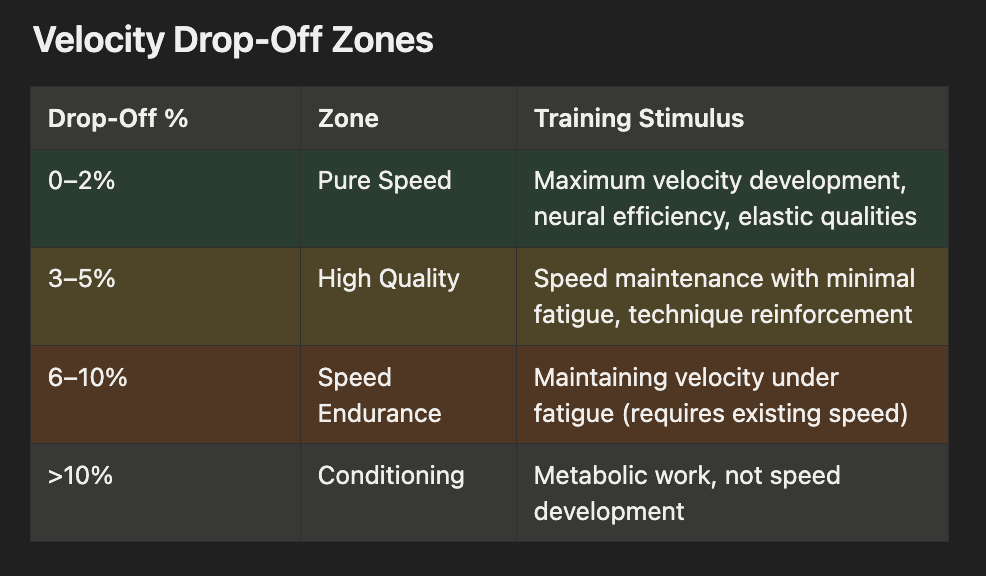
Once velocity drops beyond a narrow threshold, the stimulus changes.
|
Typical working ranges used by sprint coaches:
|
-
-
|
Acceptable for high-quality sprint work
|
-
|
Speed endurance territory
|
-
If an athlete never reaches high velocity in the first place, they cannot meaningfully operate in the 6–10% zone.
|
There is nothing to endure.
|
|
|
|
|
|
Why Speed Endurance Without Speed Backfires
|
Training speed endurance too early produces predictable problems:
|
1. Technique Degrades First
|
As fatigue rises, posture collapses, contact times lengthen, and braking forces increase.
|
|
You rehearse poor mechanics at high volume.
|
2. Elastic Qualities Are Replaced by Muscular Effort
|
True sprinting relies on stiffness, timing, and rapid force transfer.
|
|
Fatigue pushes athletes toward pushing, reaching, and grinding.
|
3. Neural Output Gets Blunted
|
Maximum velocity sprinting is a high-neural-output activity.
|
|
Excessive fatigue teaches the nervous system to self-limit.
|
You become durable at being slow.
|
|
|
|
|
|
The Correct Order of Operations
|
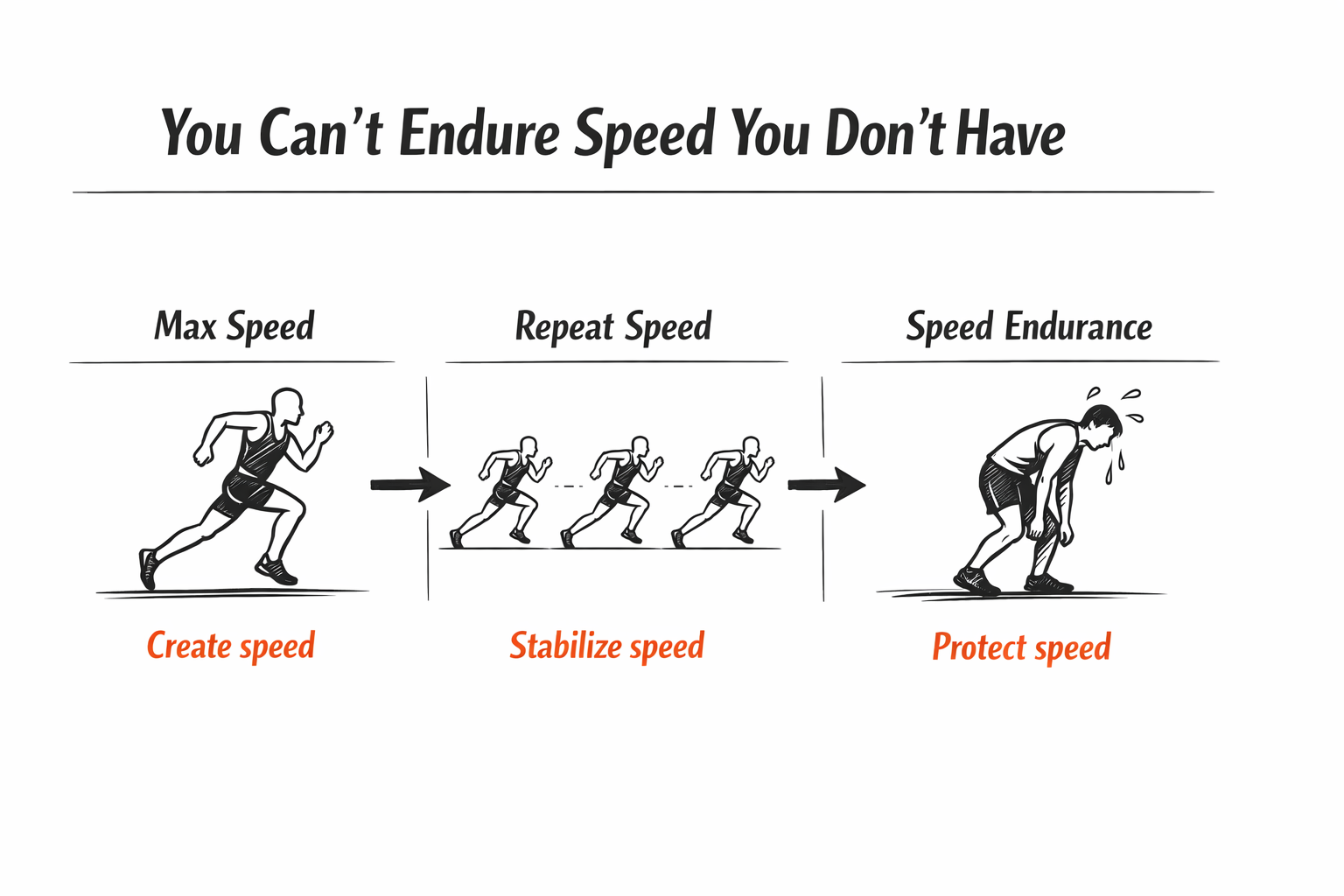
Speed development follows a hierarchy.
|
Step 1: Build Maximum Velocity
|
If athletes cannot hit near-max speeds while fresh, nothing else matters yet.
|
Step 2: Learn to Repeat Speed
|
Slightly higher total volume
|
|
This is where resilience begins.
|
Step 3: Introduce Speed Endurance
|
Only now does speed endurance make sense.
|
|
You are no longer trying to create speed.
|
|
You are trying to delay its decay.
|
|
|
|
|
|
|
|
|
|
Thanks for reading. See you soon!
|
|
|
|
|
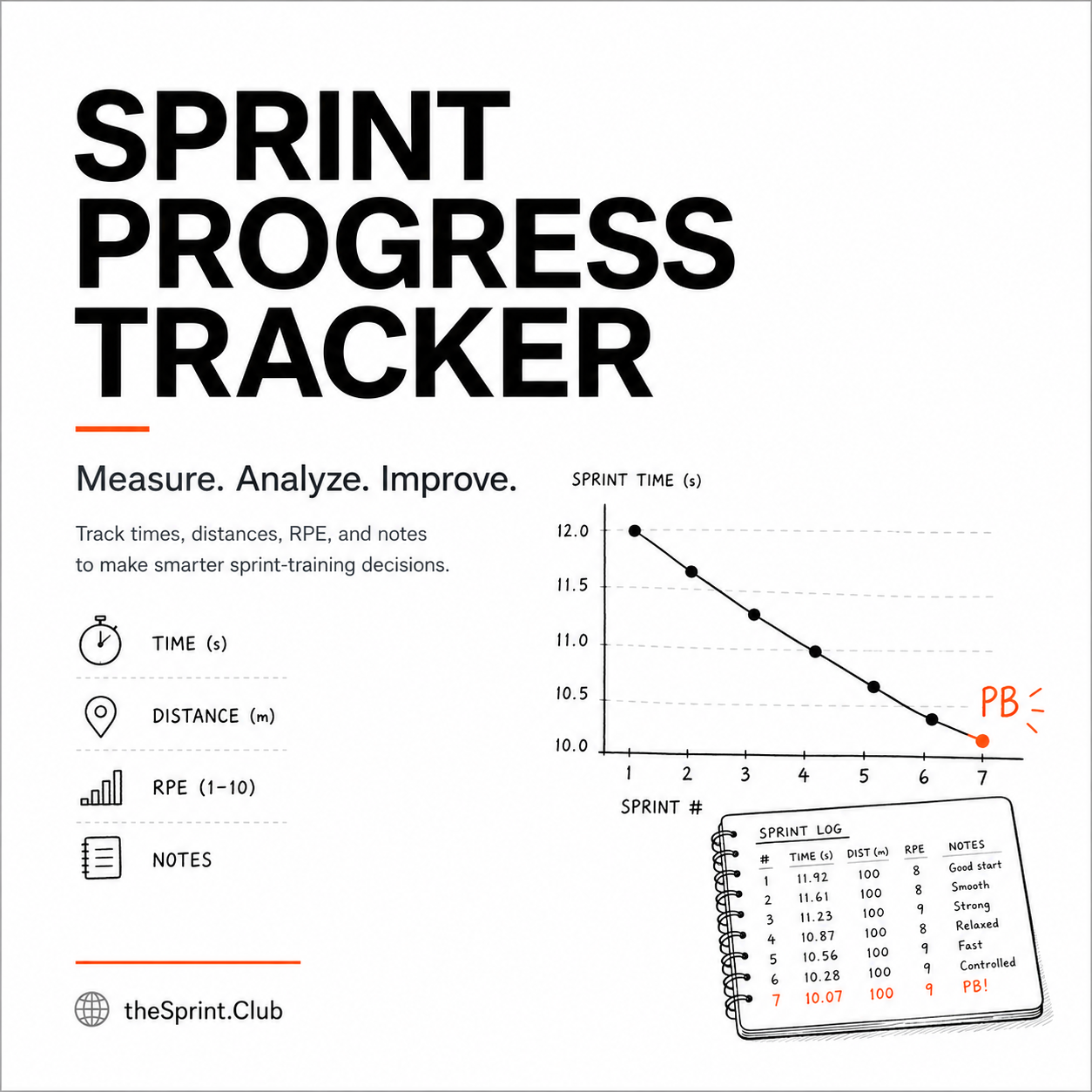
Sprint Progress Tracker: Measure and Improve Your Speed
|
|
|
|
Use a sprint progress tracker to record times, monitor fatigue, identify trends, and make smarter training decisions that improve sprint performance.
|
|
|
|
|
|
|
|
Why absorbing force efficiently is the missing link to faster sprint times, shorter ground contacts, and better performance.
|
|
|
|
Most athletes focus on producing force. Elite sprinters also master absorbing it. Every sprint step begins with a collision between the foot and the ground. Before you can produce force, your body must accept it. Athletes who develop exceptional eccentric strength can absorb larger forces, store more elastic energy, reduce ground contact time, and return more of that energy into …
|
|
|
|
|
|
|
|
|