|
|
|
|
Your reps are already predictions
|
Every practice ends with a pile of times. Most teams treat them like trivia.
|
Training times are not just “how fast you went today.” They are inputs you can use to estimate what you should be capable of in a race, and to set realistic targets across multiple distances without guessing.
|
That is the entire job of these two tools.
|
-
|
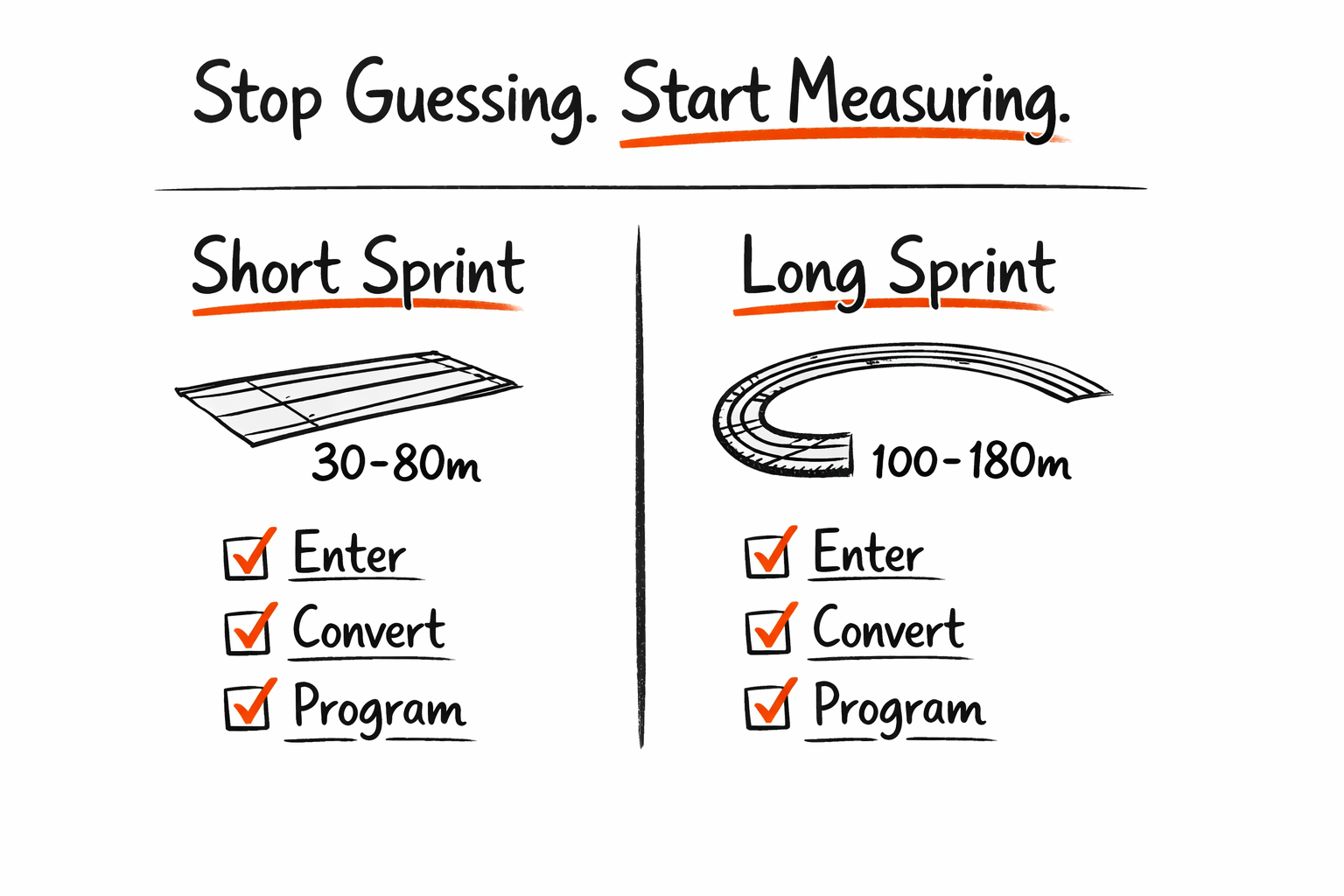
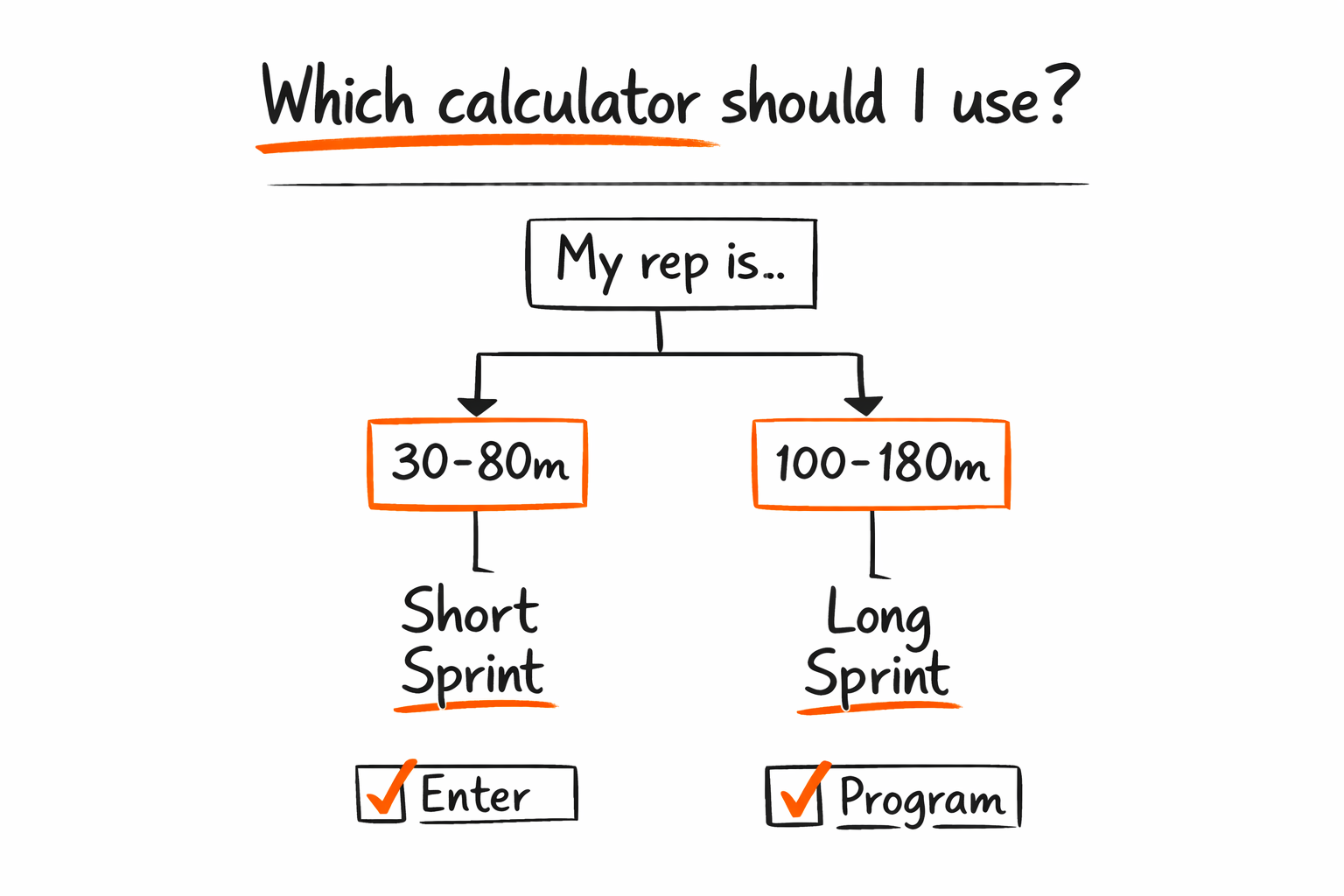
Short Sprint Calculator: use a 30 to 80 m training sprint to estimate 60 m, 100 m, 200 m.
|
-
|
Long Sprint Calculator: use a 100 to 180 m rep to estimate a 200 m (plus a split table).
|
|
|
|
|
|
|
What these calculators help you do
1) Predict expected race times from training times
|
You run a rep in training at one distance. The calculator returns an estimated expected range at another distance.
|
That gives you a reality check:
|
-
|
If the predicted race time is faster than you can currently execute in competition, your limiter might be race execution, speed endurance, relaxation, or consistency.
|
-
|
If the predicted race time is slower than your goal, you have a clear signal that the underlying speed or endurance qualities need to move.
|
2) Set training goals at multiple distances from one anchor rep
|
Most training plans break down when targets are invented.
|
-
|
Choose one distance you can test consistently in training.
|
-
|
Use the calculators to translate that rep into target times at other distances.
|
-
|
Now you have goalposts for sessions without needing a full test meet every week.
|
|
|
|
The workflow that makes this useful
This is the simplest way to turn rep timing into programming.
|
Step 1: Pick your anchor rep
|
Pick one rep distance you can repeat often with reliable timing.
|
-
|
A short anchor rep you can run fresh and frequently.
|
-
|
A longer rep you can run when you want a clearer view of speed endurance.
|
Do not overcomplicate this. The anchor rep is your ruler.
|
Step 2: Predict expected race times
|
Enter the anchor rep time. Use the calculator output as your expected race range.
|
|
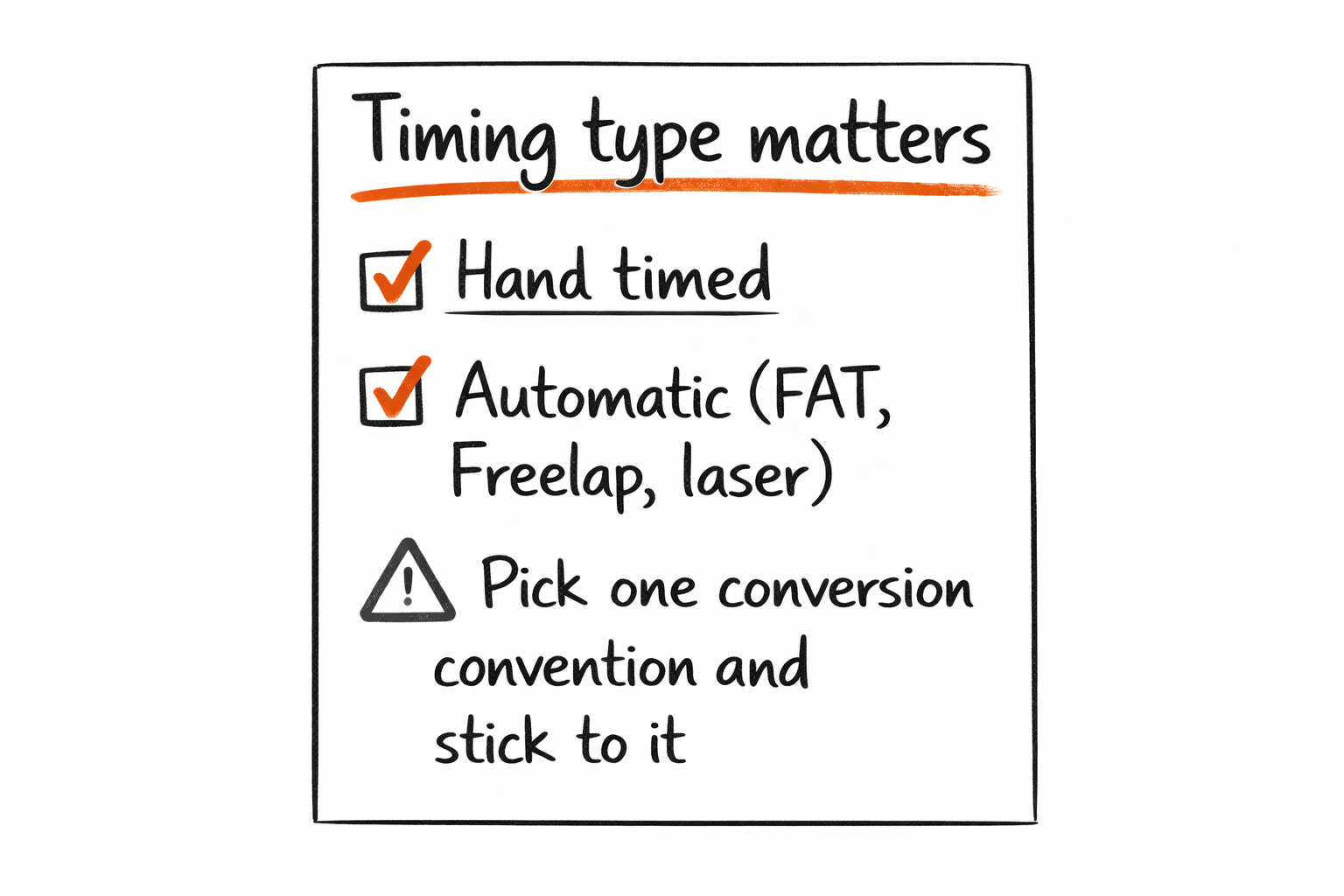
Key point: treat predictions as targets and signals, not as guarantees.
|
Step 3: Set targets at other distances
|
Now use the predicted time to set session goals at distances you did not directly test that day.
|
|
This is where it becomes a coaching tool instead of a curiosity tool.
|
|
|
3 ways to use predictions in programming
1) Build session targets that match the athlete’s current reality
|
Instead of assigning “fast” and hoping, you assign a target time based on what today’s rep predicts.
|
Result: fewer junk reps, fewer sessions where everyone misses, more sessions where quality is repeatable.
|
2) Choose the right dose for the day
|
If the athlete hits the anchor rep well, you can chase targets at another distance.
|
If the anchor rep is off, you can adjust the session without emotional decision-making:
|
-
-
-
|
Keep the same distance but cut volume.
|
-
|
End the session while quality is still high.
|
3) Track progress without constant max testing
Store weekly anchor rep times and predicted race ranges.
You now have a trendline that is easier to collect than full race efforts.
|
|
|
|
|
|
|
|
|
|
|
|
|
Thanks for reading. See you soon!
|
|
|
|
|
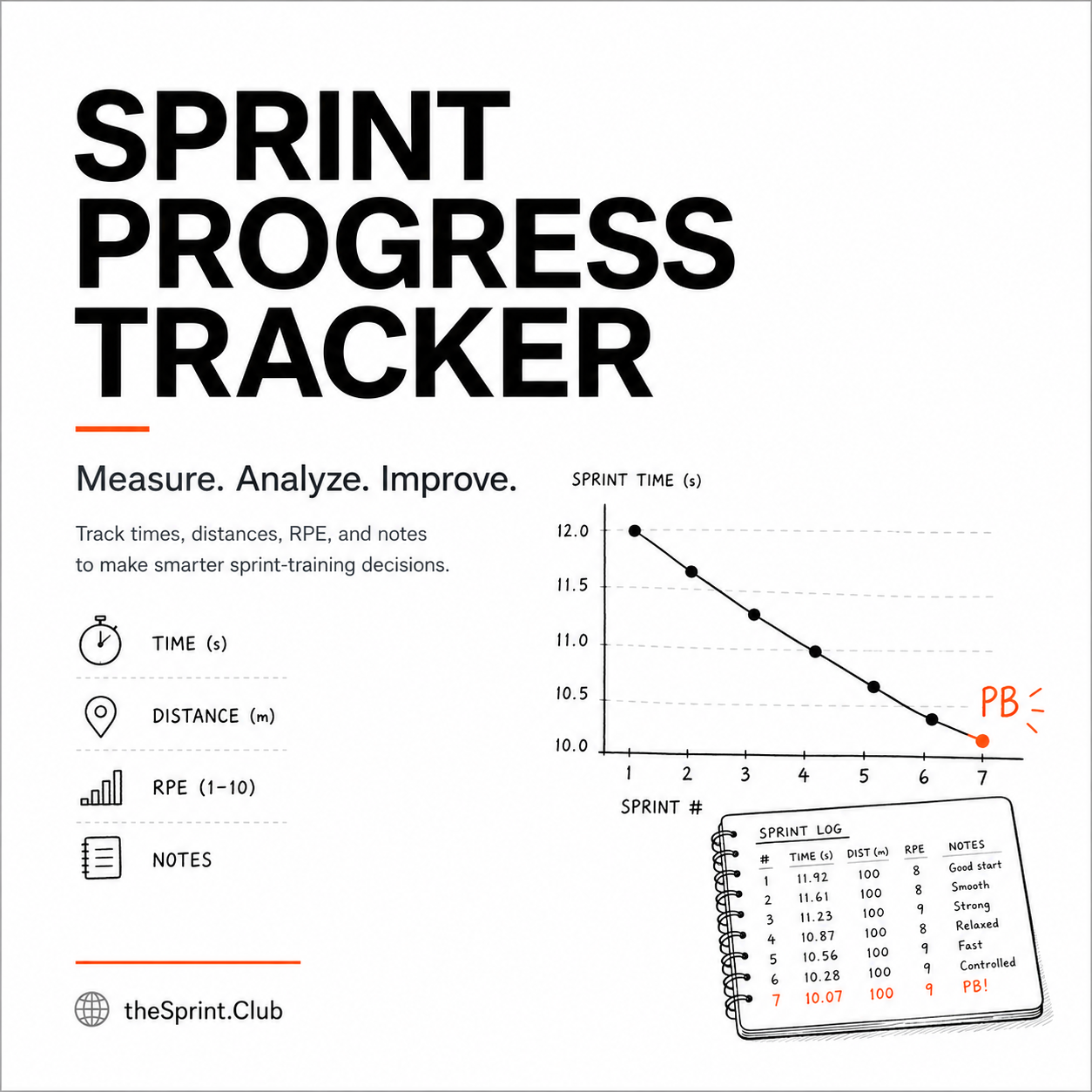
Sprint Progress Tracker: Measure and Improve Your Speed
|
|
|
|
Use a sprint progress tracker to record times, monitor fatigue, identify trends, and make smarter training decisions that improve sprint performance.
|
|
|
|
|
|
|
|
Why absorbing force efficiently is the missing link to faster sprint times, shorter ground contacts, and better performance.
|
|
|
|
Most athletes focus on producing force. Elite sprinters also master absorbing it. Every sprint step begins with a collision between the foot and the ground. Before you can produce force, your body must accept it. Athletes who develop exceptional eccentric strength can absorb larger forces, store more elastic energy, reduce ground contact time, and return more of that energy into …
|
|
|
|
|
|
|
|
|