|
|
|
|
Why “Knees Up” Might Be Ruining Your Sprint
|
The backside mechanics paradox
|
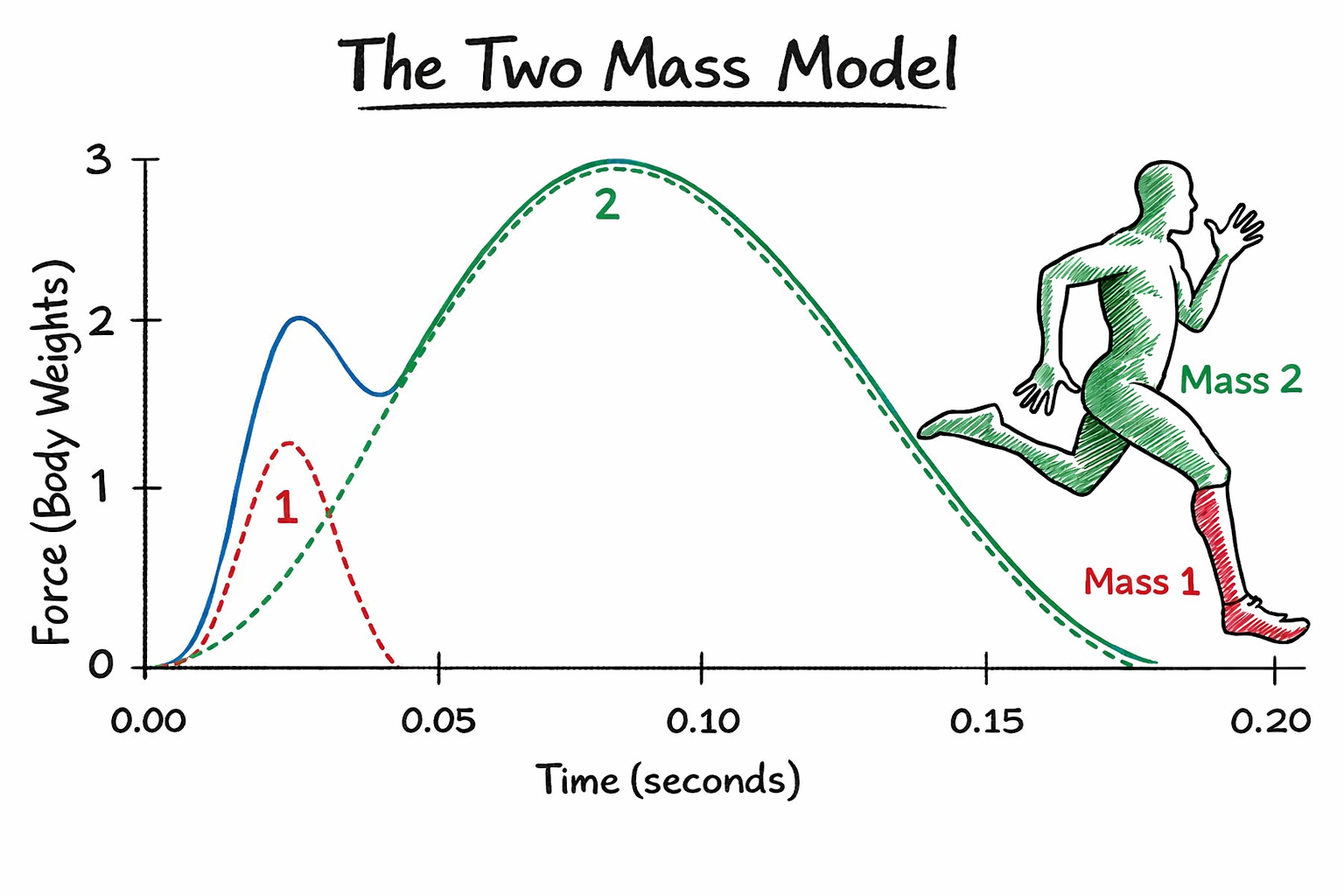
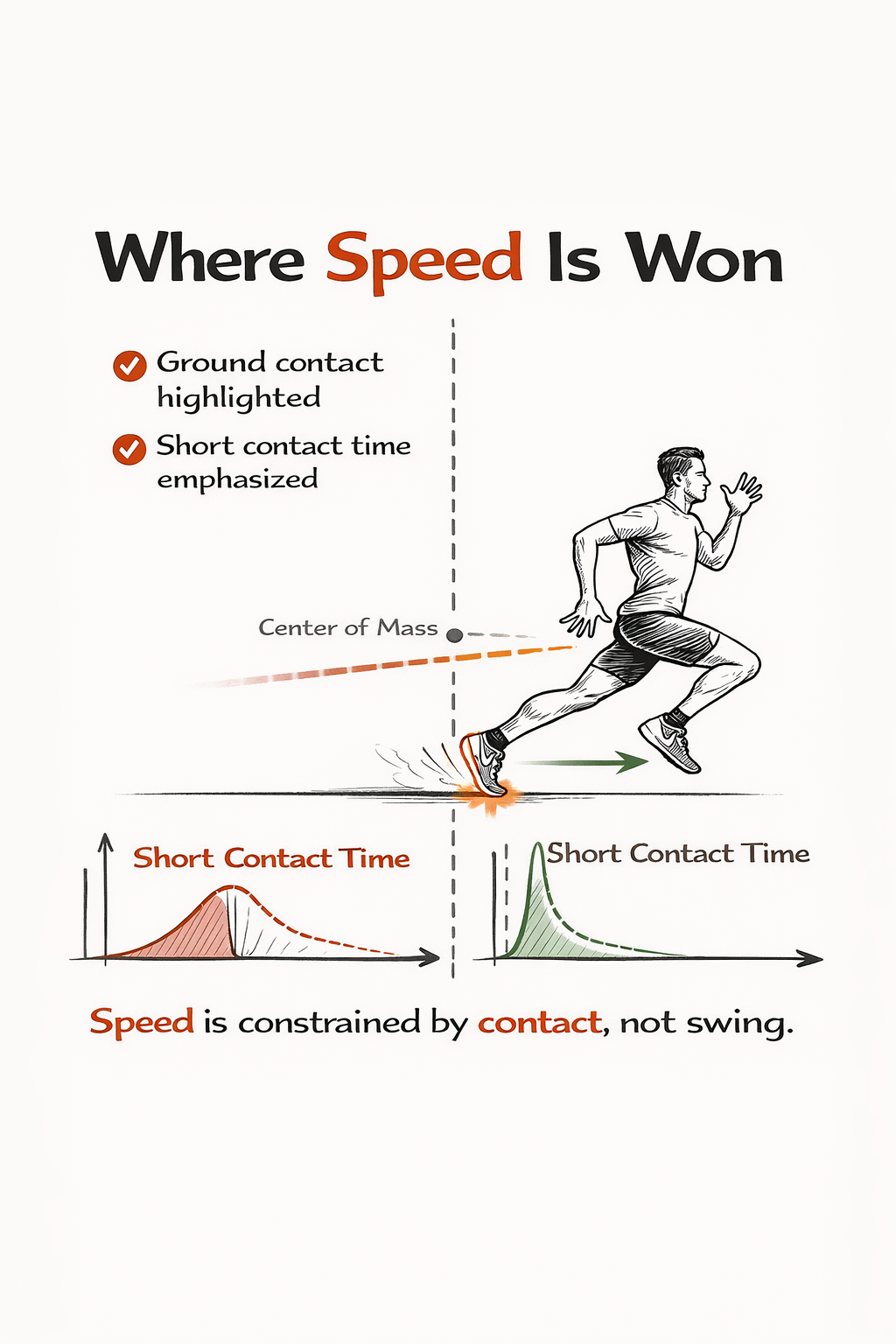
Sprinting speed is constrained by one thing more than any other: what happens during ground contact.
|
|
At high speeds, the athlete has a very short window to apply force. The center of mass must keep moving forward while large forces are produced quickly, cleanly, and with precision.
|
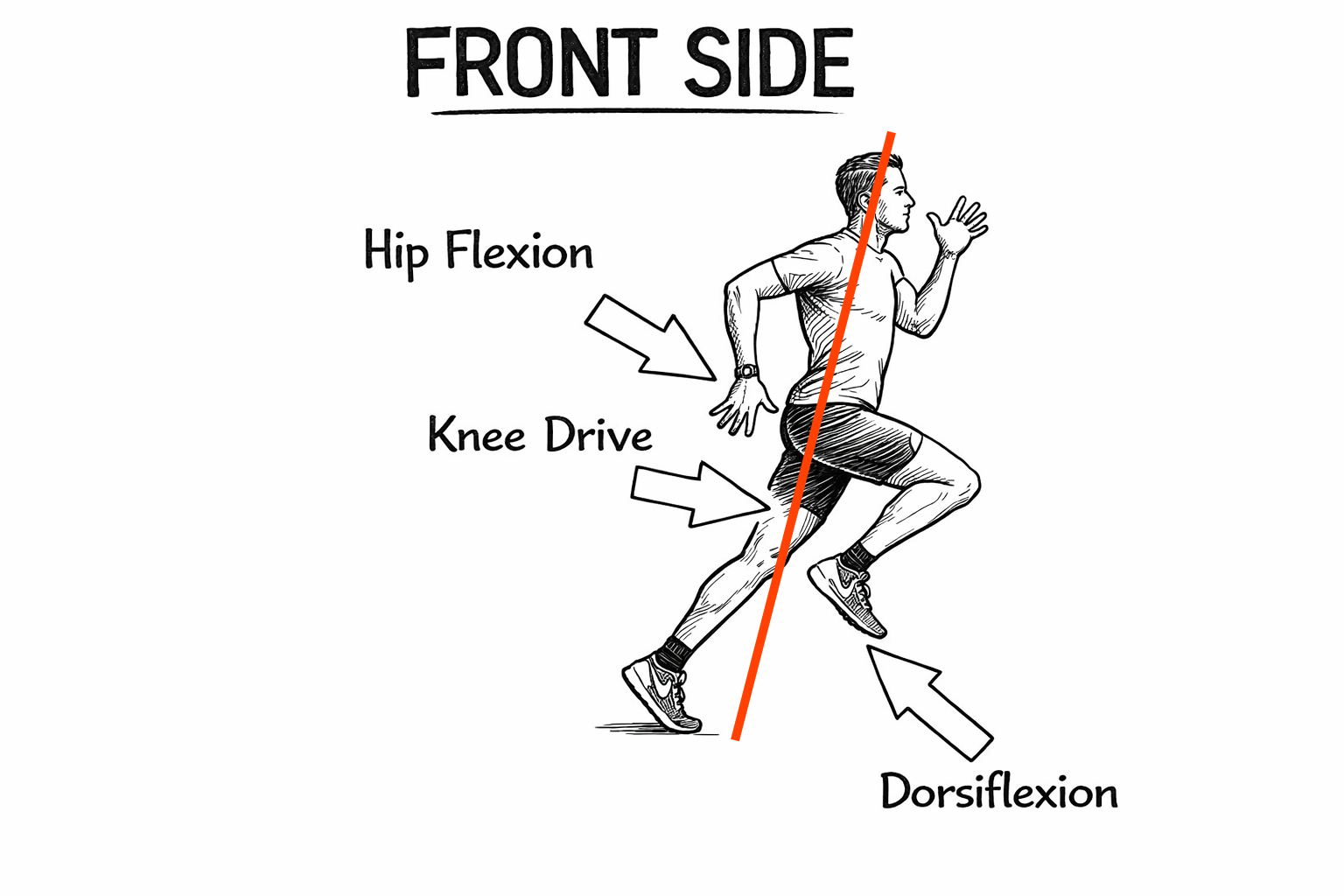
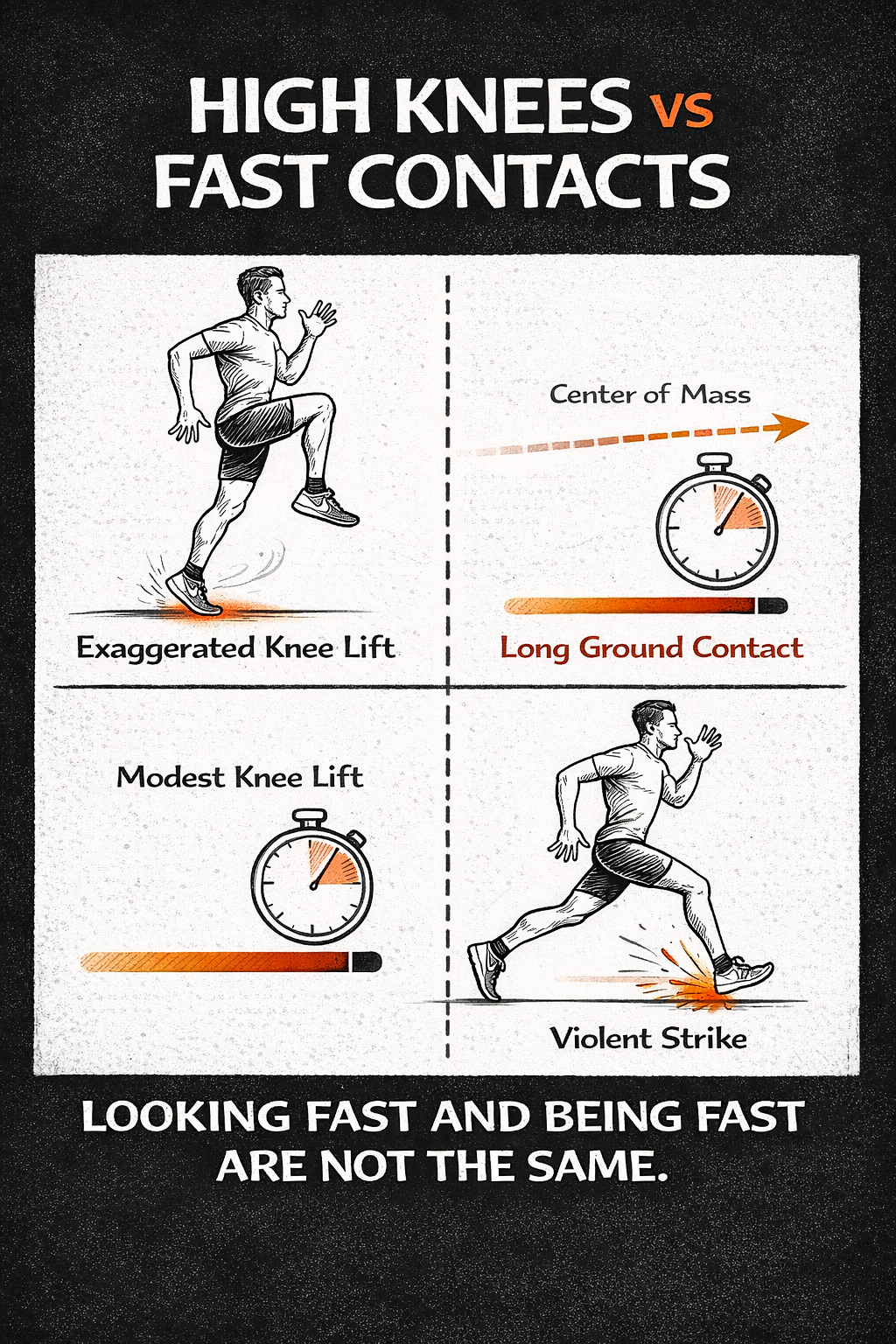
Front side mechanics are easy to see. Knee lift is visible. It photographs well. It looks “technical.”
|
That visibility is exactly why it gets over-coached.
|
|
The problem begins when the shape becomes the goal, rather than the force that creates the shape.
|
|
|
|
|
Why Over-Emphasizing Knee Lift Can Reduce Propulsion
|
|
Intentional knee lift competes with the real priority...
Striking the ground well
|
|
At max velocity, time is scarce. When attention goes toward lifting the thigh, athletes commonly:
|
-
|
delay or soften the "whip from the hip" (the propulsive driving force that results from hip extension and creates lower limb velocity through the air)
|
-
|
contact the ground farther in front of the body
|
-
|
stay on the ground longer trying to “complete” positions
|
|
Each of these increases braking or reduces effective propulsion.
|
Speed becomes less efficient even if it still looks clean.
|
|
|
|
Front side dominance shifts the stride toward cycling, not striking
When front side becomes the focus, athletes often start cycling the leg.
|
Sprinting is not about showing positions. It is about:
|
-
|
a rapid & stiff collision with the ground
|
-
|
fast recovery to repeat that strike
|
When the recovery of swing leg is treated as the driver, the downstroke loses urgency...
That reduces force during the window that actually matters.
|
|
|
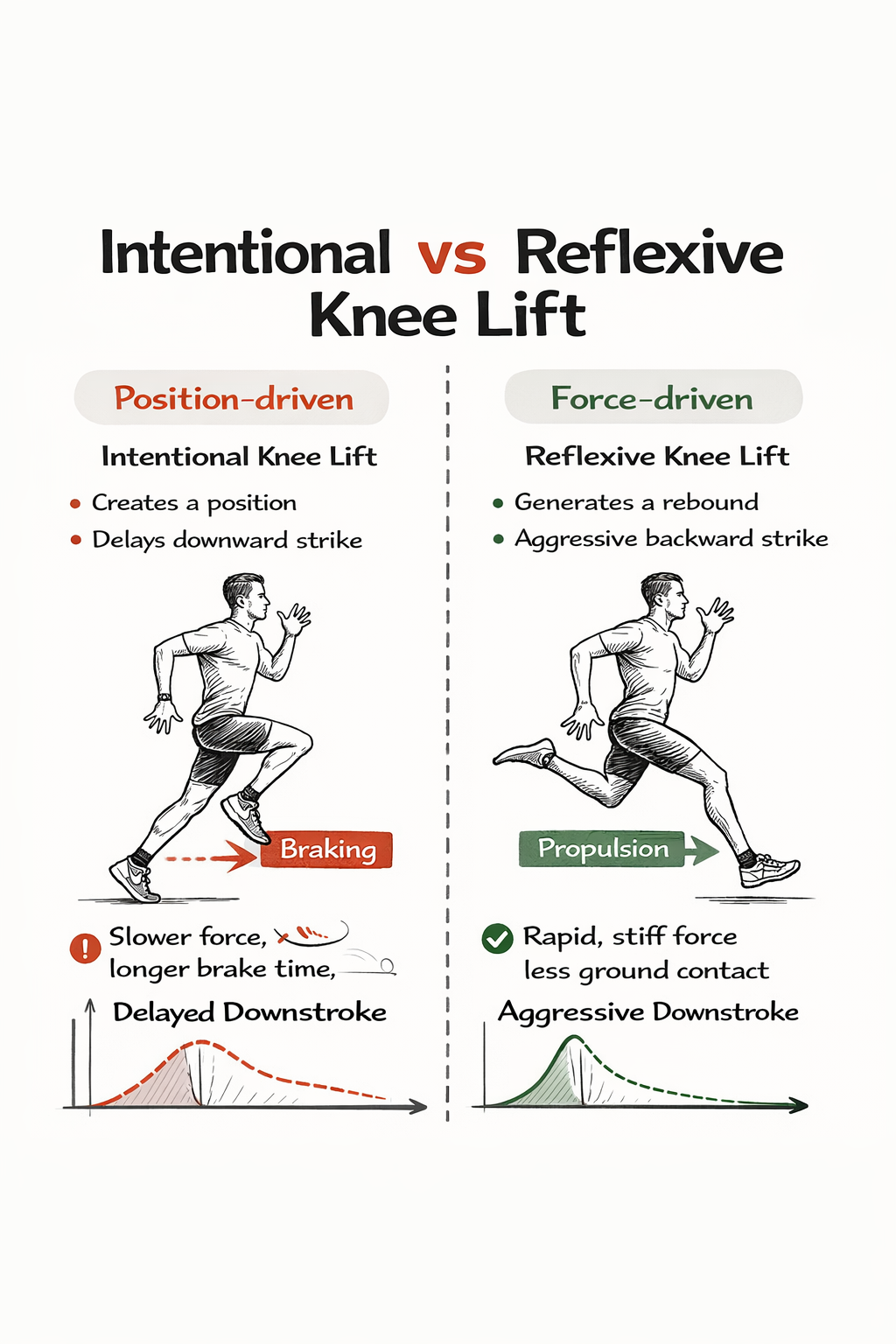
Why Knee Lift Should Be Reflexive, Not Intentional
Reflexive knee lift is an effect, not a cause
In fast sprinting, the thigh coming forward is largely the result of:
|
-
|
what the stance leg just did
|
-
|
elastic return through the system
|
-
|
correct timing at the hip
|
-
|
Intentional knee lift tries to create a position.
|
-
|
Reflexive knee lift emerges from stiffness, strike timing, and posture.
|
Reflexive lift naturally matches the athlete’s speed and contact time.
Intentional lift often becomes too slow, too long, or too high for the step to support.
|
|
|
|
|
|
|
Sprinting is timing, and intentional lift disrupts it
|
At high speed, small timing errors create large costs.
|
When athletes delay the downstroke to finish the lift:
|
-
-
|
contact happens farther in front
|
-
-
The athlete looks technical but loses speed potential.
|
How Front Side Coaching Quietly Robs Force
Propulsive force depends on the stance leg producing a fast, stiff, backward push with good alignment.
|
Front-side-dominant athletes often end up with:
|
-
|
more air time spent moving the leg
|
-
-
|
more braking from forward foot placement
|
-
|
weaker projection from poor timing
|
This is not a style problem.
It is a force production problem.
|
|
|
|
|
|
|
|
|
|
|
Thanks for reading. See you soon!
|
|
|
|
|
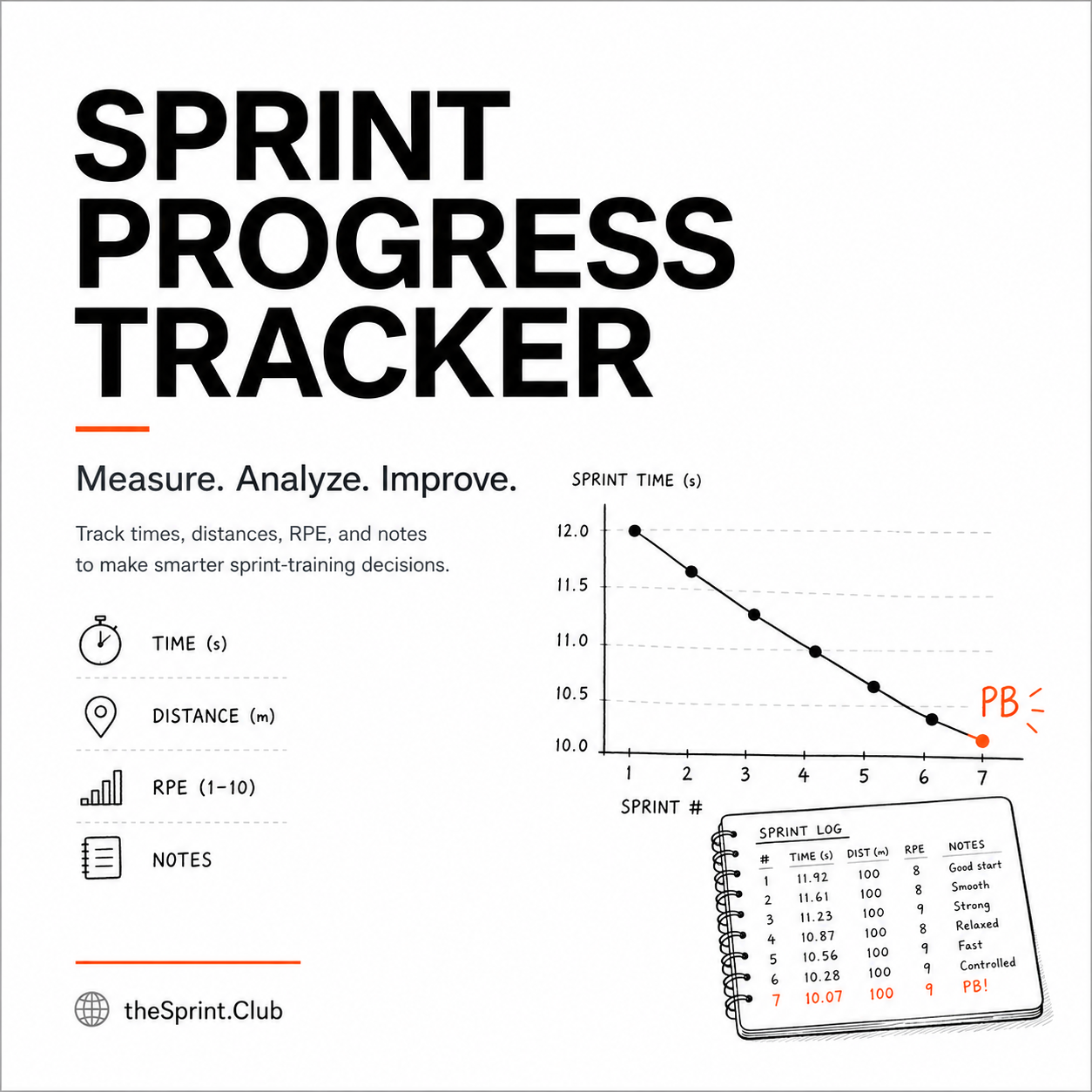
Sprint Progress Tracker: Measure and Improve Your Speed
|
|
|
|
Use a sprint progress tracker to record times, monitor fatigue, identify trends, and make smarter training decisions that improve sprint performance.
|
|
|
|
|
|
|
|
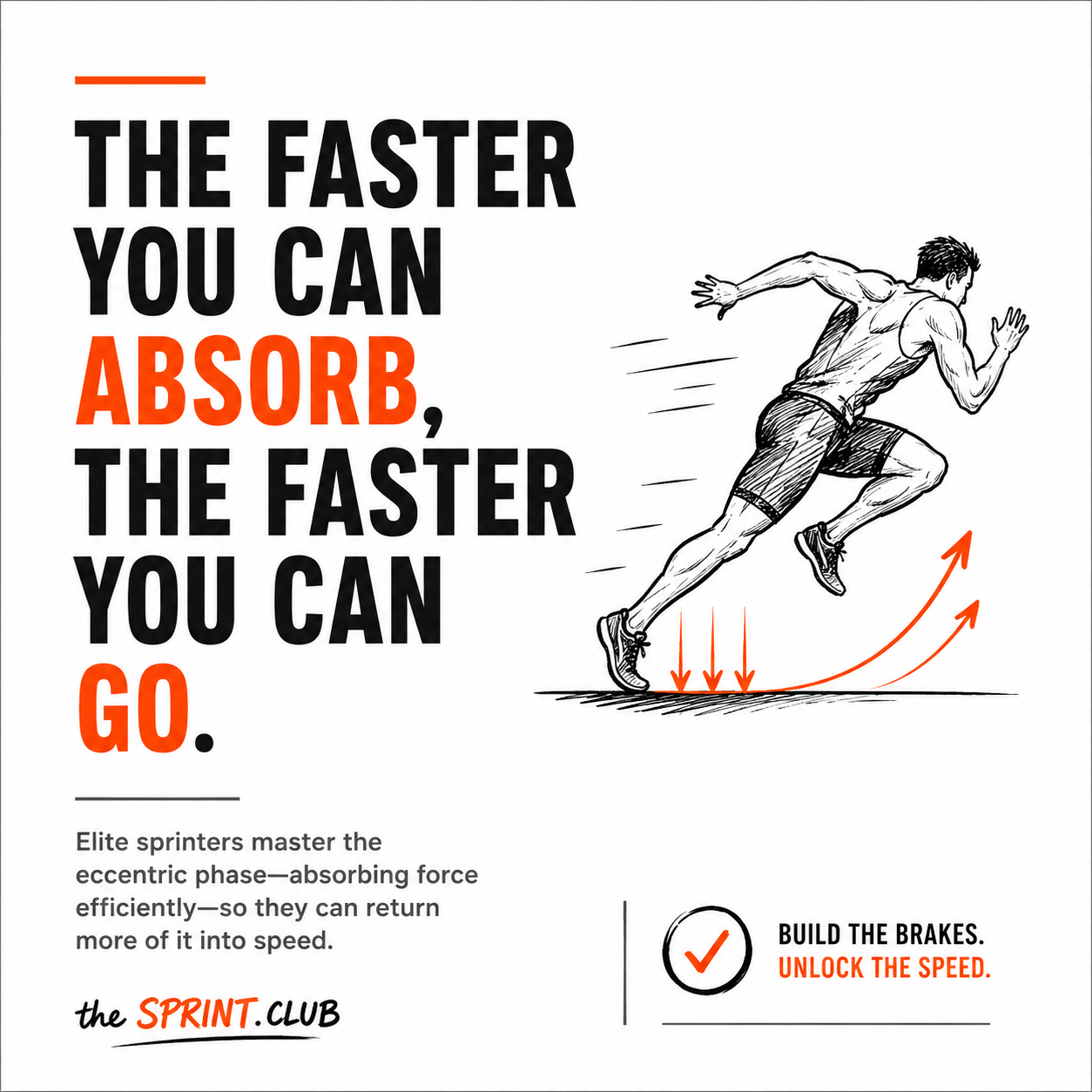
Why absorbing force efficiently is the missing link to faster sprint times, shorter ground contacts, and better performance.
|
|
|
|
Most athletes focus on producing force. Elite sprinters also master absorbing it. Every sprint step begins with a collision between the foot and the ground. Before you can produce force, your body must accept it. Athletes who develop exceptional eccentric strength can absorb larger forces, store more elastic energy, reduce ground contact time, and return more of that energy into …
|
|
|
|
|
|
|
|
|