|
|
|
|
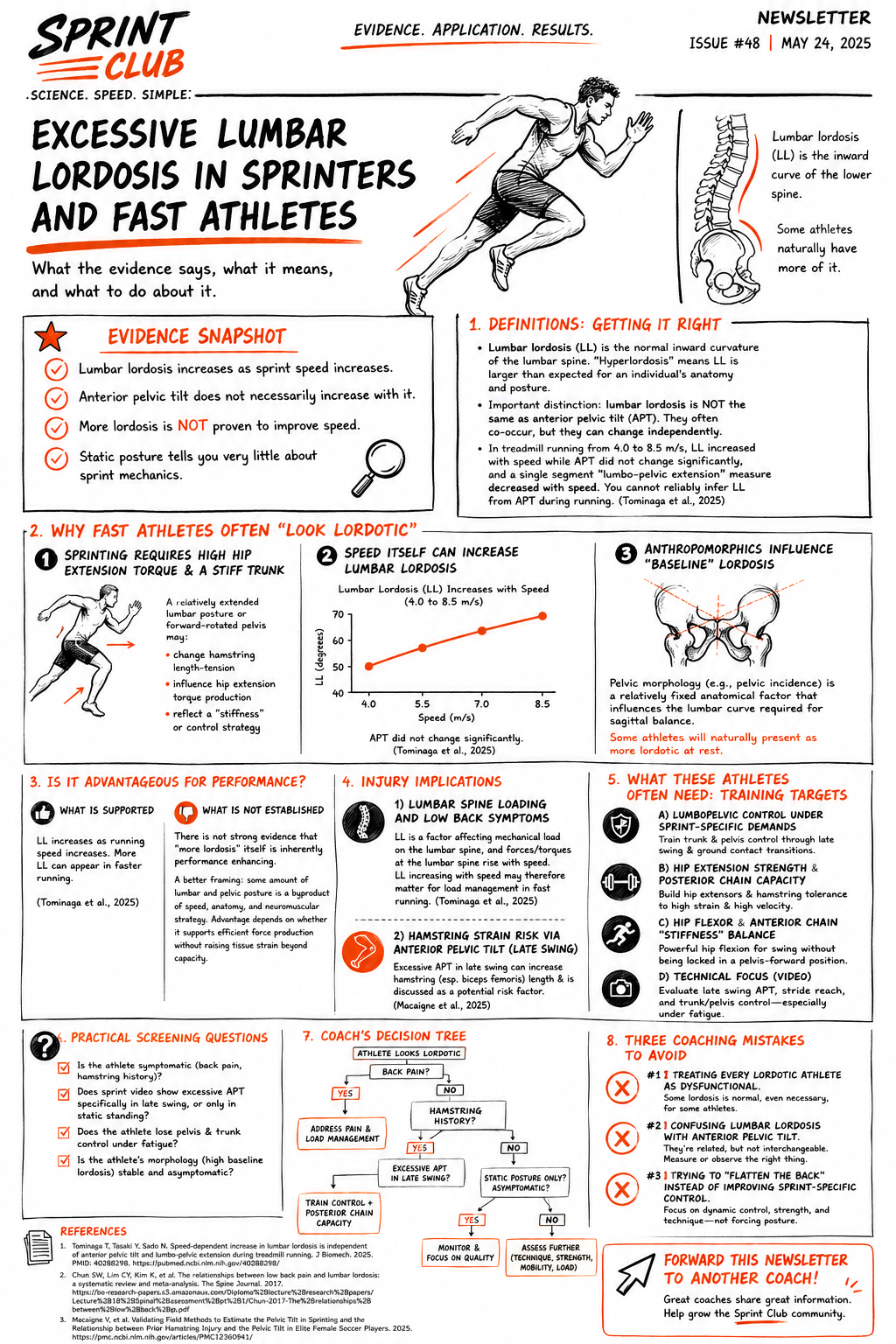
The quick definition (so we don’t talk past each other)
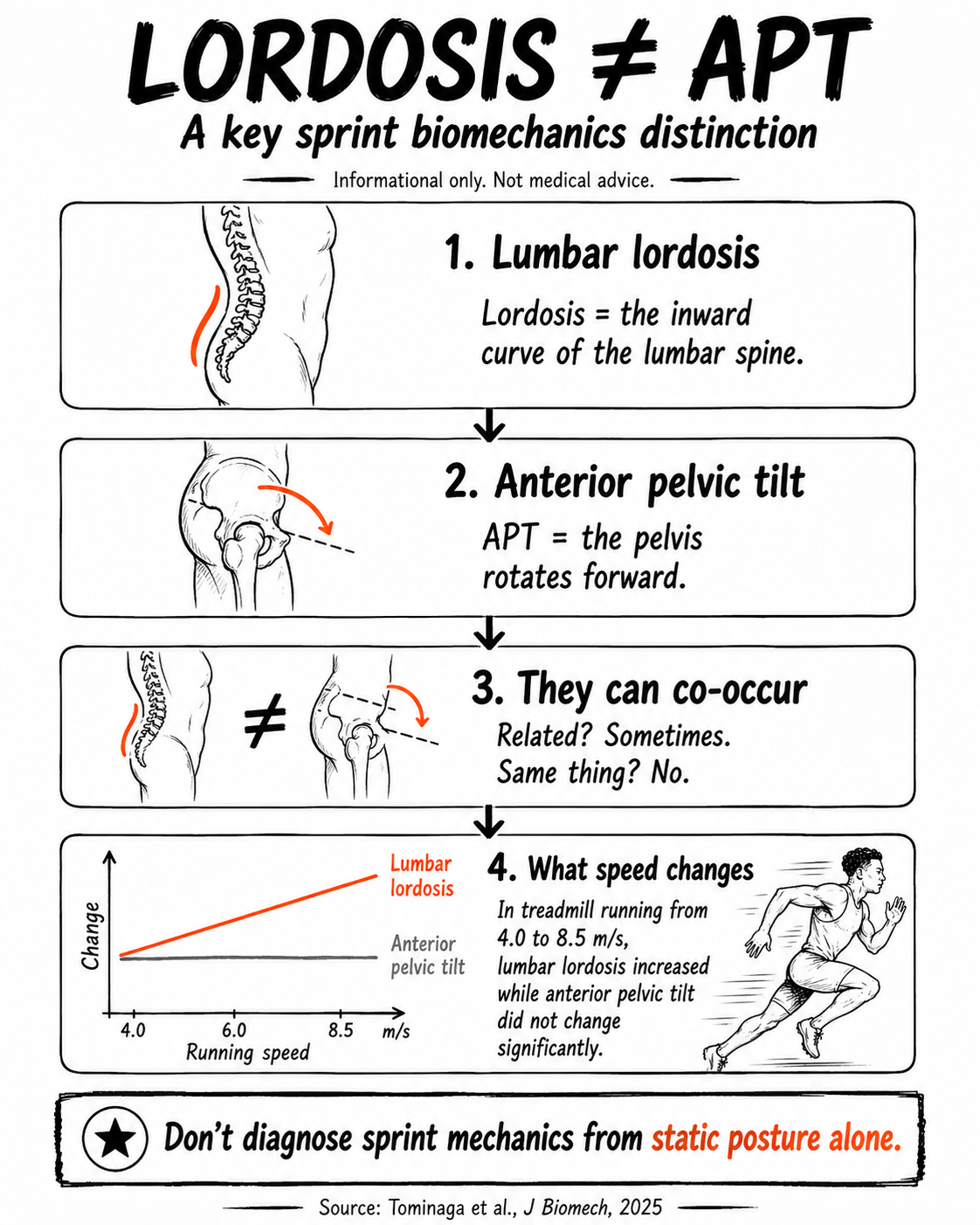
Lumbar lordosis is the normal inward curve of the low back. “Excessive” means the curve is larger than expected for the athlete’s anatomy and task.
|
Important nuance: lordosis is not identical to anterior pelvic tilt (APT). They often travel together, but they can change independently.
|
|
|
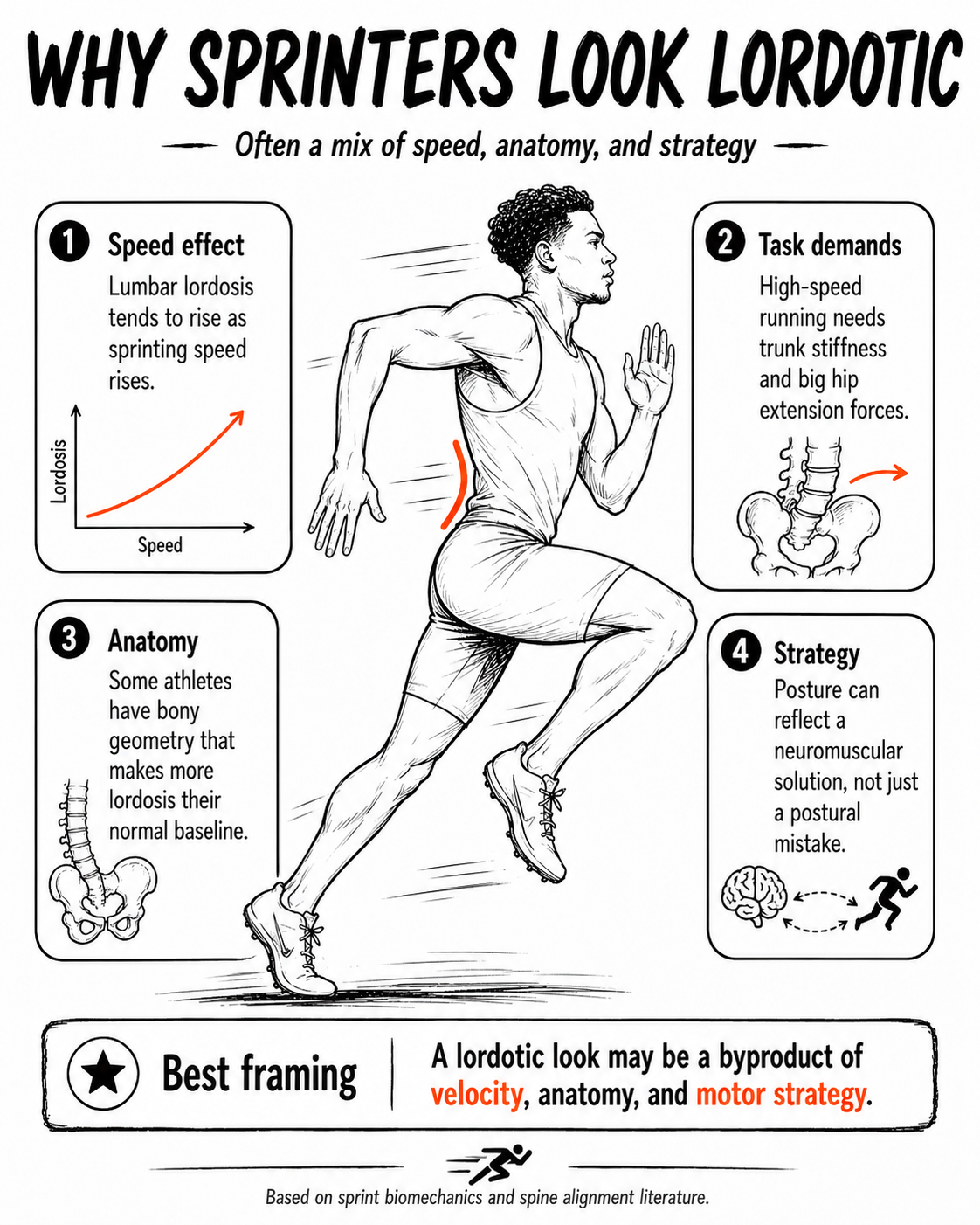
Why sprinters and fast athletes often “look” lordotic
1) Speed changes spine posture
|
A treadmill study measured lumbar lordosis directly and found it increased as running speed increased, while anterior pelvic tilt did not significantly change across speeds. That means more lordosis can show up simply because the athlete is moving fast, not because they “lost core.”[1]
|
2) The job of sprinting is force transfer
Max velocity sprinting demands:
|
- high hip extension torque (posterior chain output),
- rapid swing (hip flexor output),
- a trunk and pelvis that can transmit force without collapsing into unwanted motion.
Some athletes “solve” that with a stiffer lumbopelvic strategy. Visually, that can read as “arched.”
|
3) Anatomy matters (anthropomorphics)
Baseline sagittal posture varies a lot, partly due to pelvis and spine morphology. Two athletes can run the same speed with different looking “stack.”
|
|
|
|
|
|
|
Is it advantageous?
|
Evidence-based framing: Speed-associated lordosis is real, but “more lordosis = faster” is not established.
|
A better question is: does the athlete’s posture support efficient force production without pushing tissue strain beyond their capacity?
|
|
|
|
|
|
|
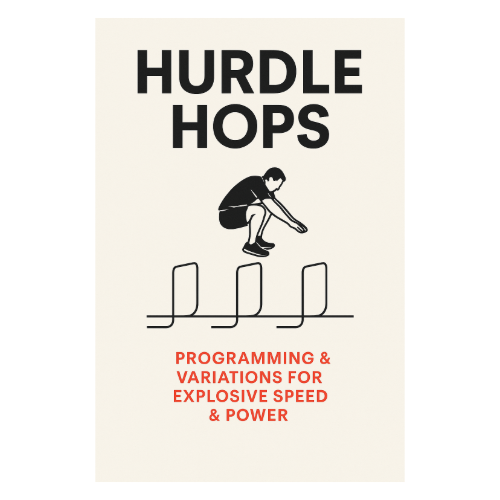
The ebook makes this distinction clear: different hurdle hop setups train different qualities. Reactive force and elasticity are trained by bouncing off the landing with low ground contact time. Stiffness and starting power are trained more through sticking landings, holding positions, and using higher hurdles. Closer spacing biases vertical force. Wider spacing increases the horizontal projection demand.
|
|
|
|
|
|
The injury conversation, what’s plausible vs. what’s hype
1) Low back load, not automatically “pain”
|
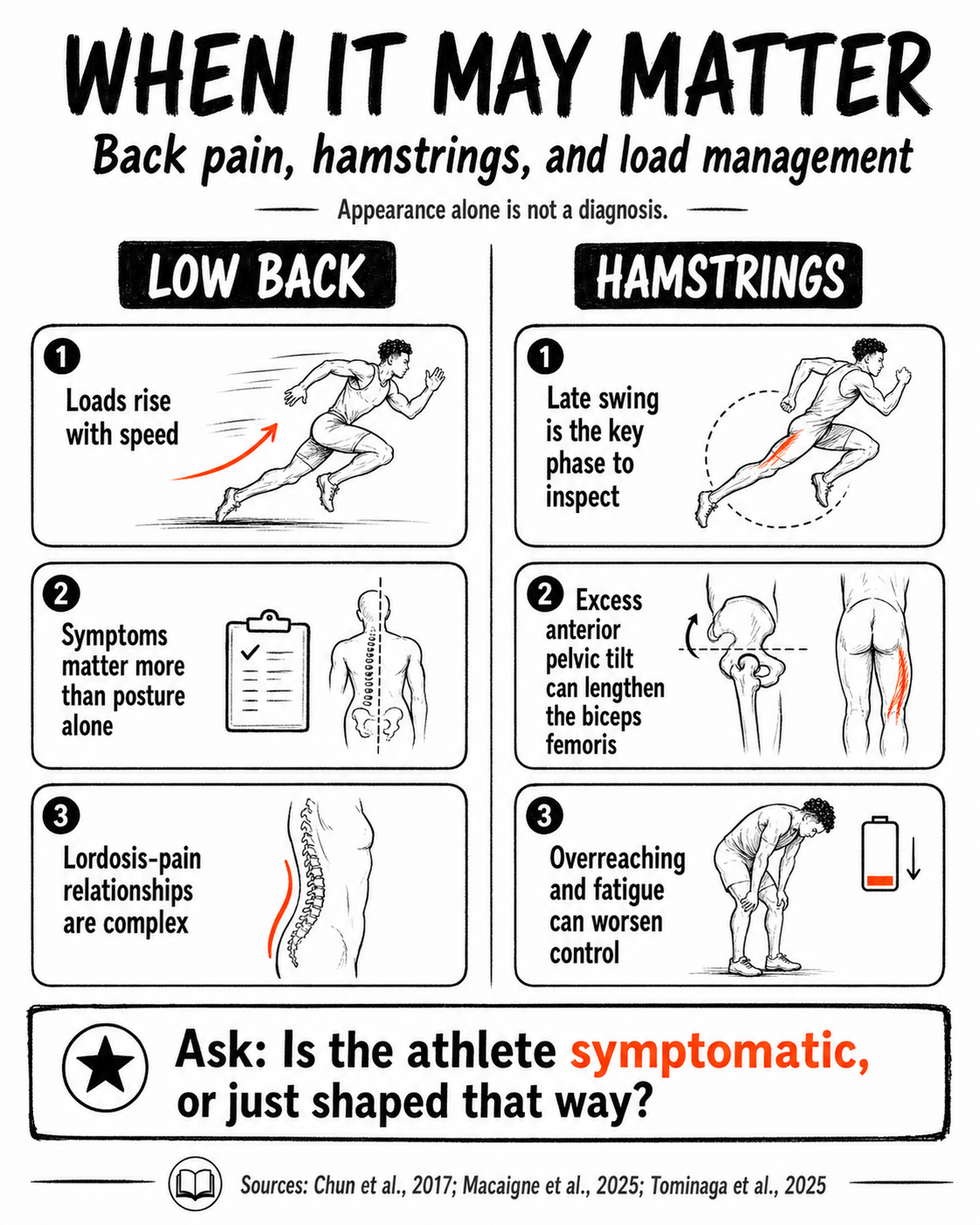
Because spinal forces and torques rise with speed, posture that increases lumbar loading could matter for some athletes, especially with high sprint volumes.[1]
|
|
Also, low-back pain research does not support simple slogans like “lordosis causes pain.” It depends on context and diagnosis.[2]
|
2) Hamstrings, the key moment is late swing
|
The stronger mechanistic story is excessive anterior pelvic tilt in late swing, because the hamstrings originate on the pelvis (ischial tuberosity). More APT can lengthen the biceps femoris in the phase where hamstring strains often occur.
|
In elite female soccer players, late-swing pelvic tilt correlated with longer biceps femoris length, and previously injured players showed higher late-swing APT than non-injured players.[3]
|
Translation: don’t obsess over a static “standing posture.” Look at sprinting frames.
|
|
|
|
|
|
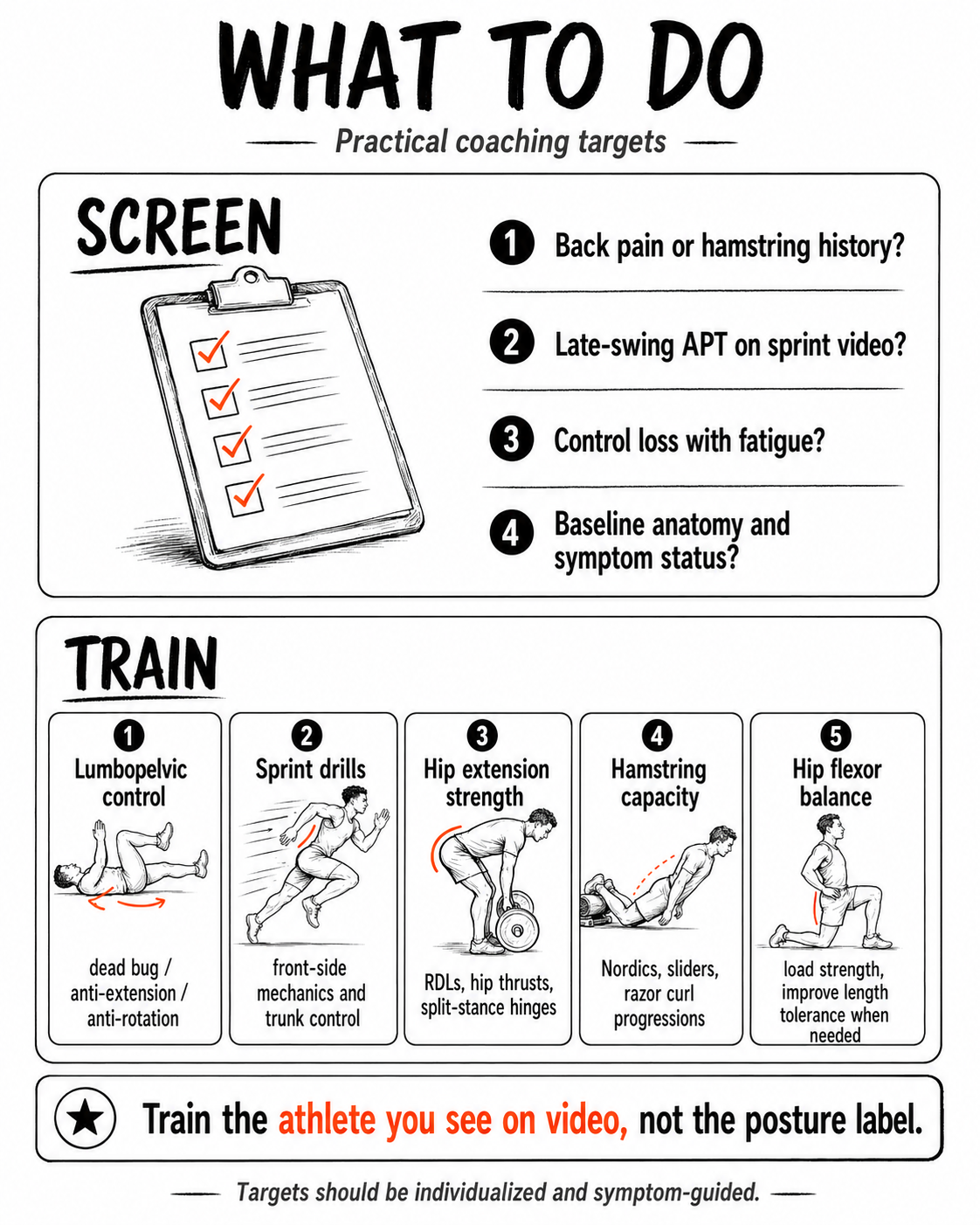
A coachable checklist, what to look for on video (phone is enough)
Focus on max velocity (or top-end reps) and look for these patterns:
|
- Late swing: pelvis stays dumped forward as the leg reaches for strike.
- Overreach: foot lands too far ahead of center of mass (often pairs with APT and hamstring stress).
- Fatigue drift: posture is fine early, then APT and backside mechanics increase late in session.
|
|
Training priorities (what to do about it)
1) Train “anti-extension” without turning sprinting into a plank
Pick 1–2, progress over weeks:
|
- Dead bug progressions (quality reps, exhale control)
- Ab wheel or rollout progressions (only if pelvis stays neutral)
- Pallof press variations (anti-rotation)
|
Goal: keep pelvis and trunk organized while hips move fast.
|
2) Build hip extension strength and hamstring strain tolerance
Pick 2–3, dose intelligently:
|
- RDL variations (bilateral, then split-stance)
- Hip thrust variations (strength and power)
- Nordic hamstrings or sliding leg curls (eccentric bias)
- Lengthened hamstring work (careful progression)
|
Goal: higher “tissue capacity” so mechanics don’t have to be perfect to stay healthy.
|
3) Give hip flexors a real job (not just stretching)
If the athlete is powerful but stuck in a pelvis-forward strategy, don’t only stretch hip flexors. Also train:
|
- resisted hip flexion (standing, marching variations),
- sprint drills that emphasize front-side mechanics.
4) Put it back into sprinting
Use drill-to-sprint transfer:
|
- A-skips and wicket runs (if they help the athlete self-organize)
- Fly-ins with “hold posture” constraints (short, high quality)
- Keep cues external and simple (for example, “rib cage stacked over hips,” “step down under
|
|
|
|
|
Help Grow THE SPRINT CLUB
If this newsletter helps you think differently about speed:
|
- share it on Instagram stories
- repost it on X
- send it to another coach
- forward it to an athlete stuck at a plateau
|
The goal of this newsletter is simple:
|
|
Teach the hidden systems that determine visible performance.
|
Growth happens when readers like you share ideas that challenge outdated training assumptions.
|
|
|
|
|
|
|
|
|
|
The Science of Anthropometrics and Sprinting
|
|
|
|
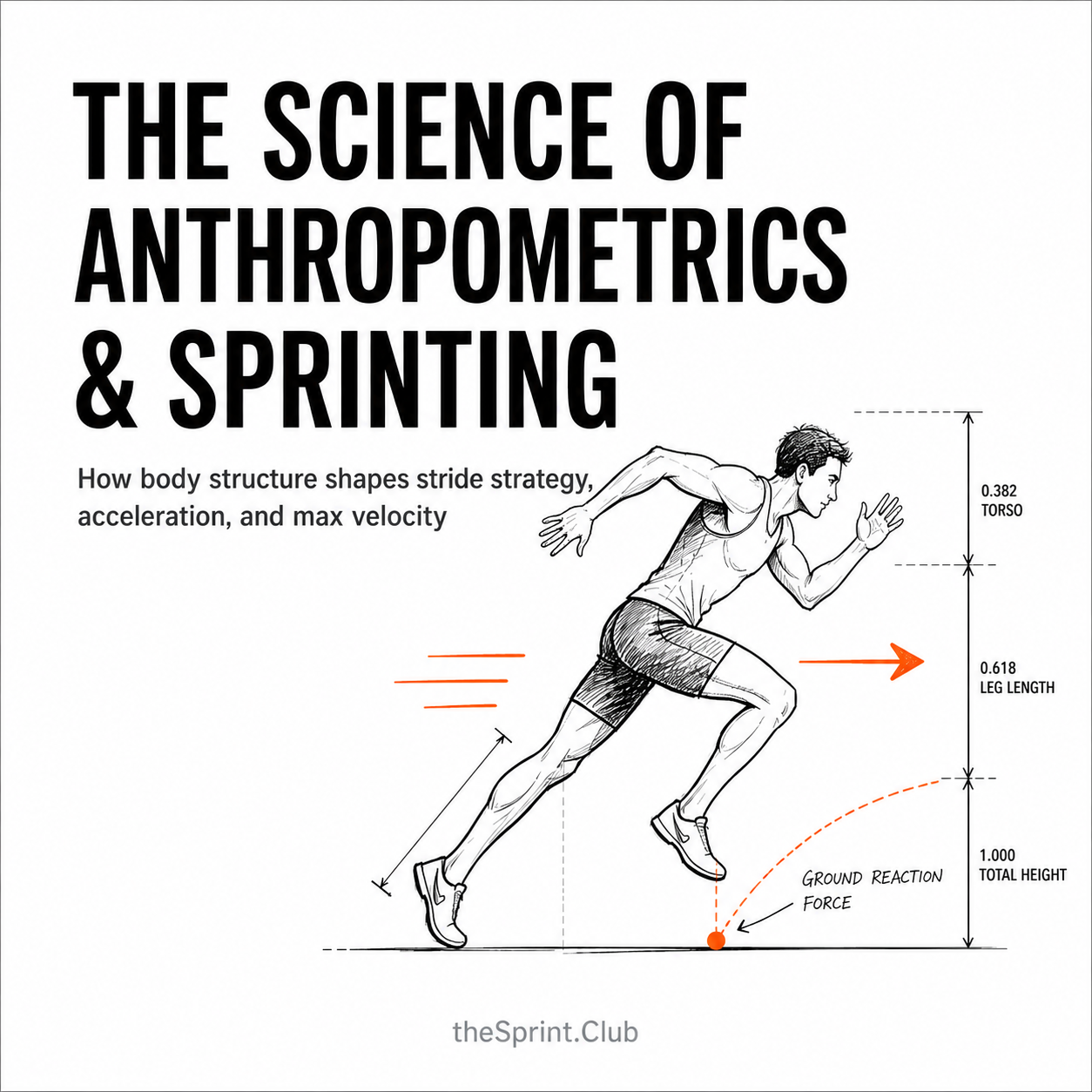
Anthropometrics do not determine whether an athlete can sprint fast, but they shape how each athlete creates speed. This post explains how height, limb length, torso proportions, body mass, and stiffness influence acceleration, max velocity, stride length, stride frequency, and sprint technique. Learn how to use body structure as a coaching map instead of forcing every sprinter into the same model.
|
|
|
|
|
|
|
|
How to Jump Higher: A Complete Guide to Explosive Leg Training
|
|
|
|
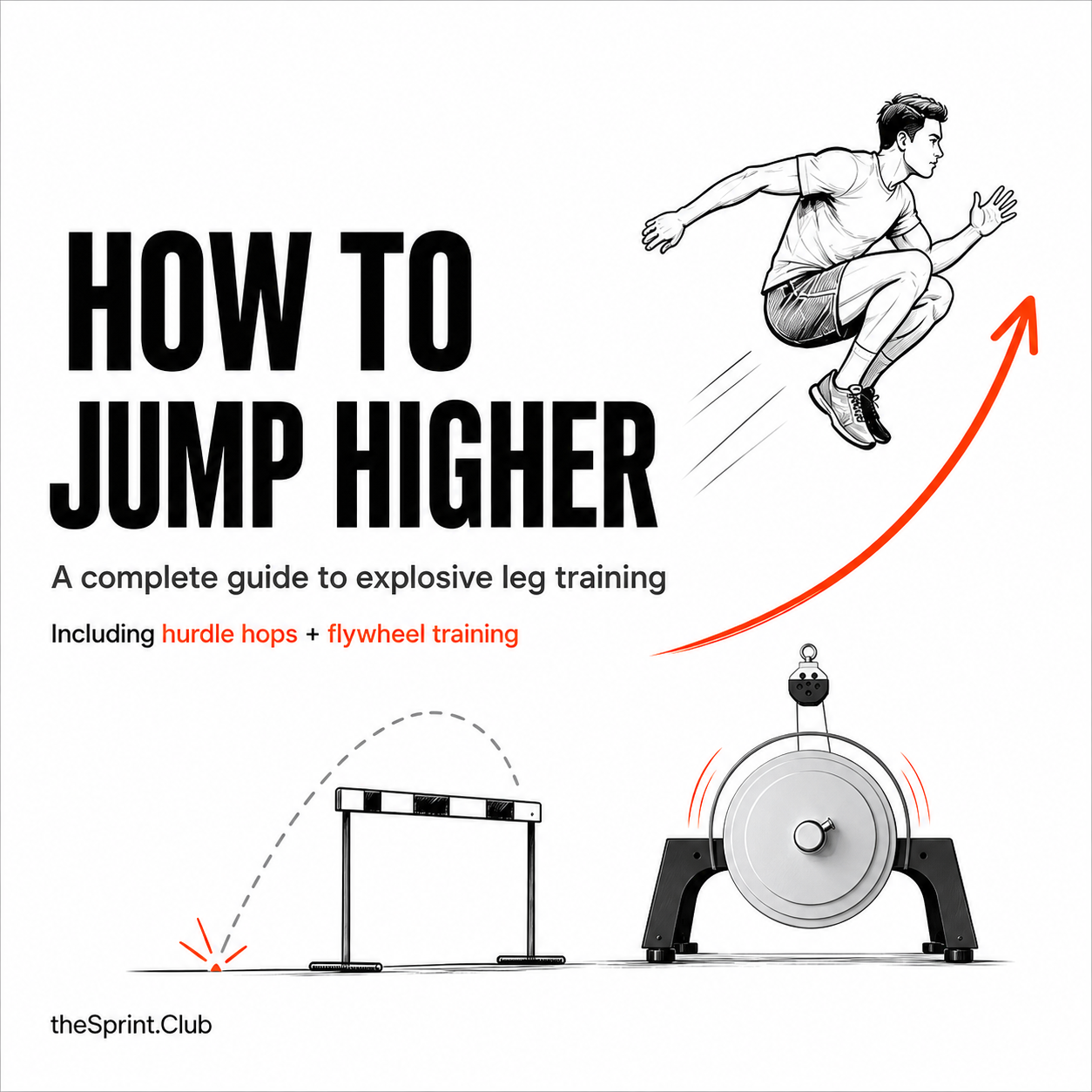
Want to jump higher? This guide breaks down the strength, stiffness, reactive power, and recovery principles behind explosive jumping. Learn how to use hurdle hops, flywheel training, plyometrics, and smart strength work to build more force, waste less energy, and rebound faster.
|
|
|
|
|
|
|
|
|