|
|
|
|
The Hidden Variable Between Practice and Performance
|
There’s a pattern you’ve seen before.
|
|
An athlete looks elite in training.
|
|
Fast. Powerful. Efficient.
|
|
Then competition shows up… and something disappears.
|
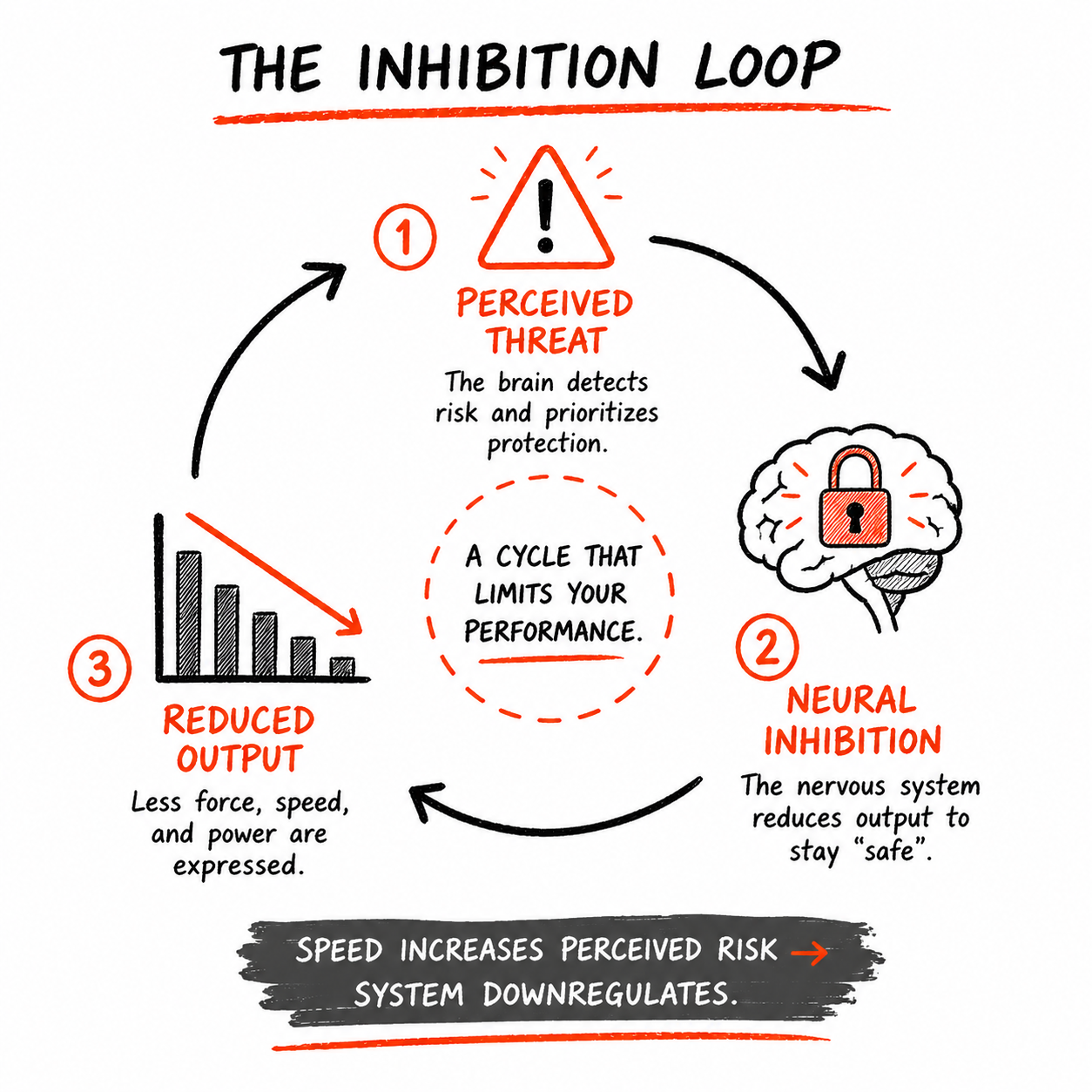
Same body. Different output.
|
The constraint is neural.
|
|
|
The Real Bottleneck: Permission, Not Capacity
|
Most athletes train capacity.
|
In controlled environments, the nervous system feels safe enough to allow high output. But when speed increases and consequences become real, the system shifts priorities:
|
Protect first. Perform second.
|
It's the brain that regulates output to prevent perceived threat to the system [Noakes, 2012].
|
|
|
|
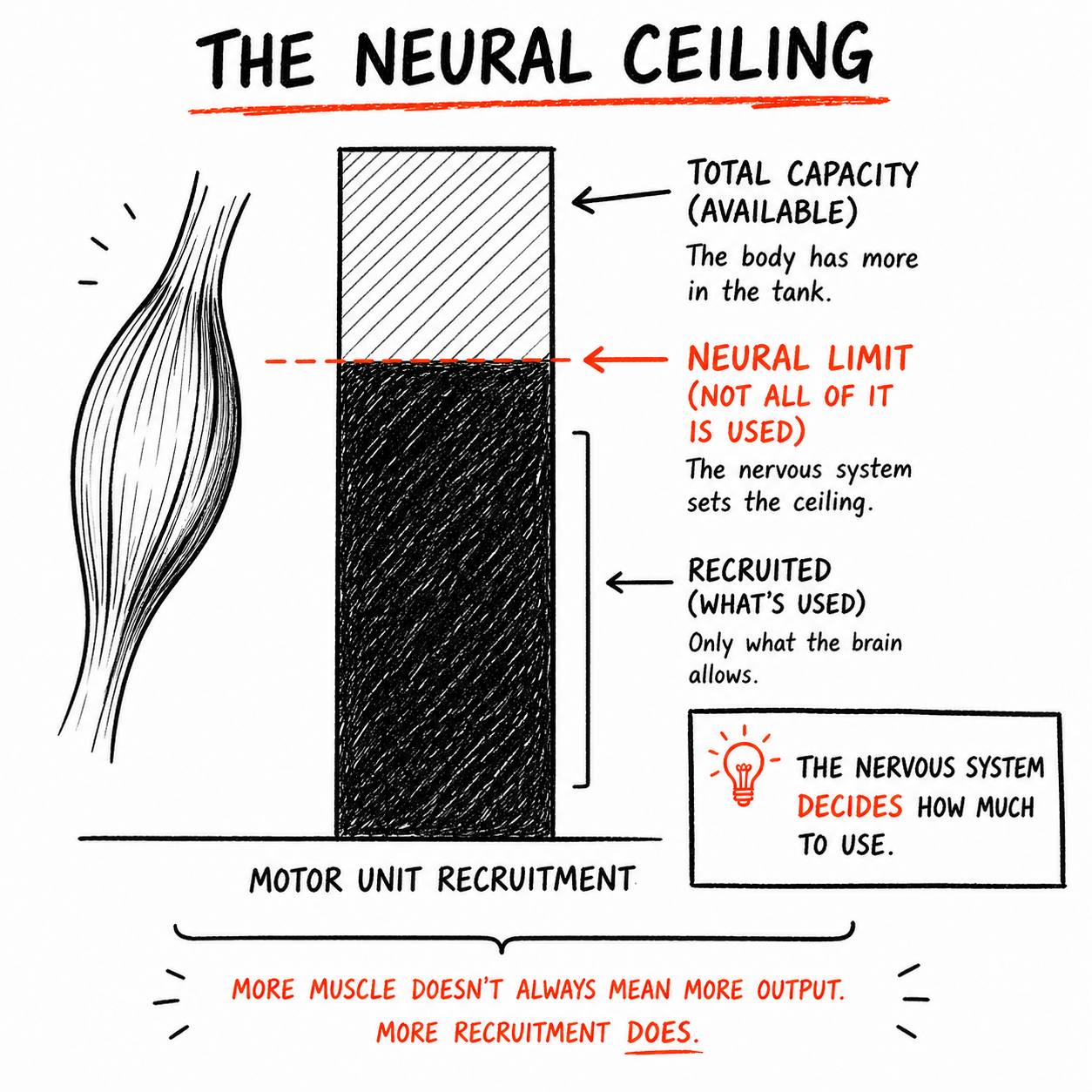
Your body is capable of more than it will allow you to express.
|
|
And that gap is where performance is decided.
|
|
|
|
|
Why You’re Not Getting Faster
|
If you’re training hard but not seeing results, it’s often misdiagnosed.
|
- A strength ceiling
- A mobility restriction
- A lack of effort
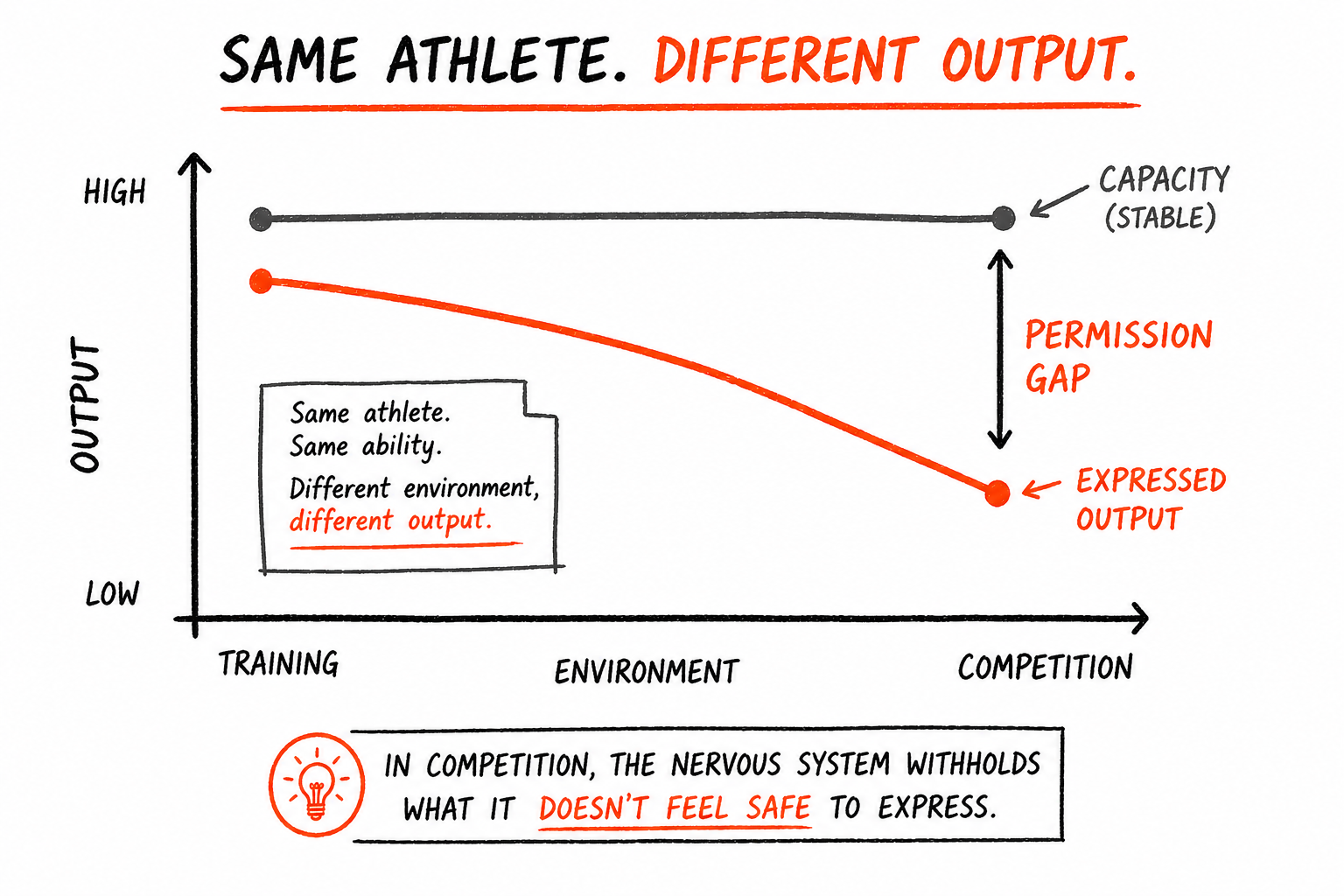
It’s a regulation problem under threat.
|
As velocity increases, coordination demands rise. The nervous system evaluates:
|
- Stability
- Predictability
- Risk
If any of those feel off, output gets downregulated.
|
This is supported by research showing that maximal force and speed depend on how many motor units the nervous system is willing to recruit, not just how many exist [Enoka & Duchateau, 2017].
|
No permission = no performance.
|
|
|
|
|
|
Train the System, Not Just the Body
|
If performance is gated by permission, training has to reflect that.
|
Here are three evidence-aligned approaches:
|
1) Reduce Cognitive Interference
|
Overthinking increases co-contraction and disrupts fluid movement.
|
Research shows that an external focus of attention improves movement efficiency and performance outcomes [Wulf, 2013].
|
- Cue outcomes (“push the ground away”) instead of positions
- Avoid overloading athletes with technical instructions at speed
2) Gradually Increase Exposure to Speed
|
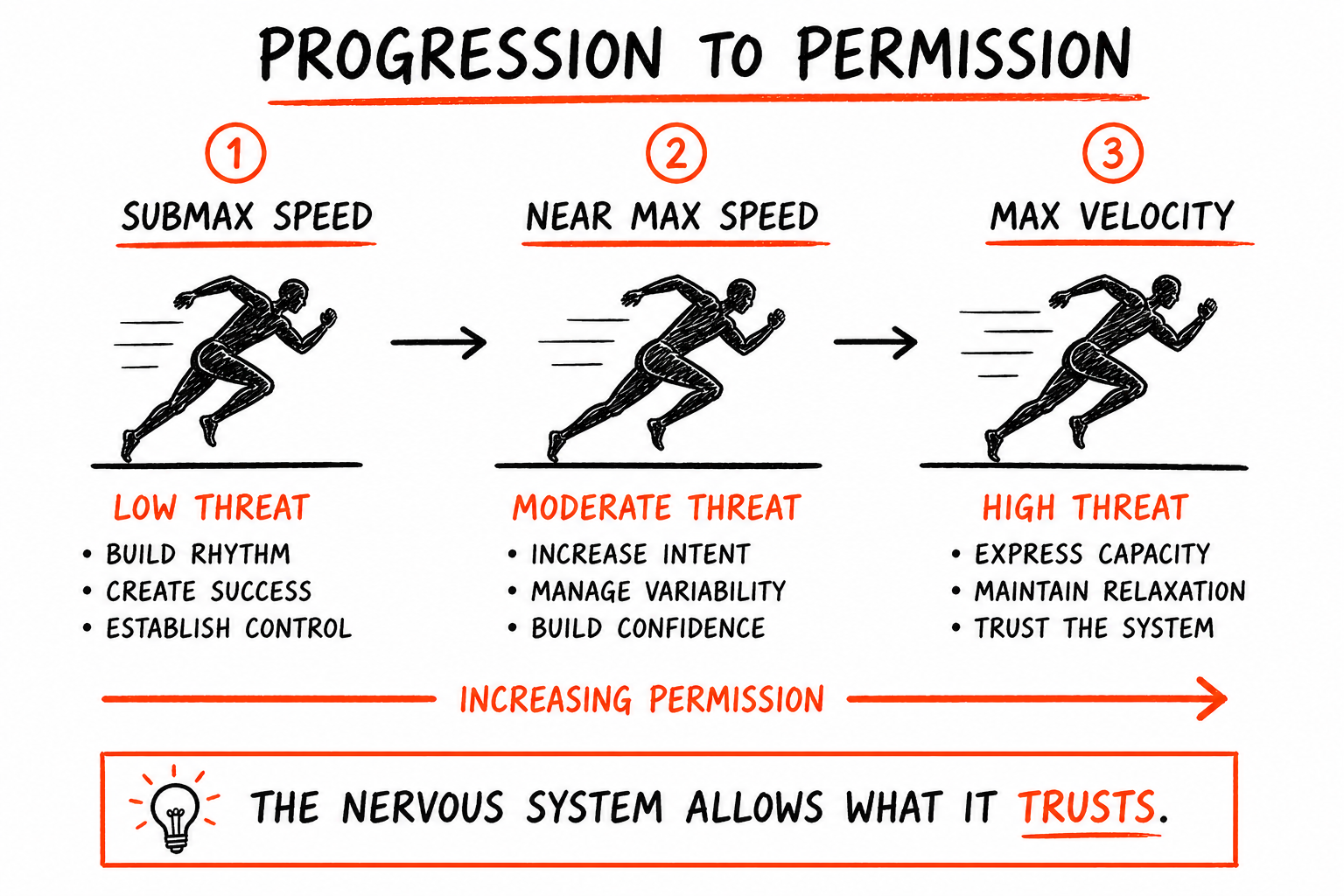
The nervous system adapts to what it experiences safely.
|
Progressive exposure reduces perceived threat and increases allowable output.
|
- Submax → near-max → max velocity progressions
- Use constraints that maintain rhythm and control
3) Build Stable, Predictable Mechanics
|
The more consistent and repeatable the movement, the more the system “trusts” it.
|
- Emphasize rhythm and timing over force
- Train stiffness and elastic return, not just strength
|
|
A Simple Way to See It
Left side: “Physical Capacity”
|
Right side: “Neural Permission”
|
- Safety
- Confidence
- Coordination under speed
Bottom caption: “Performance = What You Can Do × What Your Nervous System Allows”
|
|
|
|
|
|
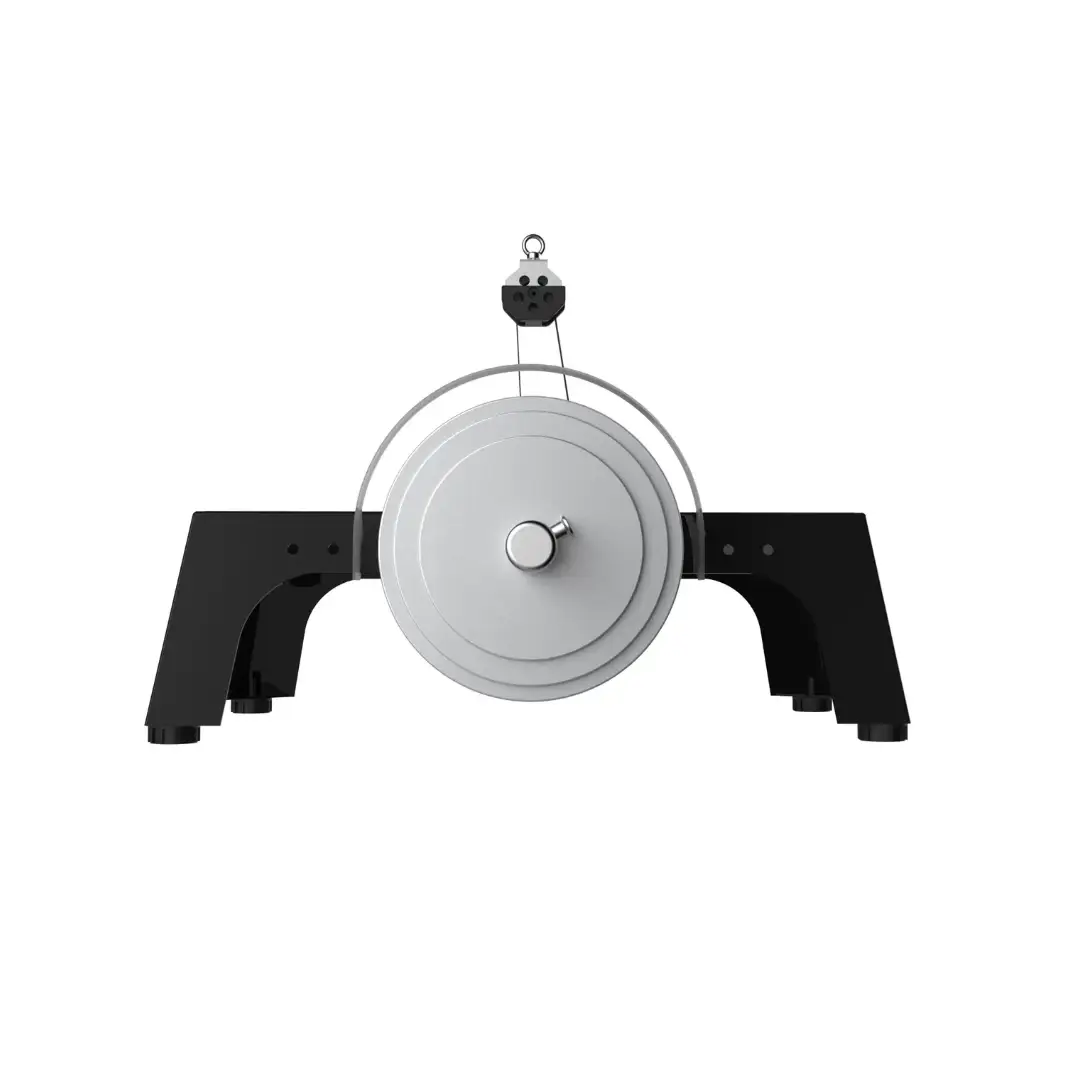
EccentriDisk Flywheel Trainer
|
|
|
Elevate your athletic prowess with the EccentriDisk Flywheel Trainer! Engineered for explosive strength, this versatile flywheel system (with 8", 10", 12" disks) delivers eccentric overload for superior sprint speed, jump height, and power. Featuring a non-slip foot surface, durable braided strap, and accessories like a hand bar and waist belt, it’s ideal for athletes targeting muscle hypertrophy and injury prevention. Compatible with Exxentric flywheels. Shop now at thesprint.club
|
|
|
|
|
|
|
|
|
|
Thanks for reading. See you soon!
|
|
|
|
|
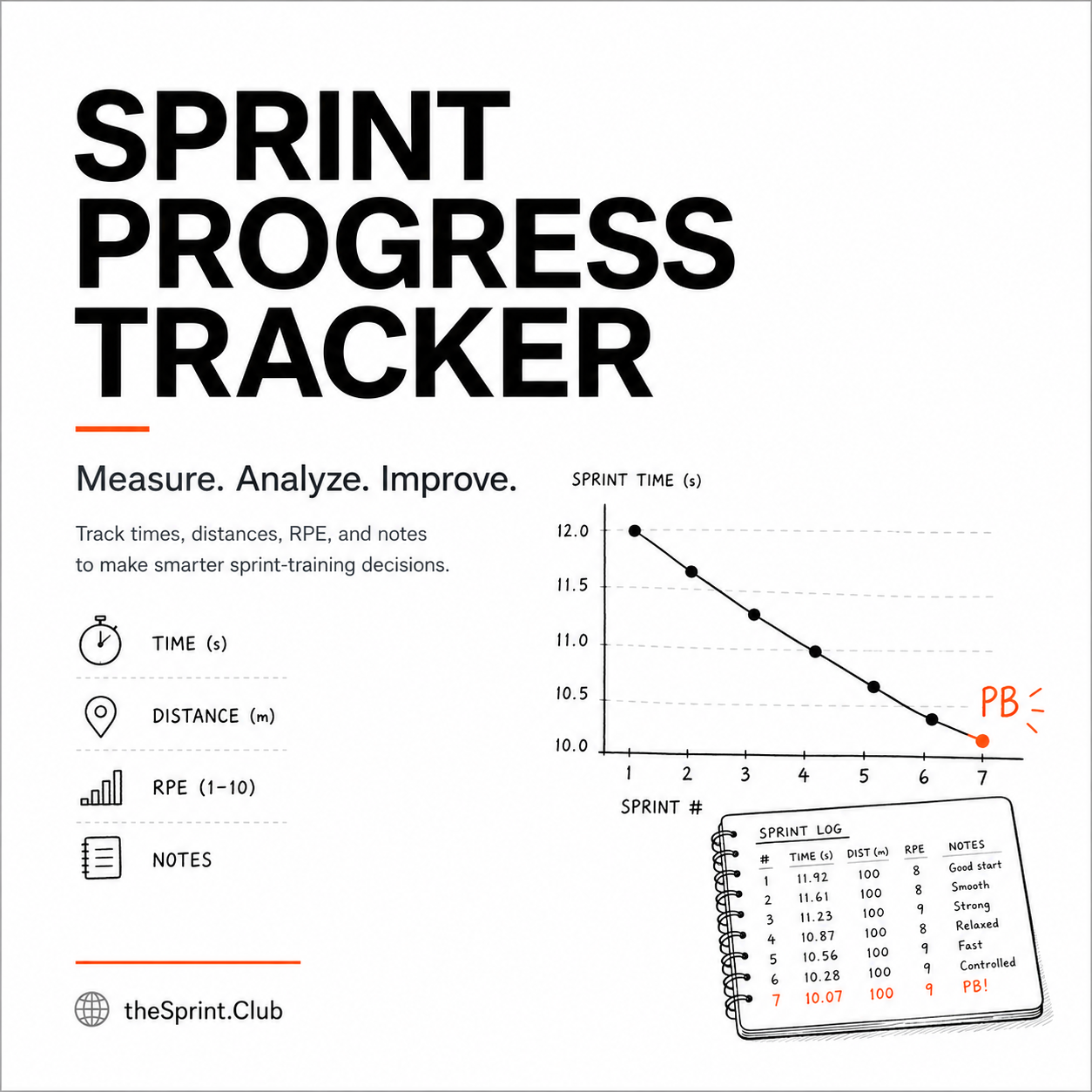
Sprint Progress Tracker: Measure and Improve Your Speed
|
|
|
|
Use a sprint progress tracker to record times, monitor fatigue, identify trends, and make smarter training decisions that improve sprint performance.
|
|
|
|
|
|
|
|
Why absorbing force efficiently is the missing link to faster sprint times, shorter ground contacts, and better performance.
|
|
|
|
Most athletes focus on producing force. Elite sprinters also master absorbing it. Every sprint step begins with a collision between the foot and the ground. Before you can produce force, your body must accept it. Athletes who develop exceptional eccentric strength can absorb larger forces, store more elastic energy, reduce ground contact time, and return more of that energy into …
|
|
|
|
|
|
|
|
|