|
|
|
|
The Core Paradox
Trying harder doesn't always make you faster.
|
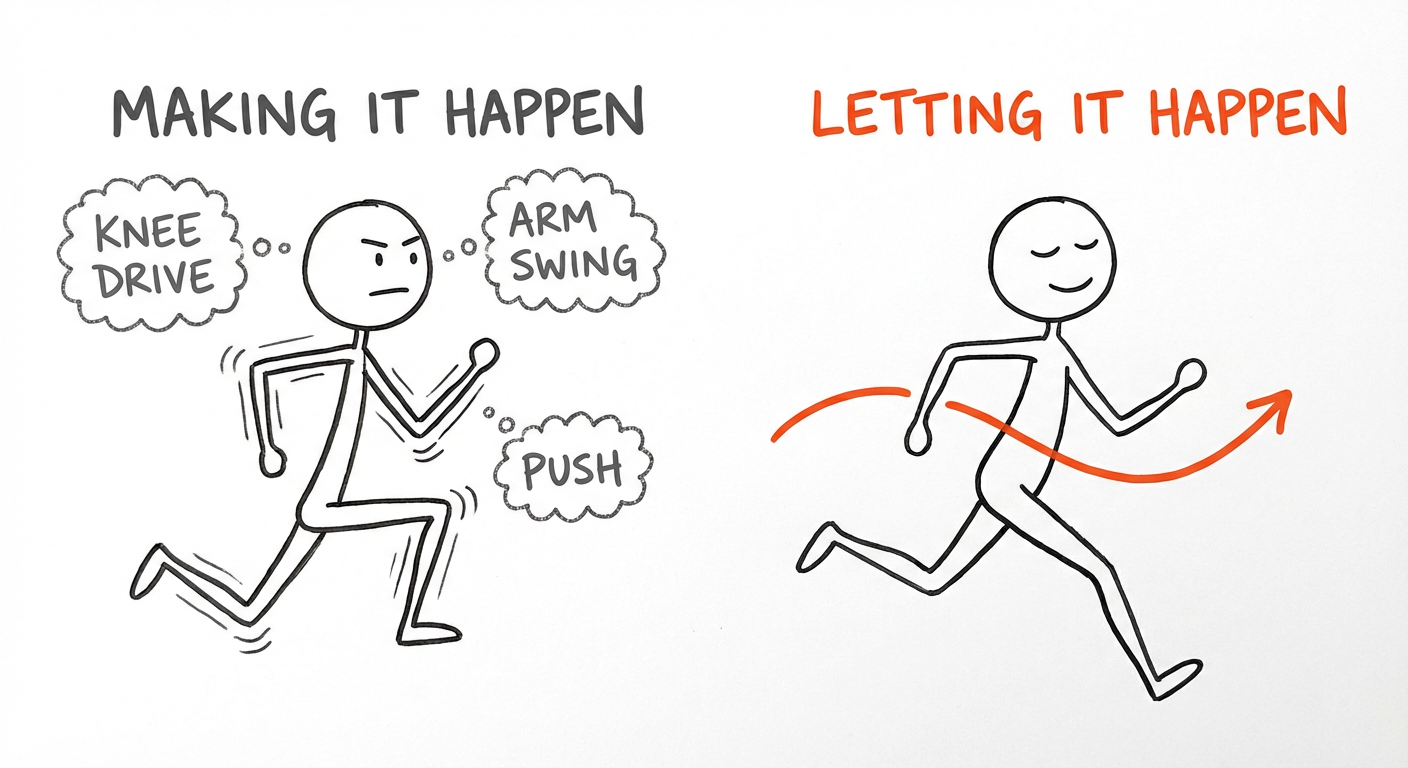
Research identifies two distinct performance states:
|
|
|
"Letting It Happen" (Flow State)
|
- Unconscious execution
- Minimal thought
- Automatic movement
- Gradual confidence build
"Making It Happen" (Clutch State)
|
- Conscious control
- Heightened awareness
- Deliberate effort
- Sudden intensity spike
|
|
|
The Science
Elite athletes show superior implicit (unconscious) motor learning compared to novices. These unconsciously learned skills are less vulnerable to pressure.
|
Motor expertise correlates with unconscious rather than conscious executive control.
|
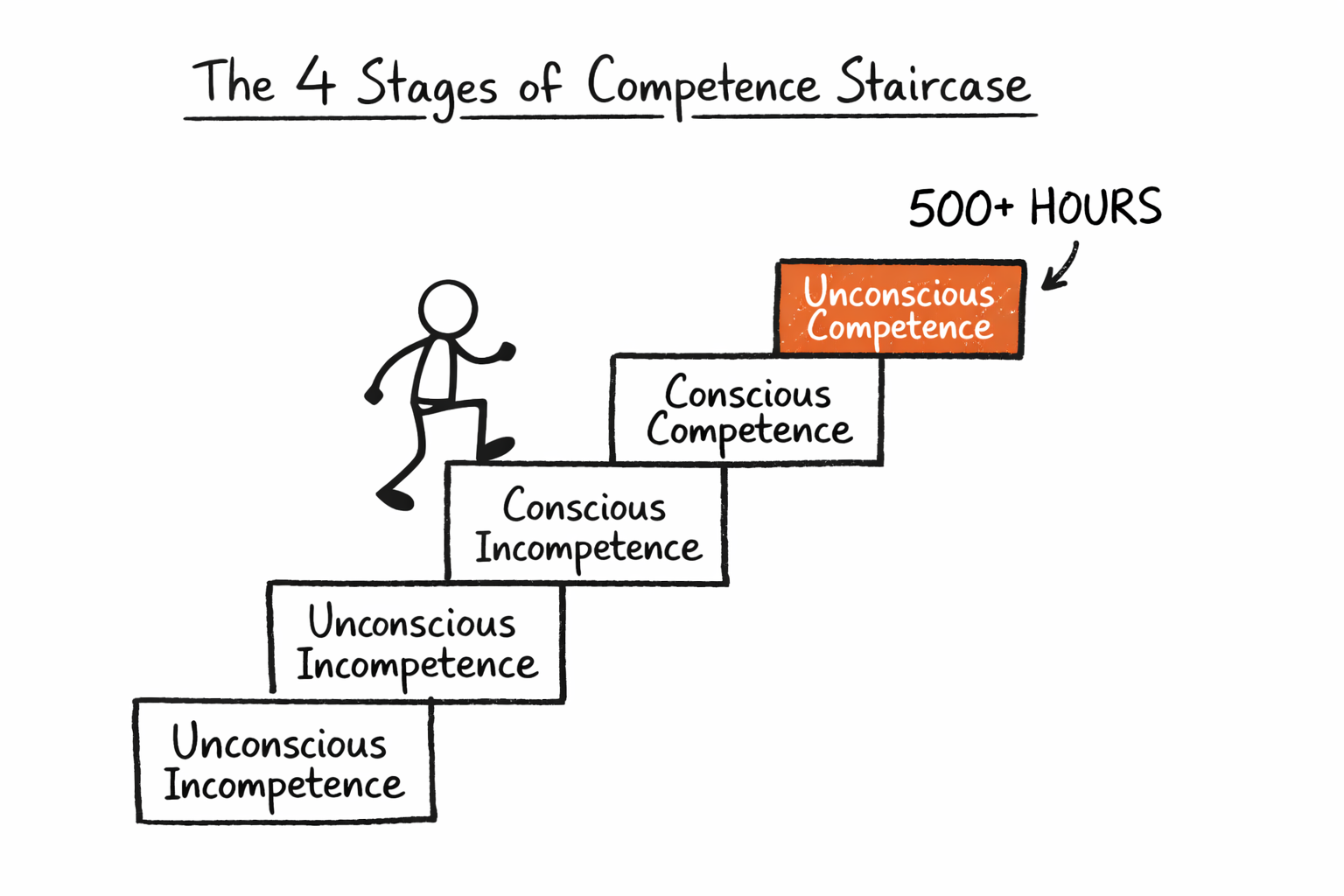
The 4 Stages: Unconscious Incompetence → Conscious Incompetence → Conscious Competence → Unconscious Competence (500+ hours)
|
|
|
The Attentional Focus Game-Changer
|
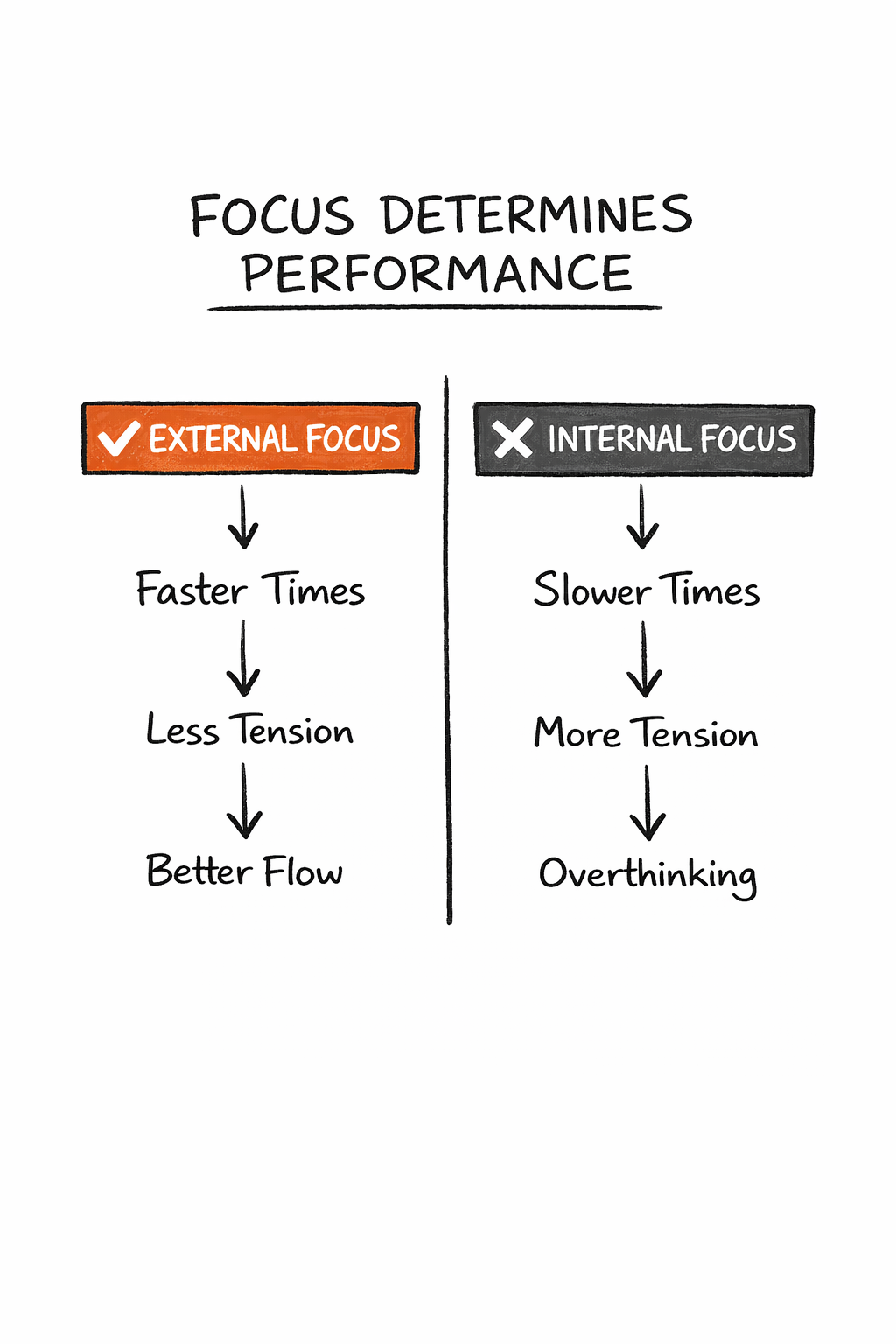
External Focus (focus on movement effect) significantly improves both reaction time and sprint time.
|
|
✓ Use: "Push blocks back" | "Attack the track" | "Rip through air"
|
|
✗ Avoid: "Drive knees up" | "Pump arms faster" | "Extend hip"
|
Action Toolkit
- Trust Training - Your body knows the pattern
- External Cues - Reframe all internal thoughts as external effects
- Rhythm Patterns - "Fast-fast-fast" bypasses conscious control
- Pre-Race Routine - Build automatic transition to "letting go"
- Selective Awareness - Train conscious, race unconscious
- Mental Rehearsal - Program patterns without fatigue
|
|
|
|
|
|
|
|
|
|
|
|
Thanks for reading. See you soon!
|
|
|
|
|
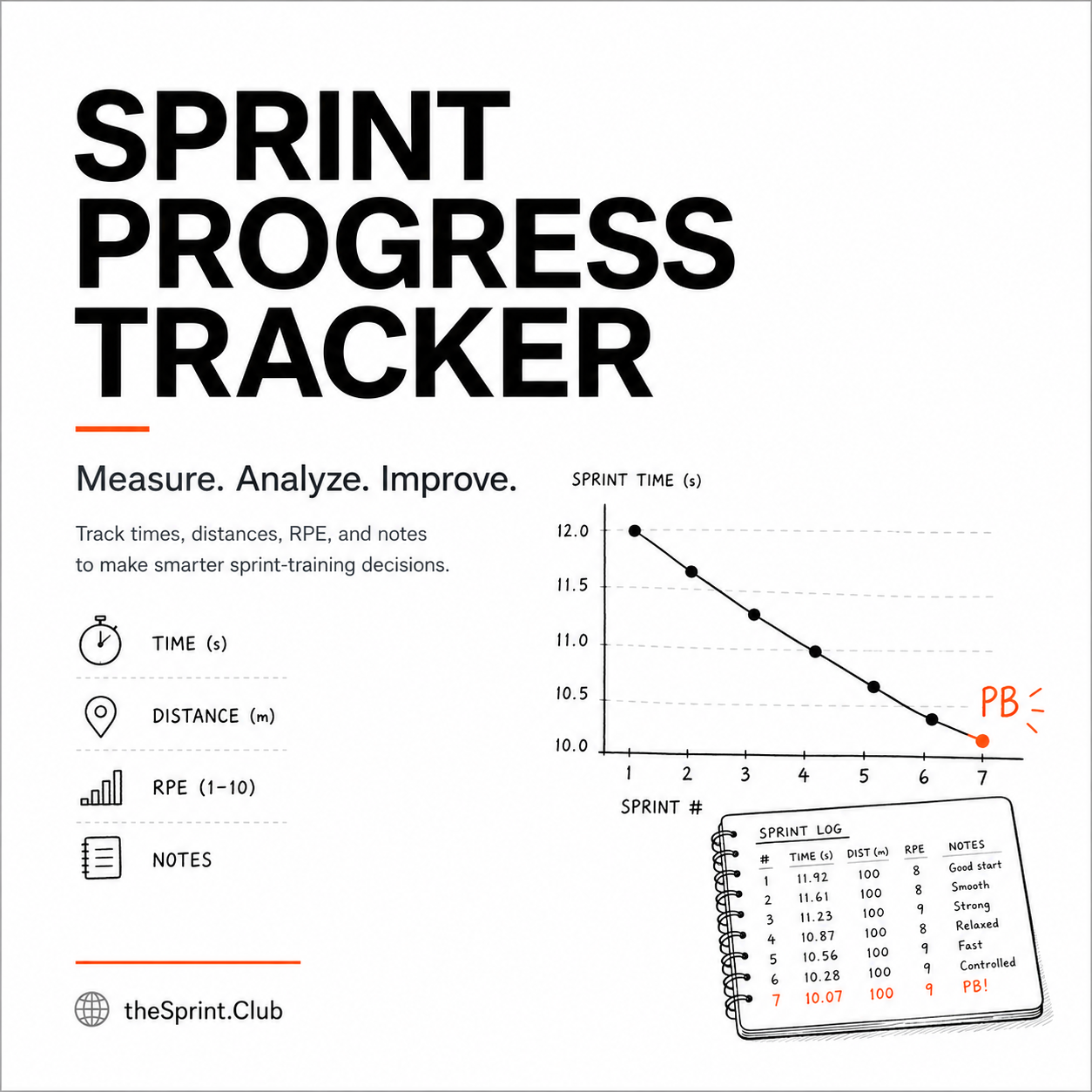
Sprint Progress Tracker: Measure and Improve Your Speed
|
|
|
|
Use a sprint progress tracker to record times, monitor fatigue, identify trends, and make smarter training decisions that improve sprint performance.
|
|
|
|
|
|
|
|
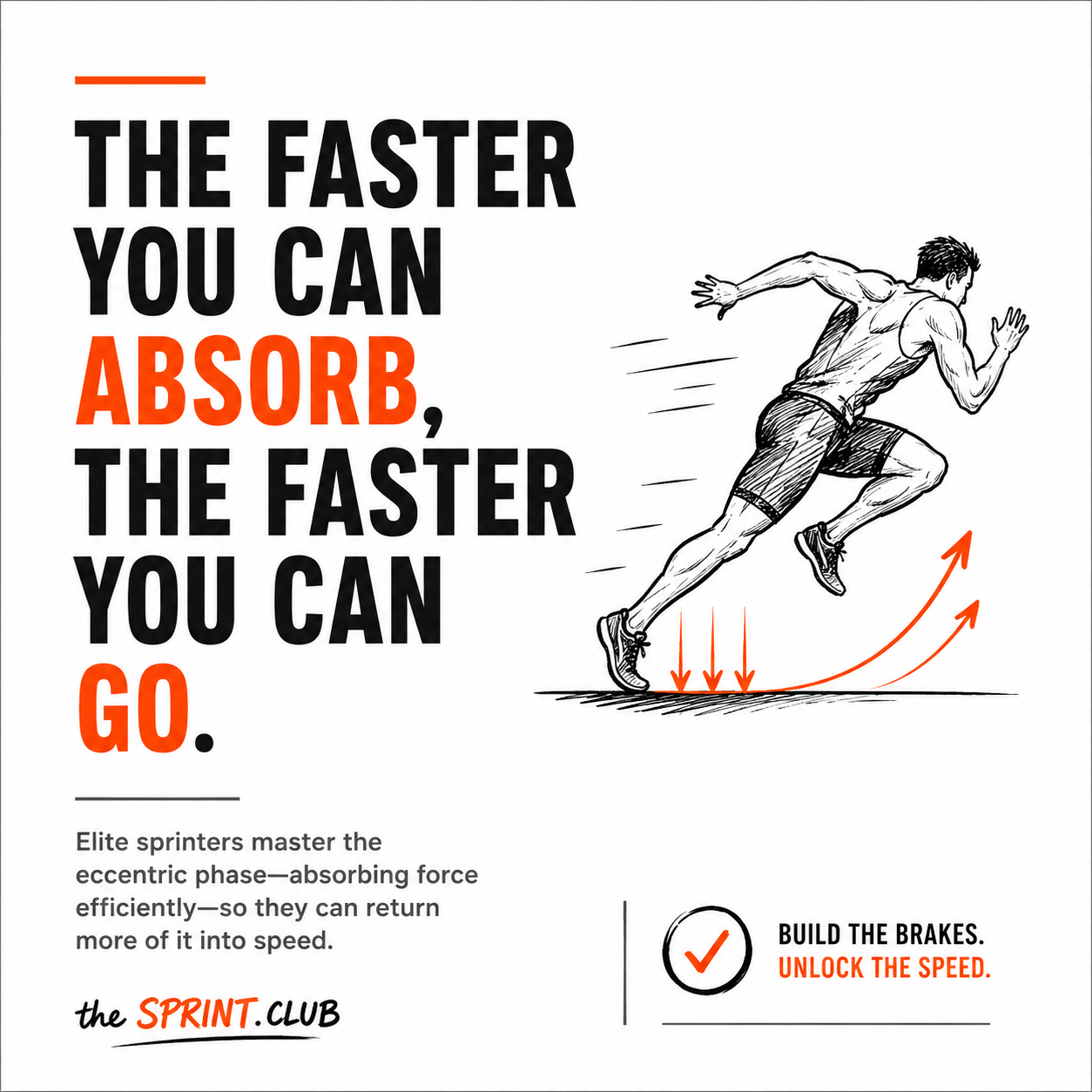
Why absorbing force efficiently is the missing link to faster sprint times, shorter ground contacts, and better performance.
|
|
|
|
Most athletes focus on producing force. Elite sprinters also master absorbing it. Every sprint step begins with a collision between the foot and the ground. Before you can produce force, your body must accept it. Athletes who develop exceptional eccentric strength can absorb larger forces, store more elastic energy, reduce ground contact time, and return more of that energy into …
|
|
|
|
|
|
|
|