|
|
|
|
FOOT ALIGNMENT & SPRINT PERFORMANCE
Why your feet may be stealing free speed
|
|
|
"The foot is the only part of your body that touches the ground. If it's pointing in the wrong direction, every pound of force you produce follows it."
|
|
Most coaches obsess over knee drive, arm action, front-side mechanics, and shin angles.
|
Few ever look at the feet.
|
|
Yet every sprint step begins with one question:
|
Where is your force actually going?
|
If your foot lands or pushes off pointing significantly outward ("duck feet") or excessively inward ("pigeon-toed"), some of the force you worked so hard to produce isn't traveling where you want it.
|
Instead of propelling you straight down the track, some of that force leaks sideways.
|
Those small leaks accumulate over hundreds of steps, reducing efficiency while increasing stress throughout the ankle, knee, hip, and groin.
|
|
For many athletes, these patterns aren't permanent. They're trainable.
|
|
|
Start Here: A Quick Assessment
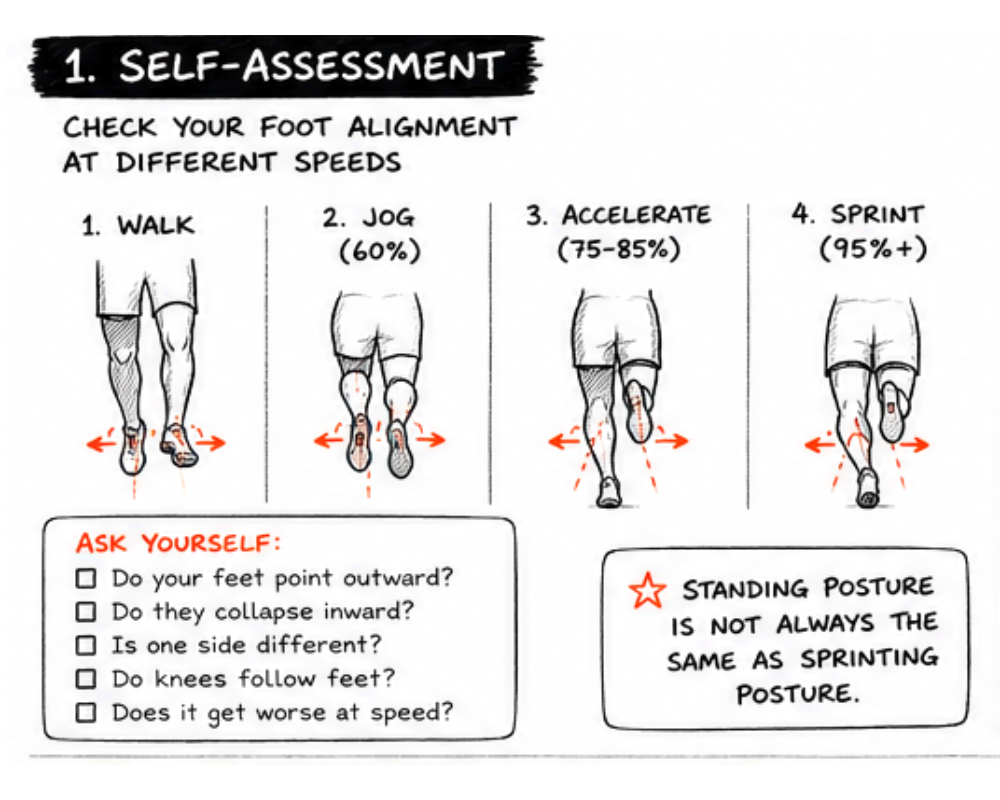
Before trying to "fix" anything, determine whether you (or your athlete) actually have a problem.
|
Record yourself from the front and behind while performing:
|
- Walking naturally
- Easy jogging
- A few accelerations
- Max velocity sprinting
- Do your feet consistently point outward?
- Do they collapse inward?
- Does one side differ from the other?
- Do your knees follow the same direction as your feet?
- Does the pattern become worse as speed increases?
|
A standing posture isn't always the same as a sprinting posture.
|
The pattern that matters most is the one you display when producing high forces.
|
|

|
|
|
Here’s what you’ll find inside Programming:
|
- Weeks 1–4: Building from the ground up. Foot & ankle stiffness, reactive hops, and low-amplitude bounds.
- Weeks 5–8: Wickets & MaxV development. Teaching athletes to feel speed, not fake it.
- Weeks 9–17: Translating bounce into effortless racing speed; adaptation, not exhaustion.
- Bonus sections: Extreme isometrics for metabolic conditioning, contrast training, and real-world examples.
It’s not theory—it’s a complete 17-week blueprint for speed you can feel.
|
|
|
|
|
|
|
|
|
The Elite Difference
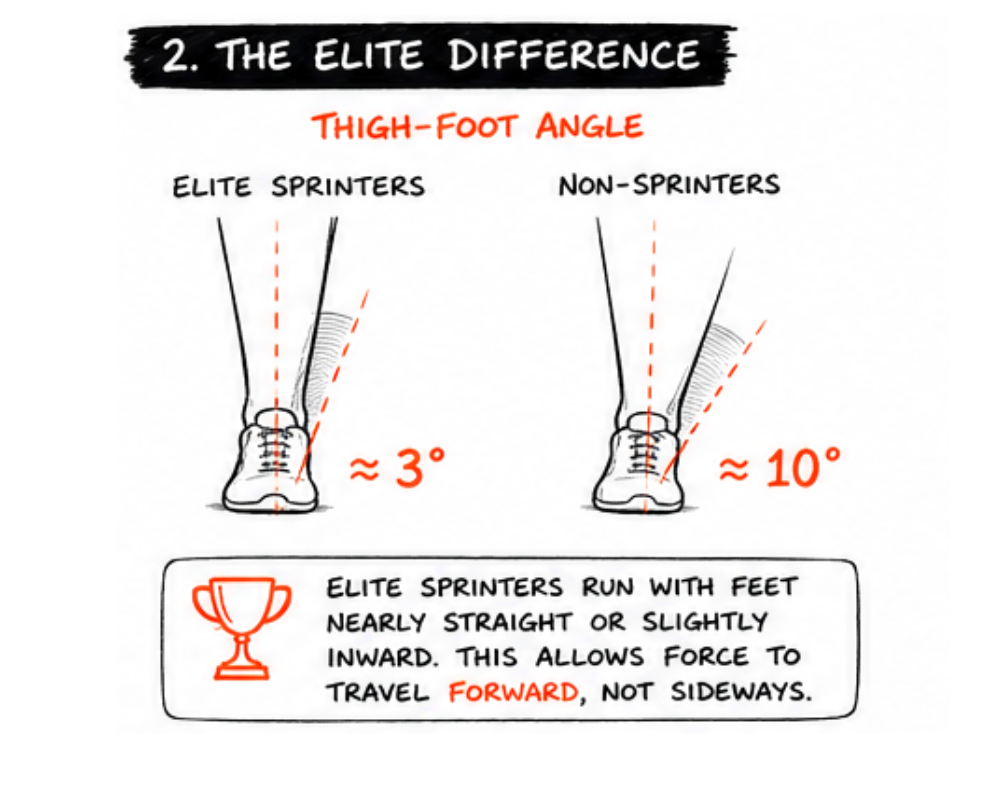
One fascinating observation from sprint biomechanics research is that elite sprinters typically run with feet that are nearly straight ahead or even slightly internally rotated.
One study reported an average thigh-foot angle of roughly 3° in sprinters compared with approximately 10° in non-sprinters.
That isn't because elite athletes consciously point their toes straight.
It's because their hips, feet, and lower limbs naturally organize themselves into positions that maximize force production.
Their mechanics allow force to travel efficiently into the ground and back into forward motion.
|
|
|
|
|
|
|
The Foot Is Just the End of the Chain
Many athletes assume their feet are the problem.
|
They're just the messenger.
|
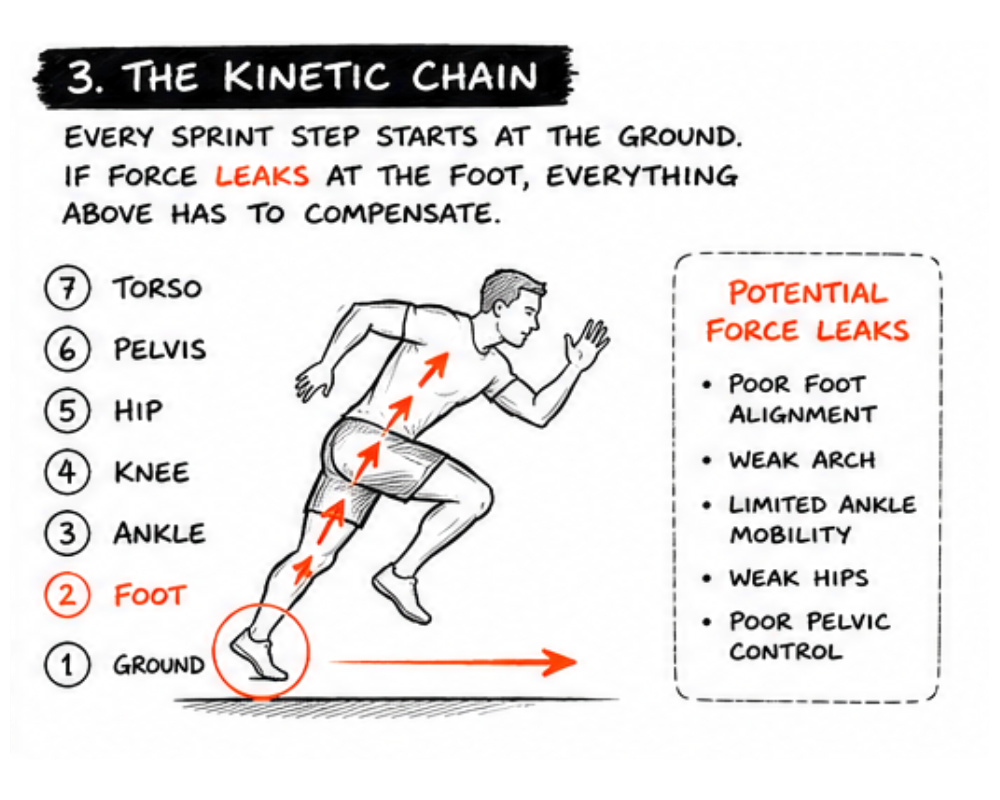
Think of the body as one connected chain.
|
Pelvis ↓ Hip ↓ Knee ↓ Ankle ↓ Foot ↓ Ground
|
Or viewed from the opposite direction during sprinting:
|
Ground ↑ Foot ↑ Ankle ↑ Knee ↑ Hip ↑ Pelvis ↑ Torso
|
Every sprint step starts at the ground.
|
Every force travels upward.
|
If the foot isn't positioned well, every joint above it must compensate.
|
|
The result is reduced efficiency, greater energy leaks, and increased tissue stress.
|
|
|
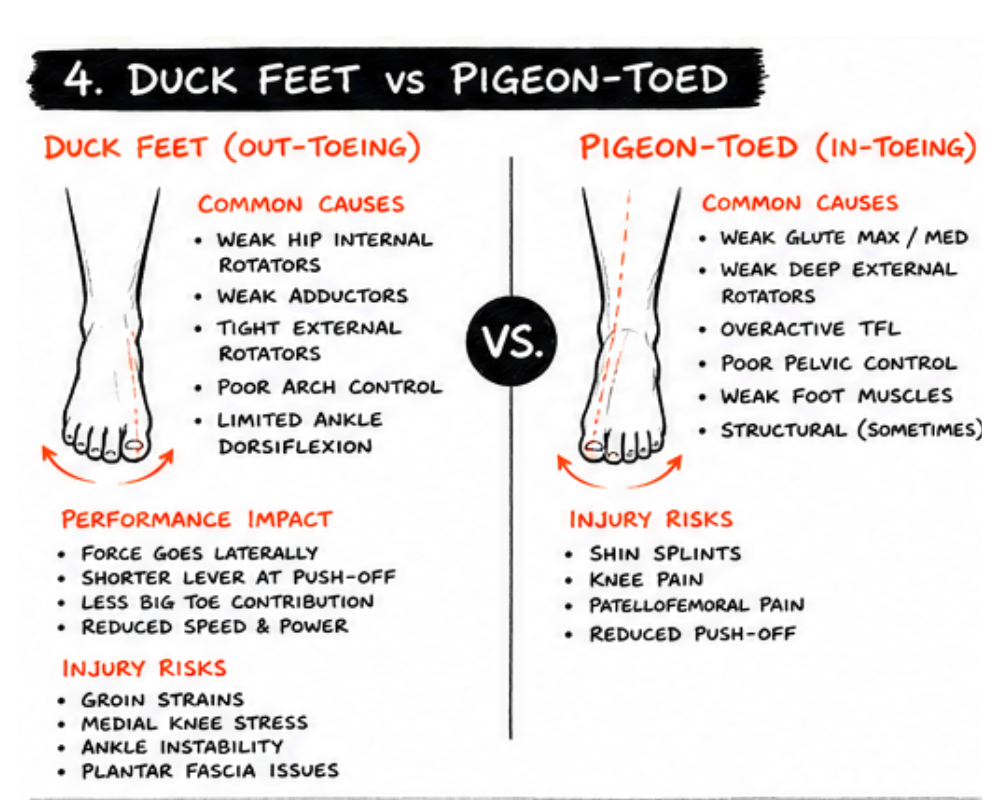
Challenge #1: Excessive Out-Toeing ("Duck Feet")
This is the most common alignment issue seen in field and court athletes.
|
Common contributors
- Weak hip internal rotators
- Weak adductors
- Tight piriformis and deep external rotators
- Poor foot arch control
- Limited ankle dorsiflexion
- Habitual movement patterns
|
Notice something important:
|
None of those are the foot itself.
|
Why Duck Feet Reduce Sprint Performance
|
Imagine trying to push a shopping cart.
|
|
If you push directly behind it...
|
|
If you push from the side...
|
|
Your foot works exactly the same way.
|
When the foot points excessively outward:
|
- Force is directed laterally.
- The big toe contributes less during push-off.
- The foot becomes a shorter lever.
- Less ankle power reaches the track.
- Every stride becomes slightly less efficient.
|
Individually these losses appear small.
|
|
Across thousands of sprint steps?
|
Injury Risks
Athletes with excessive toe-out often experience:
|
- Groin strains
- Medial knee pain
- Achilles irritation
- Ankle instability
- Plantar fascia overload
|
Again, the foot isn't always the cause.
|
It's often the visible symptom of a larger movement problem.
|
Challenge #2: Excessive In-Toeing ("Pigeon-Toed")
|
This issue receives less attention.
|
|
Here's the interesting part:
|
|
A slight inward orientation is actually common among elite sprinters.
|
Once internal rotation becomes excessive, performance begins to suffer.
|
Common contributors
- Weak glute max
- Weak glute medius
- Weak deep hip external rotators
- Overactive tensor fasciae latae (TFL)
- Poor pelvic control
- Weak intrinsic foot muscles
Some athletes also have structural femoral anteversion that cannot be completely changed with exercise.
|
|
This is why assessment matters.
|
|
|
|
|
|
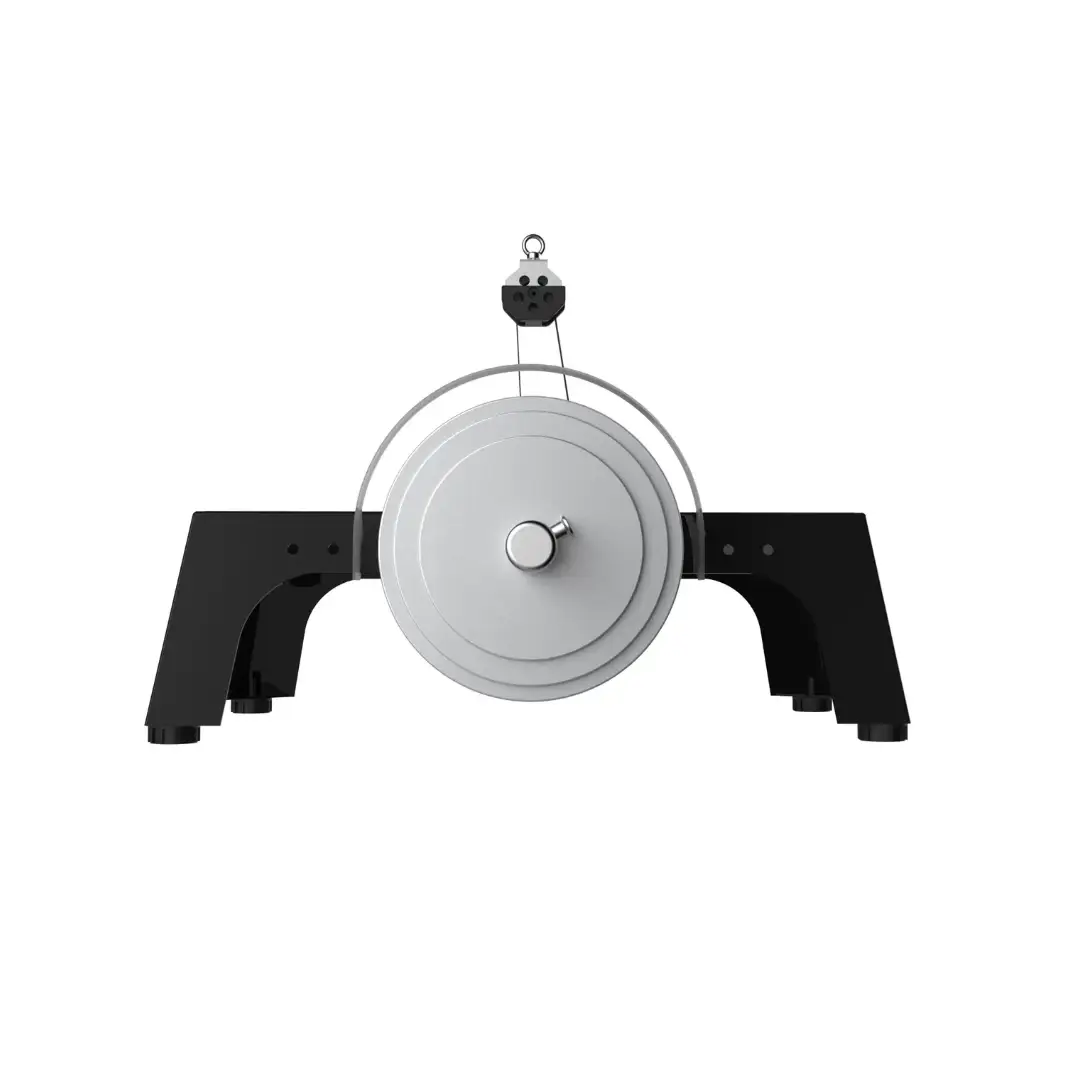
EccentriDisk Flywheel Trainer
|
|
|
Elevate your athletic prowess with the EccentriDisk Flywheel Trainer! Engineered for explosive strength, this versatile flywheel system (with 8", 10", 12" disks) delivers eccentric overload for superior sprint speed, jump height, and power. Featuring a non-slip foot surface, durable braided strap, and accessories like a hand bar and waist belt, it’s ideal for athletes targeting muscle hypertrophy and injury prevention. Compatible with Exxentric flywheels. Shop now at thesprint.club
|
|
|
|
|
|
|
When It Becomes Too Much
Excessive in-toeing may contribute to:
|
- Knee valgus
- Shin splints
- Patellofemoral pain
- Reduced push-off effectiveness
- Poor force direction
|
The goal isn't perfectly straight feet.
|
|
The goal is efficient force application.
|
|
Build Better Feet
|
The foot contains more than 100 muscles, tendons, and ligaments working together.
|
|
Ignoring them is like trying to build horsepower while forgetting the tires.
|
|
Research has shown that foot strengthening can increase arch stiffness substantially after consistent training.
|
|
Stronger feet also improve stability, force transfer, and energy return.
|
Universal Foot Core Exercises
- Short-foot (doming)
- Toe flexor strengthening
- Single-leg balance
- Barefoot balance work
- Controlled hopping
- Calf strengthening
- Ankle mobility drills
|
|
Solutions for Duck Feet
Hip Strength
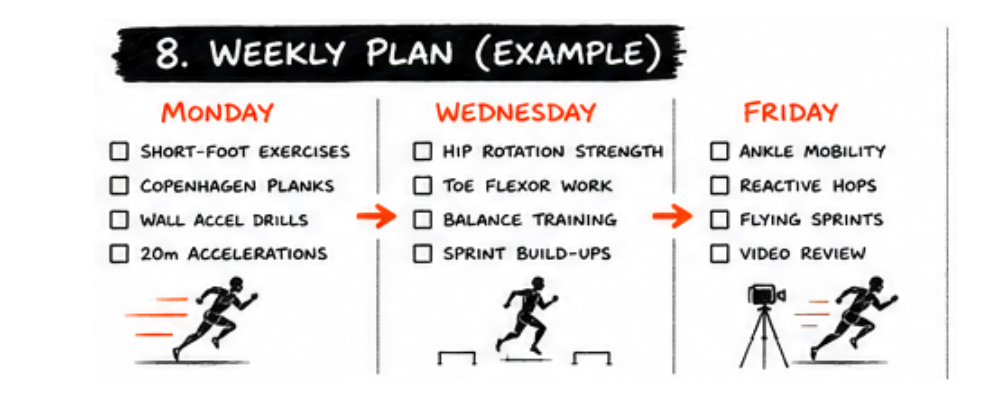
- Copenhagen planks
- Banded adduction
- Hip internal rotation exercises
Mobility
- Piriformis stretching
- Hip capsule mobility
- Ankle dorsiflexion work
Foot
- Short-foot exercise
- Toe curls
- Big toe loading drills
Solutions for Pigeon-Toed Athletes
- Clamshells
- Monster walks
- Single-leg squats
- Hip external rotation strength
- Core stability
- Pelvic control
- TFL mobility
|
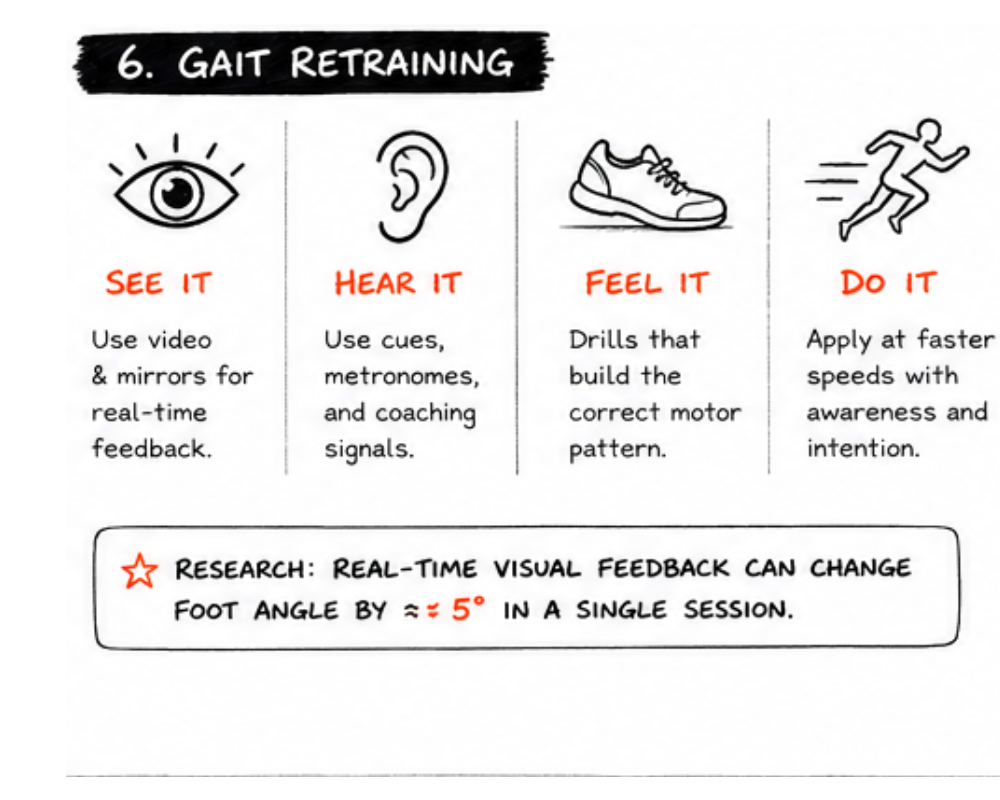
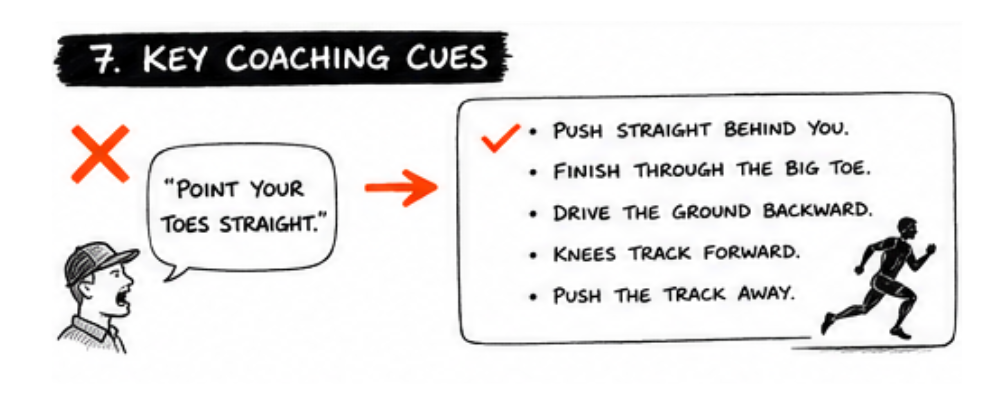
Then reinforce those improvements during sprint mechanics.
|
|
|
The Biggest Takeaway
|
Don't coach the foot first in these situations.
|
|
Coach the muscles that position the foot.
|
|
Then teach the nervous system to use those muscles at sprint speed.
|
|
That's where lasting change happens.
|
|
The foot doesn't generate elite sprint mechanics on its own.
|
|
It reflects the quality of everything above it.
|
The foot usually follows.
|
|
Before blaming an athlete's feet, ask:
|
|
✓ Is hip strength symmetrical?
|
|
✓ Are the adductors strong?
|
|
✓ Can they internally and externally rotate the hip?
|
|
✓ Is ankle dorsiflexion limited?
|
|
✓ Does the foot collapse under load?
|
|
✓ Have they actually practiced the new movement pattern?
|
|
The feet are probably telling you something.
|
|
|
|
|
|
|
|
|
|
Thanks for reading. See you soon!
|
|
|
|
|
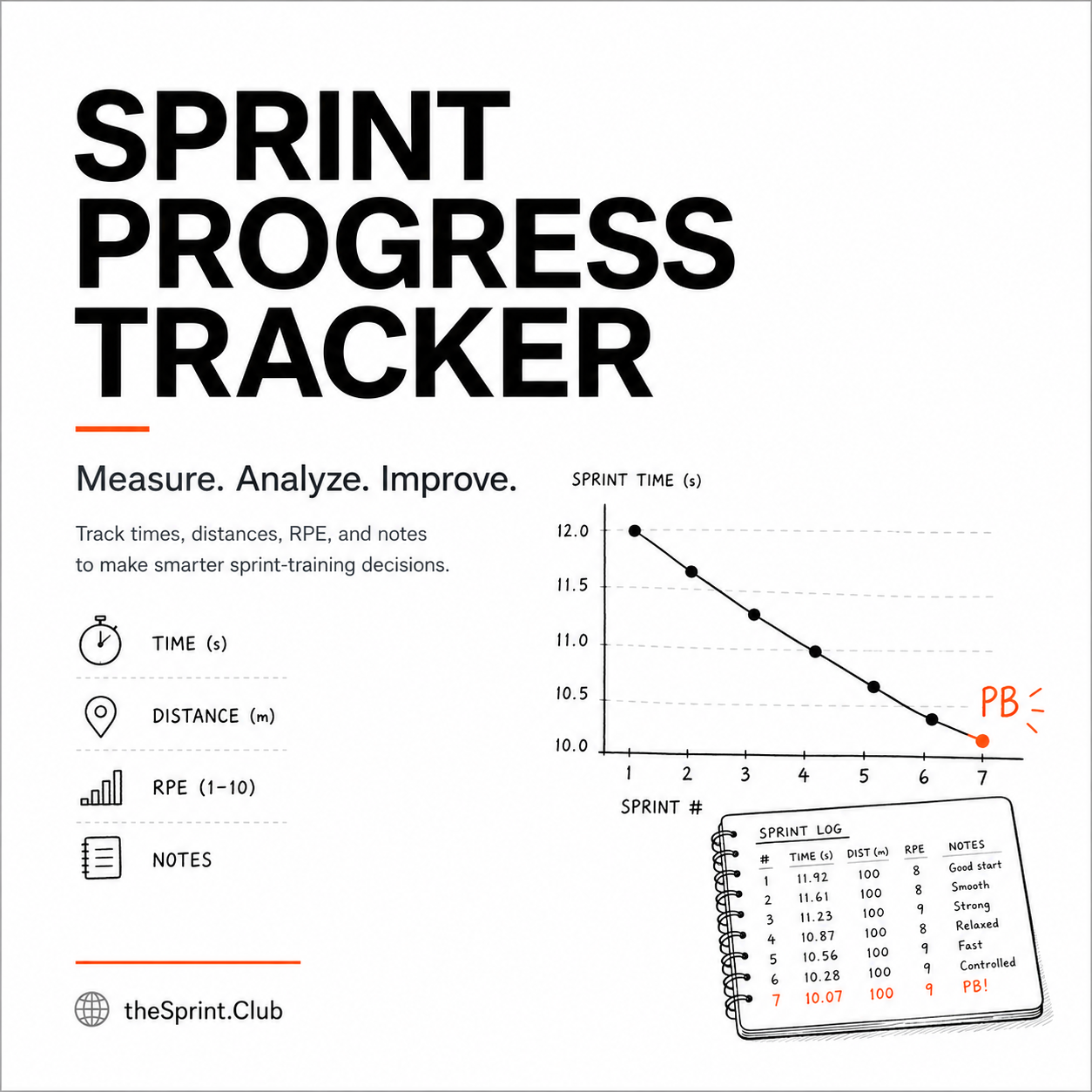
Sprint Progress Tracker: Measure and Improve Your Speed
|
|
|
|
Use a sprint progress tracker to record times, monitor fatigue, identify trends, and make smarter training decisions that improve sprint performance.
|
|
|
|
|
|
|
|
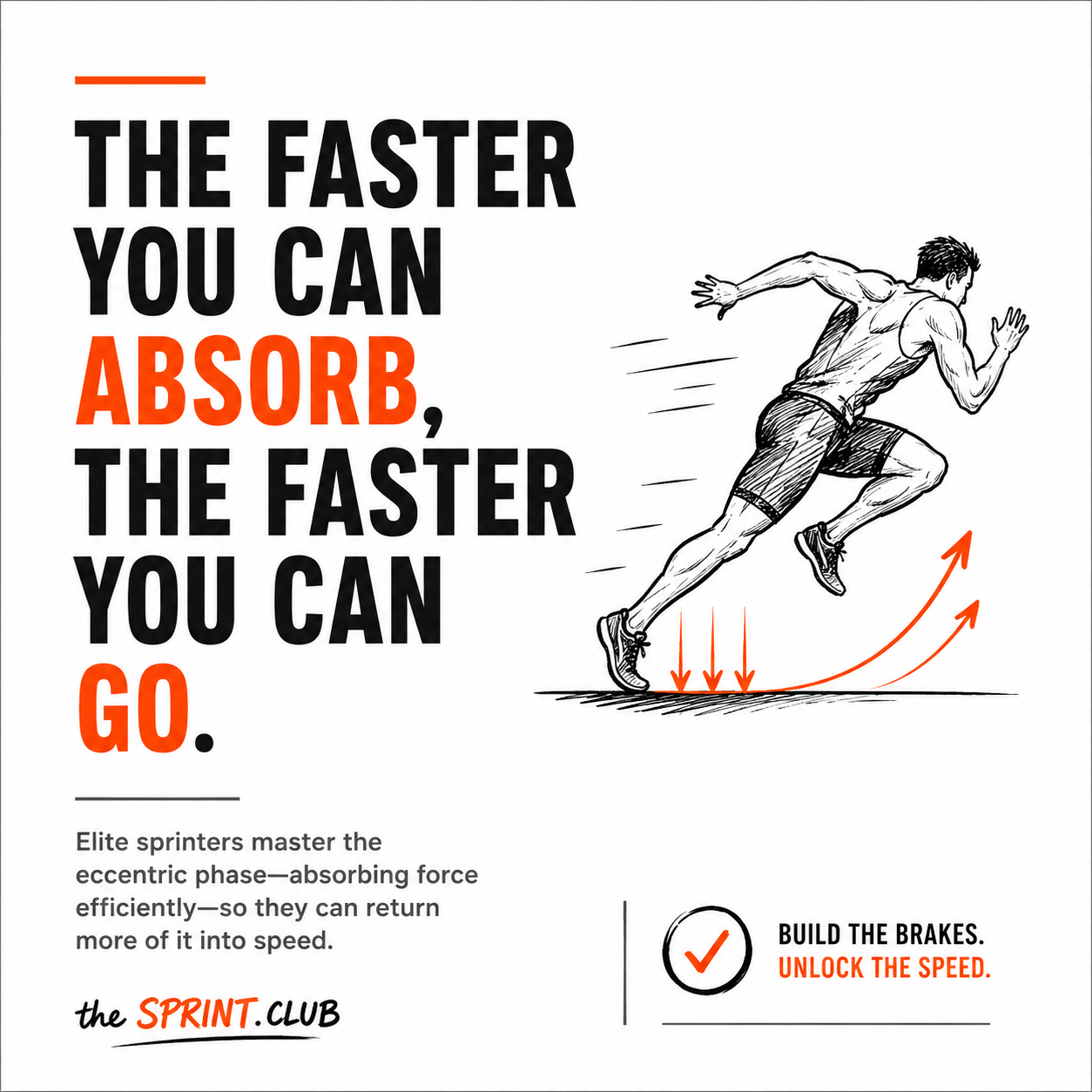
Why absorbing force efficiently is the missing link to faster sprint times, shorter ground contacts, and better performance.
|
|
|
|
Most athletes focus on producing force. Elite sprinters also master absorbing it. Every sprint step begins with a collision between the foot and the ground. Before you can produce force, your body must accept it. Athletes who develop exceptional eccentric strength can absorb larger forces, store more elastic energy, reduce ground contact time, and return more of that energy into …
|
|
|
|
|
|
|
|
|