|
|
|
|
At maximum velocity, sprinting stops being about pushing and becomes about preparing. Ground contact times are so short that athletes cannot meaningfully create speed during stance. Instead, speed is determined by what happens before the foot hits the ground.
|
Elite sprinters do not “work harder on the ground” at MaxV. They work the air.
|
The MaxV constraint that changes everything
-
|
Ground contact times are extremely short.
|
-
|
There is not enough time to consciously push.
|
-
|
Any increase in contact time usually reduces speed.
|
This flips the performance bottleneck.
|
|
|
Instead of asking:
“How much force can I produce on the ground?”
The better question becomes:
“How well did I prepare this contact before it happened?”
|
|
|
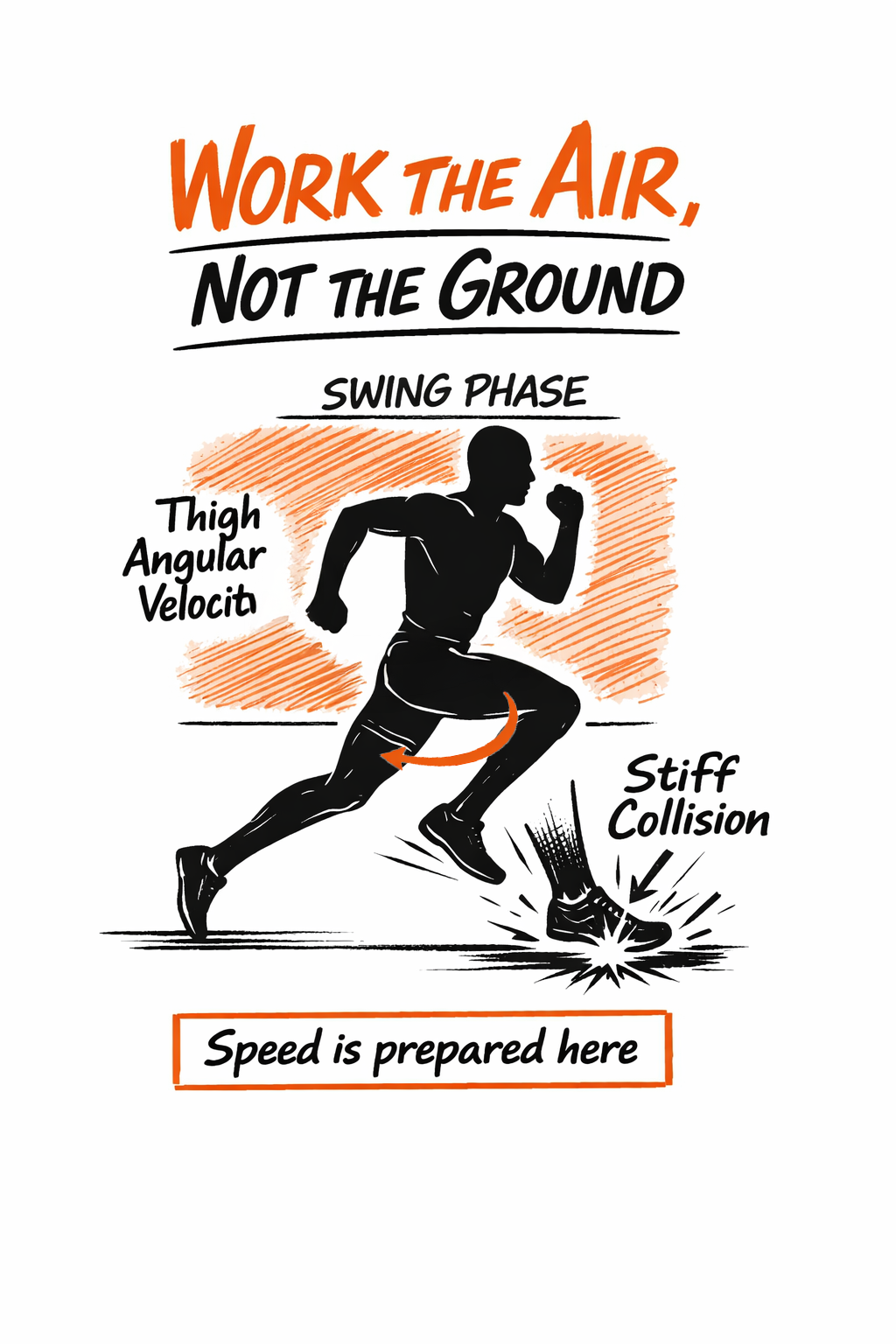
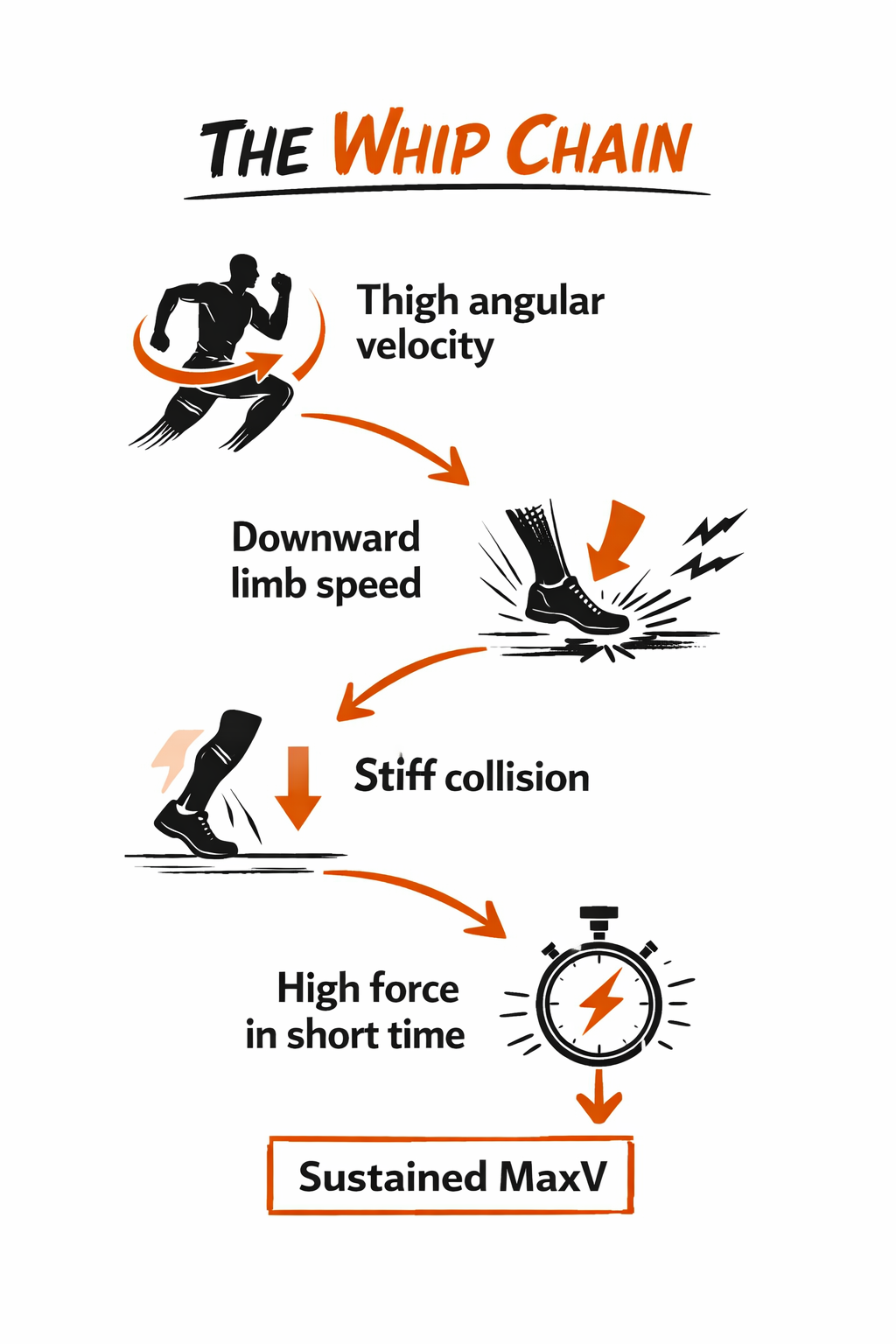
That preparation occurs almost entirely during swing phase / the "whip from the hip"
|
|
|
What “working the air” actually means
|
“Working the air” does not mean floating, relaxing, or being passive. It means aggressively organizing the swing phase so stance becomes a fast, elastic collision rather than a prolonged push.
|
Operationally, it involves:
|
-
|
High thigh angular velocity
|
-
|
Fast downward and backward foot velocity at touchdown
|
-
|
Pre-tensioned stiffness through the ankle and lower limb
|
-
|
Precise timing that places the foot under or slightly behind the center of mass
|
|
The goal is not to create force during stance, but to enable force to appear instantly because stance is short and stiff.
|
|
|
|
Why limb velocity dominates at MaxV
Sprint speed is the product of:
|
At MaxV, frequency becomes the limiter.
|
-
-
|
Swing time becomes the phase where adjustments can still be made
|
If the swing leg is slow:
|
High limb velocity solves this by:
|
-
|
Repositioning the leg faster
|
-
|
Increasing downward limb speed at touchdown
|
-
|
Allowing high forces to occur in minimal time
|
This is why thigh angular velocity is so tightly associated with elite sprinting speed.
|
|
“Whip from the hip”, the missing link
|
The phrase “whip from the hip” is not a cue for style. It describes a mechanical reality.
|
High thigh angular velocity:
|
-
|
Increases vertical and downward limb velocity at touchdown
|
-
|
Raises instantaneous loading demands
|
-
|
Requires stiffness to avoid collapse
|
-
|
Enables high force production without long contact
|
|
|
Swing creates the conditions.
Stiffness converts those conditions into speed.
|
|
|
Without stiffness, limb velocity leaks.
|
Without limb velocity, stiffness has nothing to convert.
|
|
|
|
|
|
|
|
|
|
Thanks for reading. See you soon!
|
|
|
|
|
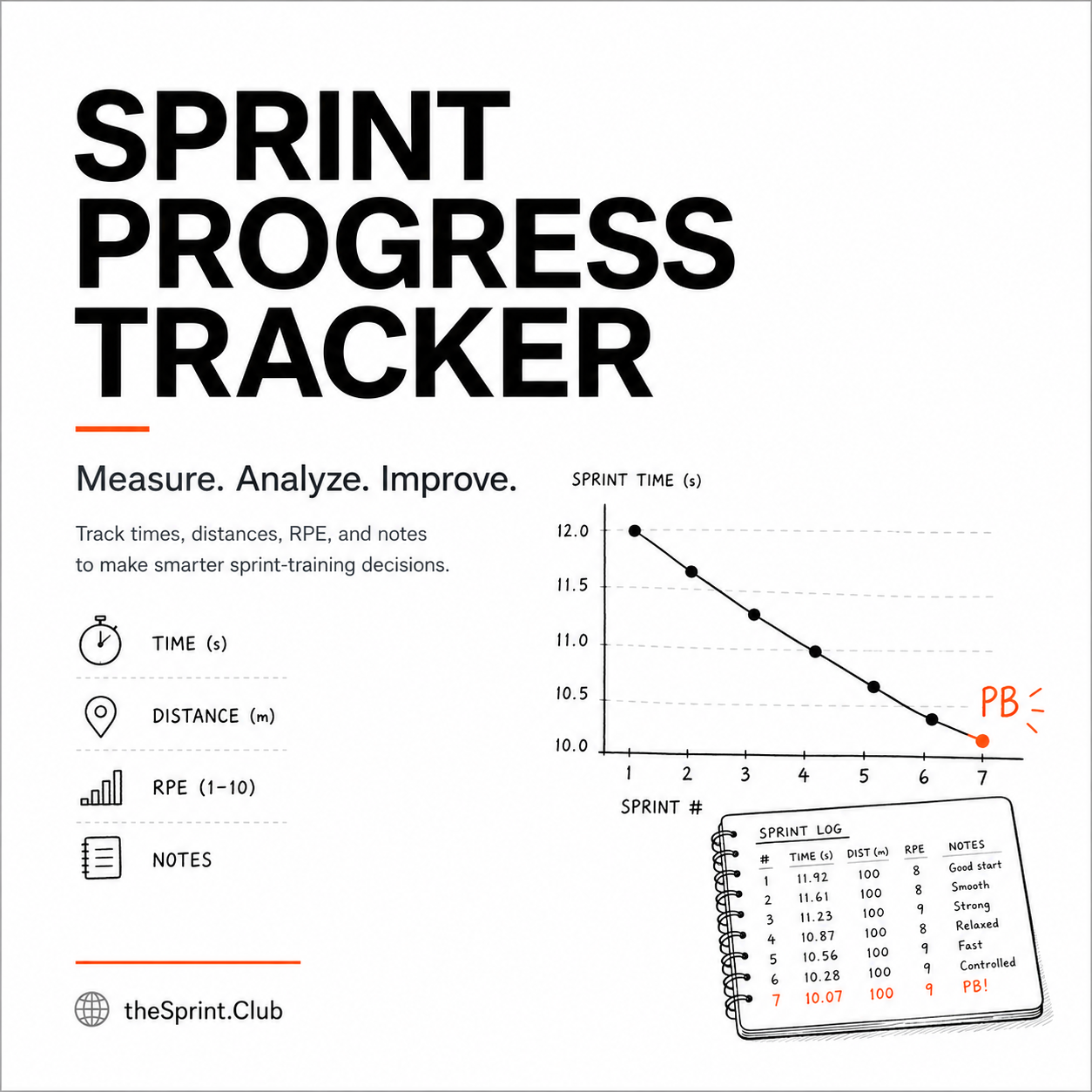
Sprint Progress Tracker: Measure and Improve Your Speed
|
|
|
|
Use a sprint progress tracker to record times, monitor fatigue, identify trends, and make smarter training decisions that improve sprint performance.
|
|
|
|
|
|
|
|
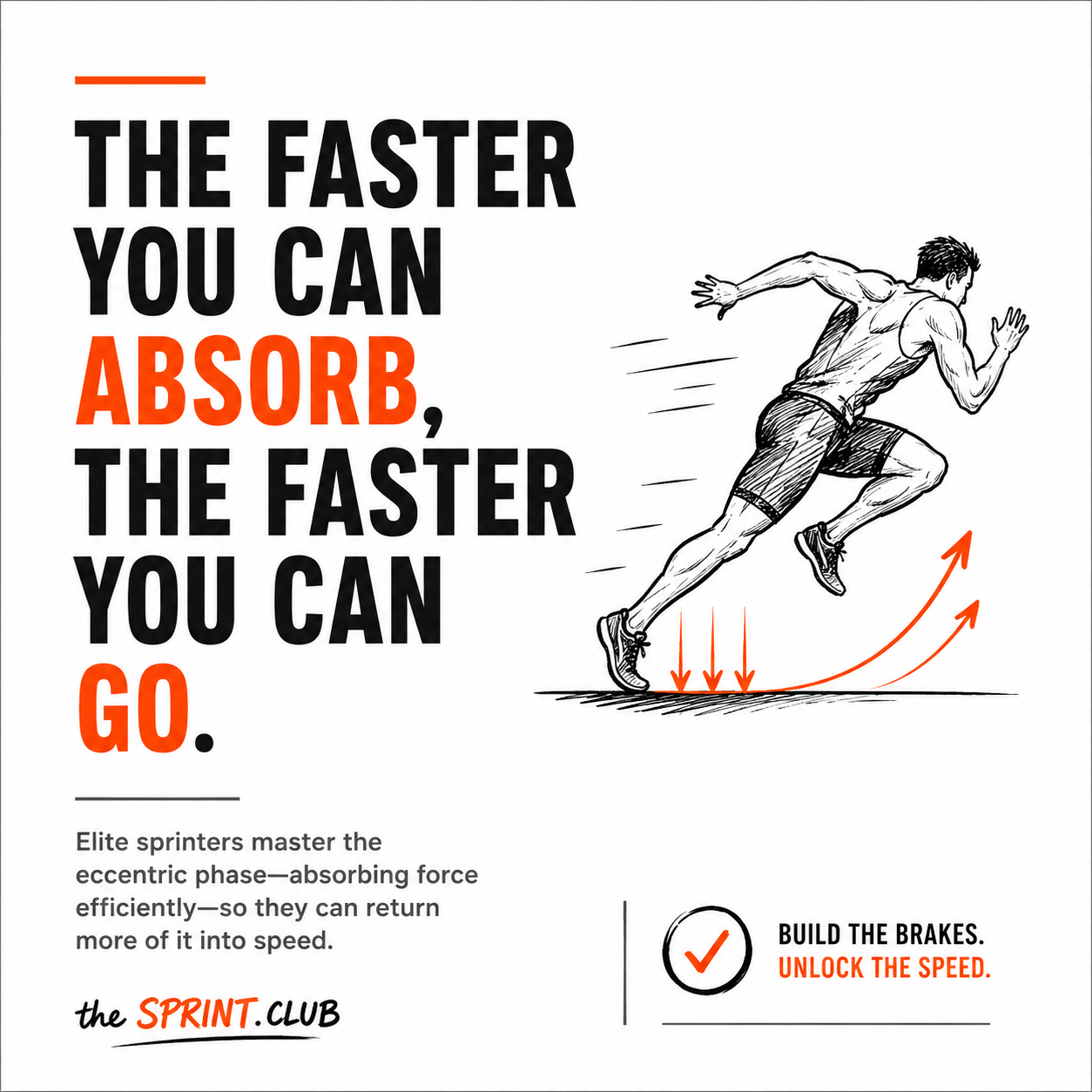
Why absorbing force efficiently is the missing link to faster sprint times, shorter ground contacts, and better performance.
|
|
|
|
Most athletes focus on producing force. Elite sprinters also master absorbing it. Every sprint step begins with a collision between the foot and the ground. Before you can produce force, your body must accept it. Athletes who develop exceptional eccentric strength can absorb larger forces, store more elastic energy, reduce ground contact time, and return more of that energy into …
|
|
|
|
|
|
|
|
|