|
|
|
|
|
|
|
Quick framing: “Pusher” and “bouncer” are useful coaching labels, not fixed identities. Most athletes sit on a spectrum, and the goal is not to erase strengths. The goal is to remove the limiter that caps speed.
|
|
The short version
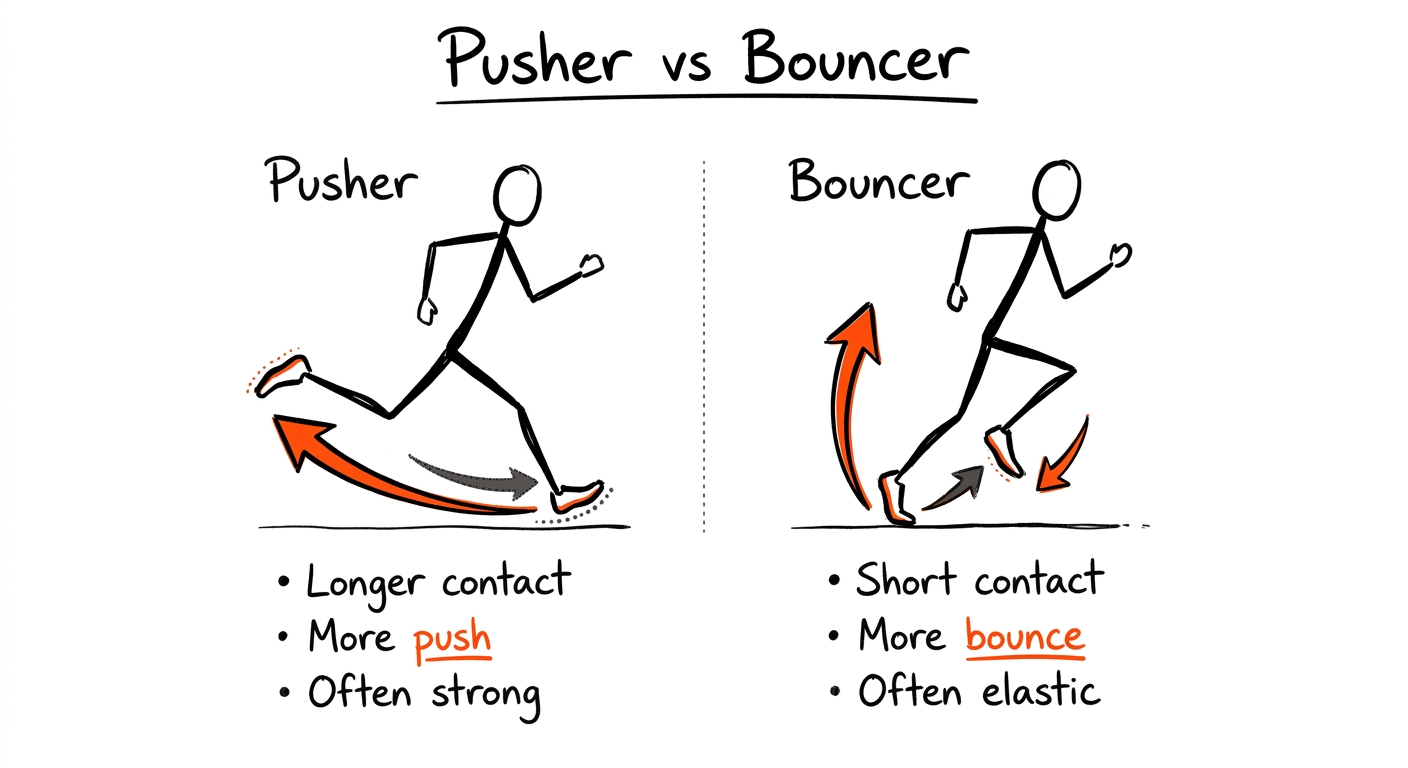
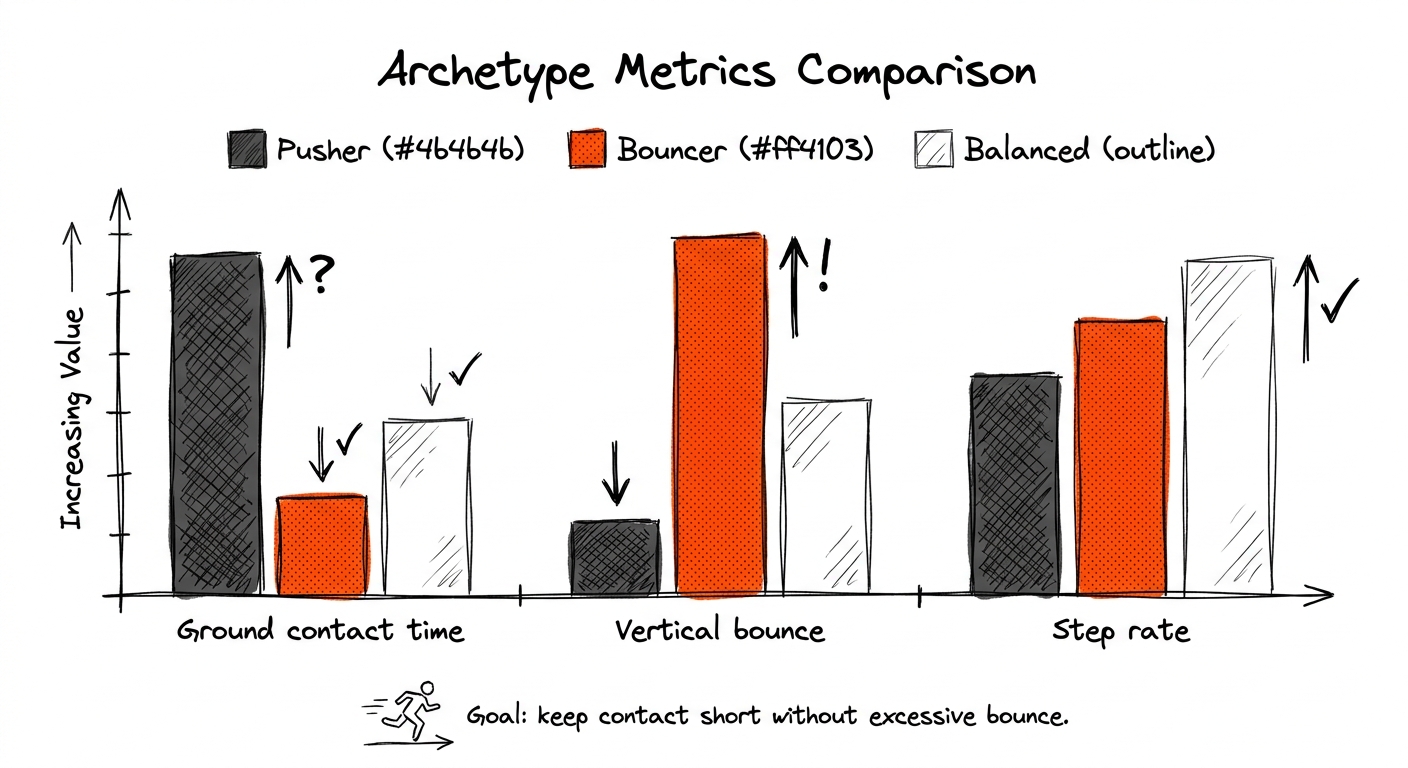
A pusher tends to spend longer on the ground and tries to create speed by pushing longer.
|
A bouncer tends to spend less time on the ground and creates speed by rebounding fast off a stiff system.
|
The performance constraint is usually the opposite of the athlete’s natural tendency:
|
- Pushers need shorter contact, earlier cycle, more elastic rebound
- Bouncers need less airtime, more grounded projection, better stiffness and direction
|
|
Why this matters, the “push to bounce” transition
|
Early acceleration has more “push” because inertia is high, contact times are longer, and projection is the job.
|
As speed rises, the job becomes short contact, high stiffness, and fast repositioning. That is where “bounce” becomes more valuable, and why athletes who can transition well separate late.
|
|
|
|
|
|
|
Spot it fast, field tests you can do today
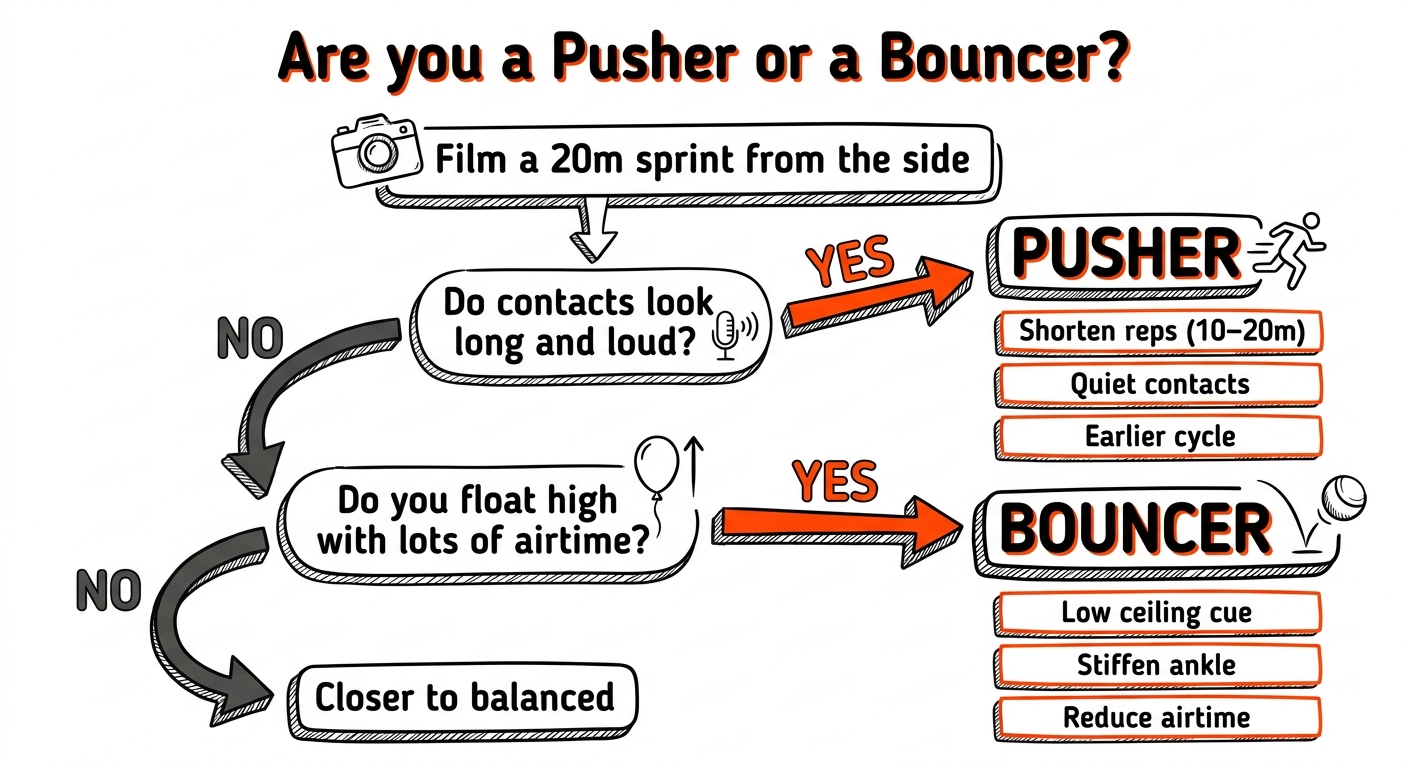
Test 1, Side-view 20m video (phone)
Look for simple, coachable signals.
|
- Likely pusher:
- Loud contacts
- Visible “push behind” the hips
- Early rise, or “stuck” at the same step rhythm
- Looks powerful, but not fast
- Likely bouncer:
- Lots of airtime
- Hops up instead of projecting forward
- Looks quick, but can struggle to build speed early
- Speed shows up more in the second half
Test 2, 10s pogo rhythm
- Pusher tends to sink, “muscle” the reps, and lose rhythm.
- Bouncer tends to look good here, but can sometimes over-bounce.
Test 3, 2 x 10m vs 2 x fly 20m (if you have space)
- If the athlete wins early but gets caught later, pusher tendency.
- If the athlete starts slow but closes hard, bouncer tendency.
|
|
|
|
|
|
|
|
|
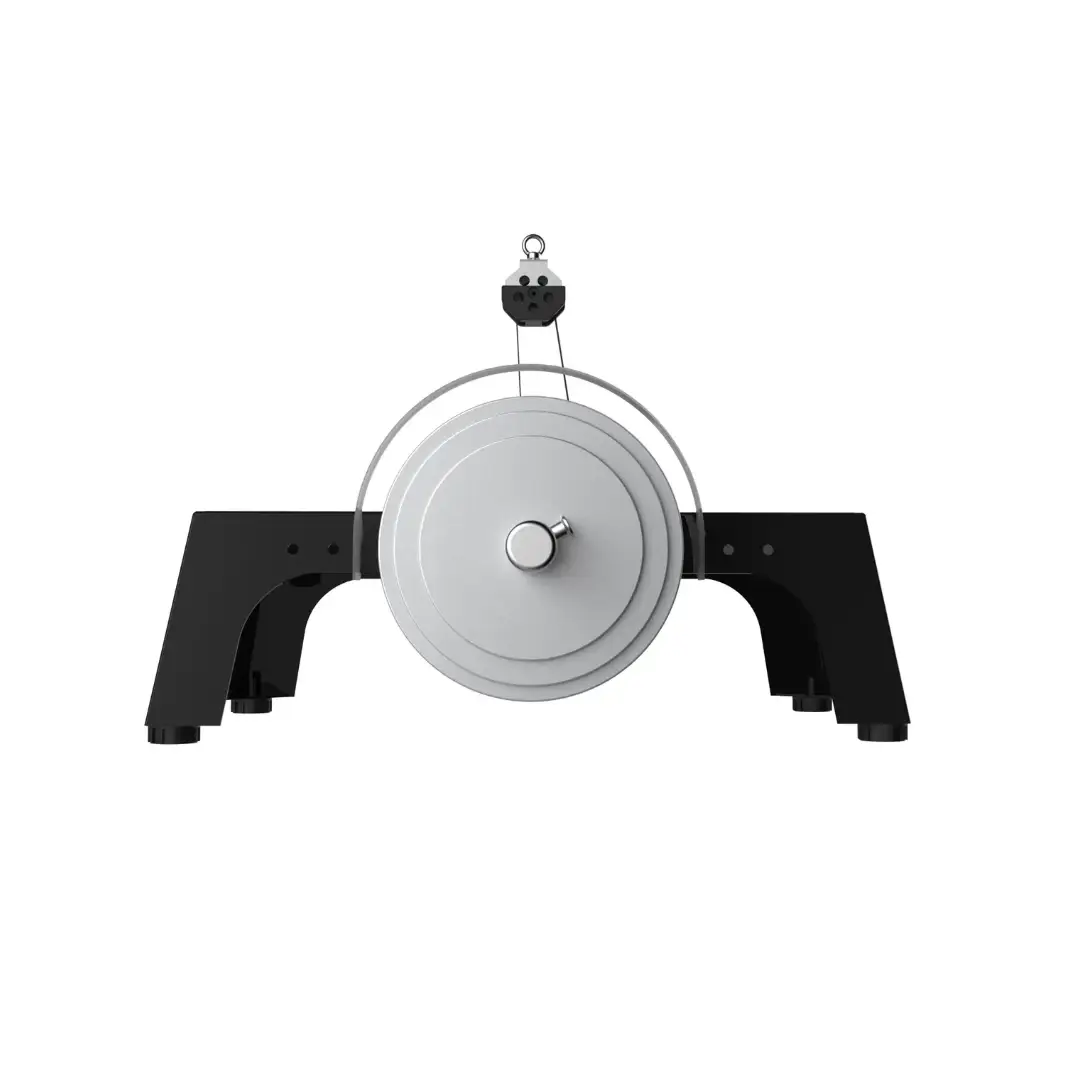
EccentriDisk Flywheel Trainer
|
|
|
Elevate your athletic prowess with the EccentriDisk Flywheel Trainer! Engineered for explosive strength, this versatile flywheel system (with 8", 10", 12" disks) delivers eccentric overload for superior sprint speed, jump height, and power. Featuring a non-slip foot surface, durable braided strap, and accessories like a hand bar and waist belt, it’s ideal for athletes targeting muscle hypertrophy and injury prevention. Compatible with Exxentric flywheels. Shop now at thesprint.club
|
|
|
|
|
|
The archetypes, strengths and failure modes
1) The Pusher
- Win the first few steps.
- Create projection and horizontal intent.
- Often have strength to grind through imperfect positions.
- Contacts stay long as velocity rises.
- The leg cycle gets delayed because the stance phase “steals time.”
- They keep trying to add effort, when the real solution is timing, stiffness, and reposition.
Coaching cues that often work
|
- "Work the air, not the ground."
- "Whip the Hip"
2) The Bouncer
- Express stiffness and elastic rebound.
- Keep contacts short.
- Hold rhythm and look smooth as speed rises.
- Too much vertical oscillation and airtime.
- Losing projection and direction in early acceleration.
- “Floating” instead of building speed.
Coaching cues that often work
|
- “Bounce forward, not up.”
- "Push"
- "Press the Ground"
Training fixes, without breaking the athlete
If you coach a Pusher
|
Goal: shorten contact without losing projection.
|
- 10 to 20m accelerations at 85 to 92%, full rest, one cue per rep.
- Low dribble progressions (quiet foot, earlier cycle, no reach).
- Wickets (short spacing) to force quicker strike and rhythm.
- Low amplitude pogos (stiffness and rhythm, not height).
If you coach a Bouncer
|
Goal: keep the short contact, redirect it forward.
|
- 10 to 20m accelerations from varied starts (2-point, falling, push-up), full rest.
- Sled sprints, light-medium load (enough to organize projection, not enough to slow mechanics).
- Low hill accelerations (only if posture and direction improve).
|
|
|
|
|
|
|
|
|
Thanks for reading. See you soon!
|
|
|
|
|
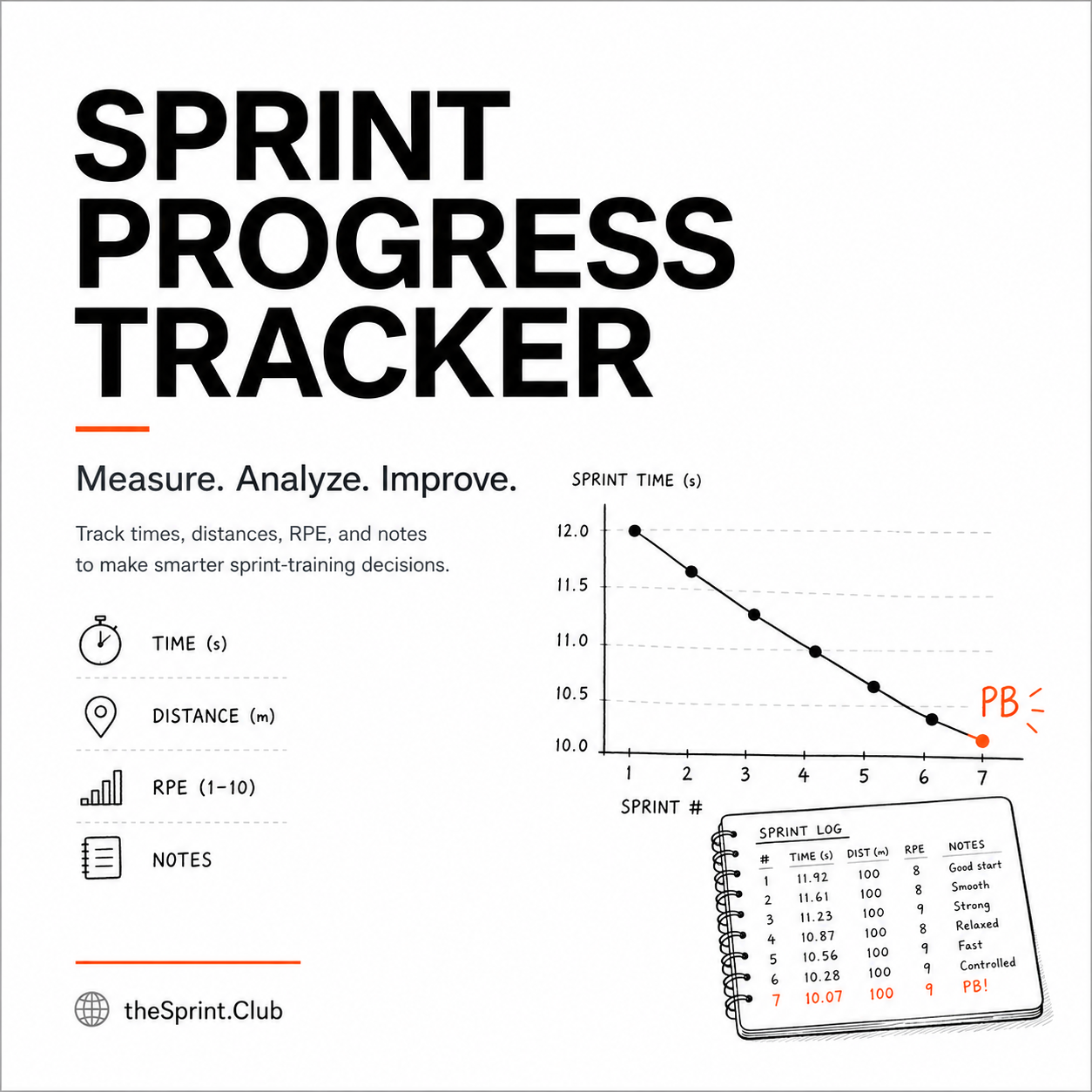
Sprint Progress Tracker: Measure and Improve Your Speed
|
|
|
|
Use a sprint progress tracker to record times, monitor fatigue, identify trends, and make smarter training decisions that improve sprint performance.
|
|
|
|
|
|
|
|
Why absorbing force efficiently is the missing link to faster sprint times, shorter ground contacts, and better performance.
|
|
|
|
Most athletes focus on producing force. Elite sprinters also master absorbing it. Every sprint step begins with a collision between the foot and the ground. Before you can produce force, your body must accept it. Athletes who develop exceptional eccentric strength can absorb larger forces, store more elastic energy, reduce ground contact time, and return more of that energy into …
|
|
|
|
|
|
|
|
|