|
|
|
|
Your Athlete Is Leaking Speed
Most athletes do not lose speed because they are lazy.
|
|
|
They lose speed because they leak.
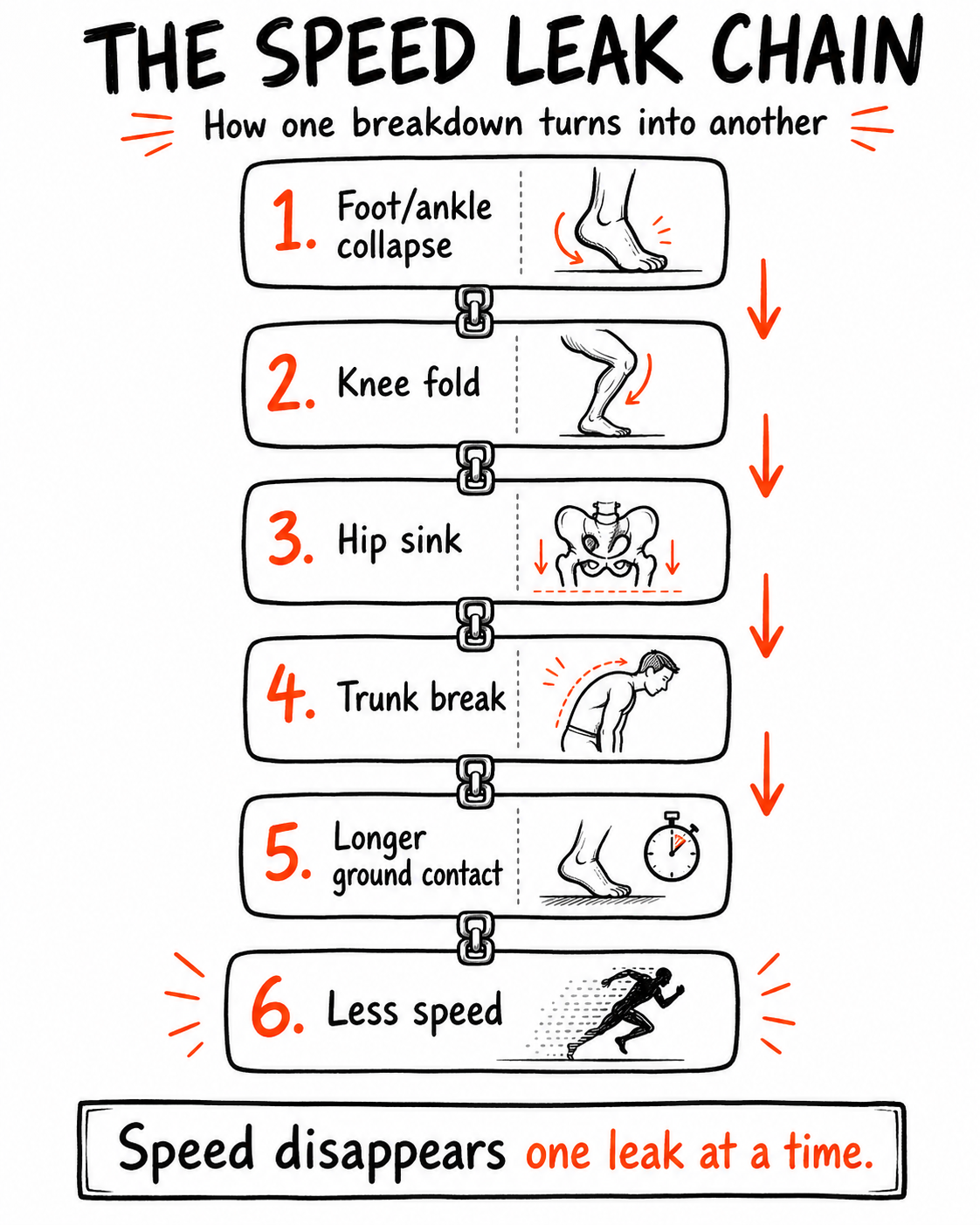
They leak at the ankle.
They leak at the knee.
They leak at the hip.
They leak when the ground hits back and the body folds instead of rebounds.
|
|
That is why an athlete can squat more, clean more, train harder, and still not look faster when it matters.
|
Because sprinting is not just about how much force you can create.
|
It is about how quickly you can organize force when the ground gives you almost no time to think.
|
And that is where hurdle hops become interesting.
|
Not because they look cool.
|
Not because they are “plyometrics.”
|
Because properly programmed hurdle hops train one of the most underdeveloped qualities in speed training:
|
the ability to collide with the ground and come away sharper, not softer.
|
|
|
The Quality Most Athletes Are Missing
|
A lot of athletes are strong in the weight room but soft on contact.
|
|
It means they cannot preserve shape under speed.
|
When the foot strikes the ground, the body has to resist collapse, transmit force, and redirect energy almost instantly. If the ankle gives too much, the knee folds too much, the hips sink too much, or the trunk loses position, the athlete turns a sprint contact into a slow strength exercise.
|
This is where stiffness gets misunderstood.
|
Stiffness does not mean being tight, rigid, or robotic.
|
It means the body has enough structural readiness to resist unwanted deformation when force arrives. In sprinting, that matters because ground contact time is limited, and the athlete has to express force quickly. Plyometric training has been shown to improve sprint performance in meta-analytic research, and one likely reason is that it trains the fast stretch-shortening qualities that sprinting depends on.
|
Hurdle hops, done well, are not just a jumping drill.
|
They are a stiffness test.
|
Can the athlete hit the ground and keep the system together?
|
|
|
|
|
|
|
The Difference Between Jumping and Bouncing
|
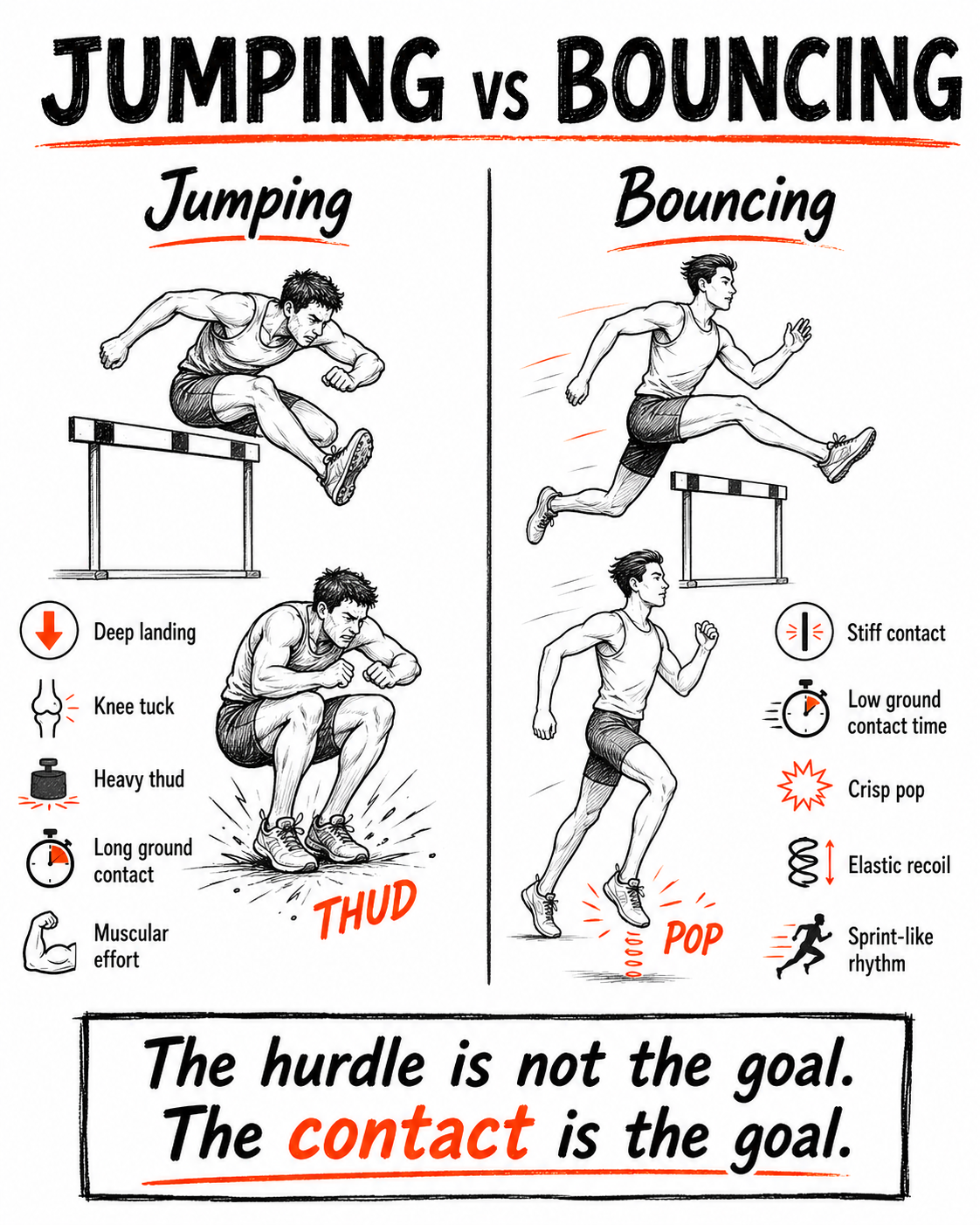
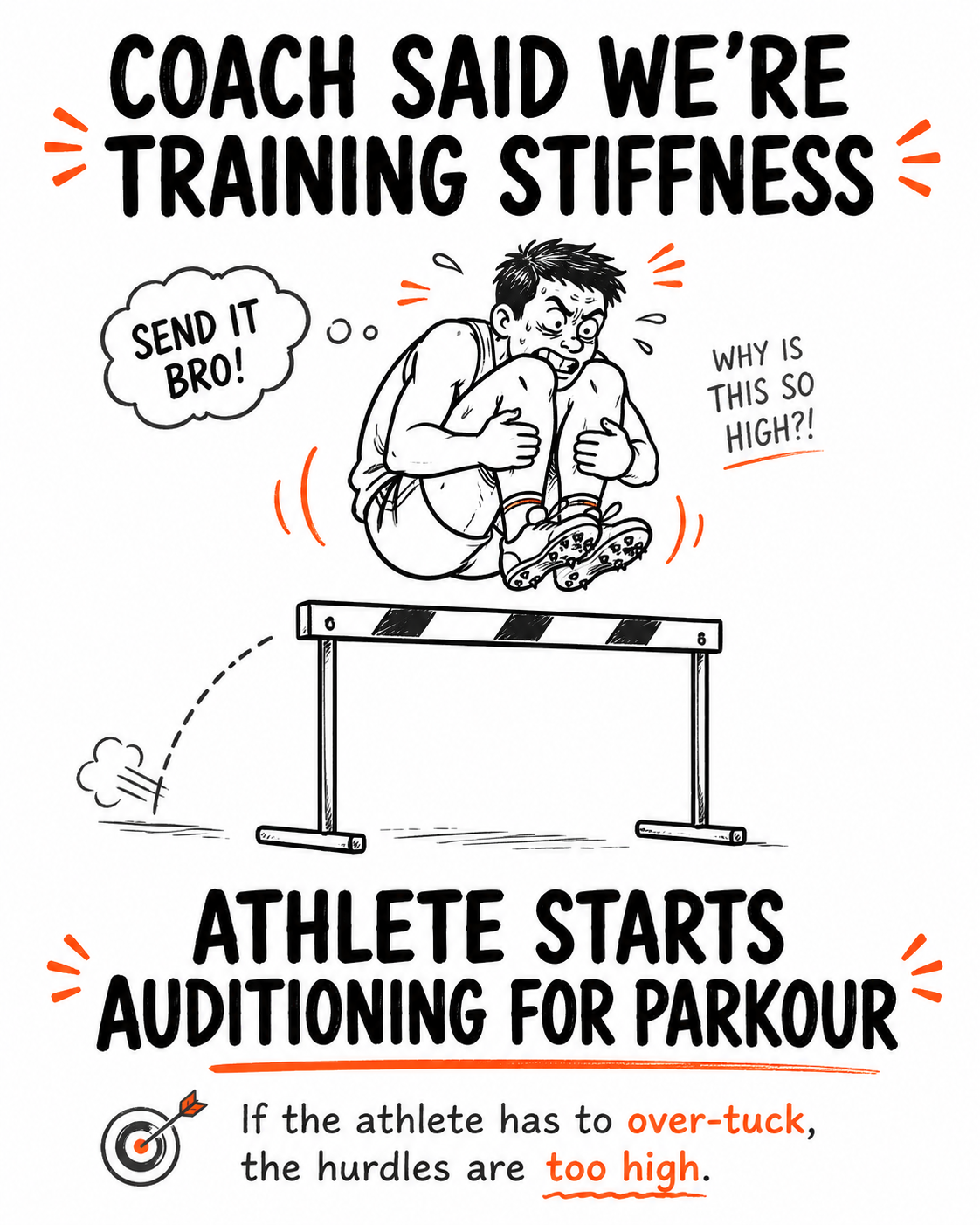
Most athletes turn hurdle hops into a jump contest.
|
|
They overreach the spacing.
|
|
They spend too much time on the ground.
|
|
Then they call it “explosive.”
|
|
But the goal is not to survive the hurdles.
|
The goal is to train a quality.
|
|
|
|
|
|
|
|
|
|
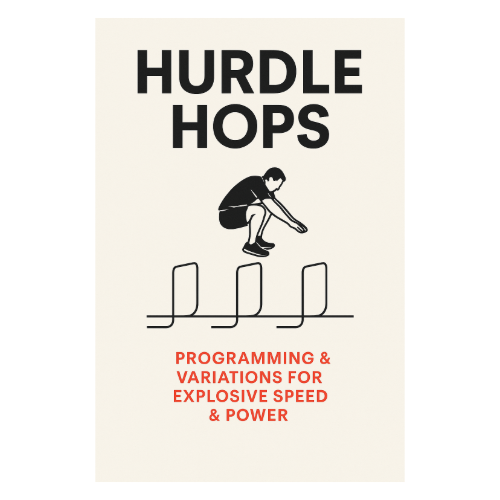
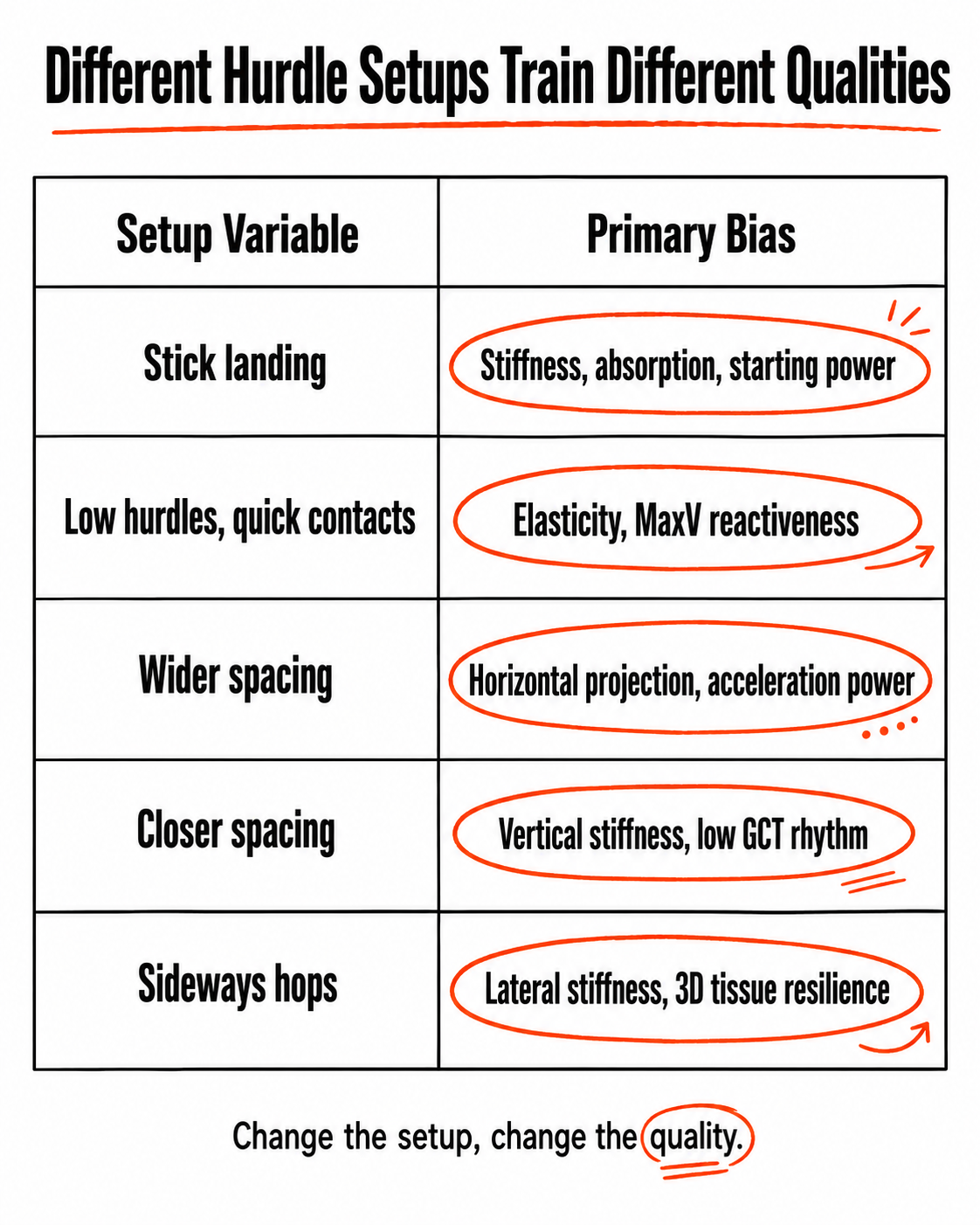
The ebook makes this distinction clear: different hurdle hop setups train different qualities. Reactive force and elasticity are trained by bouncing off the landing with low ground contact time. Stiffness and starting power are trained more through sticking landings, holding positions, and using higher hurdles. Closer spacing biases vertical force. Wider spacing increases the horizontal projection demand.
|
|
|
|
|
|
|
The hurdle is not the point.
|
The hurdle is the constraint.
|
It forces the athlete to organize the body around a specific demand.
|
Low, quick, vertical contacts teach stiffness and elastic rebound.
|
Longer spacing teaches projection and acceleration power.
|
Stick landings teach the body to absorb force without folding.
|
Sideways hops teach the athlete that the body is not built in one dimension.
|
Change the hurdle. Change the quality.
|
|
|
|
|
|
|
|
|
|
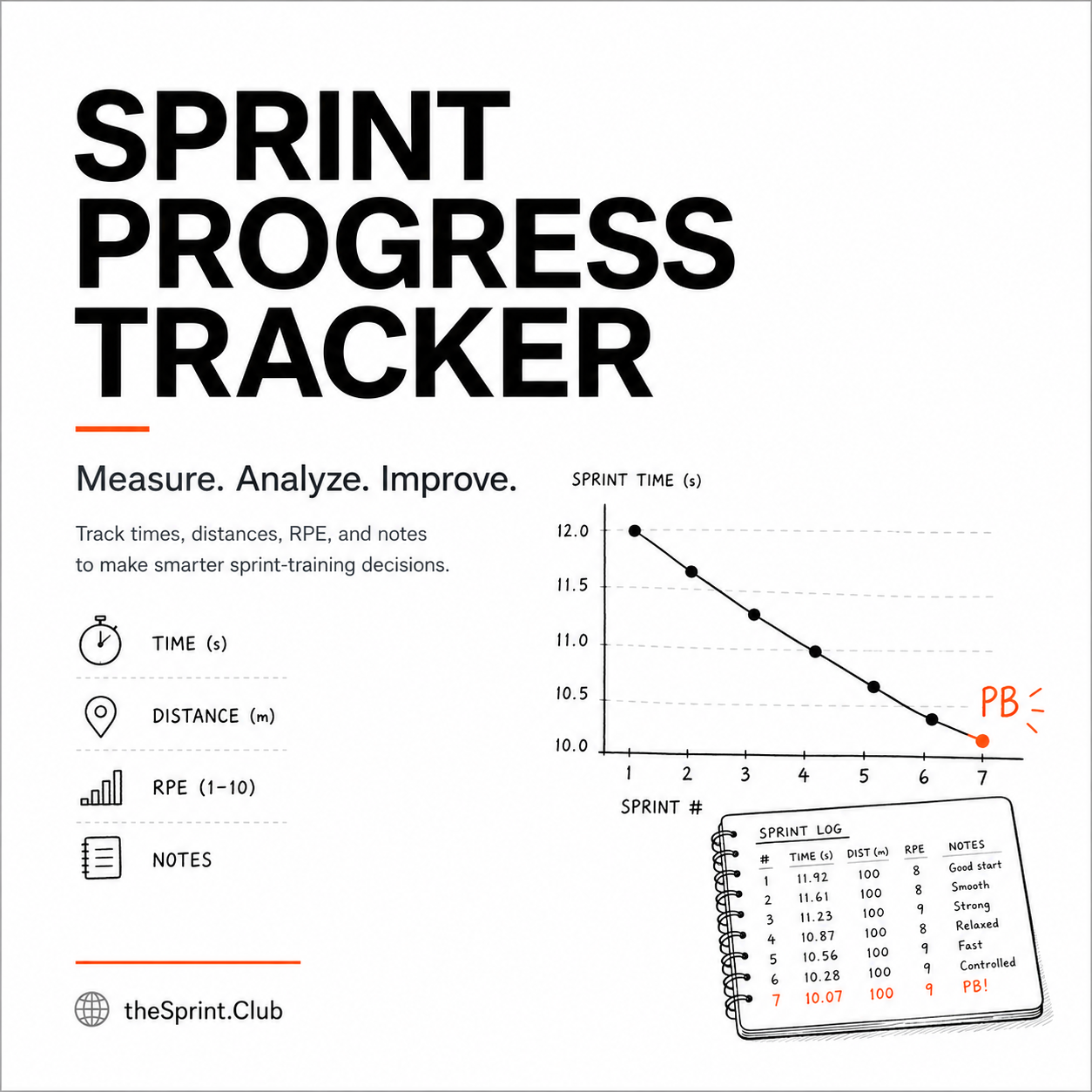
Sprint Progress Tracker: Measure and Improve Your Speed
|
|
|
|
Use a sprint progress tracker to record times, monitor fatigue, identify trends, and make smarter training decisions that improve sprint performance.
|
|
|
|
|
|
|
|
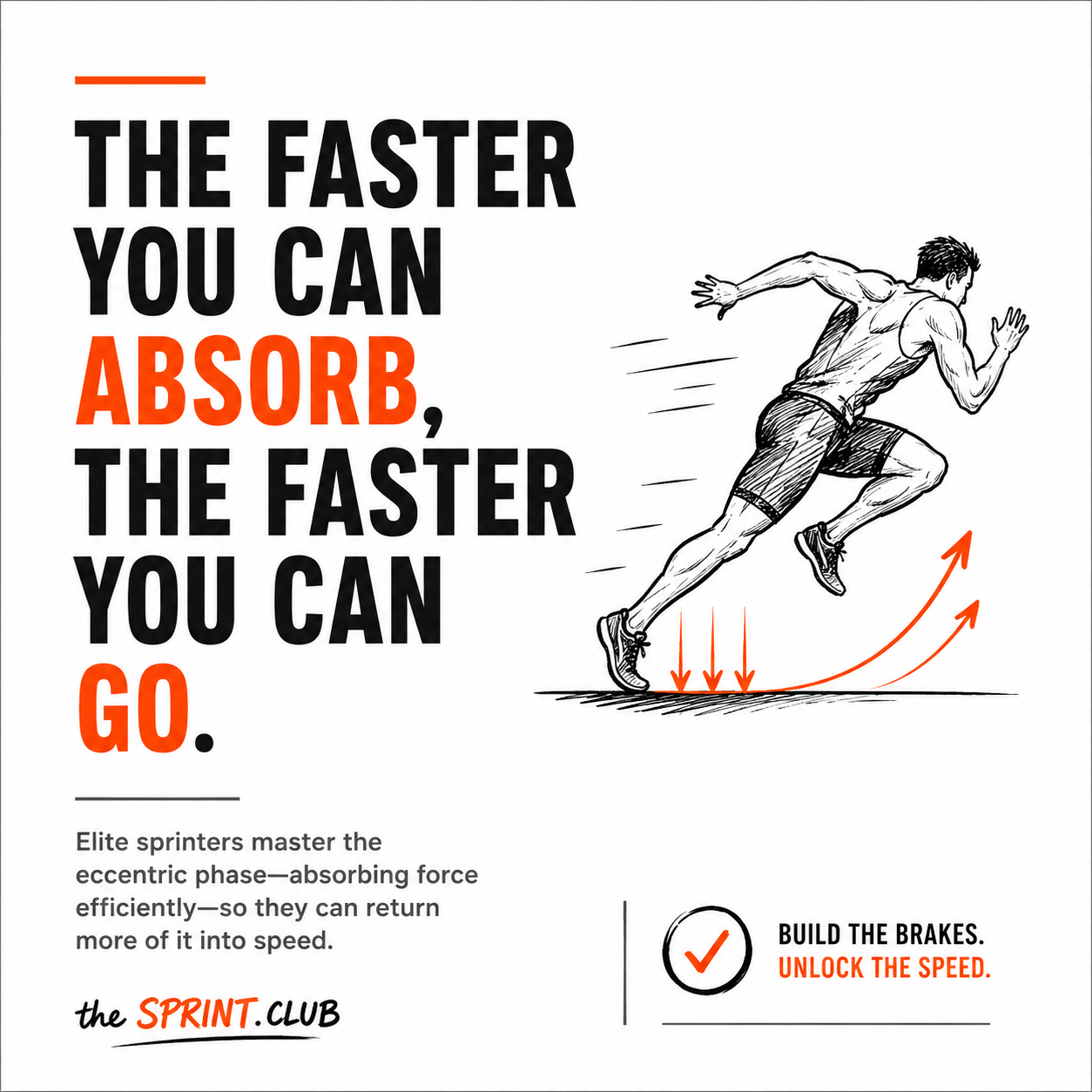
Why absorbing force efficiently is the missing link to faster sprint times, shorter ground contacts, and better performance.
|
|
|
|
Most athletes focus on producing force. Elite sprinters also master absorbing it. Every sprint step begins with a collision between the foot and the ground. Before you can produce force, your body must accept it. Athletes who develop exceptional eccentric strength can absorb larger forces, store more elastic energy, reduce ground contact time, and return more of that energy into …
|
|
|
|
|
|
|
|
|