|
|
|
|
|
There is a reason two athletes can work equally hard, lift similar numbers, and run completely different times.
|
|
One athlete looks spring-loaded.
|
Not weak.
Not untrained.
Heavy.
|
|
The difference is usually not motivation.
|
|
It is how force moves through the body.
|
|
Elite speed is less about “producing” force and more about whether the body can organize, absorb, redirect, and release force without collapse.
|
|
|
The Fastest Athletes Don’t Waste Force
Most athletes are taught to think about effort.
|
Fast athletes are organized around efficiency.
|
Every step in sprinting is a negotiation between:
|
- stiffness
- timing
- posture
- rhythm
- relaxation
- elastic return
When these systems organize correctly:
|
- ground contact gets shorter
- force transfer improves
- elastic energy returns faster
- projection stays cleaner
- speed rises without visible strain
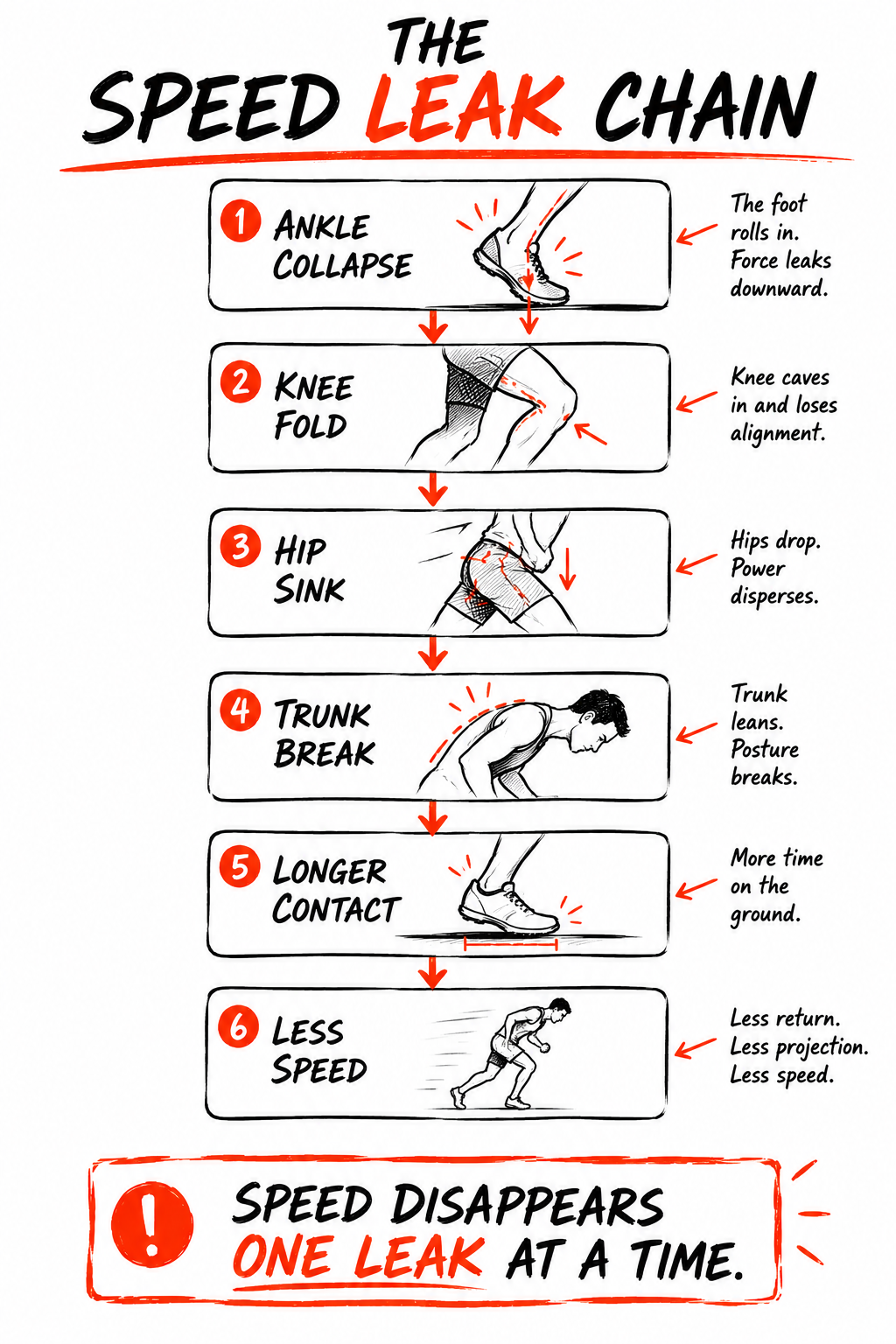
- the ankle collapses
- the knee folds early
- posture breaks
- contact times lengthen
- energy disappears into the ground
This is why sprinting often looks relaxed at the highest level.
|
The nervous system is solving movement efficiently instead of fighting itself.
|
Research consistently shows elite sprinters display:
|
- shorter ground contact times
- greater lower-limb stiffness
- superior force application timing
- better elastic energy utilization
|
|
|
|
|
|
The Important Shift
|
Elite training increasingly asks:
|
“How cleanly can you transfer force?”
|
That changes exercise selection.
Cueing.
Volume.
Recovery.
Even mindset.
|
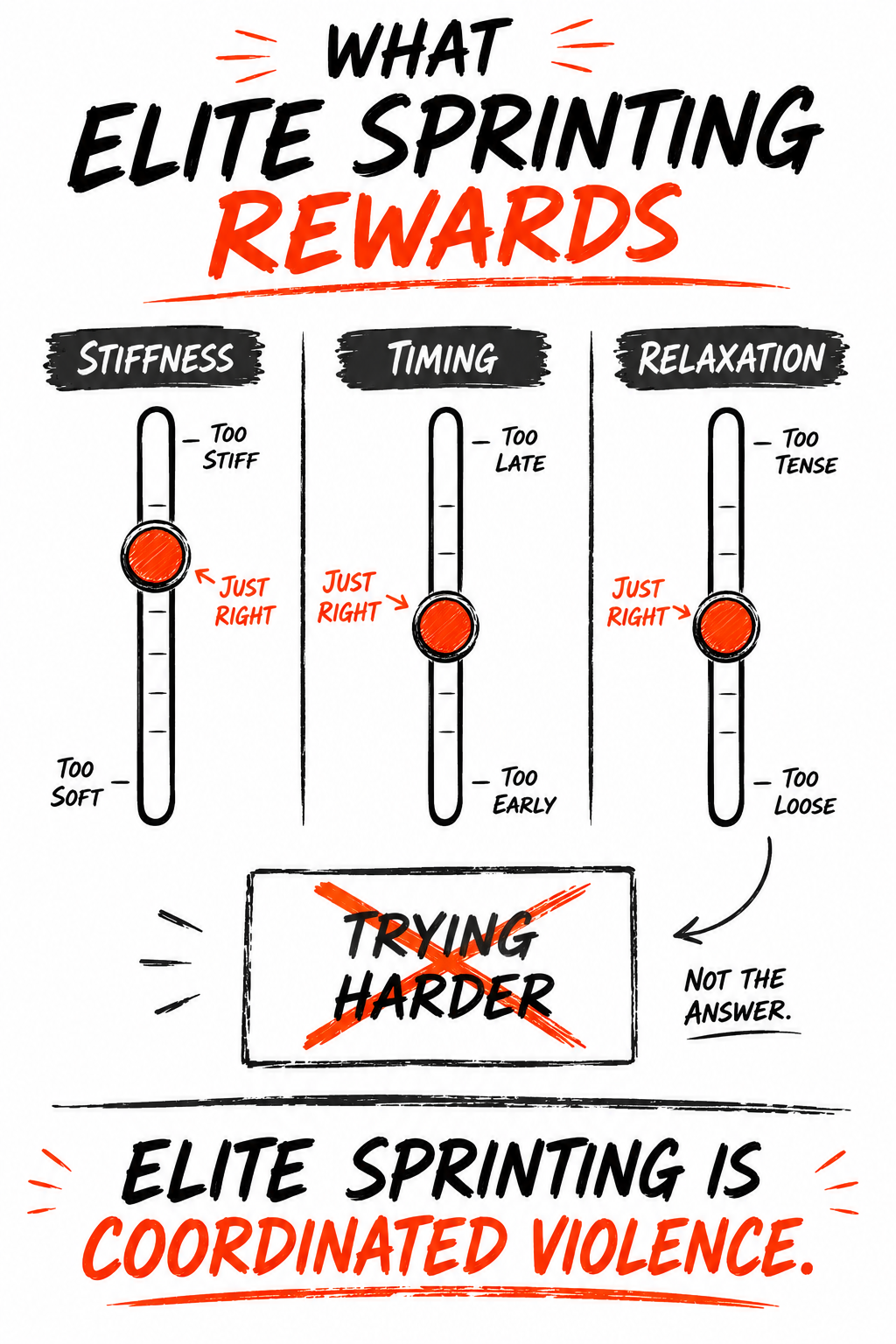
More fatigue is not always better adaptation.
|
|
Sometimes exhaustion simply teaches slower coordination.
|
|
|
|
|
|
|
|
|
|
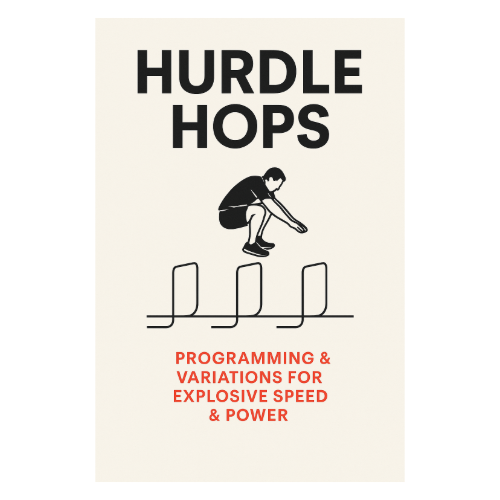
The ebook makes this distinction clear: different hurdle hop setups train different qualities. Reactive force and elasticity are trained by bouncing off the landing with low ground contact time. Stiffness and starting power are trained more through sticking landings, holding positions, and using higher hurdles. Closer spacing biases vertical force. Wider spacing increases the horizontal projection demand.
|
|
|
|
|
|
A Simple Test
|
Watch an athlete sprint and ask:
|
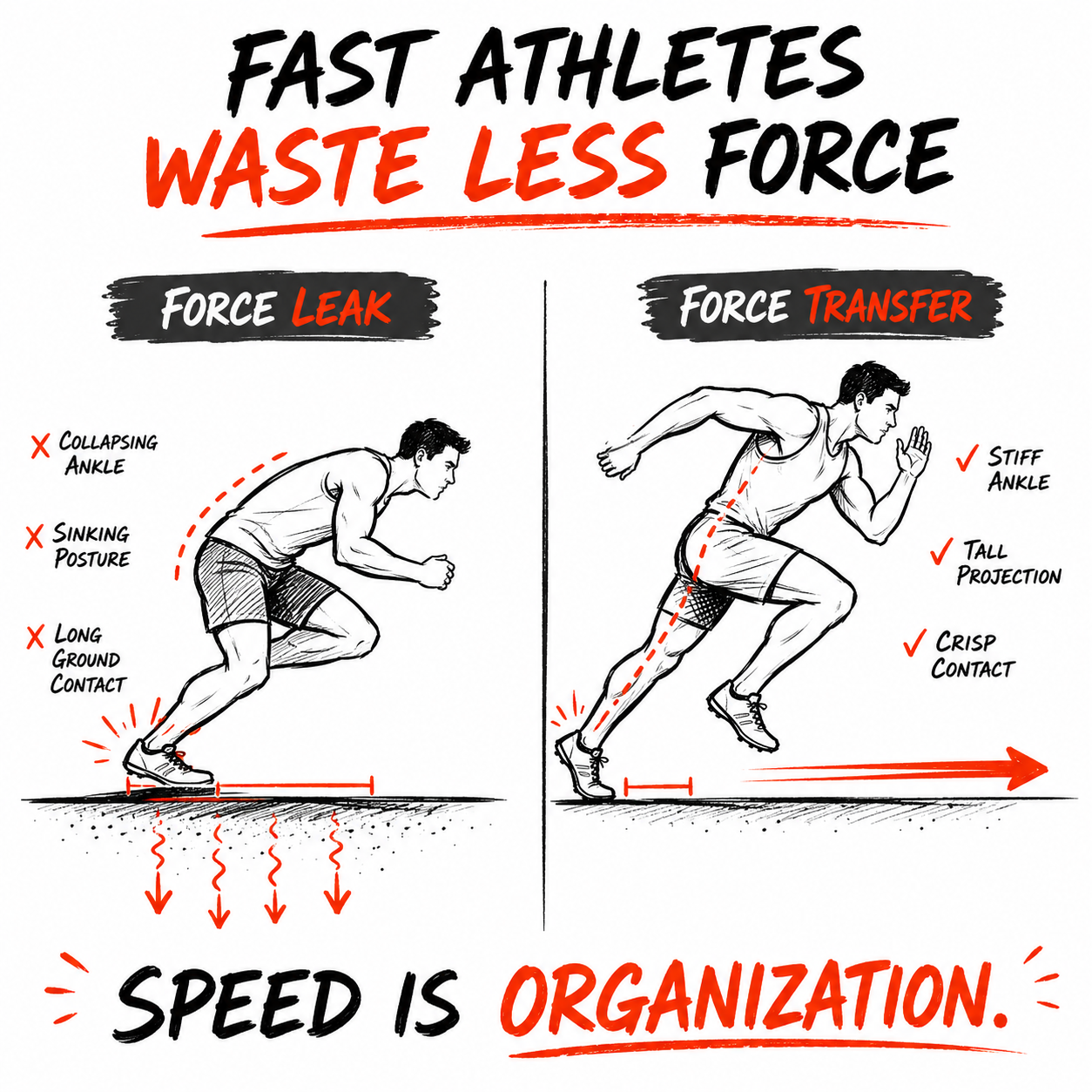
Does force LOOK organized?
|
- quiet upper body
- clean projection angles
- stable pelvis
- stiff but reactive ankle
- short crisp contacts
- rhythm without visible tension
- loud contacts
- collapsing posture
- overreaching
- excessive muscular tension
- long time on the ground
- visible effort increase without speed increase
|
Speed leaks before it disappears.
|
|
|
|
|
|
Help Grow THE SPRINT CLUB
If this newsletter helps you think differently about speed:
|
- share it on Instagram stories
- repost it on X
- send it to another coach
- forward it to an athlete stuck at a plateau
|
The goal of this newsletter is simple:
|
|
Teach the hidden systems that determine visible performance.
|
Growth happens when readers like you share ideas that challenge outdated training assumptions.
|
|
|
|
|
|
|
|
|
|
The Science of Anthropometrics and Sprinting
|
|
|
|
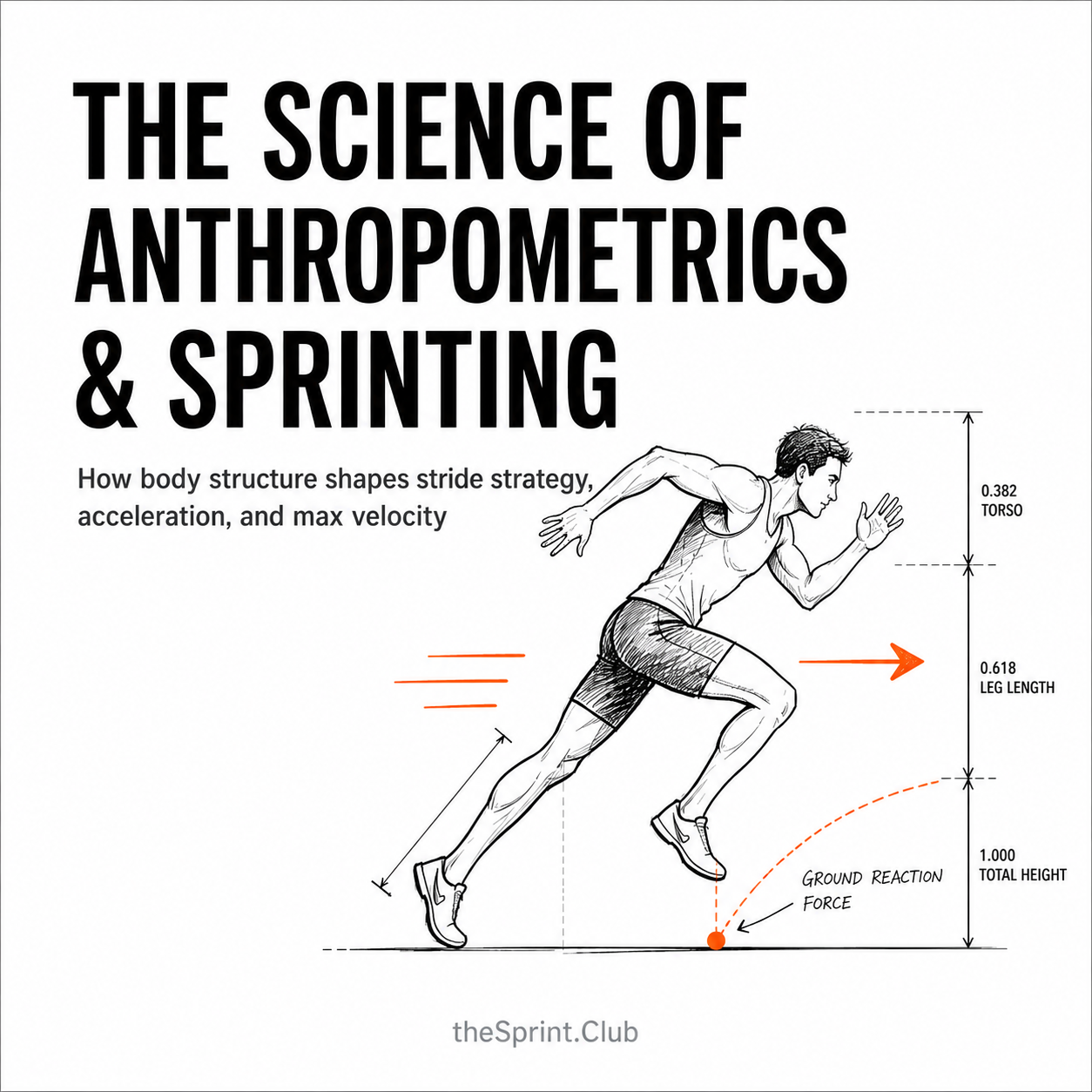
Anthropometrics do not determine whether an athlete can sprint fast, but they shape how each athlete creates speed. This post explains how height, limb length, torso proportions, body mass, and stiffness influence acceleration, max velocity, stride length, stride frequency, and sprint technique. Learn how to use body structure as a coaching map instead of forcing every sprinter into the same model.
|
|
|
|
|
|
|
|
How to Jump Higher: A Complete Guide to Explosive Leg Training
|
|
|
|
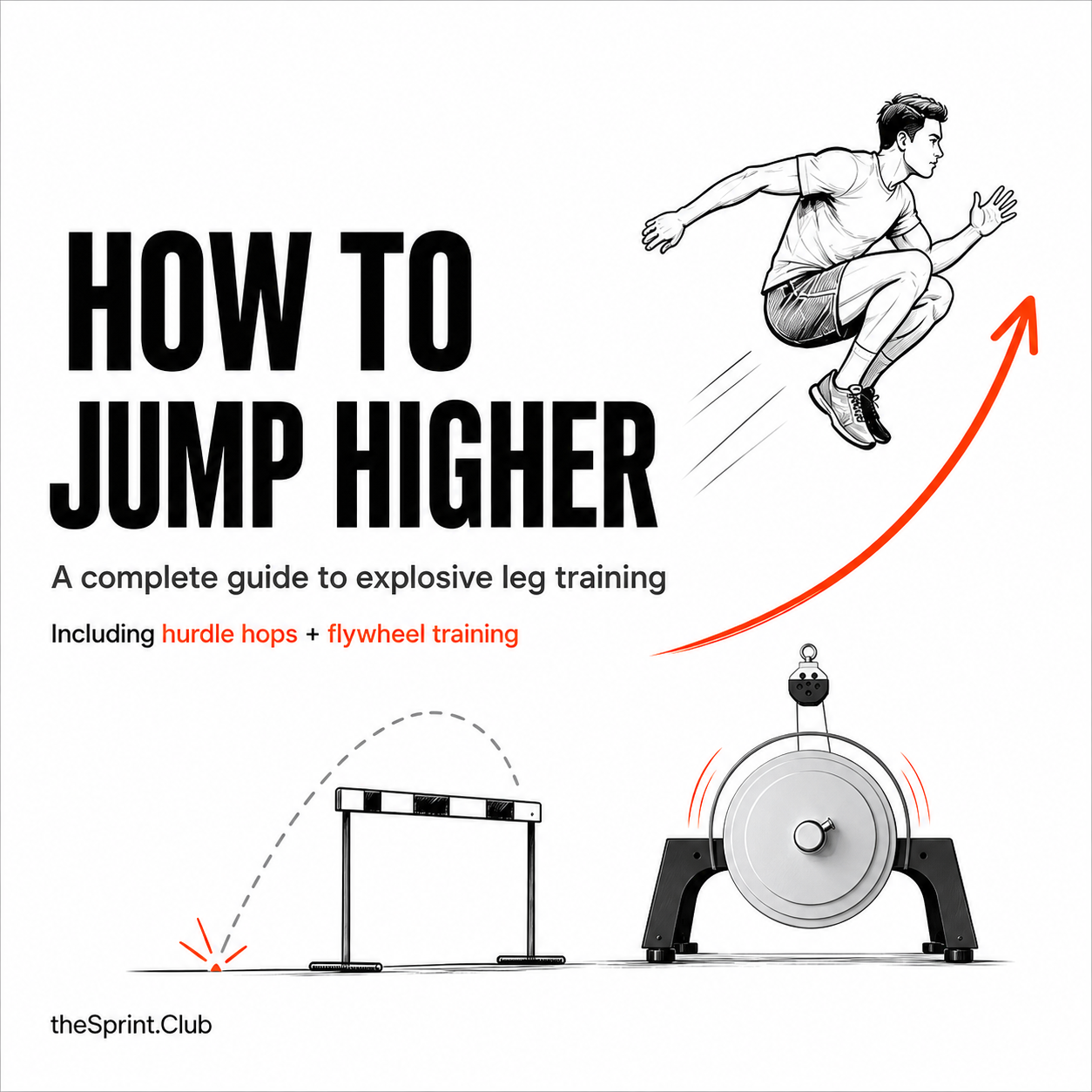
Want to jump higher? This guide breaks down the strength, stiffness, reactive power, and recovery principles behind explosive jumping. Learn how to use hurdle hops, flywheel training, plyometrics, and smart strength work to build more force, waste less energy, and rebound faster.
|
|
|
|
|
|
|
|
|