|
|
|
|
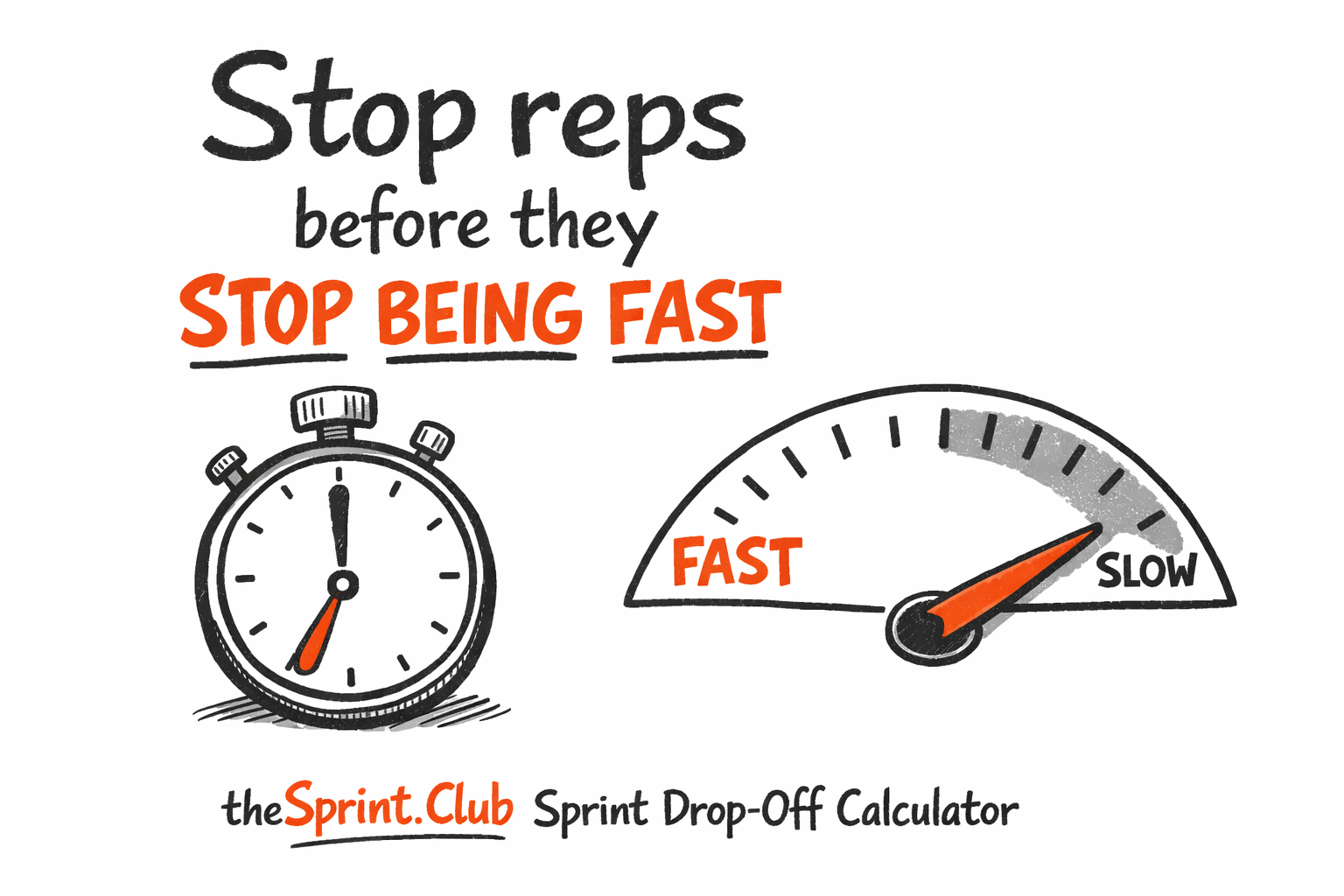
There is a moment in almost every “speed day” where the workout quietly changes jobs.
|
|
You showed up to train speed.
|
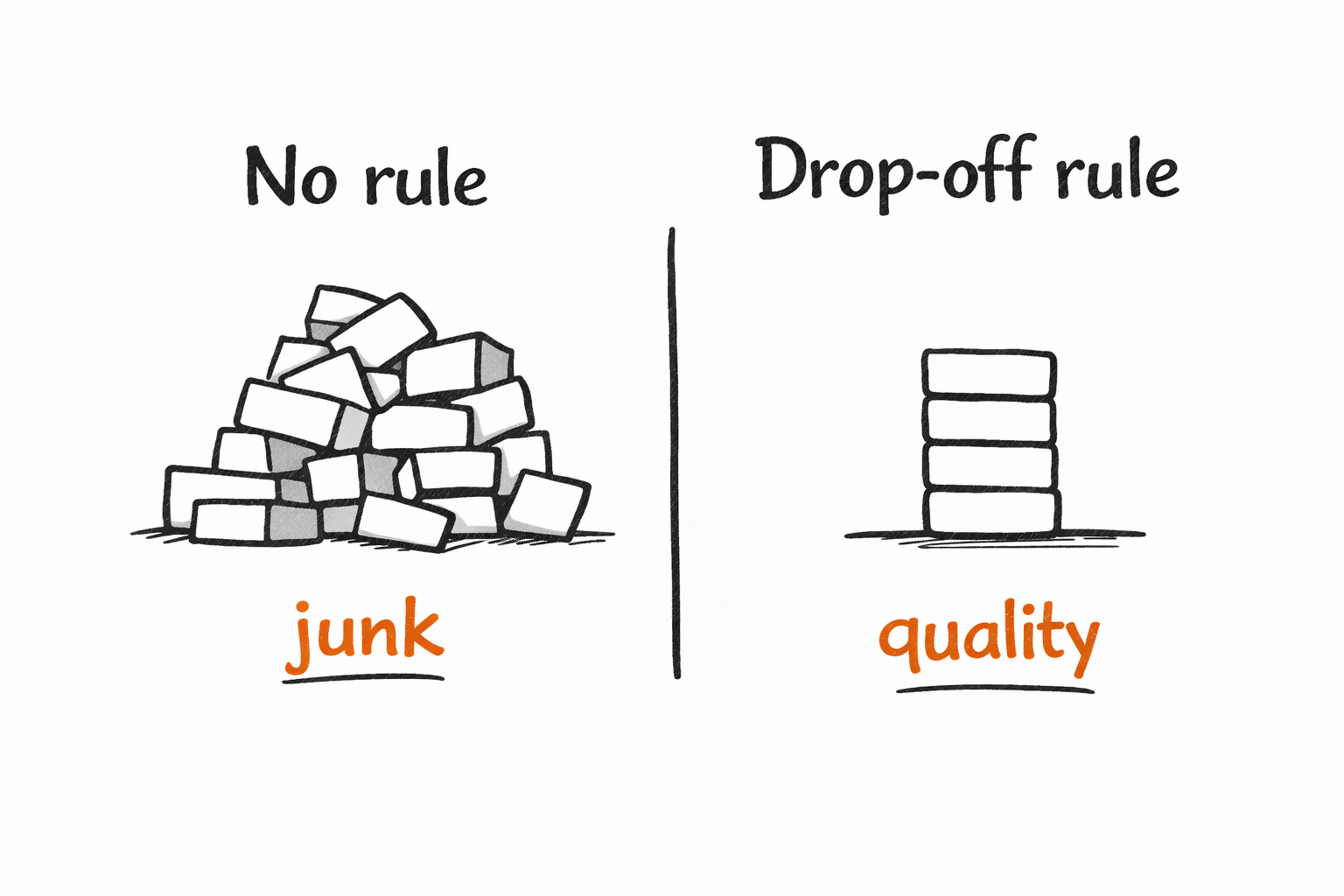
And suddenly you are not practicing speed anymore, you are practicing being slower.
|
The fix is not more grit. It is a rule.
|
|
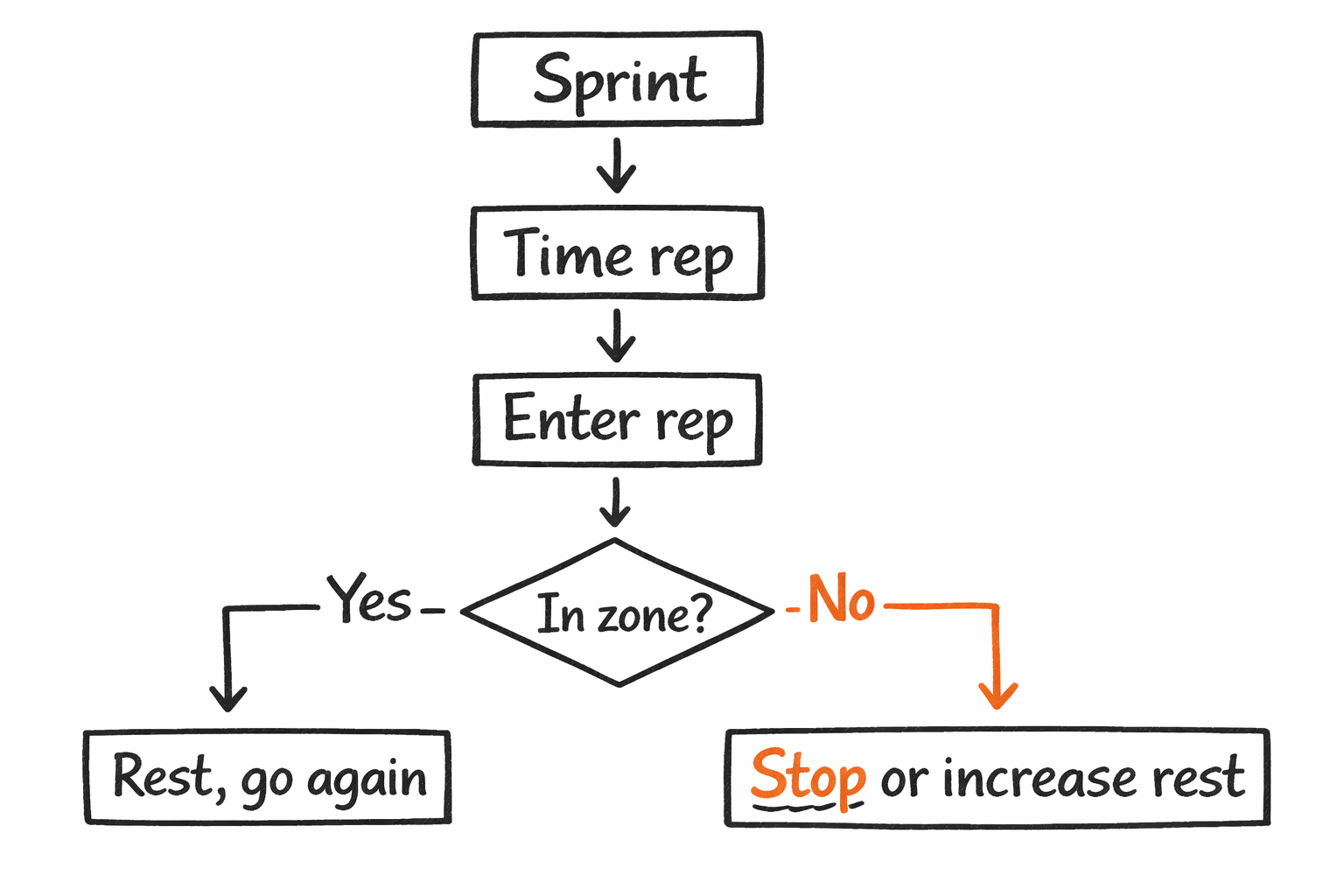
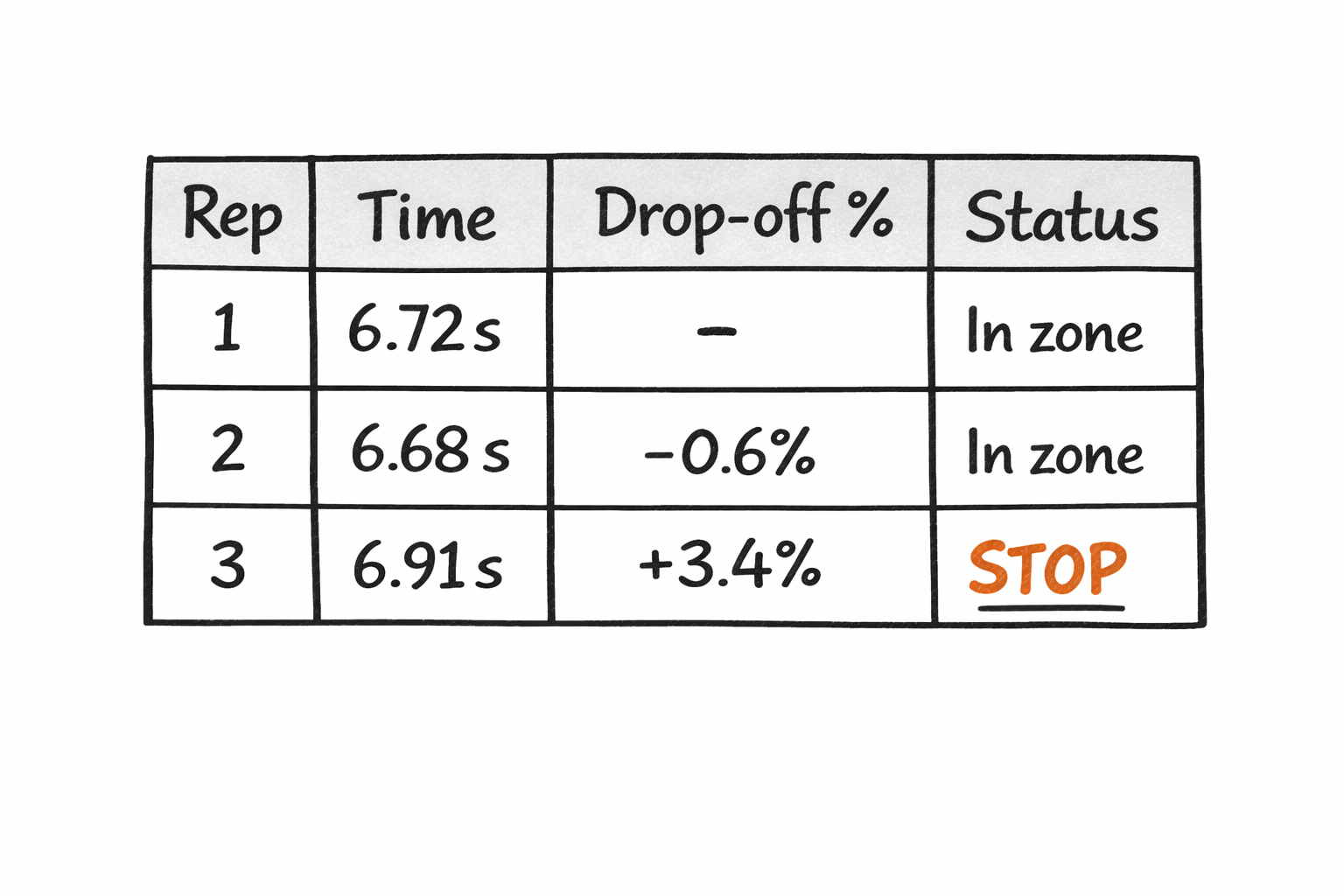
Your Sprint Drop-Off Calculator is a simple “quality stop rule” that makes the session honest. It calculates how far each rep has drifted from a reference time, then tells you when your threshold is reached so you can stop or adjust rest instead of collecting junk reps.
|
|
|
|
|
What “drop-off” means in this tool
|
The calculator uses the exact formula shown on the page:
|
|
Drop-off (%) = (Rep time − Reference time) ÷ Reference time × 100
|
You choose what “reference time” means:
|
-
|
Best time in this session, the reference updates automatically to the fastest rep you enter.
|
-
|
Fixed baseline time, useful if rep 1 is not the best and you want a stable anchor.
|
|
You set the drop-off goal (%), then log reps. When the threshold is reached, the tool displays a stop message and flags it in the table.
|
|
|
|
Why this works, even if you hate spreadsheets
Speed training is quality-dependent. One elite sprint training review explicitly notes that full recovery is required between sprints to avoid a drop-off in performance.
|
And when sprints are repeated under fatigue, performance commonly shows up as declining sprint speed across repetitions.
|
|
So the calculator’s job is not to “judge” you. It is to tell you when the session’s output is changing, so you can protect what you actually came for.
|
|
|
Three practical ways to use it today
1) Make rest decisions that are tied to outcomes
If drop-off appears early, do not argue with it. Change one variable:
|
-
-
-
|
Reduce total distance for the day.
|
Then re-run the session next week and compare.
|
2) Separate “speed” from “conditioning” without a philosophical argument
If your goal is speed quality, use a stricter stop rule.
If your goal is repeated-effort tolerance, you can allow more drift, but be explicit about that tradeoff.
|
Either way, you stop guessing which session you actually trained.
|
3) Create a shareable record in 20 seconds
-
|
Tap Copy results as CSV and paste into notes, a group chat, or your training log.
|
-
|
Coaches: share the CSV with athletes so they learn what “good reps” look like in numbers, not vibes.
|
|
|
|
|
|
|
|
|
Common mistakes that make drop-off times look worse than they are
-
|
Timing noise. Hand timing, inconsistent start cues, and mixed timing methods can create fake “drift.” Keep your timing method consistent within a block.
|
-
|
Changing conditions mid-session. Surface, footwear, wind, and slope changes can produce real time changes that are not fatigue.
|
-
|
Racing the rest. If you reduce rest to squeeze volume, the tool will often reveal you changed the session goal.
|
|
|
|
|
|
|
|
|
|
Thanks for reading. See you soon!
|
|
|
|
|
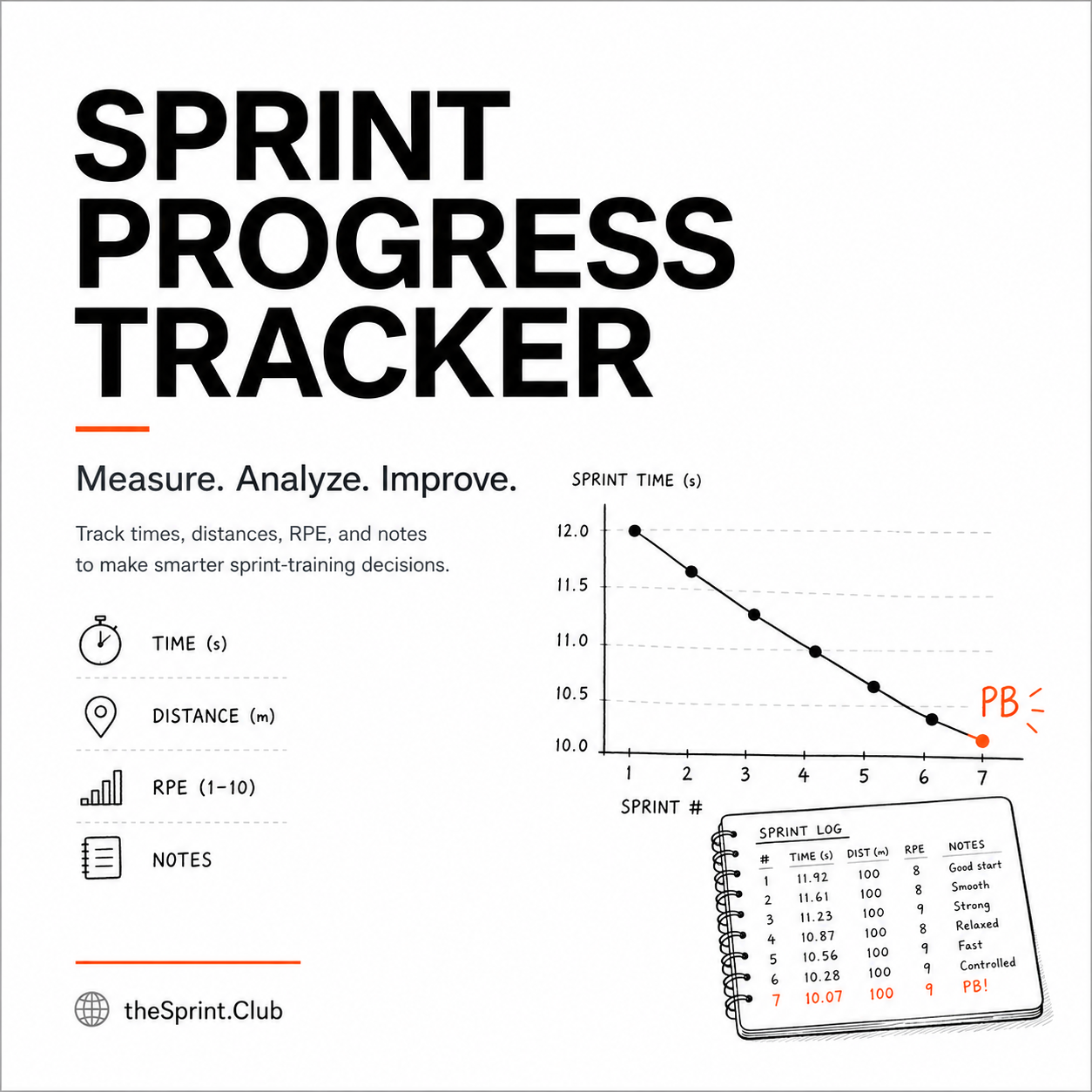
Sprint Progress Tracker: Measure and Improve Your Speed
|
|
|
|
Use a sprint progress tracker to record times, monitor fatigue, identify trends, and make smarter training decisions that improve sprint performance.
|
|
|
|
|
|
|
|
Why absorbing force efficiently is the missing link to faster sprint times, shorter ground contacts, and better performance.
|
|
|
|
Most athletes focus on producing force. Elite sprinters also master absorbing it. Every sprint step begins with a collision between the foot and the ground. Before you can produce force, your body must accept it. Athletes who develop exceptional eccentric strength can absorb larger forces, store more elastic energy, reduce ground contact time, and return more of that energy into …
|
|
|
|
|
|
|
|
|