|
|
|
|
The Day Everything Clicked… After Doing Nothing
|
He hadn’t trained in 10 days.
|
|
By every traditional standard, he should’ve been worse.
|
|
Instead, he ran a personal best.
|
|
No new program. No breakthrough cue. No added volume.
|
And somehow, everything changed.
|
|
|
The Plateau Trap
|
Most athletes respond to plateaus the same way:
|
|
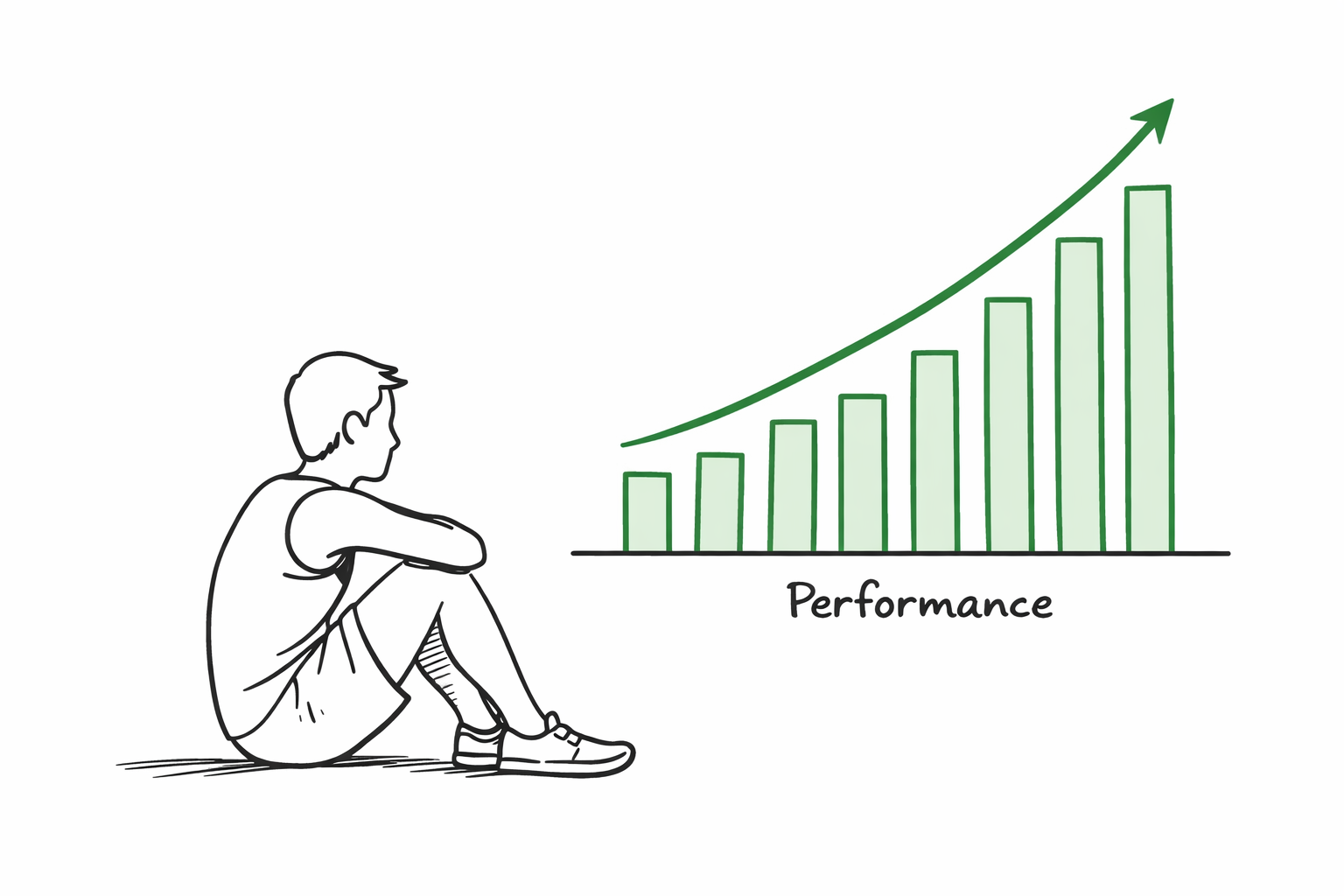
But plateaus are rarely a signal that you need more.
|
|
They’re often a signal that something is buried.
|
|
|
|
The Hidden Layer: Fitness vs Fatigue
|
There’s a concept in performance science that explains this clearly:
|
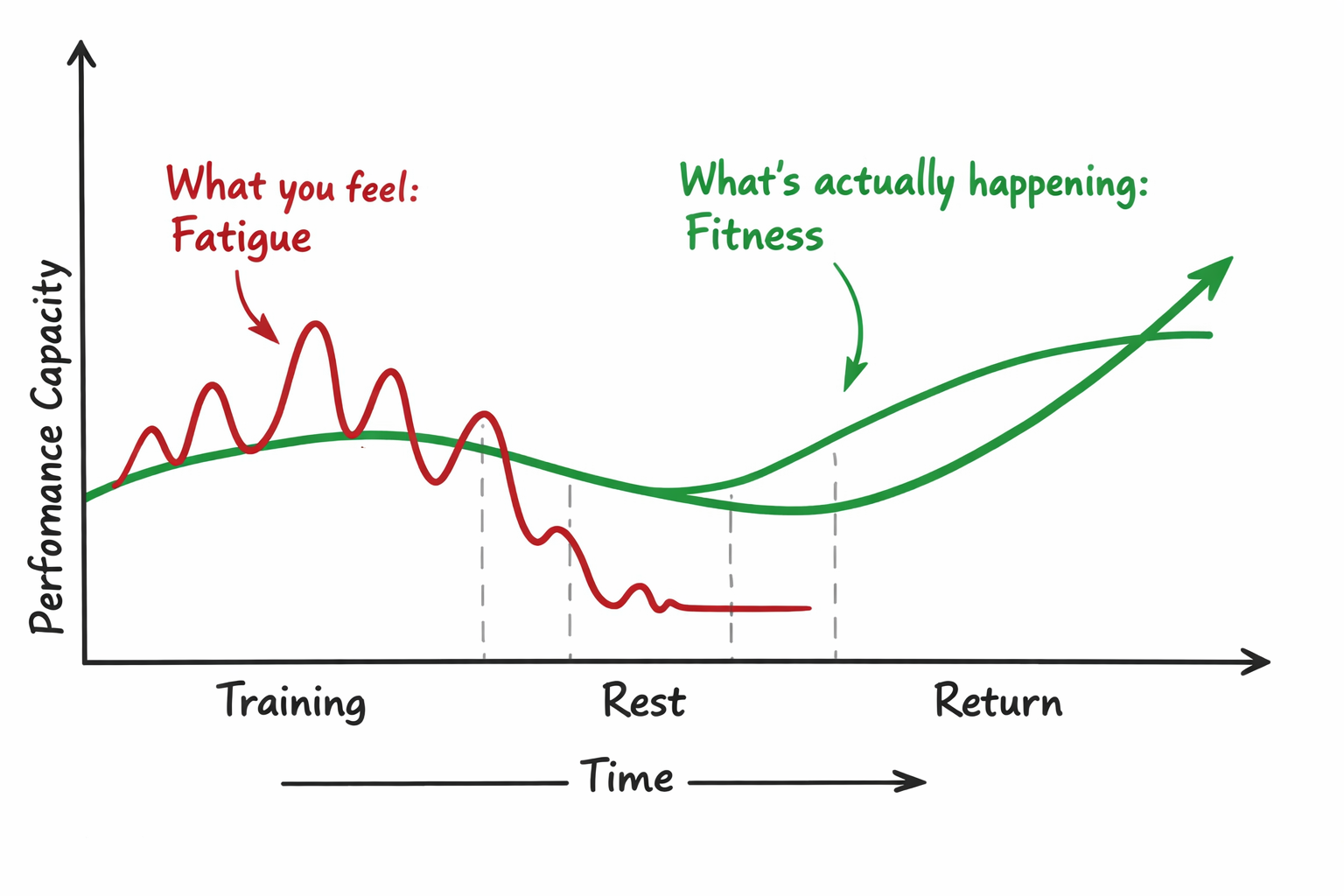
Fitness and fatigue coexist.
|
- Fitness builds slowly over time
- Fatigue accumulates quickly and masks it
|
When fatigue is high, your true performance capacity is hidden.
|
|
When fatigue drops, performance appears to “suddenly” improve.
|
This is the foundation of supercompensation theory and is widely discussed in training literature.
|
|
|
|
The Neural Side No One Talks About
|
Plateaus aren’t just muscular.
|
Every sprint, lift, and jump places demand on the nervous system:
|
- Motor unit recruitment
- Firing frequency
- Coordination timing
- Intermuscular synchronization
Over time, this system becomes noisy and inefficient.
|
|
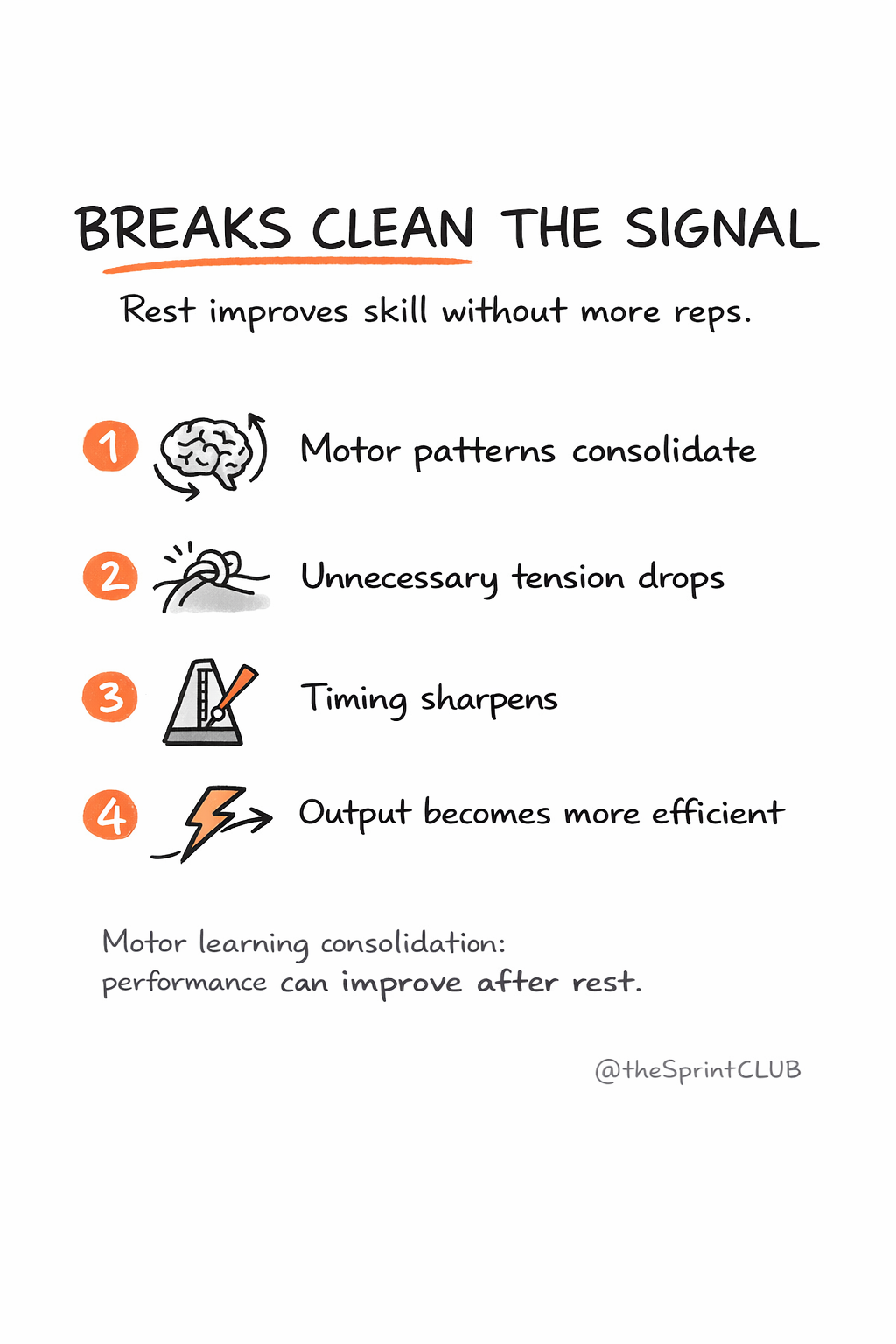
A break does something subtle but powerful:
|
- Motor patterns consolidate
- Unnecessary tension drops
- Timing sharpens
- Output becomes more efficient
This is supported by research on motor learning consolidation, where skill improves after rest without additional practice .
|
|
|
The Plateau Reset Effect
|
A removal of interference.
|
During a prolonged break:
|
- Residual fatigue dissipates
- Hormonal balance normalizes
- Neural drive rebounds
- Movement patterns reorganize
|
You’re not starting over.
|
You’re revealing what was already built.
|
|
|
So… How Long Should You Do Nothing?
|
This is the question everyone actually wants answered.
|
|
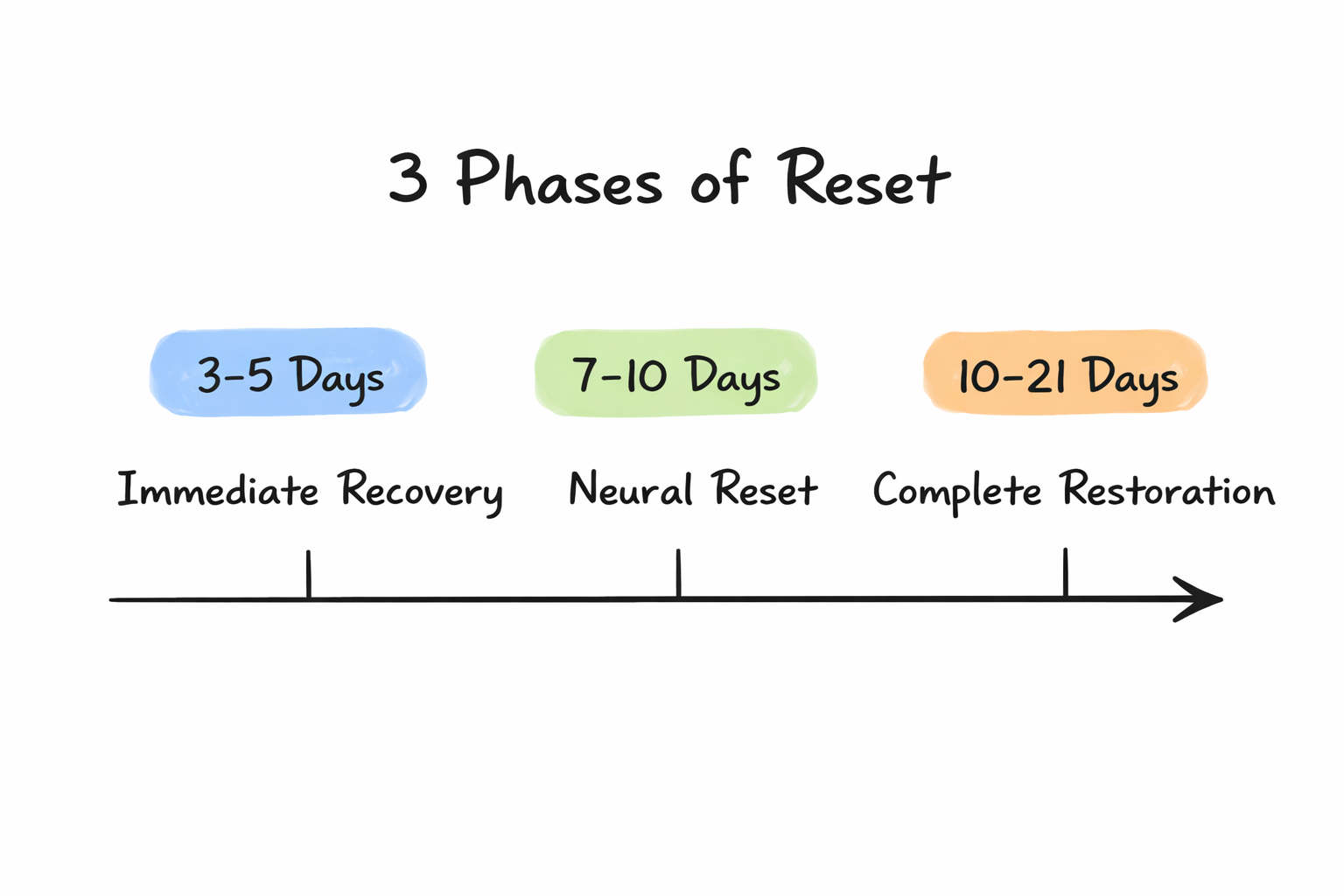
Here’s a practical framework:
|
3–5 Days: The Unmasking Phase
- Acute fatigue drops
- You start to feel “better”
- Performance begins to stabilize
7–10 Days: The Neural Rebound Window
- Nervous system refreshes
- Coordination improves
- Explosiveness returns
10–21+ Days: The Deep Reset
- Movement patterns reorganize
- Chronic fatigue fully dissipates
- Psychological drive resets
|
|
|
|
The Paradox
|
The harder you’ve been pushing…
|
|
The more likely it is that your next breakthrough requires pulling back.
|
|
This is where most athletes get it wrong.
|
|
They interrupt the rebound.
|
|
They feel slightly better… and immediately load again.
|
|
Before the system fully resets.
|
|
Before the breakthrough happens.
|
What This Means for You
- Same times
- Same outputs
- Same feeling
|
It may not be a programming issue.
|
|
It may be a recovery ceiling.
|
Consider:
- Taking a planned 7–10 day deload or full break
- Removing high neural demand work (max sprints, heavy lifts)
- Keeping only light movement or nothing at all
|
|
|
|
|
|
|
|
|
Thanks for reading. See you soon!
|
|
|
|
|
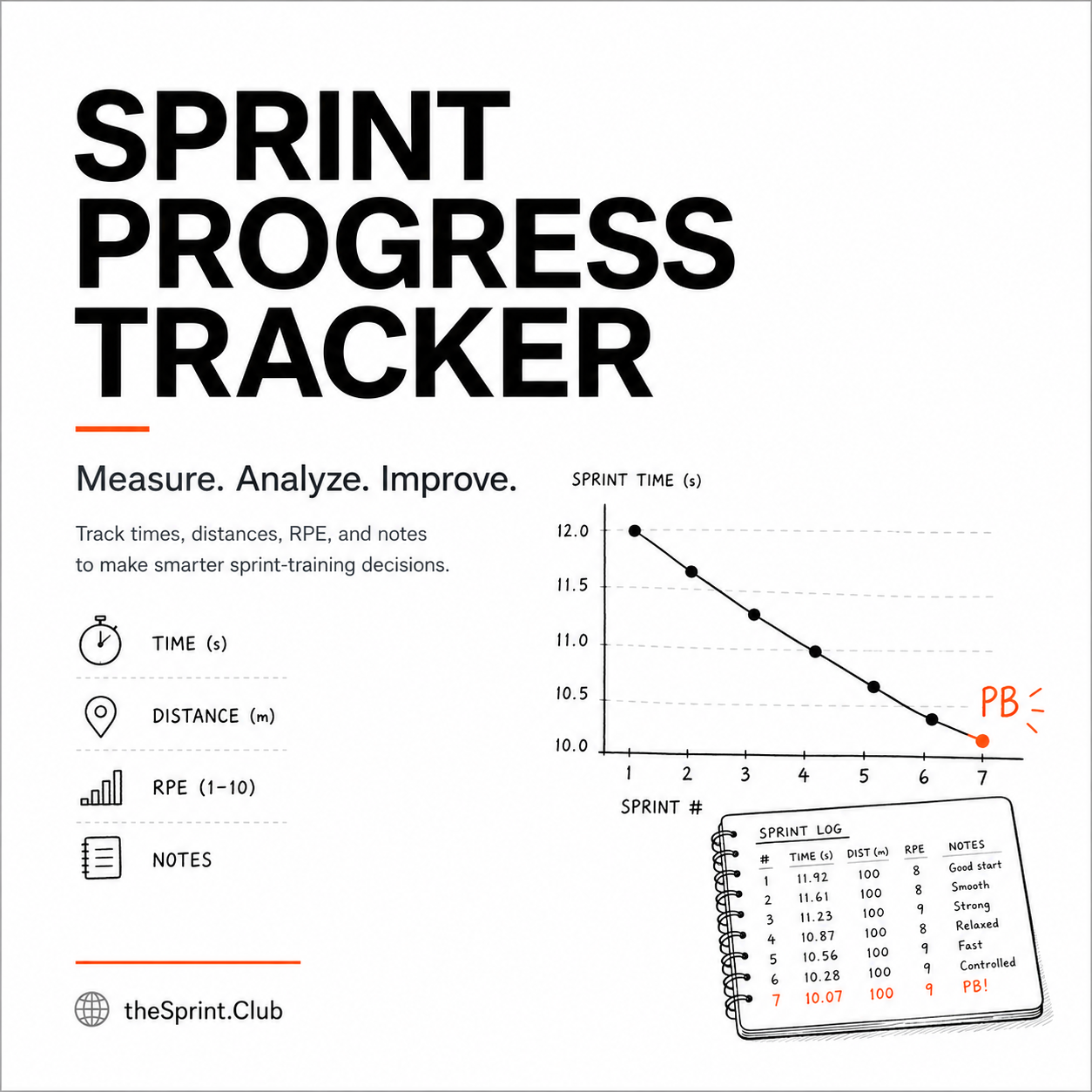
Sprint Progress Tracker: Measure and Improve Your Speed
|
|
|
|
Use a sprint progress tracker to record times, monitor fatigue, identify trends, and make smarter training decisions that improve sprint performance.
|
|
|
|
|
|
|
|
Why absorbing force efficiently is the missing link to faster sprint times, shorter ground contacts, and better performance.
|
|
|
|
Most athletes focus on producing force. Elite sprinters also master absorbing it. Every sprint step begins with a collision between the foot and the ground. Before you can produce force, your body must accept it. Athletes who develop exceptional eccentric strength can absorb larger forces, store more elastic energy, reduce ground contact time, and return more of that energy into …
|
|
|
|
|
|
|
|
|