|
|
|
|
Let your nervous system tell you when to stop
Why this matters
The thing that actually makes you fast, high neural drive, precise timing, elastic stiffness, is also the first thing to disappear when fatigue rises. The Drop-Off Method exists to protect that quality.
|
Instead of prescribing speed work by volume, it uses performance decay as the stop signal. When output drops beyond a defined threshold, the session ends.
|
|
Not because you are tired.
|
Because the stimulus has changed.
|
What the Drop-Off Method is
|
|
Definition
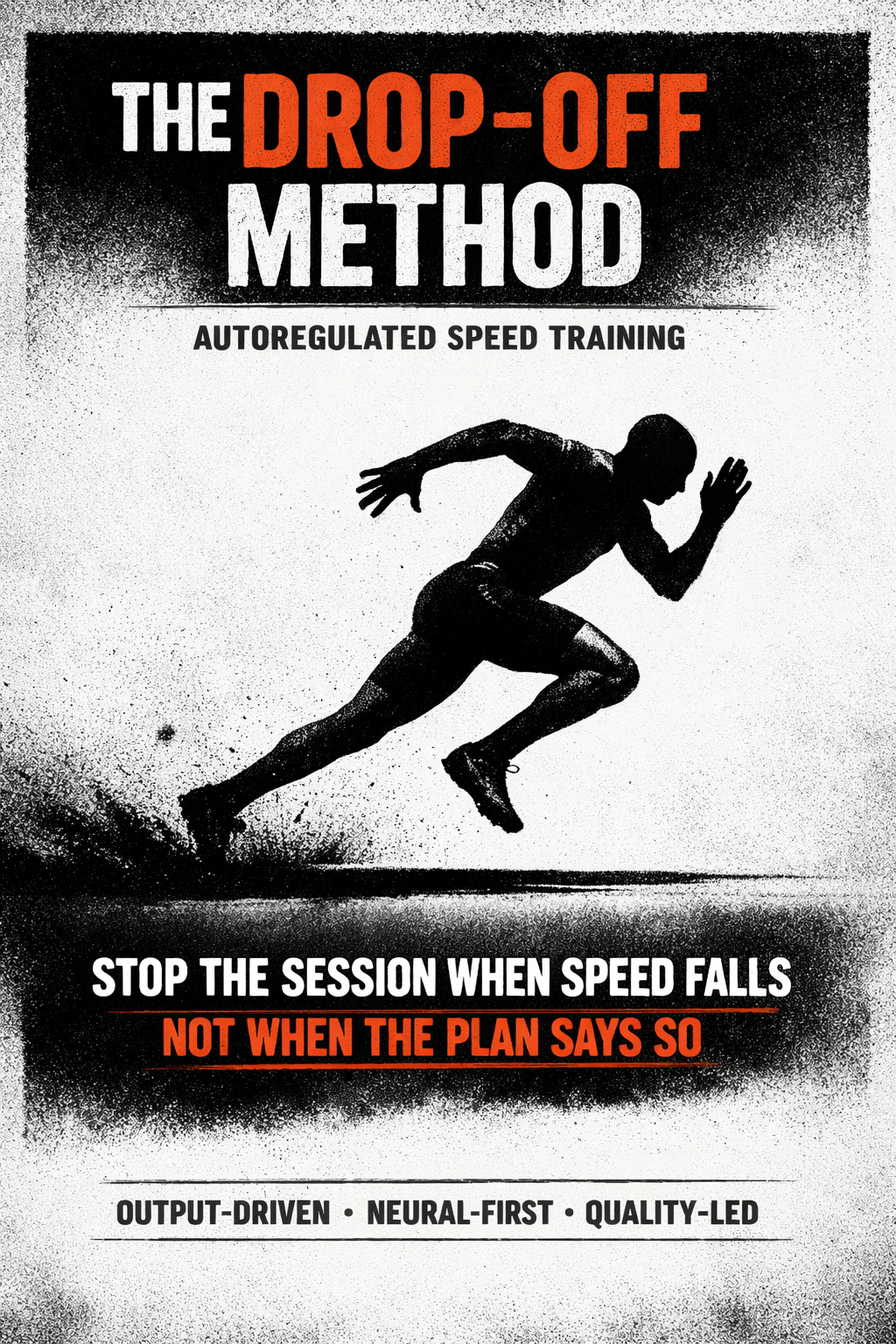
The Drop-Off Method is an autoregulation strategy where sprint repetitions stop once performance slows beyond a predefined percentage from the best rep of that session.
It is objective, measurable, and specific to speed.
|
|
-
-
|
Identify the fastest rep of the day.
|
-
|
Set a drop-off percentage.
|
-
|
End the main sprint work when a rep exceeds that cutoff.
|
-
-
-
-
|
Session ends when a rep is slower than 1.03 s
|
|
This shifts decision-making away from ego and toward output.
|
|
|
Why it works (the physiology and motor-control logic)
-
-
|
Precise intermuscular coordination
|
-
|
Rapid force production in extremely short ground contacts
|
As fatigue accumulates, speed loss is not random. It reflects:
|
-
|
Reduced motor unit recruitment
|
-
|
Slower rate of force development
|
-
|
Compromised stiffness and timing
|
-
|
Increasing coordination error
|
|
Once those systems degrade, additional reps train slower patterns.
|
The Drop-Off Method does not avoid fatigue.
|
|
It targets the fatigue window where adaptation still matches the goal.
|
|

|
|
The real benefit most people miss
The method is not about doing less work.
|
It is about accumulating more high-quality exposures over time.
|
By cutting sessions when speed quality collapses, athletes:
|
-
|
Recover faster between sessions
|
-
|
Hit higher outputs more often across the week
|
-
|
Avoid burying the nervous system under junk volume
|
Speed improves because speed practice stays fast.
|
Practical drop-off thresholds (starting points)
|
These are initial ranges, not rigid rules. Individualize based on athlete history, timing reliability, and training phase.
|
-
-
|
Neural and coordination dominant
|
Max velocity (upright sprinting, fly zones)
|
-
-
|
High neural demand, elastic reliance
|
Special endurance (80–150 m)
|
-
-
|
Higher metabolic cost, greater recovery demand
|
Larger drop-offs usually mean higher recovery cost. Smaller drop-offs usually mean faster turnaround to the next speed session.
|
|

|
Common mistakes
-
|
Chasing planned volume instead of honoring the cutoff
|
-
|
Treating drop-off as a toughness test
|
-
|
Ignoring timing noise and inconsistent setups
|
-
|
Changing the threshold mid-session
|
-
|
Letting early reps be submaximal, inflating allowable volume
|
|
Autoregulation only works if intent and measurement are honest.
|
|
|
|
|
|
|
|
|
|
Thanks for reading. See you soon!
|
|
|
|
|
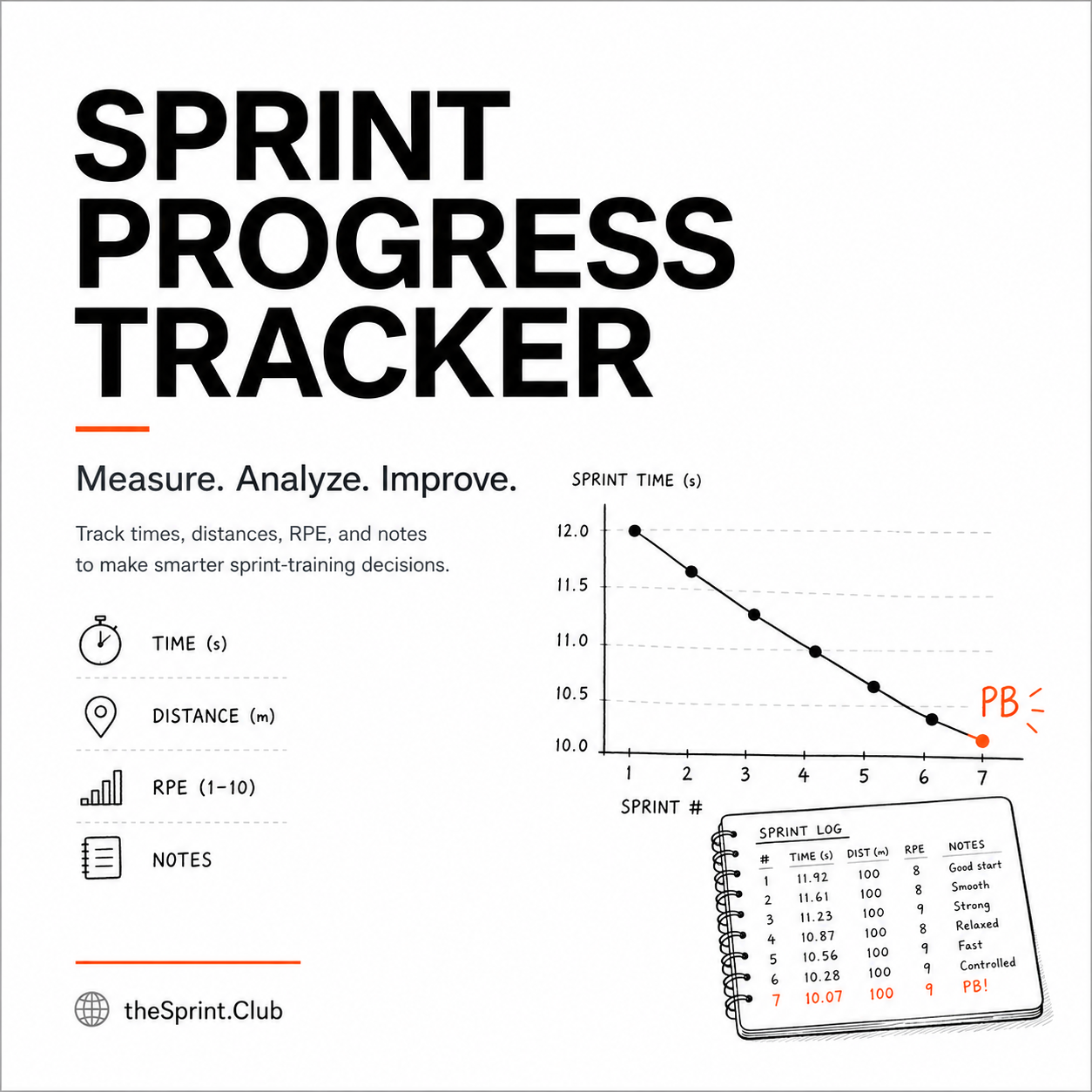
Sprint Progress Tracker: Measure and Improve Your Speed
|
|
|
|
Use a sprint progress tracker to record times, monitor fatigue, identify trends, and make smarter training decisions that improve sprint performance.
|
|
|
|
|
|
|
|
Why absorbing force efficiently is the missing link to faster sprint times, shorter ground contacts, and better performance.
|
|
|
|
Most athletes focus on producing force. Elite sprinters also master absorbing it. Every sprint step begins with a collision between the foot and the ground. Before you can produce force, your body must accept it. Athletes who develop exceptional eccentric strength can absorb larger forces, store more elastic energy, reduce ground contact time, and return more of that energy into …
|
|
|
|
|
|
|
|
|