|
|
|
|
The Hidden Variable Between Practice and Performance
|
He looked like a different athlete.
|
|
In training, everything was there—clean mechanics, explosive outputs, consistent times.
|
|
But in competition, it disappeared. Tight. Hesitant. Slower.
|
|
Same body. Same preparation. Different result.
|
|
If you coach or compete, you’ve seen this pattern over and over:
|
|
Training says one thing. Performance says another.
|
|
Most people try to solve this with more volume, more reps, more intensity.
|
|
But the missing variable isn’t physical.
|
|

|
|
|
Belief Isn’t Motivational. It’s Mechanical.
|
What we call “confidence” is often misunderstood.
|
|
It’s not positive thinking.
|
|
It’s a constraint system.
|
|
At the center of this is your brain’s estimate of what you are capable of executing successfully.
|
According to Bandura’s research, self-efficacy directly influences:
|
- Effort
- Persistence
- Stress response
- And critically… performance output
|
Your brain doesn’t just observe your capabilities.
|
|

|
|
|
|
|
The Expectation Effect
There’s a powerful phenomenon in performance science:
|
The Athletes given a “performance-enhancing” substance (that is actually inert) often improve measurably—sometimes significantly.
|
Not because of the substance.
|
Your brain changes output based on what it believes is possible.
|
|
|
|
Expectation → Nervous System Permission → Output → Reinforced Belief
|
|
If expectation is low or uncertain, the system downregulates.
|
If expectation is high and supported by evidence, output increases.
|
|

|
|
|
|
Why Training Doesn’t Always Transfer
|
Training builds capacity.
|
|
But performance requires permission to express that capacity.
|
If your belief system hasn’t caught up to your physical development, you get:
|
- Stronger, but not faster
- Faster in practice, slower in competition
- Technically sound, but inconsistent
Because the system doesn’t trust the output yet.
|
|

|
|
|
How to Build Self-Belief (That Actually Transfers)
|
These are not mindset tricks.
|
These are training methods.
|
1) Evidence Stacking
|
Your brain trusts proof, not intention.
|
Start tracking and reinforcing:
|
- Best reps
- Small wins
- Objective improvements
- “You hit 10.5 m/s last week”
- “Your last 3 sessions were consistent”
- “Your contact times improved”
|
This creates a database of capability.
|
|
|
|
Belief grows from remembered evidence.
|
|
2) Constraint Exposure
|
Put athletes in environments where success is forced through execution.
|
- Shortened sprint zones that demand precision
- Assisted speed work to expose higher velocities
- Competitive reps with controlled variables
|
This introduces the nervous system to higher outputs safely.
|
|
|
|
The system learns: “We can do this.”
|
|
3) Prediction Error Training
|
Have athletes predict their performance before a rep.
|
|
When they outperform their expectation, it creates a “prediction error.”
|
|
It forces the brain to update its internal model.
|
|
|
|
“I thought I could run X… but I ran faster.”
|
|
4) Reduce Uncertainty Before Performance
|
Uncertainty kills output.
|
- Rehearse the exact environment
- Standardize warm-ups
- Control variables where possible
|
Familiarity increases trust.
|
|
|
|
The nervous system performs best in known environments.
|
|
5) Identity Framing
|
This is subtle, but powerful.
|
|
Identity stabilizes behavior under pressure.
|
[Inference] This aligns with observed patterns in performance psychology where identity-based beliefs create more consistent execution under stress.
|
|
|
|
|
|
Gear That Represents the Process
|
|
|
A reminder that performance is built through exposure, evidence, and doing hard things repeatedly.
|
|
|
|
|
|
|
|
|
|
Thanks for reading. See you soon!
|
|
|
|
|
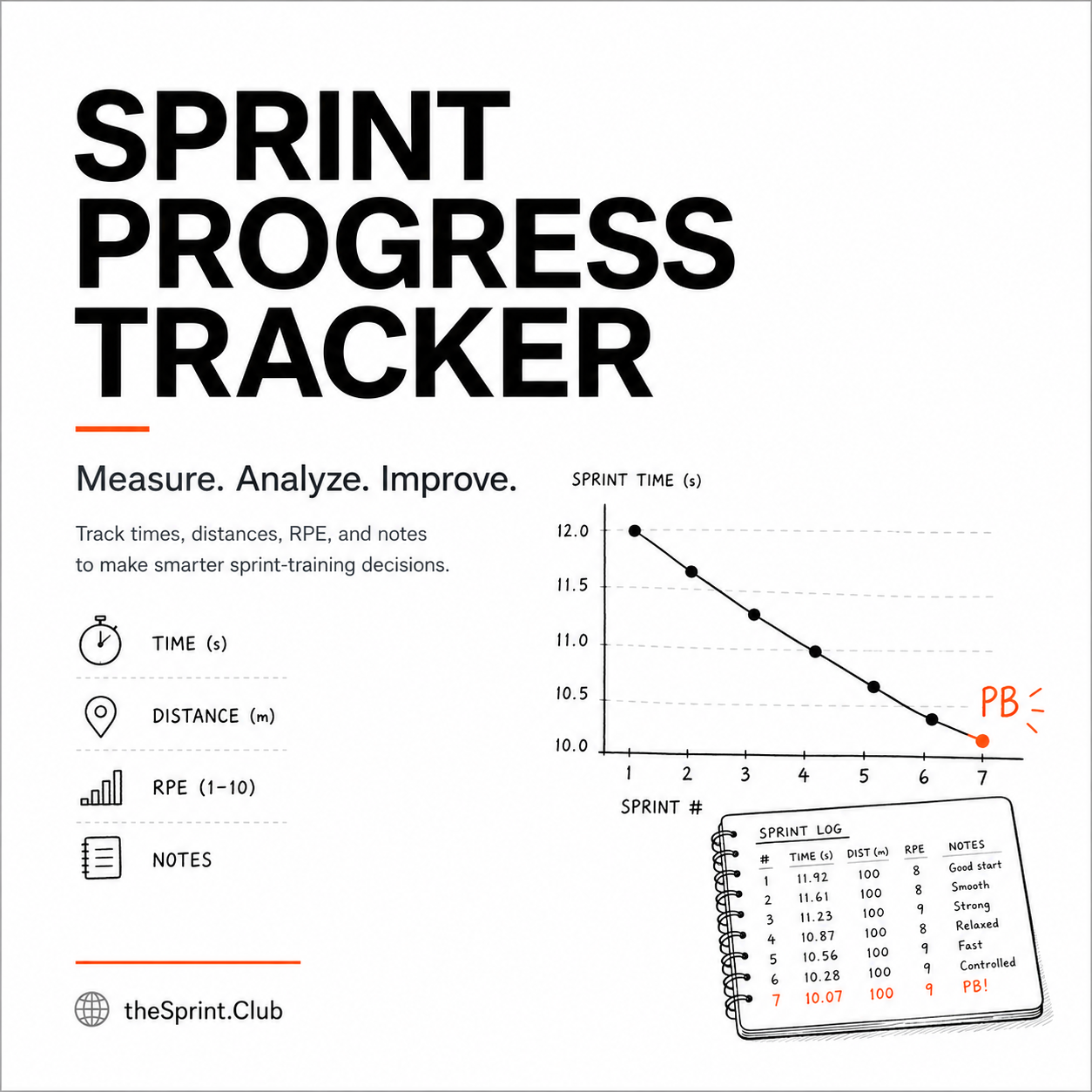
Sprint Progress Tracker: Measure and Improve Your Speed
|
|
|
|
Use a sprint progress tracker to record times, monitor fatigue, identify trends, and make smarter training decisions that improve sprint performance.
|
|
|
|
|
|
|
|
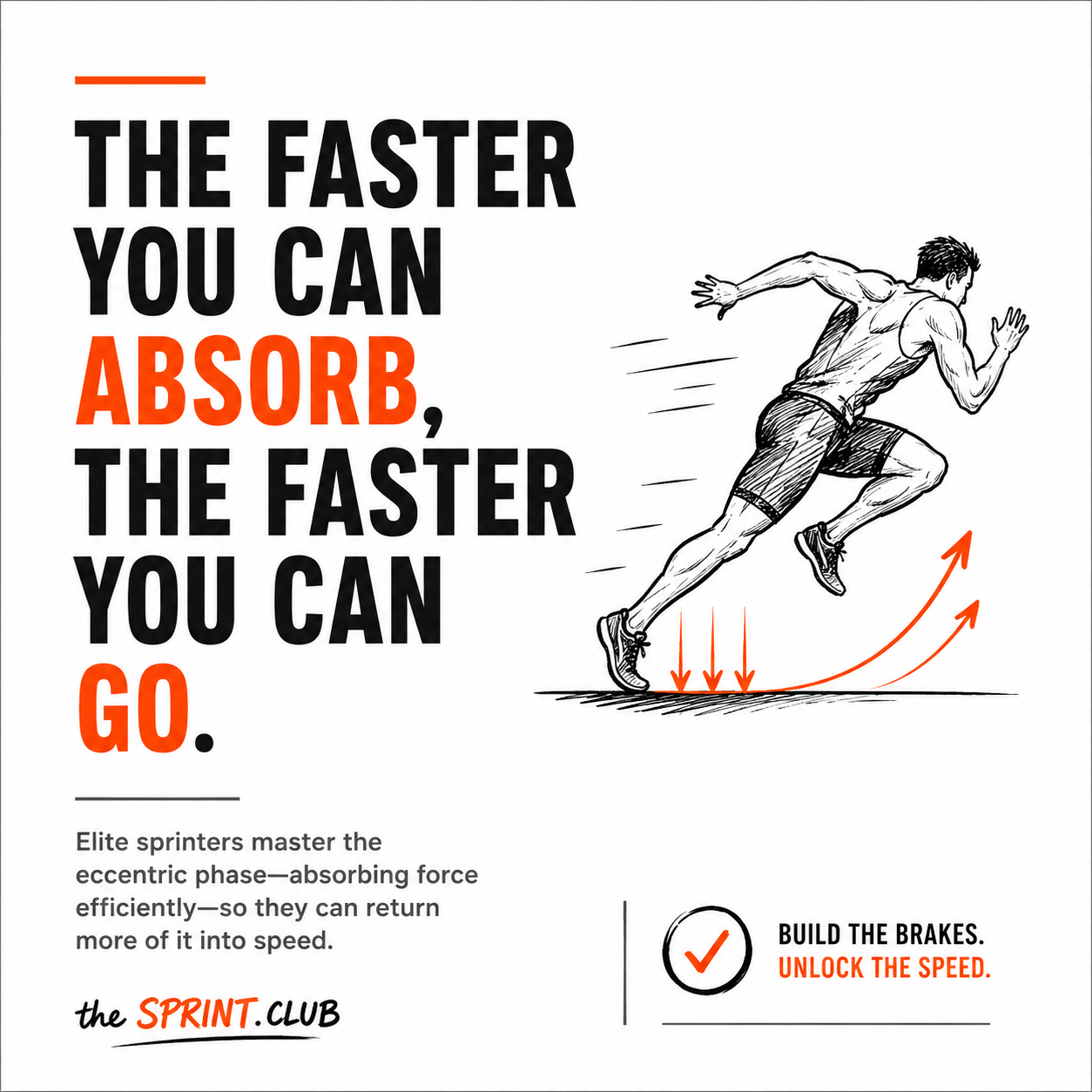
Why absorbing force efficiently is the missing link to faster sprint times, shorter ground contacts, and better performance.
|
|
|
|
Most athletes focus on producing force. Elite sprinters also master absorbing it. Every sprint step begins with a collision between the foot and the ground. Before you can produce force, your body must accept it. Athletes who develop exceptional eccentric strength can absorb larger forces, store more elastic energy, reduce ground contact time, and return more of that energy into …
|
|
|
|
|
|
|
|
|